

Data centers consume massive amounts of electricity, with cooling and lighting accounting for up to 50% of total energy use. The wrong lighting choice drains your budget while creating heat that forces your cooling systems to work harder.
At PacLights, we’ve seen firsthand how data center LED fixtures make the difference between a facility that hemorrhages money and one that runs efficiently. This guide walks you through what makes lighting truly matter in data centers and how to select fixtures that deliver real performance.
Why Data Centers Need Specialized LED Lighting
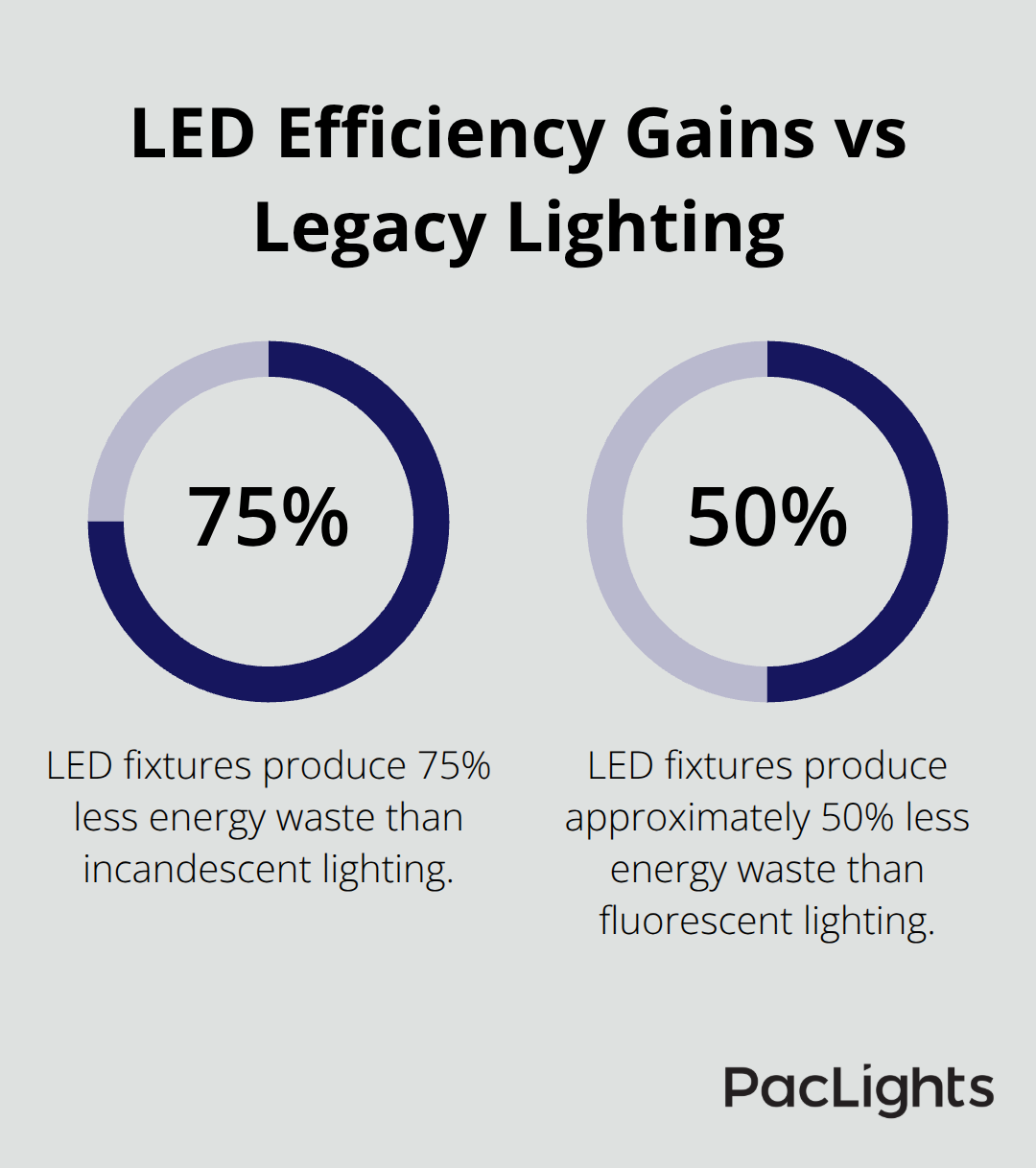
Standard commercial lighting simply won’t cut it in data centers. The 24/7 operating environment, extreme heat concentration, and non-negotiable uptime requirements demand fixtures engineered specifically for these conditions. Cooling typically accounts for 30–50% of total data center energy consumption, and this is where lighting choice becomes a financial decision that affects your bottom line directly. Traditional fixtures generate excessive heat, forcing cooling systems to work overtime. LED fixtures, by contrast, produce 75% less energy waste than incandescent lighting and approximately 50% less than fluorescent alternatives. This isn’t just about lower electricity bills-it’s about preventing your cooling infrastructure from becoming the largest expense in your facility. A data center running standard lighting wastes energy that could power your IT equipment instead, inflating your Power Usage Effectiveness ratio and making your facility less competitive. Most data centers operate with a PUE between 1.2 and 1.8, and poor lighting choices push you toward the higher end of that range.
When you switch to high-performance LED fixtures designed for data center environments, you restructure how your entire facility consumes and dissipates energy.
Thermal Stress Demands Purpose-Built Fixtures
Data center lighting must handle thermal stress that would destroy ordinary fixtures. LED fixtures designed for data centers use aluminum heatsinks and operate reliably across 0–40°C, with extended-range options supporting −20 to 50°C for extreme environments. This thermal stability matters because overheating fixtures fail unpredictably, and in a 24/7 operation, any outage costs money and damages your reputation. Signify’s research shows that LED fixtures last up to 25 times longer than conventional sources, which in data centers translates to fewer maintenance windows and reduced disruption risk. The longer lifespan-typically exceeding 25,000 hours-means you avoid scheduling emergency replacements in hard-to-reach ceiling spaces while your facility operates at full capacity. Thermal management also reduces the heat load that your cooling systems must handle, creating a compounding efficiency gain. This is why driver reliability matters: you need MTBF ratings of at least 100,000 hours and surge protection of 4 kV minimum to prevent cascading failures that could affect multiple fixtures simultaneously.
Continuous Operation Requires Flicker-Free Performance
Data centers cannot tolerate lighting failures. Your fixtures must deliver flicker-free, consistent illumination across server aisles where technicians perform critical maintenance tasks. LED fixtures with proper color temperature selection-4000–5000K is optimal for data centers-improve visibility without creating glare that strains eyes during long maintenance windows. Color Rendering Index of at least 80, preferably 90 or higher in critical areas, allows technicians to distinguish cable colors and equipment indicators accurately, reducing installation errors and troubleshooting time. Durability in data center environments means impact resistance rated IK08–IK10 in high-risk areas and IP ratings of IP65–66 in moisture-prone zones. These specifications prevent dust accumulation and equipment damage from vibration caused by HVAC systems or rack equipment. When you select fixtures, prioritize those with built-in redundancy options and compatibility with centralized Building Management Systems that enable remote monitoring. This allows your team to detect equipment failures weeks before they cause outages, turning reactive maintenance into predictive operations that protect your uptime record. The right fixture selection transforms your lighting from a passive utility into an active component of your facility’s reliability strategy.
What Makes Data Center LED Fixtures Different
High-performance data center LED fixtures aren’t simply smaller versions of commercial lighting. They’re engineered to solve specific problems that kill efficiency and uptime in 24/7 operations. Fixtures that work in office buildings fail in data centers because they can’t handle continuous thermal stress, they generate excessive heat that compounds cooling costs, and they lack the monitoring integration your facility needs to prevent failures before they happen. The difference shows in measurable ways when you select fixtures designed specifically for these demands.
Thermal Engineering Separates Purpose-Built Fixtures from Generic Alternatives
Aluminum heatsinks and extended operating ranges from −20 to 50°C keep your fixtures stable even when ambient temperatures spike around high-density server racks. Driver reliability with MTBF ratings of at least 100,000 hours and surge protection of 4 kV minimum prevents cascading failures that could take out multiple fixtures simultaneously. LED fixtures rated for 50,000 hours or more at L70 brightness mean you replace them far less often than traditional fixtures. Signify’s research confirms that LED fixtures last up to 25 times longer than conventional sources, which in data centers translates to avoiding emergency replacements in hard-to-reach ceiling spaces during peak operating hours. This durability matters more than the upfront price because a single unplanned outage costs far more than the difference between a cheap fixture and a properly engineered one.
Energy Efficiency Multiplies When Smart Controls Enter the Picture
LED fixtures reduce energy consumption by up to 75% versus incandescent and about 50% versus fluorescent. Adding occupancy sensors, daylight harvesting, and centralized Building Management System integration yields an additional 20–40% in energy savings beyond the LED efficiency alone. Fixtures with 0–10V, DALI, or DMX dimming compatibility give you flexibility to adapt lighting to actual workload demands throughout the day. Task lighting and zoning concentrate illumination above racks and work areas rather than flooding entire spaces, lowering total energy use and heat generation simultaneously.
Visibility and Reliability Work Together in Critical Zones
Color temperature selection of 4000–5000K with Color Rendering Index of 90 or higher in critical zones allows technicians to distinguish cable colors and equipment indicators accurately, reducing installation errors that cost time and money. Impact resistance rated IK08–IK10 and IP ratings of IP65–66 in moisture-prone zones prevent dust accumulation and equipment damage from vibration caused by HVAC systems. Networked monitoring systems detect equipment failures weeks before they cause outages, transforming maintenance from reactive crisis management into predictive operations that protect your uptime record. When your lighting system reports performance data in real time, your team stops guessing about fixture health and starts making decisions based on actual conditions. This shift from passive utility to active reliability partner sets the stage for understanding how to evaluate which fixtures will actually deliver results in your specific data center environment.
How to Choose and Install Data Center LED Fixtures That Actually Deliver Results
Measure Your Current Lighting Layout with Precision
Start with a light meter and walk through your server aisles to document illumination levels at different heights and distances from fixtures. Server rooms should hit 300–500 lux, control rooms need 500–750 lux, and hallways require 100–200 lux according to industry standards. Most data centers operate with either overlighting in non-critical zones or dark spots in work areas where technicians need precision visibility. Once you know your actual levels, calculate how many fixtures you need and where they should mount. Recessed, surface-mounted, and suspended options each work differently depending on your ceiling height and aisle layout. High ceilings benefit from high-bay fixtures with efficacy of 150+ lm/W, while lower spaces need different optics to avoid glare.
Audit Existing Fixtures and Calculate True Cost of Ownership
Examine your current fixtures for age and condition. If your system is more than 10 years old, replacement pays for itself through energy savings alone. LED fixtures rated L70 at 50,000 hours or higher last significantly longer than what you’re replacing, and Signify research confirms LED fixtures last up to 25 times longer than conventional sources. Calculate your total cost of ownership over five to ten years by comparing upfront investment against energy savings, reduced maintenance labor, and avoided emergency replacements. A fixture costing 20% more initially but lasting three times longer and consuming half the energy becomes the cheaper option within three years.
Evaluate Performance Metrics Before Commitment
Focus on fixtures with MTBF ratings of at least 100,000 hours and drivers with 85% or higher efficiency. Request photometric reports from manufacturers showing how light distributes across your specific aisle widths and ceiling heights. Test dimming and control compatibility with your existing Building Management System before committing to a large purchase. Fixtures supporting 0–10V, DALI, or DMX control give you flexibility to integrate occupancy sensors and daylight harvesting, which add 20–40% additional energy savings beyond LED efficiency alone.
Partner with Lighting Design Professionals
Professional designers specify fixtures matched to your specific thermal environment, considering how heat from server racks affects ambient temperature around fixtures. They verify that surge protection of 4 kV minimum and proper thermal management through aluminum heatsinks keep your fixtures operating reliably across the 0–40°C range typical in data centers. PacLights provides free lighting layout designs and ROI assessments that reveal exactly how much you’ll save and how quickly upgrades pay for themselves.
Execute Installation and Commissioning Correctly
Licensed electricians should follow manufacturer instructions precisely, with particular attention to proper insulation and clearance in recessed fixtures to prevent overheating in plenum spaces. After installation, test all fixtures to confirm uniform coverage and verify that controls respond correctly before full operation. Commissioning should check for flicker, color inconsistencies, and that dimming operates smoothly across the full range. Post-installation monitoring through networked controls detects equipment failures weeks before they cause outages, transforming maintenance from reactive crisis response into predictive operations that protect your uptime record. Fixtures designed specifically for data center demands rather than generic commercial alternatives stop treating lighting as a passive utility and start treating it as infrastructure that directly protects your facility’s reliability and your budget.
Final Thoughts
Data center LED fixtures represent a fundamental shift in how facilities manage energy, reliability, and operating costs. LED fixtures reduce energy consumption by up to 75% compared to incandescent lighting, and when paired with smart controls like occupancy sensors and daylight harvesting, you gain an additional 20–40% in savings. Cooling costs drop as heat generation decreases, your PUE improves, and fixtures lasting 25 times longer than conventional sources mean fewer maintenance windows disrupting operations.
Reliability compounds these benefits through fixtures with MTBF ratings of 100,000 hours and proper thermal management via aluminum heatsinks that operate consistently across the 0–40°C range typical in data centers. Networked monitoring systems detect equipment failures weeks before they cause outages, transforming maintenance from crisis response into predictive operations that protect your uptime record. When technicians work under flicker-free illumination with proper color rendering, installation errors drop and troubleshooting time shrinks significantly.
The path forward starts with measuring your current lighting layout and calculating true cost of ownership over five to ten years. We at PacLights provide free lighting layout designs and ROI assessments that reveal exactly how much you’ll save and how quickly upgrades pay for themselves. Contact us today to transform lighting from a passive utility into infrastructure that directly protects your facility’s efficiency and reliability.
Disclaimer: PacLights is not responsible for any actions taken based on the suggestions and information provided in this article, and readers should consult local building and electrical codes for proper guidance.