

Ceiling height matters. When you’re designing a modern space, every inch counts, and traditional lighting fixtures eat up valuable room.
Low profile wafer lighting solves this problem. At PacLights, we’ve seen how these slim fixtures deliver bright, even illumination without the bulk of conventional recessed lights.
This guide covers what makes them different, where they work best, and how to install them in your facility.
Why Wafer Lights Outperform Traditional Recessed Fixtures
The Space-Saving Advantage
Ultra-thin wafer lights measure less than one inch thick, while traditional recessed fixtures require six to eight inches of clearance above the ceiling. This slim profile transforms tight spaces into usable areas. In retrofit projects, you avoid cutting deeper cavities or relocating structural elements. The integrated LED module sits flush with the drywall, creating an uninterrupted ceiling line that modern architects and designers prefer. Many facilities report that this seamless appearance alone justifies the upgrade, especially in retail environments where ceiling aesthetics directly influence customer perception.
Energy Consumption and Long-Term Savings
Energy consumption tells the real story. A 12-watt wafer light produces approximately 1,050 lumens, delivering 87 lumens per watt. Traditional incandescent recessed fixtures of comparable brightness consume 65 watts or more-a 70 to 90 percent reduction in energy use according to ENERGY STAR data. Over a five-year period in a 2,000-square-foot office space with 20 fixtures running eight hours daily, you’d save roughly 4,000 kilowatt-hours. At average commercial rates of 12 cents per kilowatt-hour, that translates to approximately 480 dollars in electricity costs alone. Wafer lights last 25,000 to 50,000 hours (roughly ten to twenty years in typical use), which eliminates the recurring expense of bulb replacements.
Light Distribution and Beam Angles
Light distribution quality separates quality wafer fixtures from mediocre ones. Most wafer lights engineered for commercial and residential use deliver even illumination across a space with minimal hotspots or shadows. Beam angles typically range from 15 to 45 degrees, allowing you to match ambient lighting or accent lighting to your specific needs. For kitchen counters, a 4-inch fixture with a 40-degree beam spaced three to four feet apart provides consistent task lighting without glare. For office spaces, wider beam angles at five to six foot spacing create uniform ambient light that reduces eye strain.
Color Temperature Selection
Color temperature flexibility matters more than many facility managers realize. Most quality wafer fixtures offer options from 2700K warm white to 5000K cool white, with some models providing tunable white that adjusts on-site. Choosing the wrong color temperature upfront costs money later. A 3000K neutral white works better for kitchens and offices than a 2700K warm tone, which can appear yellowish under task lighting. Tunable models cost 20 to 30 percent more upfront but prevent costly fixture replacements if your space function changes.
Dimming Performance and Compatibility
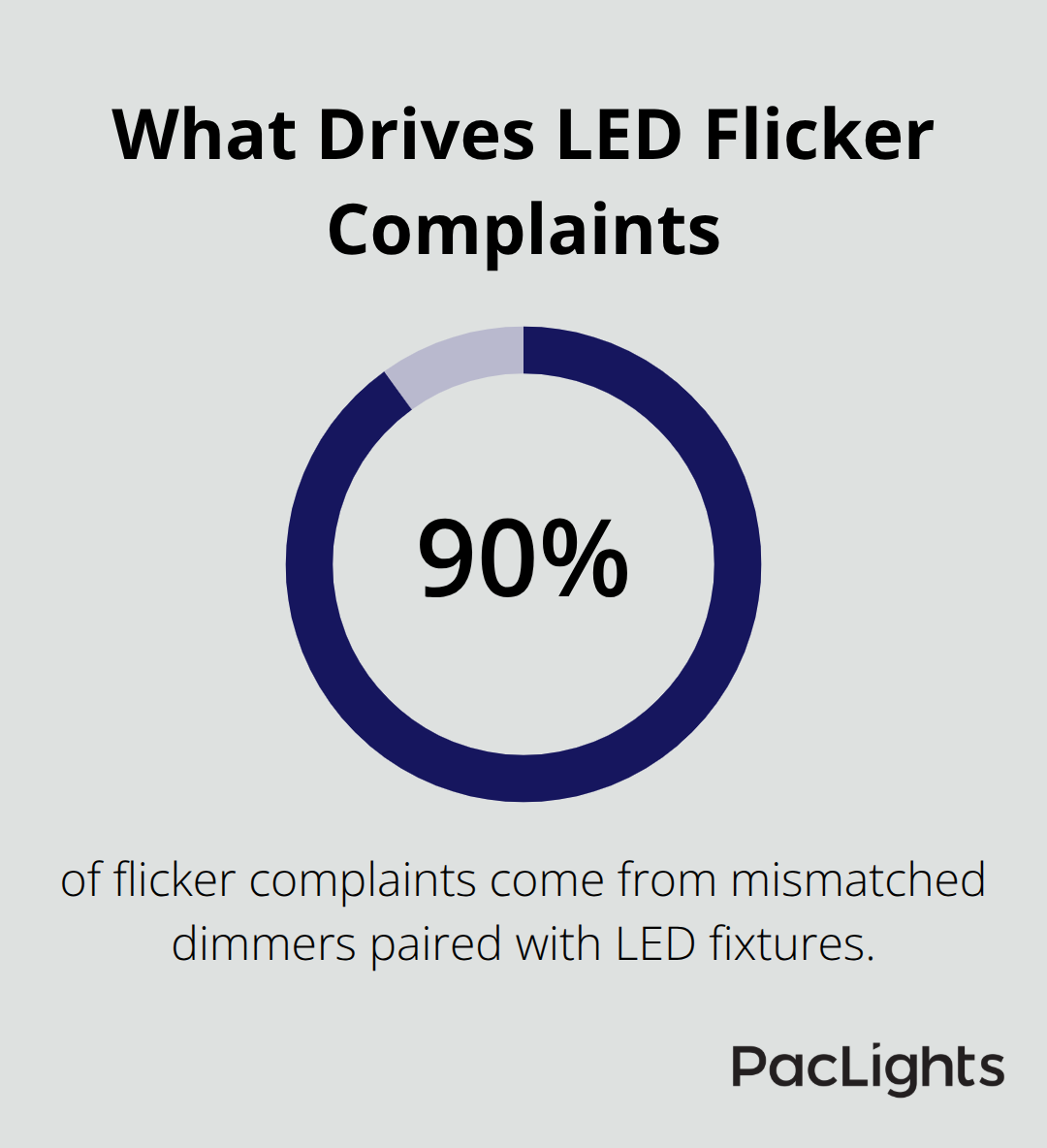
Dimming performance determines user satisfaction more than brightness alone. Approximately 90 percent of flicker complaints come from mismatched dimmers paired with LED fixtures. Pairing LED-rated dimmers like the Lutron Diva with compatible wafer lights eliminates the bouncing or flicker seen with cheaper dimmer switches.
Test your specific fixture and dimmer combination before final installation to confirm smooth dimming performance down to low brightness levels. This compatibility check becomes especially important when you plan to integrate smart controls into your facility’s lighting system.
Where Wafer Lighting Delivers the Most Impact
Retail Spaces: Showcasing Products Without Visual Clutter
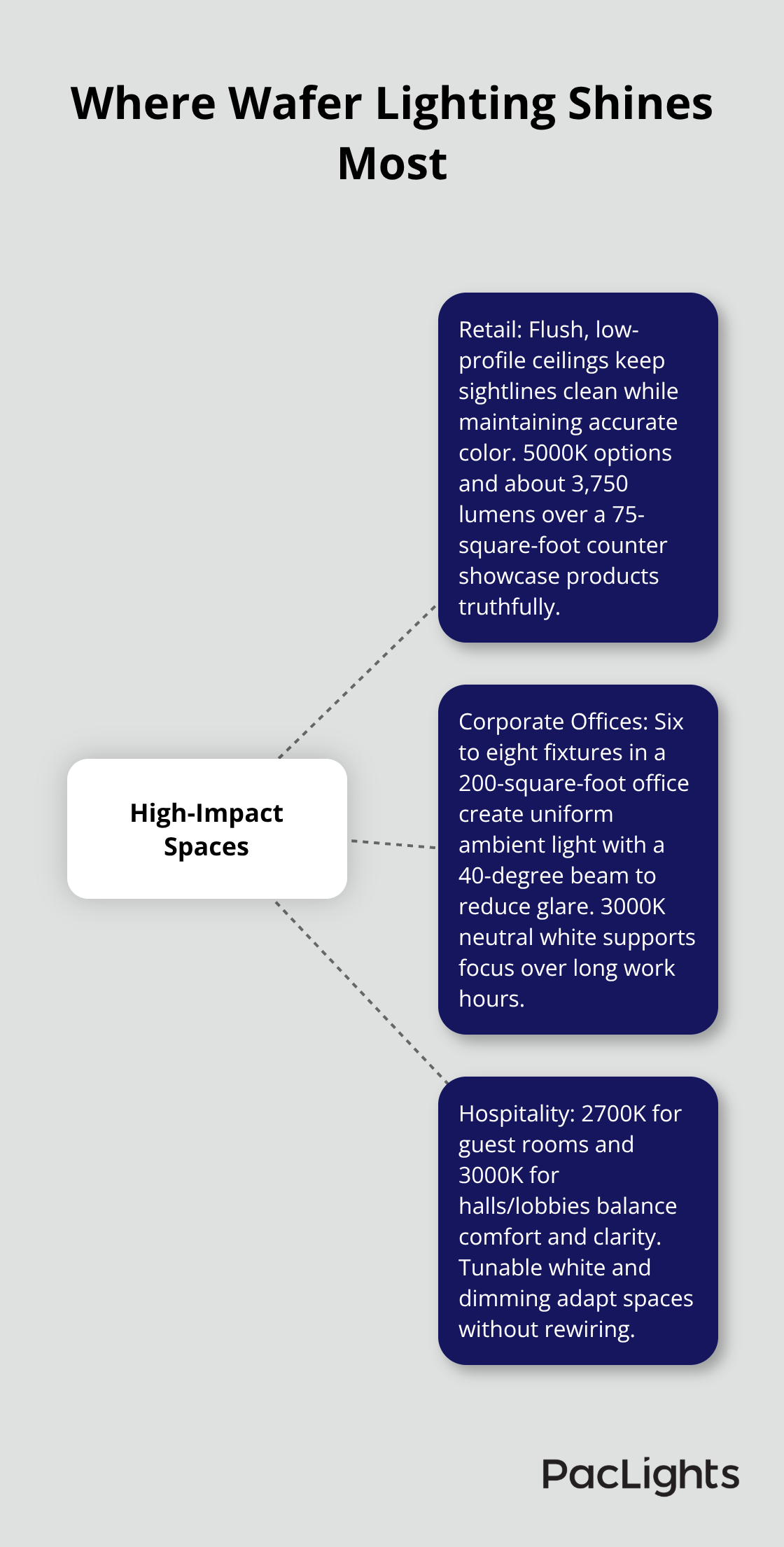
Retail environments demand lighting that showcases merchandise without adding visual clutter. Wafer lights excel here because their flush profile keeps ceilings clean while delivering the color accuracy needed to display products truthfully. A 75-square-foot boutique counter requires roughly 3,750 lumens according to IES guidelines for retail spaces, achievable with four 12-watt wafers spaced evenly across the area. The ability to select 5000K color temperature ensures fabrics, jewelry, and artwork render accurately, directly influencing purchase decisions. Retailers who upgrade from traditional fixtures report that the seamless ceiling appearance alone improves customer perception of the space as more upscale and modern. The dimming capability pairs well with seasonal promotions, allowing staff to adjust brightness for different displays without rewiring.
Corporate Offices: Eliminating Glare and Eye Strain
Corporate offices present a different challenge: uniform illumination without glare that causes eye strain during long work hours. A typical 200-square-foot office space benefits from six to eight wafer fixtures spaced five to six feet apart, delivering consistent ambient light across desks and meeting areas. The 40-degree beam angle prevents harsh shadows on walls and monitor screens, reducing the fatigue that cheaper, narrow-beam fixtures create. Offices using 3000K neutral white report better focus than those with 2700K warm tones, which can feel drowsy in task-intensive environments.
Pairing wafers with motion sensors in conference rooms cuts energy waste significantly, since these spaces sit empty 60 to 70 percent of the workday.
Hospitality Settings: Flexibility Across Multiple Spaces
Hotels and residential hospitality settings require flexibility that traditional fixtures cannot match. Guest rooms demand 2700K warm white for relaxation, while hallways and lobbies need 3000K for clarity and safety. Tunable white wafers solve this problem by adjusting color temperature on-site without replacement, eliminating the cost of installing separate fixture types. A 300-room hotel upgrading from halogen to wafer lighting reduces ceiling heat load substantially, lowering air conditioning demand during peak occupancy. Guest satisfaction increases measurably when rooms feature dimmable lighting that guests control via bedside panels or mobile apps, a feature that smart-enabled wafers deliver easily. The long lifespan of 25,000 to 50,000 hours means housekeeping staff rarely encounters burned-out fixtures, reducing maintenance calls and improving operational efficiency.
These three environments represent just the beginning of what wafer lighting can accomplish. The real advantage emerges when you assess your specific facility’s layout, ceiling constraints, and lighting goals-a process that determines whether your upgrade delivers maximum impact or falls short of expectations.
Installation and Smart Integration: Getting Wafer Lights Right From Day One
Measuring and Preparing Your Ceiling
Proper installation separates projects that deliver five years of flawless operation from those that fail within months. Start by measuring your ceiling cavity depth-this single measurement determines whether your fixture will fit. Drywall thickness ranges from half-inch to five-eighths inch, and your fixture trim must accommodate this variation. Test hole sizes on scrap drywall first rather than cutting directly into your ceiling. This practice prevents costly mistakes and confirms that spring clips seat properly before you commit to your actual installation.
When you route wiring through attics, label each junction box clearly (for example, OFFICE RECESSED or KITCHEN COUNTER) to prevent future confusion during maintenance or renovations. Mark attic hole positions from below using lawn flags or tape, creating a reliable guide for routing Romex safely to each ceiling location. Most installers overlook these details, but they determine whether your facility maintains organized electrical systems for years to come.
Spacing and Clearance Requirements
Fixture placement demands attention to clearance rules that protect both performance and safety. Maintain eighteen inches clearance from ceiling fan blades to prevent strobing effects as the blades spin. Keep fixtures at least thirty inches from walls to avoid harsh downlighting on vertical surfaces. Spring clips on wafer fixtures prove forgiving if you encounter joists spaced sixteen inches on-center-simply rotate the fixture to clear obstructions rather than relocating your planned layout.
For standard spacing, position fixtures four to six feet apart depending on your room size and fixture output. A typical 200-square-foot office space benefits from six to eight wafer fixtures spaced five to six feet apart, delivering consistent ambient light across desks and meeting areas. This spacing prevents dark spots while maintaining the seamless ceiling appearance that modern facilities demand.
Smart Controls and Dimmer Compatibility
Smart lighting integration requires upfront planning that prevents costly rewiring later. Not all dimmers work reliably with LED wafers; cheaper dimmer switches cause flicker or bouncing that frustrates users within weeks. Test your specific fixture and dimmer combination before final installation-the Lutron Diva LED Dimmer performs smoothly with quality wafers, while budget alternatives often fail. Verify fixture compatibility with your chosen smart control ecosystem before installation; Bluetooth mesh systems like Juno integrate with SmartThings, Alexa, and Google, but older fixtures lack this capability.
Long-Term Maintenance and Durability
Maintenance demands minimal effort once properly installed. Dust fixtures quarterly using a soft, lint-free cloth, monitor for any flicker or unusual behavior, and inspect connections annually for corrosion or loosening. LED wafers degrade gradually rather than fail suddenly-you’ll notice slowly dimming light over years rather than complete outages.
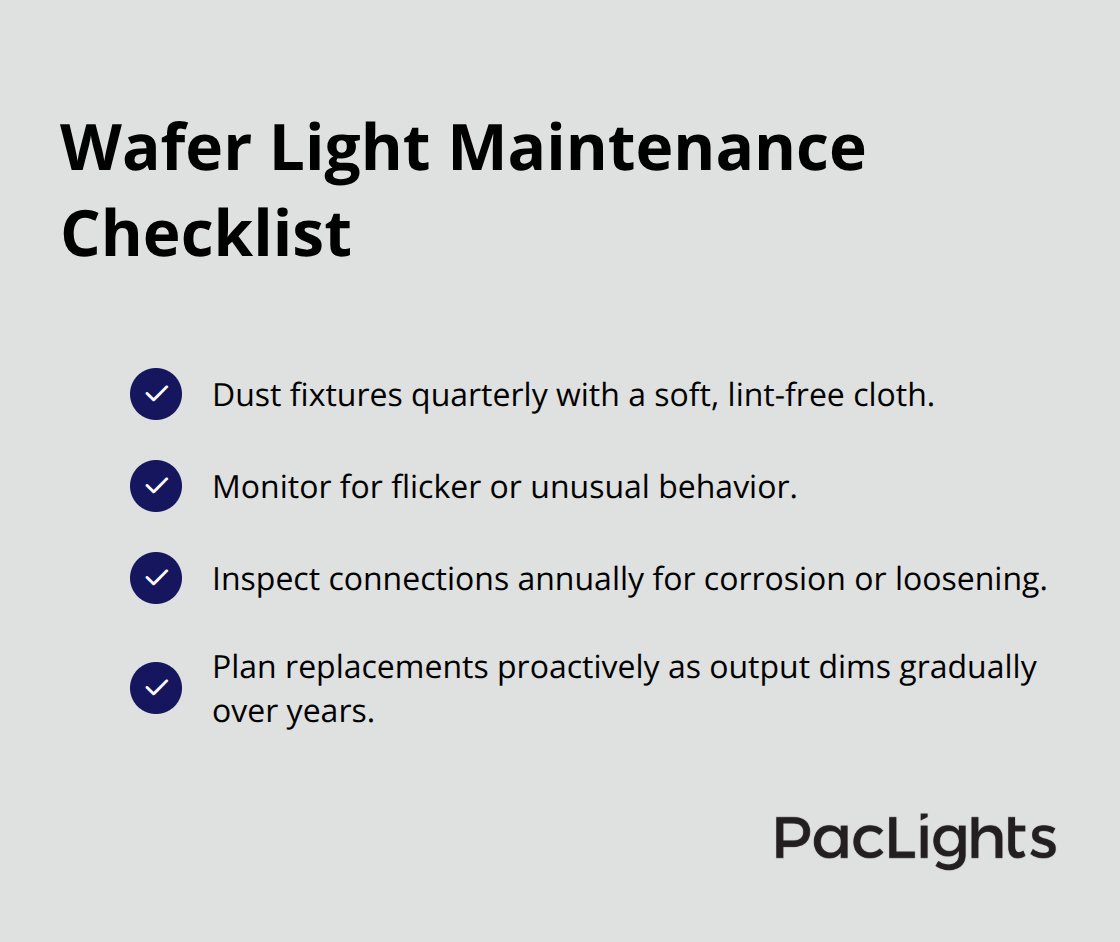
This gradual decline gives you time to plan replacements without emergency disruptions.
Lifespan ratings of 25,000 to 50,000 hours translate to roughly ten to twenty years at typical residential or commercial usage patterns, meaning most facilities upgrade fixtures once or twice per decade rather than annually. The long lifespan of wafer lighting means housekeeping and maintenance staff rarely encounter burned-out fixtures, reducing maintenance calls and improving operational efficiency across your facility.
Final Thoughts
Low profile wafer lighting transforms how modern facilities approach illumination. Fixtures thinner than one inch fit tight ceilings that reject traditional recessed lights, energy consumption drops 70 to 90 percent compared to incandescent alternatives, and lifespans of 25,000 to 50,000 hours eliminate the constant replacement cycle that drains maintenance budgets. Retail spaces gain the seamless ceiling aesthetics that influence customer perception, offices reduce eye strain through even light distribution, and hospitality settings achieve flexibility through tunable color temperatures that adjust without rewiring.
The real case for upgrading rests on three factors working together. Your facility’s ceiling constraints determine whether traditional fixtures even fit-most retrofit projects face this limitation, making low profile wafer lighting the only practical solution. Energy savings compound over years; a 2,000-square-foot office with 20 fixtures saves roughly 480 dollars annually in electricity costs alone, with no bulb replacement expenses. Installation complexity drops dramatically when you eliminate the need for deep cavities and bulky housings, reducing labor costs and project timelines.
Implementation starts with honest assessment of your space. Measure ceiling depth, identify clearance requirements around fans and walls, and determine whether your current electrical system supports the fixture count you need. Test dimmer compatibility before committing to smart controls-this single step prevents the flicker complaints that plague poorly planned upgrades. We at PacLights provide free lighting layout designs and ROI assessments that translate your facility’s specific constraints into a concrete implementation plan, showing exactly where fixtures go, what brightness you’ll achieve, and what your energy savings will be.
Disclaimer: PacLights is not responsible for any actions taken based on the suggestions and information provided in this article, and readers should consult local building and electrical codes for proper guidance.