

Lighting shapes how guests feel the moment they walk through your doors. At PacLights, we’ve seen firsthand how cylinder lights for hospitality transform spaces-from corridors to dining areas-by creating the right atmosphere while cutting energy costs.
The right lighting choice matters more than most operators realize. This guide walks you through why cylinder lights work so well in hotels and restaurants, where to install them, and how to pick the perfect fit for your property.
Why Cylinder Lights Transform Hospitality Spaces
Guests form opinions about your property within seconds of arrival, and lighting sets that tone before they reach the front desk. Cylinder lights deliver the visual warmth hospitality requires while solving real operational problems. Hospitality operators face competing demands: you need spaces that feel inviting without sacrificing functionality or draining your energy budget. Cylinder lights address all three. A warm color temperature around 2700K to 3000K creates the intimate atmosphere guests expect in dining areas and lounges, making food appear more appealing and encouraging longer stays. In corridors and entryways, these fixtures provide focused illumination that guides movement while maintaining visual comfort. The 2700K to 3000K range isn’t arbitrary-this warmth fosters a psychological sense of welcome that cooler lighting cannot match. Unlike generic downlights or troffers that feel institutional, cylinder fixtures read as intentional design elements. They transform plain ceilings into architectural features, which matters in competitive markets where first impressions directly influence booking decisions and online reviews.
Energy Savings That Hit Your Bottom Line
The financial case for cylinder lights is immediate and measurable. Switching from halogen or incandescent cylinder fixtures to dimmable LED equivalents typically pays back in 2 to 3 years based on energy savings alone. A mid-size hospitality property running 40 pendant cylinders can expect roughly 8,000 to 12,000 dollars in annual energy savings, plus another 3,000 to 6,000 dollars in reduced maintenance labor since LED fixtures require far fewer bulb replacements over their 25,000 to 50,000 hour lifespan. Dimming and occupancy sensors extend these savings further, reducing overall lighting energy consumption by 40 to 50 percent compared to older halogen systems. Energy Star certified LED cylinder fixtures deliver an additional 15 to 20 percent savings through improved drivers and thermal management, compounding your advantage.
Flexibility That Adapts to Any Space
Cylinder lights come in multiple diameters, mounting options, and output levels, which means one product family handles vastly different applications. Surface-mount cylinders work in tight corridors where pendant drops would obstruct traffic or sightlines. Pendant versions anchor dining tables and reception areas with visual impact. A 10-inch pendant positioned 30 to 36 inches above a dining surface creates a focal point without creating glare on place settings or wine glasses. For tall lobbies with 12-foot ceilings, you can extend drops to 48 to 60 inches to create architectural drama while maintaining head clearance. Opaque finishes reduce reflections and glare in dining spaces, while translucent or clear glass options provide more even ambient light for general areas. Power ranges from under 10 watts to 39 watts accommodate everything from intimate guest rooms to expansive atriums. Field-adjustable directional switches allow on-site tuning after installation, so you can accommodate furniture rearrangements or updated design schemes without rewiring.
Design Impact That Guests Notice
Cylinder fixtures transform how guests perceive your property’s quality and attention to detail. The architectural presence of these lights signals intentional design rather than standard commercial installation. Opaque cylinder finishes reduce reflections on wine glasses and distracting glare in dining spaces, improving guest comfort and encouraging them to linger longer. Warm finishes (brass or bronze) pair well with wood tones and create intimate zones, while satin nickel or black complement cooler palettes like concrete or gray stone. When you cluster cylinders at varying heights over tables or bars, you create visual rhythm and anchor the space without overwhelming it. This adaptability means you’re not locked into a single aesthetic or performance profile-cylinder lights grow with your property’s changing needs and design evolution.
Now that you understand why cylinder lights matter for your bottom line and guest experience, the next step is identifying where they perform best across your property.
Where Cylinder Lights Perform Best in Your Property
Corridors and Entryways: Setting the First Impression
Corridor and entryway lighting sets the first impression, and cylinder fixtures handle this task with precision that generic downlights cannot match. In hallways, surface-mount cylinders eliminate visual obstruction while maintaining clean sightlines for guests and staff. A typical hotel corridor benefits from spacing cylinders 4 to 6 feet apart to avoid dead zones and visual clutter, creating consistent illumination that guides movement without drawing attention to the ceiling itself.
Entryways demand brighter output to compensate for natural light transitions, so choosing cylinders in the 1500 to 2500 lumen range ensures guests navigate confidently from outdoors into your lobby. Mounting height matters significantly: cylinders positioned 8 to 10 feet above floor level in tall entryways create architectural interest while keeping the space feeling open rather than cramped. In narrower corridors, lower mounting around 8 feet works better and reduces the sense of institutional lighting that damages perceived quality.
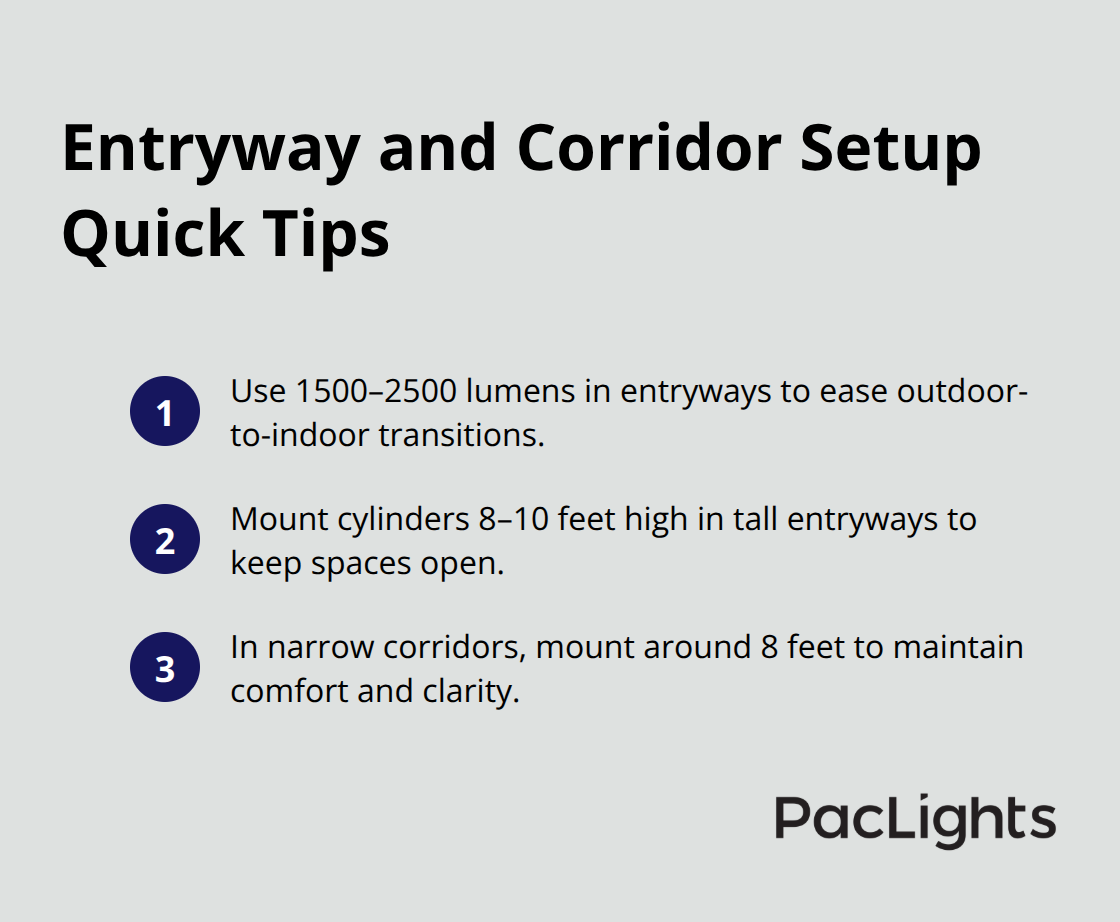
Opaque finishes prevent glare from bouncing off corridor walls, protecting guest comfort during late-night movement.
Dining Areas and Restaurant Spaces: Creating an Experience
Dining areas and restaurant spaces demand a fundamentally different approach because the goal shifts from way-finding to creating an experience that encourages guests to spend more time and money at your property. A 10-inch pendant cylinder suspended 30 to 36 inches above dining tables anchors each table zone while preventing glare on place settings and wine glasses-a detail that separates intentional hospitality design from standard commercial installation.
Space these pendants roughly 4 to 6 feet apart to create visual rhythm without overwhelming the ceiling, and warm 2700K color temperature makes food appear more appetizing while fostering the psychological comfort that keeps guests lingering longer. Opaque finishes are non-negotiable in dining spaces because they eliminate reflections that distract from the meal experience and reduce the harsh shadows that cooler lighting creates on faces. For bar areas, slightly tighter spacing of 3 to 4 feet creates a more intimate cluster effect that anchors the bar as a destination within the larger space.
Guest Rooms: Subtle Yet Essential Lighting
Guest rooms represent a more subtle but equally important application where cylinder lights function as both task and ambient lighting without consuming valuable wall or surface space. Surface-mount cylinders above seating areas or work surfaces in guest rooms deliver focused illumination for reading, work, or grooming without the visual bulk of traditional sconces. Lower wattage options around 10 to 15 watts suffice in guest rooms since ceiling heights typically reach 8 to 9 feet and the space is inherently intimate.
Dimmable variants perform exceptionally well here because guests control their lighting environment from bright morning wake-up to soft evening ambiance without switching fixtures, directly improving perceived comfort and likelihood of repeat bookings. The ability to adjust color temperature or brightness through simple controls transforms a standard room into a space that feels responsive to guest needs rather than fixed and institutional. This flexibility extends across your entire property, which means the next step involves selecting the right specifications for each application.
Selecting the Right Cylinder for Your Space
Match Function to Specifications
Choosing the correct cylinder light requires matching three variables: the specific function of the space, the visual atmosphere you want to create, and your operational budget over the fixture’s lifespan. Start by measuring your ceiling height and identifying the primary task each area serves. A corridor demands brightness and efficiency; a dining area demands warmth and glare control; a guest room demands flexibility and comfort. These demands produce completely different specifications.
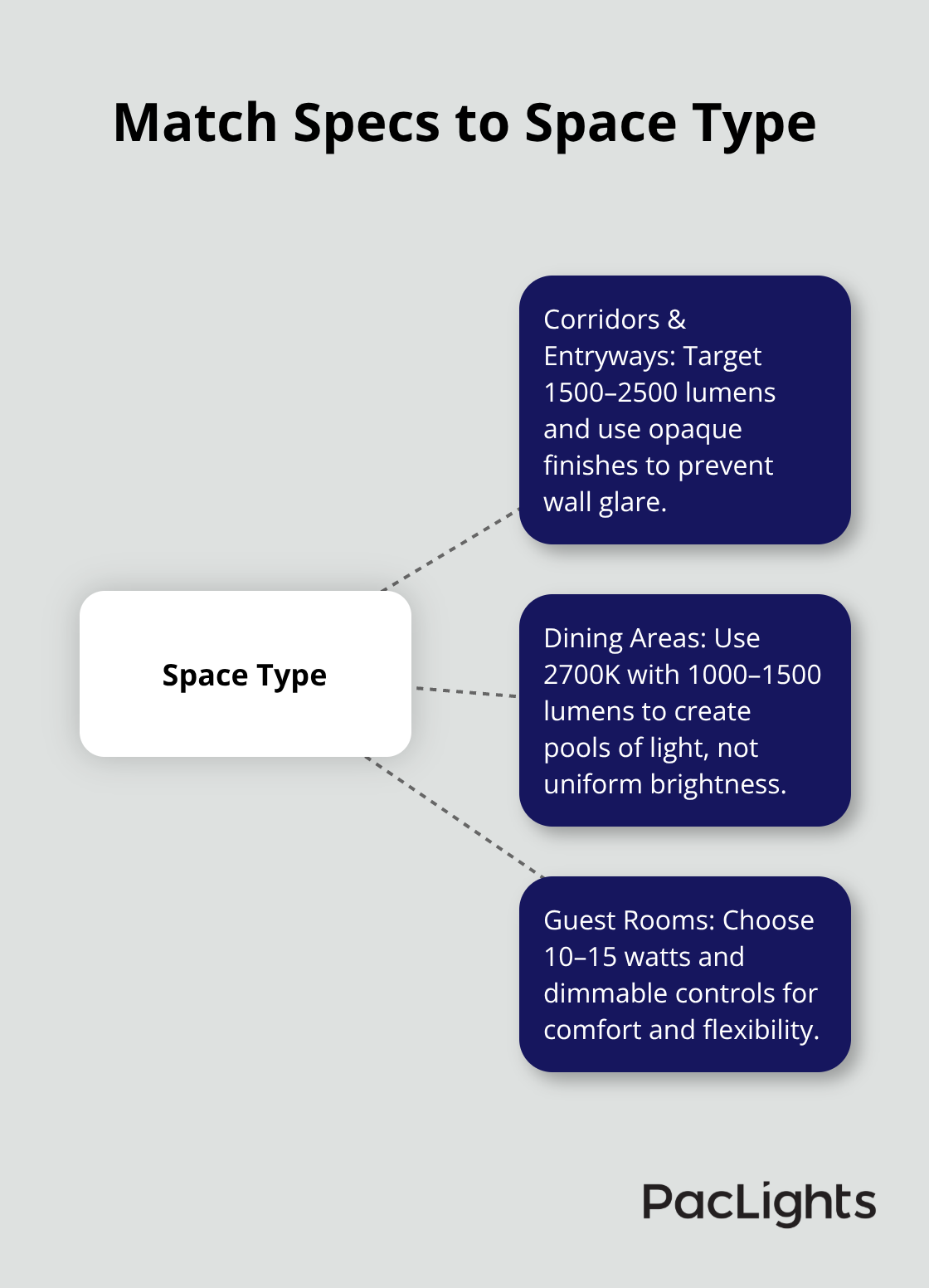
For corridors and entryways, target 1500 to 2500 lumens depending on ceiling height and traffic volume, using opaque finishes to prevent wall glare. Dining areas perform best with 2700K color temperature and lumen outputs between 1000 and 1500 per fixture, positioned to create pools of light rather than uniform brightness across the entire ceiling. Guest rooms require lower wattage around 10 to 15 watts with dimmable capability, since occupants need control over their environment without the visual weight of multiple fixtures.
The most common mistake operators make involves specifying identical fixtures across different spaces, which wastes energy in low-traffic areas and under-illuminates high-visibility zones. Measure specific surfaces and tasks before finalizing specifications-ceiling height, mounting position, and surrounding reflectivity all shift the lumen requirement significantly.
Plan Installation Timelines and Lead Times
Installation timing and lead times determine whether your project stays on schedule or delays opening. Standard cylinder orders typically require 10 weeks for delivery, which means you must lock specifications during the design phase rather than waiting for construction to begin. Surface-mount cylinders install faster than pendant versions since they require no cord length decisions or additional suspension hardware, making them ideal for retrofit projects with tight timelines.
Pendant installations demand precise height calculations: measure from your mounting point to the surface below (dining table, counter, floor), then subtract your desired distance of 30 to 36 inches above that surface to determine required cord length. Miscalculating by even 6 inches forces either costly field modifications or aesthetic compromises that affect guest experience.
Account for Long-Term Maintenance Costs
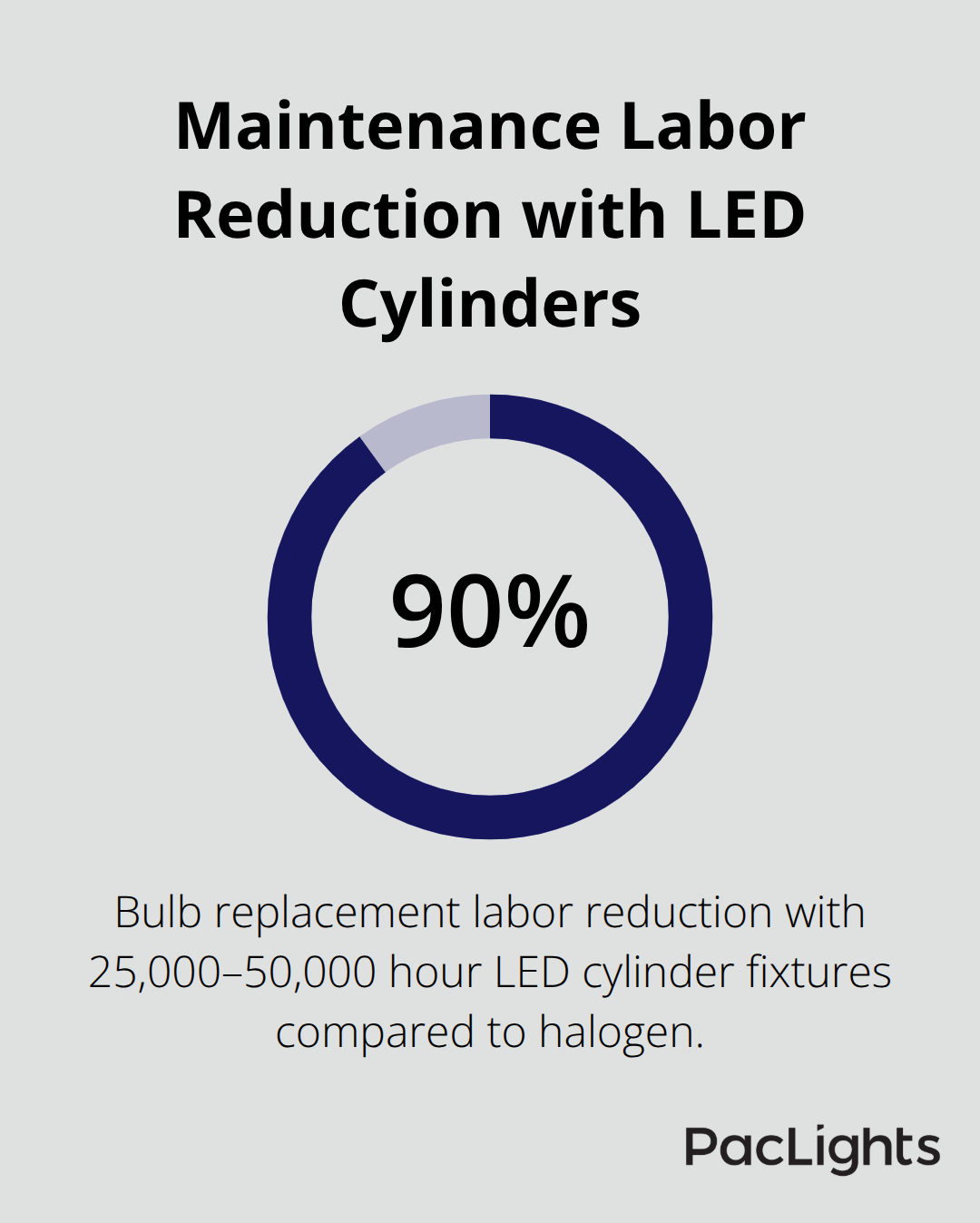
Maintenance considerations shift your long-term costs substantially. LED cylinder fixtures at 25,000 to 50,000 hour lifespan mean bulb replacement labor drops by roughly 90 percent compared to halogen systems, translating to 3,000 to 6,000 dollars in annual savings for a 40-fixture installation across maintenance labor alone. Tempered glass and matte finishes resist fingerprints and chemical cleaners better than polished metals, reducing cleaning frequency in high-touch areas like dining rooms and lobbies.
Energy Star certified fixtures provide an additional 15 to 20 percent efficiency gain through superior thermal management, shortening your payback period from 3 years to roughly 2.5 years for most hospitality applications.
Final Thoughts
Cylinder lights for hospitality environments deliver measurable returns that extend far beyond aesthetics. Your investment pays for itself through energy and maintenance savings alone within 2 to 3 years, after which your property operates with substantially lower overhead. Warm 2700K to 3000K color temperatures make dining experiences more appealing and encourage longer stays, while opaque finishes eliminate glare that damages comfort in high-visibility areas.
Your operations team experiences dramatic labor reductions since LED cylinder fixtures last 25,000 to 50,000 hours, meaning far fewer bulb replacements than halogen systems. A 40-fixture installation saves roughly 3,000 to 6,000 dollars annually in maintenance labor alone, and Energy Star certified options add another 15 to 20 percent efficiency gain through superior thermal management. Your ceiling transforms from a cost center into an operational asset that supports both guest satisfaction and your bottom line.
Measure your spaces, identify where cylinder lights perform best across corridors, dining areas, and guest rooms, then lock your specifications early to avoid installation delays. We at PacLights offer free lighting layout designs and ROI assessments to validate your installation plans and confirm the financial impact for your specific property. Contact us to start planning your cylinder light implementation and see exactly how much your property can save.
Disclaimer: PacLights is not responsible for any actions taken based on the suggestions and information provided in this article, and readers should consult local building and electrical codes for proper guidance.