

Cylinder wall lights design has evolved far beyond simple functional fixtures. At PacLights, we’ve watched these lights transform into statement pieces that define modern interiors.
This guide covers the trends reshaping the market, from minimalist aesthetics to smart home integration. You’ll find practical advice for selecting fixtures that work for your space and budget.
What’s Driving Modern Cylinder Wall Light Design
Minimalist Forms Take Center Stage
Minimalist design has become the default preference across interiors today, and cylinder wall lights sit at the center of this shift. Clean cylindrical forms in metal or glass eliminate visual clutter while delivering focused illumination. Brass and bronze finishes have gained traction for their timeless appeal paired with contemporary geometry, offering a premium aesthetic without ornamental excess. The appeal lies in architectural legibility-these fixtures make a statement through form alone, not decoration.
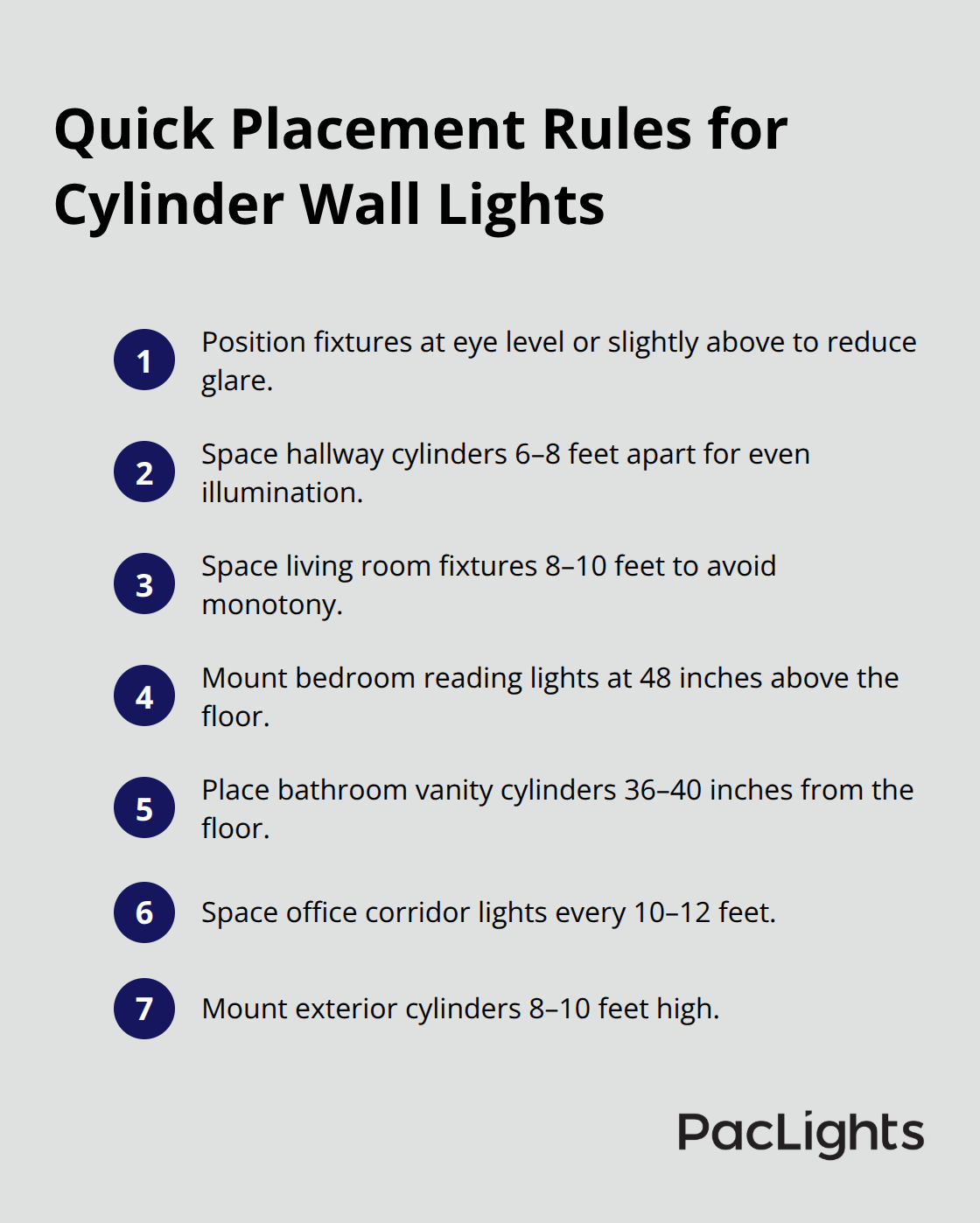
Designers now specify cylinder wall lights as sculptural focal points rather than afterthoughts, which means sizing and placement matter intensely. Position fixtures at eye level or slightly above to avoid glare while creating visual balance. For hallways and corridors, try spacing cylinder lights 6 to 8 feet apart to prevent hotspots and ensure even ambient distribution. Mixed materials like metal with glass or reclaimed wood add texture without compromising the minimalist ethos, and this combination has become standard in high-end residential and commercial projects.
Smart Controls and Circadian Alignment
Smart home integration has moved from optional to expected. Modern cylinder wall lights now support dimming, color temperature adjustment, and app-based scheduling. Tunable white technology shifts from warm 2700K to cooler 4000K, allowing occupants to align lighting with circadian rhythms or task requirements.
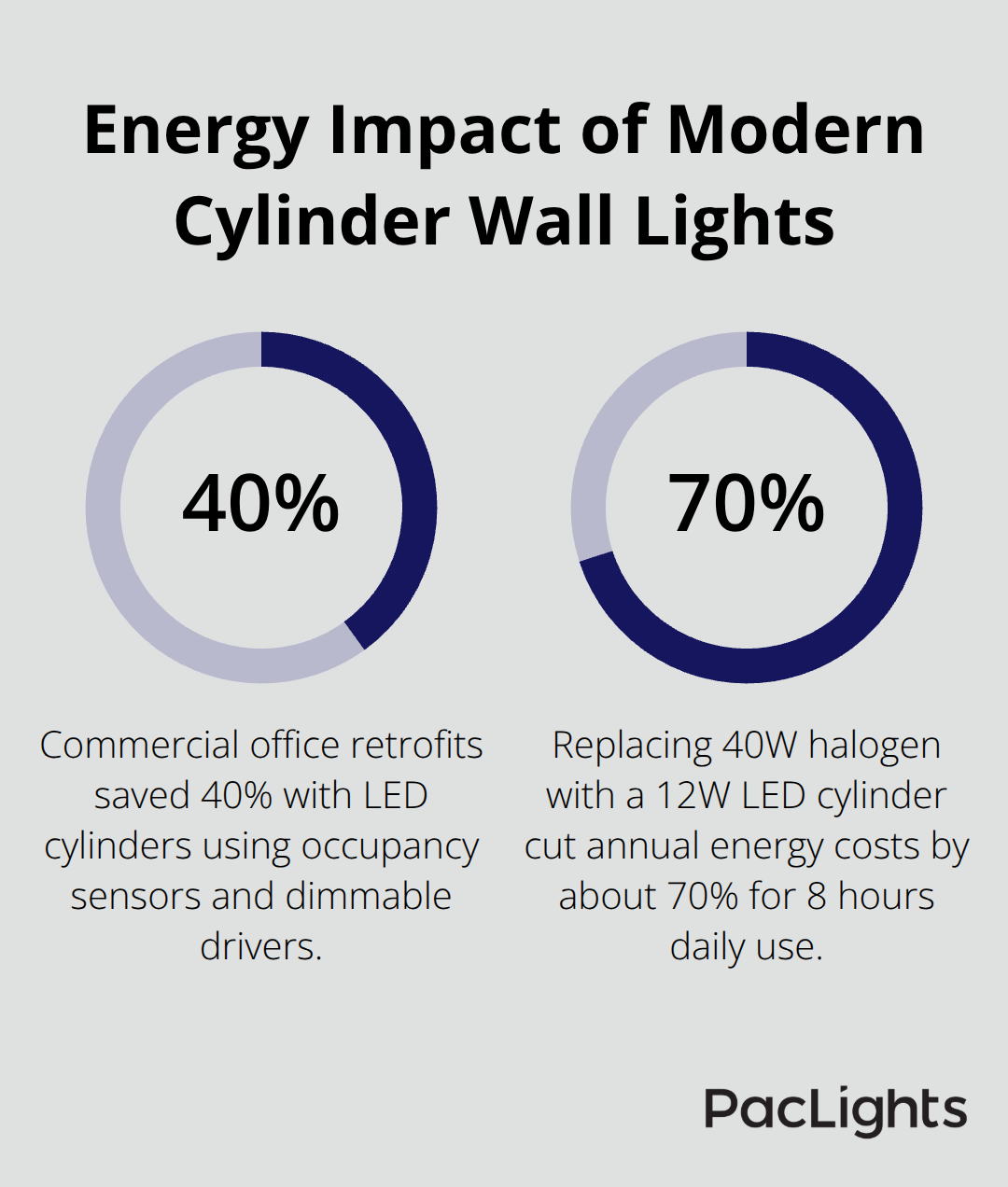
Commercial office retrofits have documented roughly 40 percent energy savings when paired LED cylinder lights with occupancy sensors and dimmable drivers, according to real-world installation data. For residential applications, remote control and voice assistant compatibility eliminate the need for physical switches in certain layouts, streamlining design and improving accessibility.
LED Efficiency and Sustainable Construction
LED technology underpins this efficiency. Cylinder LEDs deliver luminous efficacy exceeding 100 lumens per watt with lifespans surpassing 25,000 hours, dramatically reducing maintenance costs and replacement waste. A 12-watt LED cylinder produces output comparable to 40-watt halogen alternatives, directly lowering utility bills while supporting net-zero building goals.
Sustainable material sourcing now influences fixture selection-recycled aluminum heat sinks, recyclable packaging, and RoHS-compliant components appeal to environmentally conscious buyers and align with building standards like LEED. Manufacturers prioritize thermal design using aluminum alloy heat sinks with fins to maintain optimal junction temperatures, preserving brightness and extending service life.
This combination of smart controls, efficient LED engines, and sustainable construction represents where the market has settled-not as trend, but as baseline expectation. Understanding these fundamentals helps you evaluate which fixtures will perform in your specific environment, whether residential, commercial, or outdoor.
Where Cylinder Wall Lights Perform Best
Residential Accent and Task Lighting
Cylinder wall lights excel in residential spaces when positioned as accent lighting rather than primary illumination. A bedroom wall at 48 inches above the floor provides comfortable reading light without glare, while living room installations benefit from spacing fixtures 8 to 10 feet apart to avoid visual monotony.
Treat them as design elements that solve actual lighting problems-accent lighting above artwork, task lighting flanking mirrors, or ambient uplighting along feature walls. Brass and matte black finishes perform well in residential applications because they pair naturally with wood, stone, and contemporary furnishings without competing for attention.
For bathrooms, vanity-mounted cylinders should sit 36 to 40 inches from the floor on either side of mirrors to eliminate shadows on faces; this height and spacing combination has become standard in high-end residential design. Many residential projects combine warm 2700K cylinders for evening relaxation with cooler 3500K options in work areas, and dimmable drivers allow occupants to adjust mood throughout the day without rewiring.
Commercial Corridors and Retail Displays
Commercial properties demand different positioning logic. Office corridors and wayfinding require uniform spacing at 10 to 12-foot intervals to guide movement while reducing shadows that create disorientation. Retail environments use 40-degree beam angles to spotlight merchandise displays while keeping surrounding areas at lower brightness levels, preventing eye fatigue and directing customer attention.
A commercial office retrofit documented 40 percent energy savings when LED cylinders incorporated occupancy sensors and dimmable drivers, proving that smart controls directly impact operating budgets. This performance data shows why commercial facilities prioritize cylinder lights for both aesthetic and financial reasons.
Outdoor Installations and Weather Resistance
Outdoor installations face weather exposure, so IP65-rated fixtures with aluminum housings withstand moisture and temperature swings without degradation. Exterior cylinder lights positioned at entryways or along building facades should use warm 3000K color temperature to enhance curb appeal while maintaining visibility; 12-watt LED cylinders deliver comparable output to 50-watt metal halide alternatives at a fraction of the energy cost.
Installation height matters outdoors-mounting at 8 to 10 feet on exterior walls prevents light from spilling into upper windows while maintaining adequate ground-level illumination. Thermal design becomes critical in outdoor applications because temperature extremes affect LED junction temperatures and lumen maintenance; aluminum heat sinks with fins actively dissipate heat, preserving brightness across seasons.
Understanding these environment-specific requirements helps you select fixtures that perform reliably. The next step involves matching these applications to your actual space constraints and aesthetic preferences.
Selecting Fixtures That Match Your Space and Budget
Align Style with Function and Environment
Style and function must align before purchase, and this decision hinges on honest assessment of your environment. A minimalist brass cylinder works beautifully in a modern loft but clashes in a traditional farmhouse, so environment dictates material and finish first. Matte black cylinders pair with industrial and contemporary spaces; brass and bronze suit transitional or luxury residential projects; brushed nickel adapts to commercial corridors.
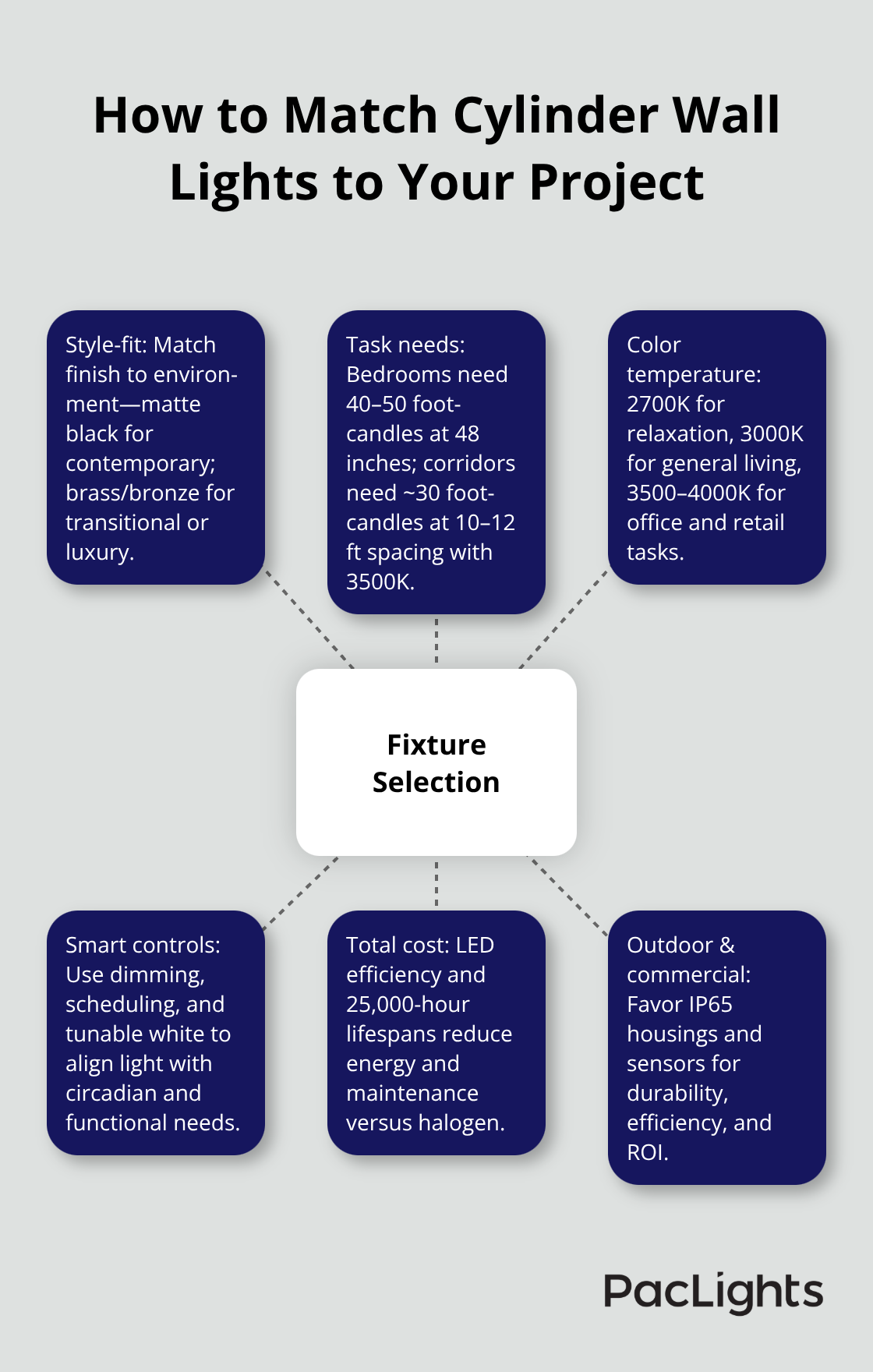
Next, evaluate actual lighting demands. A bedroom reading nook needs 40 to 50 foot-candles at the fixture, achieved with a 12-watt dimmable cylinder at 48 inches height. An office corridor requires 30 foot-candles for wayfinding safety, met with cylinders spaced 10 to 12 feet apart using 3500K color temperature for alertness. Retail displays demand 40-degree beam angles that concentrate light on merchandise while keeping surrounding areas dimmer. Mismatching style to function wastes money-a sculptural fixture in the wrong brightness level frustrates occupants and drives replacement costs upward.
Choose Color Temperature for Task and Mood
Color temperature directly impacts perceived ambiance and task performance, so treat this as a functional choice, not aesthetic preference. Warm 2700K suits residential relaxation spaces and hospitality environments; 3000K works for entryways and general residential living; 3500K to 4000K supports office work and retail. Dimmable cylinders with tunable white capabilities cost 15 to 25 percent more upfront but deliver flexibility across changing needs without rewiring. This investment pays dividends when spaces serve multiple purposes throughout the day.
Calculate Total Cost of Ownership
Long-term value emerges from LED efficiency and lifespan. A 12-watt LED cylinder at 3000K produces output matching 40-watt halogen alternatives, reducing annual energy costs by roughly 70 percent across 8 hours daily operation. With 25,000-hour lifespans, LED cylinders require replacement every 8 to 10 years versus annually for halogen, eliminating labor costs and maintenance disruption. Budget-conscious buyers often overlook this math-a 150-dollar efficient cylinder outperforms a 60-dollar inefficient fixture within 18 months when accounting for energy and replacement labor.
Maximize Outdoor and Commercial Performance
Outdoor installations amplify this advantage because IP65-rated aluminum cylinders withstand weather exposure without degradation, protecting your investment across climate swings. Smart dimming capabilities paired with occupancy sensors reduce energy consumption by 30 to 40 percent in commercial applications, directly improving ROI. Evaluate fixtures on total cost of ownership, not purchase price alone. This approach reveals which cylinders deliver genuine value across your specific timeline and usage patterns.
Final Thoughts
Cylinder wall lights design has shifted decisively toward fixtures that balance visual impact with measurable performance. The market now demands minimalist aesthetics paired with smart controls, energy efficiency, and sustainable construction-not as luxury add-ons, but as baseline requirements. Material choice and space function determine whether your installation succeeds or disappoints.
Selecting the right fixture requires honest assessment of environment, task requirements, and total cost of ownership. A 12-watt LED cylinder delivering 100+ lumens per watt outperforms cheaper halogen alternatives within 18 months when accounting for energy savings and replacement labor. Dimmable options with tunable white capabilities cost 15 to 25 percent more upfront but eliminate future rewiring when space functions change.
Real-world commercial retrofits document 40 percent energy savings when LED cylinders incorporate occupancy sensors and dimmable drivers, and proper spacing (6 to 8 feet in hallways, 10 to 12 feet in office corridors, 8 to 10 feet on exterior walls) prevents hotspots while maintaining uniform illumination. Contact PacLights to explore energy-efficient lighting solutions tailored to your project requirements and budget constraints.
Disclaimer: PacLights is not responsible for any actions taken based on the suggestions and information provided in this article, and readers should consult local building and electrical codes for proper guidance.