

Transparent cylinder pendant lights have become a staple in modern interiors because they balance form and function effortlessly. The clean lines and see-through design work with almost any décor style, from minimalist apartments to contemporary offices.
At PacLights, we’ve seen firsthand how these fixtures transform spaces by providing both visual interest and practical illumination. Whether you’re redesigning a kitchen or outfitting a commercial space, understanding how to use them effectively makes all the difference.
Why Transparent Cylinder Pendant Lights Work in Modern Design
Clear glass cylinders solve a real problem in contemporary design: how to light a space without creating visual clutter. Modern interiors reject heavy fixtures and ornate details, and transparent cylinders deliver exactly that restraint. The glass remains nearly invisible while the light becomes the focal point, which is why architects and interior designers specify them constantly for residential kitchens and commercial installations. You see the glow, not the fixture itself.
Light Transmission and Energy Efficiency
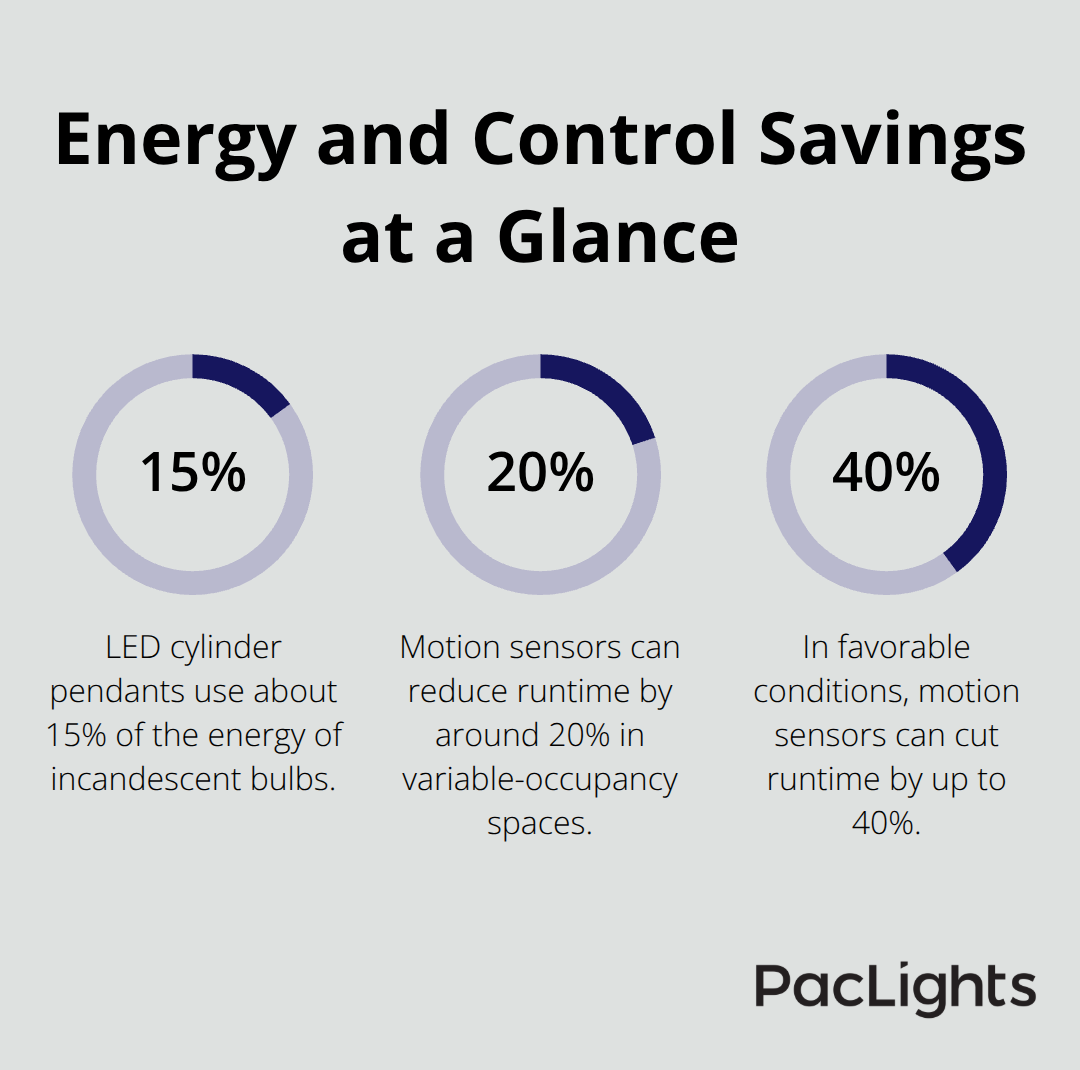
Transparency maximizes light transmission, reducing wasted output inside the fixture. LED cylinder pendants consume approximately 15 percent of the energy that traditional incandescent bulbs require, which translates to real savings over time. A single pendant replacing a 60-watt incandescent with an 8 to 10-watt LED saves roughly 250 kilowatt-hours annually at five hours per day, cutting about 40 dollars yearly at typical electricity rates. In a three-pendant kitchen setup, annual savings reach around 120 dollars, and larger commercial configurations with eight pendants running 10 to 12 hours daily save 400 to 500 dollars per year.
LED lifespans of 25,000 to 50,000 hours dramatically reduce replacement frequency compared to incandescent bulbs at roughly 1,000 hours, cutting labor downtime and maintenance costs substantially.
Material Neutrality Across Design Styles
The material itself is neutral, which means transparent cylinder pendants work equally well in Scandinavian minimalism, mid-century modern spaces, industrial lofts, and corporate interiors. The cylinder shape avoids visual competition with surrounding décor-your cabinetry, flooring, and wall colors take center stage while the fixture provides practical illumination.
Proper Installation Creates Visual Rhythm
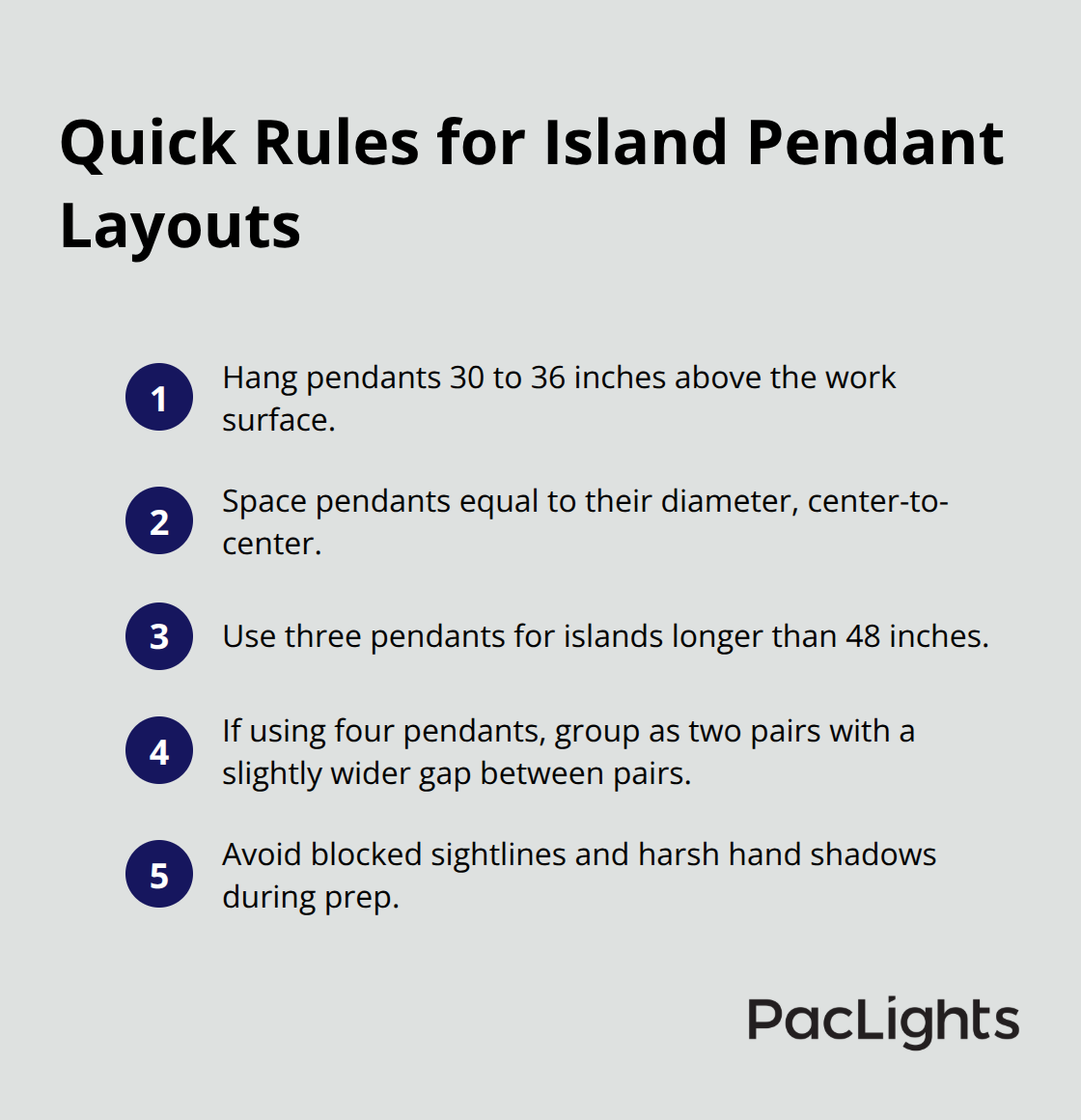
Installation height matters significantly for this balance: hang pendants 30 to 36 inches above work surfaces to maintain proper proportion and prevent headroom issues. Spacing should equal the pendant diameter, so 10-inch pendants space roughly 10 inches apart center-to-center. This creates visual rhythm without crowding. Odd-numbered clusters (three or five pendants) create better visual balance than even numbers because you can center the middle pendant, whereas even clusters require aligning two middle pendants equidistant from center.
These design principles establish the foundation for selecting and positioning your fixtures. The next section explores how different commercial and residential environments benefit from transparent cylinder pendant lighting.
Where Transparent Cylinders Shine Across Different Spaces
Transparent cylinder pendants perform differently depending on the environment, and understanding these distinctions helps you select the right fixture for your specific needs.
Office and Retail Environments
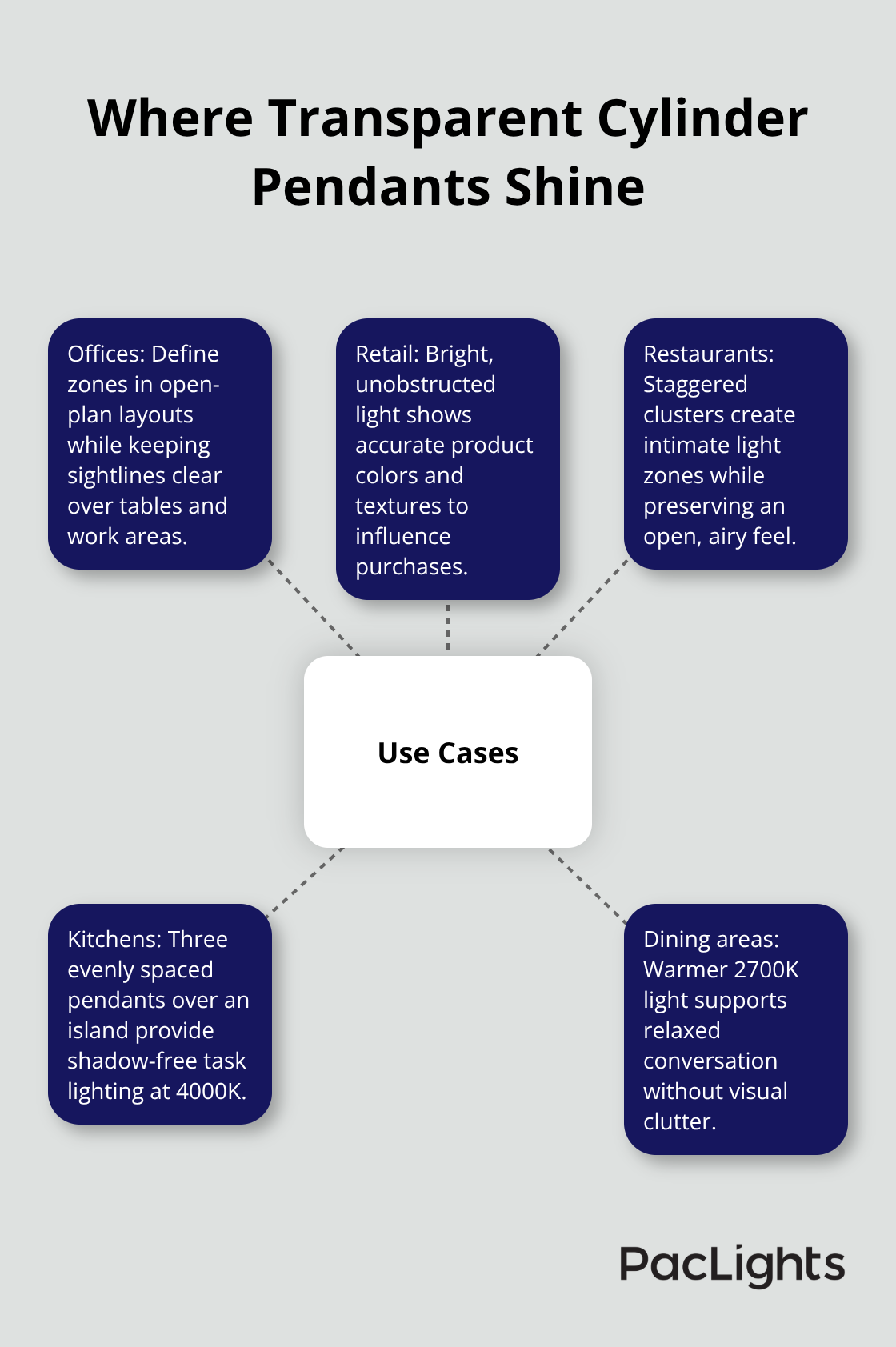
Office spaces benefit enormously from the clean aesthetic these pendants provide. In open-plan commercial environments, clusters of three to five transparent cylinders define zones without walls or barriers-hanging them above a conference table or collaborative workspace creates a light-based boundary that organizes the area visually. Retail environments gain particular advantage because customers see product colors accurately under the bright, unobstructed light that clear glass delivers. A boutique using warm white LED cylinder pendants at 3000K color temperature reveals fabric textures and garment details far better than diffused or frosted fixtures would, directly influencing purchase decisions.
Hospitality and Restaurant Settings
Restaurants and hospitality settings demand precision too. Hanging four to six pendants in a staggered pattern above a dining table creates intimate lighting zones while the transparent design keeps the space feeling open rather than enclosed. Warm white LEDs at 2700K paired with satin brass hardware deliver the ambiance hospitality venues need, and because LED fixtures consume roughly 15 percent of incandescent energy, restaurants running pendant lights 12 hours daily see substantial operational cost reductions-potentially 400 to 500 dollars annually across an eight-pendant installation.
Residential Kitchen Applications
Residential kitchens represent the most common application, and here the practical benefits become obvious immediately. Three pendants spaced evenly above an island provide task lighting that eliminates shadows on work surfaces while cool white LEDs at 4000K reveal ingredient colors and food textures with precision that warm light cannot match. The 30 to 36-inch hang height positions light directly where you need it for chopping, mixing, and food preparation, reducing eye strain during extended cooking sessions. Payback for LED conversion typically falls between 18 and 36 months, meaning homeowners recoup the fixture investment quickly through electricity savings alone.
Dining Area Lighting Strategy
Dining areas benefit from the same aesthetic restraint-a single large transparent cylinder or a pair of smaller pendants above a dining table creates a focal point without overwhelming the space visually. The key difference from kitchens lies in light color: dining spaces work better with warm white at 2700K to encourage relaxation and conversation, whereas kitchen task areas demand cooler temperatures for visibility. Transparent cylinders allow you to make this distinction clear through bulb choice alone, without changing fixture appearance. The next section explores how design considerations and installation techniques maximize the performance of these fixtures in any setting.
Design Considerations and Installation Tips
Sizing Pendants to Match Your Island
Pendant size and hanging height work together to determine whether your installation succeeds or fails. A common mistake is choosing pendants that look good in product photos but overwhelm or underwhelm the actual space. For kitchen islands, the pendant diameter should never exceed one-third the width of the island itself-a 36-inch-wide island pairs well with 10 to 12-inch pendants, while a 48-inch island accommodates 14 to 16-inch fixtures. This measurement matters more than aesthetic preference because improper sizing either wastes light or creates the exact shadow problems you installed task lighting to eliminate.
Hanging Height and Spacing Rules
Hanging height at 30 to 36 inches above the work surface prevents both the pendant from blocking sightlines and the light from casting shadows on your hands during food preparation. Spacing follows the pendant diameter rule: 10-inch pendants space 10 inches apart center-to-center, which prevents both clustering and gaps that fragment the visual rhythm. For islands longer than 48 inches, three pendants create better balance than four because odd numbers allow you to center the middle fixture while maintaining symmetrical spacing on either side. If you need four pendants across a longer island, position them as two pairs with slightly wider spacing between the pairs rather than spacing them uniformly.
Commercial Installation Precision
Commercial installations demand more precision because the cost of mistakes scales with square footage. Plan clearance by subtracting 12 inches from your surface length to determine how many pendants fit without encroaching within 6 inches of walls or edges-this prevents both visual cramping and fixture collision with people moving through the space. The fixture weight matters too-most residential pendants weigh 2 to 5 pounds, but larger commercial clusters require electrical boxes rated for 10 to 15 pounds.
Smart Controls and Compatibility
Dimmable LED bulbs paired with smart controls amplify both functionality and savings: motion sensors reduce runtime by 20 to 40 percent in spaces with variable occupancy, while daylight harvesting cuts daytime usage substantially in naturally lit areas. Verify compatibility before purchasing because not all LED bulbs work with all dimmers, and wireless smart bulbs offer easier retrofits than hardwired systems for existing installations. Advanced lighting controls enable centralized management across multiple fixtures and spaces without requiring complete rewiring.
Creating Visual Interest Through Staggered Heights
When clustering transparent cylinders, stagger or cascade them at slightly different heights rather than hanging all fixtures at identical lengths-this creates architectural interest and prevents the installation from feeling flat or monotonous, while maintaining the clean aesthetic that makes transparent cylinders valuable in the first place.
Final Thoughts
Transparent cylinder pendant lights deliver measurable advantages that extend far beyond aesthetics. LED technology cuts energy consumption to roughly 15 percent of what incandescent bulbs require, translating to annual savings of 40 to 500 dollars depending on your installation size and usage patterns. Payback periods of 18 to 36 months mean your fixture investment pays for itself through electricity savings alone, after which operating costs drop substantially. LED lifespans of 25,000 to 50,000 hours eliminate the constant replacement cycles that plague traditional bulbs, reducing both maintenance labor and long-term fixture costs.
Selecting the right fixtures requires matching pendant diameter to your space dimensions, respecting the 30 to 36-inch hang height rule, and spacing fixtures according to their width. Odd-numbered clusters create better visual balance than even arrangements, and staggered heights add architectural interest without sacrificing the clean aesthetic that makes these fixtures valuable. For commercial installations, verify electrical box weight ratings and plan clearance carefully to prevent safety issues and visual cramping.
We at PacLights understand that lighting decisions affect both your immediate environment and your long-term operating costs. Our team provides free lighting layout designs and ROI assessments to help you make informed decisions about your transparent cylinder pendant light investment.
Disclaimer: PacLights is not responsible for any actions taken based on the suggestions and information provided in this article, and readers should consult local building and electrical codes for proper guidance.