

Cylinder pendant lighting has become a staple in modern interior design for good reason. These fixtures combine clean geometry with practical illumination, making them work in kitchens, dining areas, and commercial spaces alike.
At PacLights, we’ve seen how the right pendant can transform a room’s entire aesthetic. This guide walks you through everything you need to know about selecting, sizing, and installing cylinder pendants that actually work for your space.
Why Cylinder Pendants Dominate Modern Design
Cylinder pendants succeed because they strip away visual noise while delivering serious light output. The geometry works-a simple cylindrical form creates a clean sightline without the visual clutter of ornate shades or dangling crystals. In kitchens, this matters because you look at the fixture multiple times per day. A 10W LED cylinder with a matte black finish delivers roughly 800 lumens of focused downward light, eliminating the distraction factor while keeping your eyes on the work surface. The form also adapts across design movements. A polished brass cylinder reads warm and inviting in transitional spaces, while a painted velvet black cylinder fits seamlessly into contemporary or industrial settings. This isn’t theoretical-it’s about material finish doing the heavy lifting. Warm metals like brass and gold create a welcoming tone in residential kitchens and dining areas, while cooler metals feel sleek and professional in offices. The fixture itself stays visually consistent; only the finish changes the entire mood of the room.
Light Output Without Compromise
Cylinder pendants deliver task illumination precisely where you need it. For an eight-foot kitchen island, space three pendants about two feet apart centerline-to-centerline to avoid gaps and dark zones-that’s roughly 2,400 lumens total across the workspace. Hang them 24 to 30 inches above work surfaces to balance task lighting with clear sightlines so people can actually see each other.
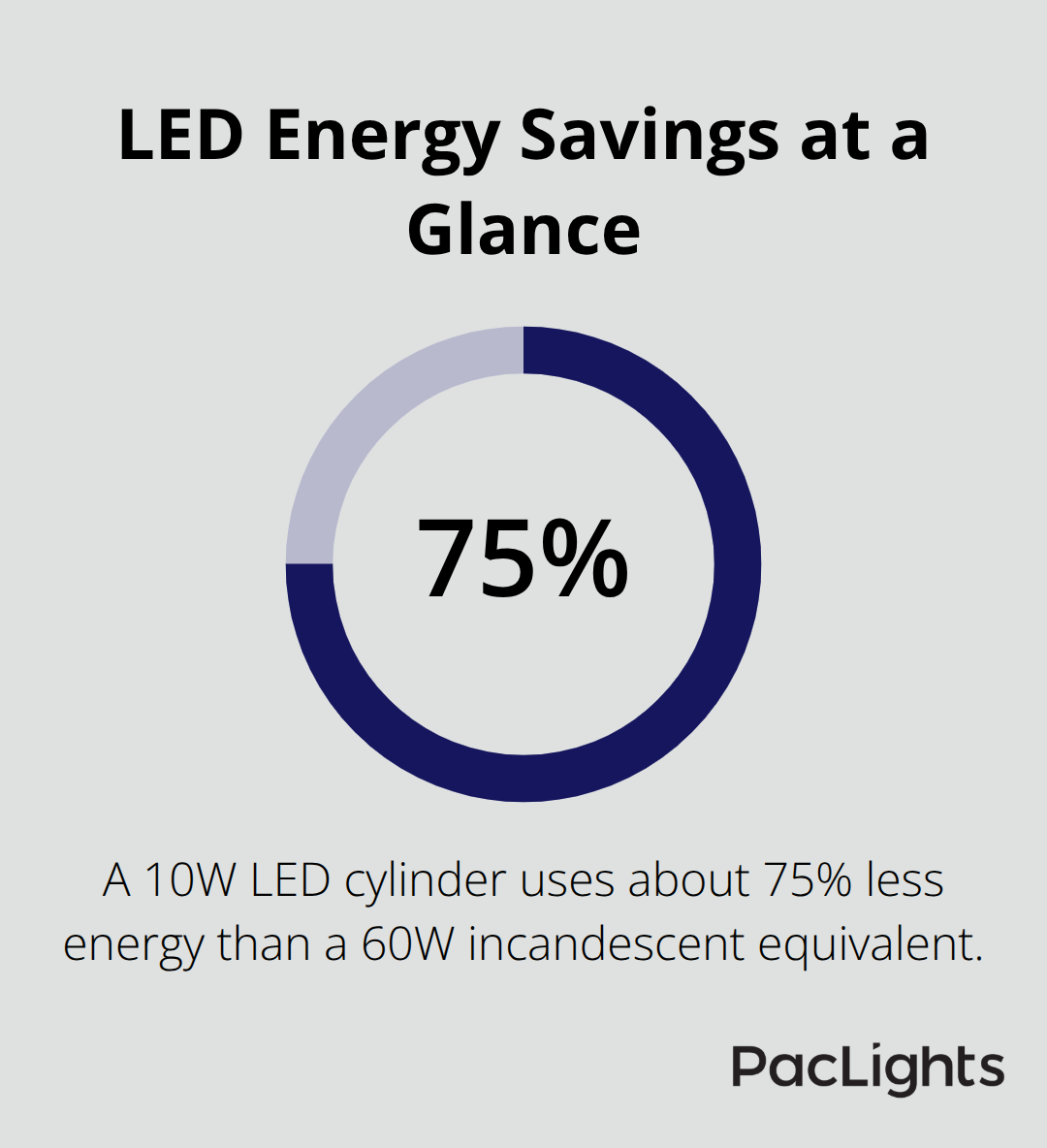
A 10W LED cylinder uses about 75% less energy than a 60W incandescent equivalent, cutting your electricity costs to roughly $180 per year for a typical residential island setup running 12 hours daily. In commercial spaces with 50 pendants, expect annual savings around $1,050. The payback window sits at 18 to 24 months because LED lifespans range from 25,000 to 50,000 hours, dramatically reducing replacement frequency and labor costs. This makes cylinder pendants a financial decision, not just an aesthetic one.
Material Selection Drives Performance
Material choice directly affects maintenance and longevity. Satin finishes cost about 10 to 15% more upfront but reduce cleaning needs compared with brass or copper finishes-a practical advantage in high-traffic kitchens. Coastal environments benefit from aluminum housings with 3-mil powder coatings to resist corrosion and lower replacement costs over time. Size flexibility also matters. Available widths span 10 and 12 inches with heights ranging roughly from 25 to 48 inches depending on the model, so you fit pendants in tight corridors or over expansive islands without compromise. Color temperature options at 3000K, 3500K, and 4000K let you match existing ambient lighting or shift the mood-3000K creates warmth for dining, while 4000K delivers the neutral, focused light commercial spaces demand.
Sizing and Spacing Shape Your Results
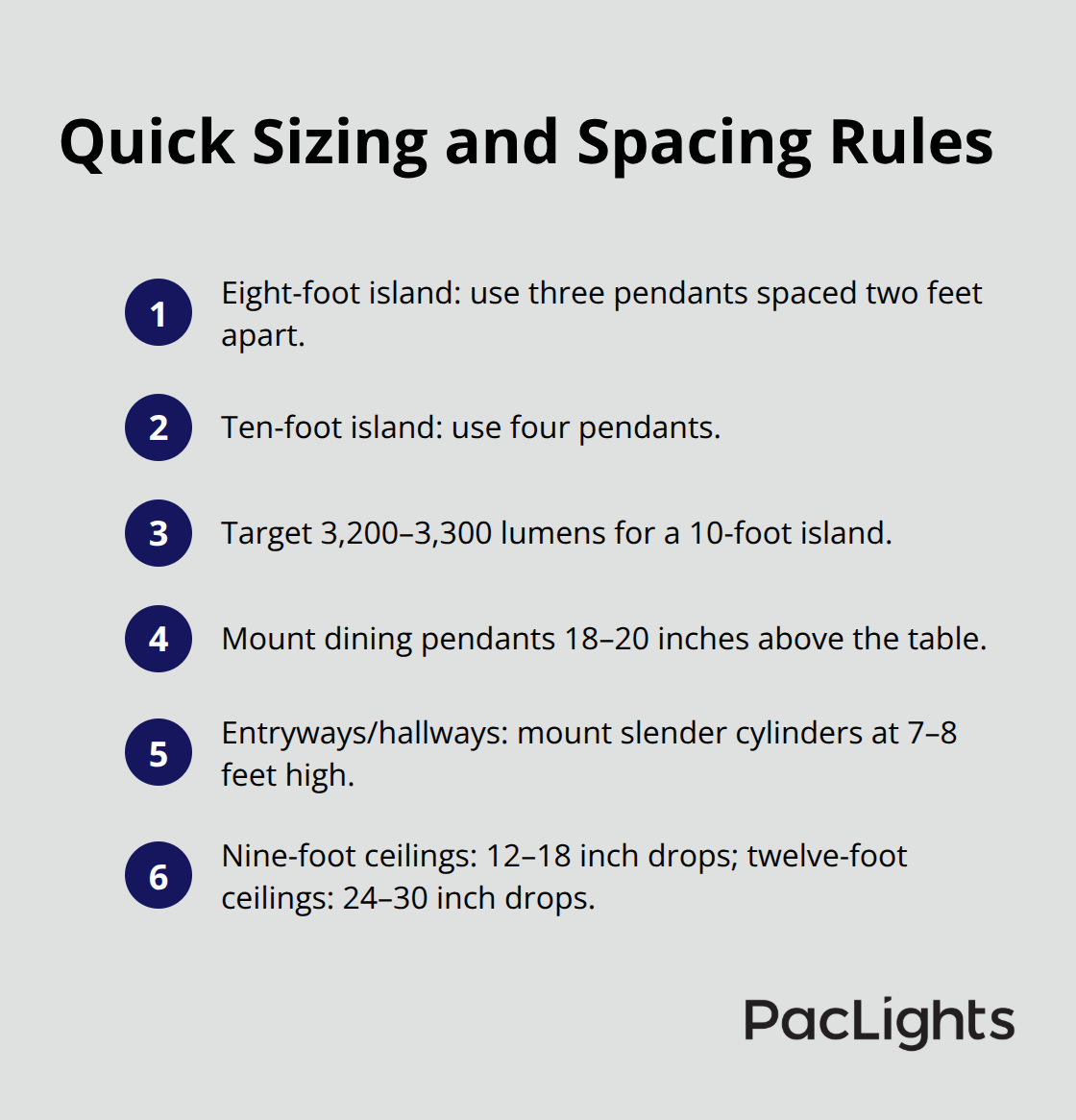
The right proportions transform how light actually performs in your space. For a ten-foot kitchen island, use four pendants to cover the surface evenly, aiming for 3,200 to 3,300 lumens total. Dining tables benefit from one large cylinder or two to three smaller pendants 18 to 20 inches above the table surface to frame the table without blocking conversation. Entryways and hallways perform best with slender cylinders mounted at 7 to 8 feet high to guide movement while preserving sightlines. This specificity means you’re not forcing a fixture to work harder than it should. Nine-foot ceilings typically use 12 to 18 inch pendant drops; twelve-foot ceilings use 24 to 30 inch drops to maintain proportions and task illumination. These measurements aren’t arbitrary-they determine whether your lighting scheme actually solves the problem you’re trying to address.
With the right size, material, and spacing locked in, the next step involves understanding how these fixtures perform in specific environments and what installation considerations matter most.
Design Considerations for Cylinder Pendant Lighting
Ceiling Height Dictates Your Pendant Drop
Cylinder pendant dimensions determine whether light reaches your work surface or leaves dark gaps across your island. Ceiling height controls everything else in your layout. Nine-foot ceilings call for 12 to 18 inch pendant drops, while twelve-foot ceilings need 24 to 30 inch drops to maintain visual proportion and task illumination. Undersizing the drop wastes light output by pushing fixtures too close to the ceiling; oversizing creates visual imbalance and makes the fixture feel disconnected from the workspace. Standard residential wiring supports pendant drops up to 24 inches without reinforcement, and adjustable cables allow height fine-tuning after installation if your initial measurements need adjustment.
Spacing and Quantity for Kitchen Islands
For kitchen islands, the math is straightforward: an eight-foot island needs three pendants spaced two feet apart centerline-to-centerline, delivering roughly 2,400 lumens total. A ten-foot island requires four pendants to eliminate dark zones, targeting 3,200 to 3,300 lumens across the surface. Hang them 24 to 30 inches above work surfaces so people can see each other without craning their necks. In dining areas, one large cylinder or two to three smaller pendants mounted 18 to 20 inches above the table frames the space without blocking sightlines during conversation. Entryways and hallways perform best with slender cylinders at 7 to 8 feet high, guiding movement while keeping sight paths clear.
Width and Height Options for Any Space
Width options typically span 10 and 12 inches, with heights ranging from 25 to 48 inches depending on the model, so tight corridors and expansive islands both have solutions without forcing compromise. This flexibility means you fit the fixture to your space rather than adapting your space to the fixture. LED lifespans of 25,000 to 50,000 hours mean fewer bulb replacements and lower maintenance labor costs over the fixture’s life.
Material and Finish Impact on Maintenance
Satin finishes cost 10 to 15% more upfront but reduce cleaning demands compared with brass or copper finishes, which patina and require regular polishing in high-traffic kitchens. Coastal environments demand aluminum housings with 3-mil powder coatings to resist salt-air corrosion and prevent expensive replacements. Polished brass reads warm in transitional spaces, painted velvet black fits industrial settings, and brushed nickel delivers sleek professionalism in offices. The cylindrical form stays consistent while material choice controls whether a space feels inviting or austere.
Color Temperature and Light Quality
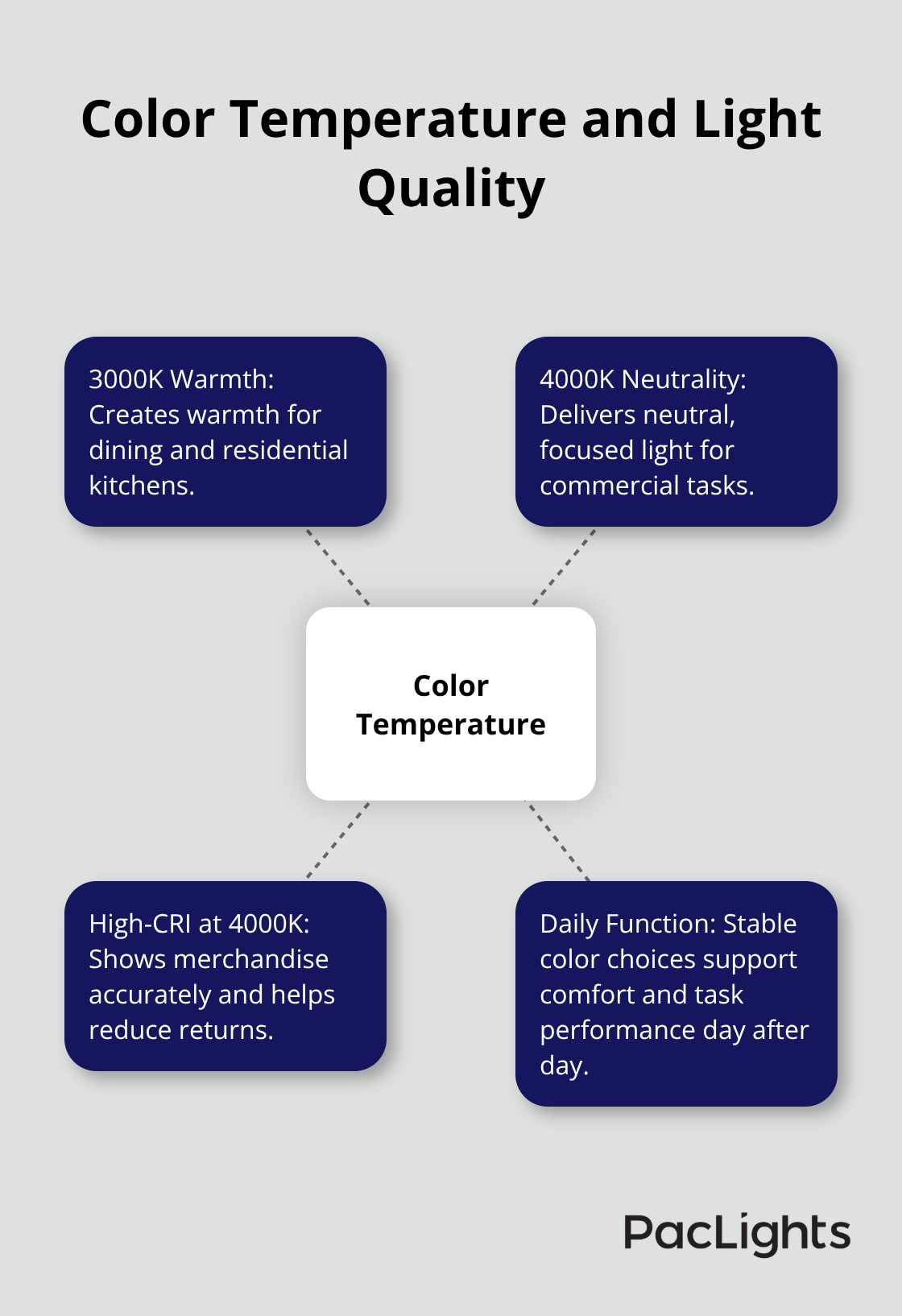
Color temperature selection matters equally to material choice. 3000K creates warmth for dining and residential kitchens, while 4000K delivers the neutral, focused light commercial spaces demand for accurate color rendering and task performance. High-CRI LEDs around 4000K help retailers show merchandise accurately and reduce returns, according to retail lighting best practices.
These decisions shape not just how your space looks, but how it functions day after day. With dimensions, materials, and color temperature locked in, the next step involves understanding how these fixtures perform in specific environments and what installation considerations matter most.
Where Cylinder Pendants Perform Best
Kitchen Islands: Precision Spacing and Height
Kitchen islands demand precision because the fixture becomes part of your daily workflow. An eight-foot island with three pendants spaced two feet apart centerline-to-centerline delivers roughly 2,400 lumens across the work surface. Mount them 24 to 30 inches above the countertop so you can see prep tasks without shadows and maintain eye contact with people on the opposite side.
A ten-foot island needs four pendants targeting 3,200 to 3,300 lumens total to eliminate dark zones that waste light and create visual dead spots. This specificity prevents you from forcing a fixture to work harder than it should.
Dining Areas: Framing Without Obstruction
Dining areas require different calculations. One large cylinder or two to three smaller pendants hung 18 to 20 inches above the table frame the space without blocking sightlines during conversation. The fixture becomes a visual anchor, not an obstruction. This vertical positioning matters because it directs light downward onto the table surface where it highlights food and creates intimacy without harsh overhead glare.
Entryways and Hallways: Guiding Movement
Entryways and hallways work differently still. Mount slender cylinders at 7 to 8 feet high to guide movement and preserve sightlines so people don’t feel claustrophobic walking through the space. This height directs light downward onto floor surfaces where it guides traffic without creating harsh overhead glare that makes spaces feel cramped.
Commercial Spaces: Automation and Energy Control
Commercial spaces require networked controls that residential kitchens simply don’t need. In retail environments, high-CRI LEDs around 4000K help show merchandise accurately and reduce returns because customers see true colors before purchasing. Pair networked lighting with motion sensors and daylight harvesting to reduce energy use by 40 to 60%, according to commercial lighting automation standards. A 50-pendant installation running 12 hours daily saves roughly $1,050 annually in electricity alone, with payback occurring within 18 to 24 months due to LED lifespans of 25,000 to 50,000 hours that slash replacement labor costs.
Hospitality Environments: Mood and Material Durability
Hospitality spaces benefit from adjustable color temperature and dimming capabilities that shift the mood throughout the day. 3000K at dinner service creates warmth and intimacy, while 4000K during lunch service delivers clarity for reading menus and seeing food presentation. Standard residential wiring supports pendant drops up to 24 inches without reinforcement, and adjustable cables allow fine-tuning after installation if spacing needs adjustment. Coastal hospitality properties demand aluminum housings with 3-mil powder coatings to resist salt-air corrosion and eliminate expensive replacements that interrupt service. Material selection determines long-term cost. Satin finishes cost 10 to 15% more initially but reduce cleaning demands compared with brass or copper finishes that require regular polishing in high-traffic commercial kitchens. The cylinder form adapts across all these environments because the geometry itself stays consistent while material choice and mounting height control how each space functions and feels.
Final Thoughts
Cylinder pendant lighting delivers measurable results because the design solves real problems. Clean geometry eliminates visual clutter while precise spacing and height calculations ensure light reaches your work surface without gaps or shadows. Material selection directly impacts maintenance costs and longevity, with satin finishes reducing cleaning demands and aluminum housings resisting coastal corrosion (a critical advantage for properties near salt water).
A 10W LED cylinder delivers roughly 800 lumens while using 75% less energy than incandescent equivalents, cutting annual electricity costs to around $180 for residential setups or $1,050 for 50-pendant commercial installations. LED lifespans of 25,000 to 50,000 hours mean fewer replacements and lower maintenance labor over time, with payback occurring within 18 to 24 months. This makes cylinder pendant lighting a financial decision alongside an aesthetic one.
We at PacLights understand that lighting decisions impact both your space and your budget. Our team offers free lighting layout designs and ROI assessments to help you optimize fixture placement and calculate energy savings specific to your project. Contact PacLights to explore customizable cylinder pendant solutions that perform exactly as intended for your space.
Disclaimer: PacLights is not responsible for any actions taken based on the suggestions and information provided in this article, and readers should consult local building and electrical codes for proper guidance.