

NSF certified light fixtures aren’t just another compliance checkbox. They’re the difference between a facility that runs smoothly and one that faces costly shutdowns, failed inspections, and equipment failures.
At PacLights, we’ve seen firsthand how the right lighting certification protects your operations. This guide breaks down what NSF certification actually means, which industries need it most, and why it’s one of the smartest investments you can make for your facility.
What NSF Certification Actually Protects
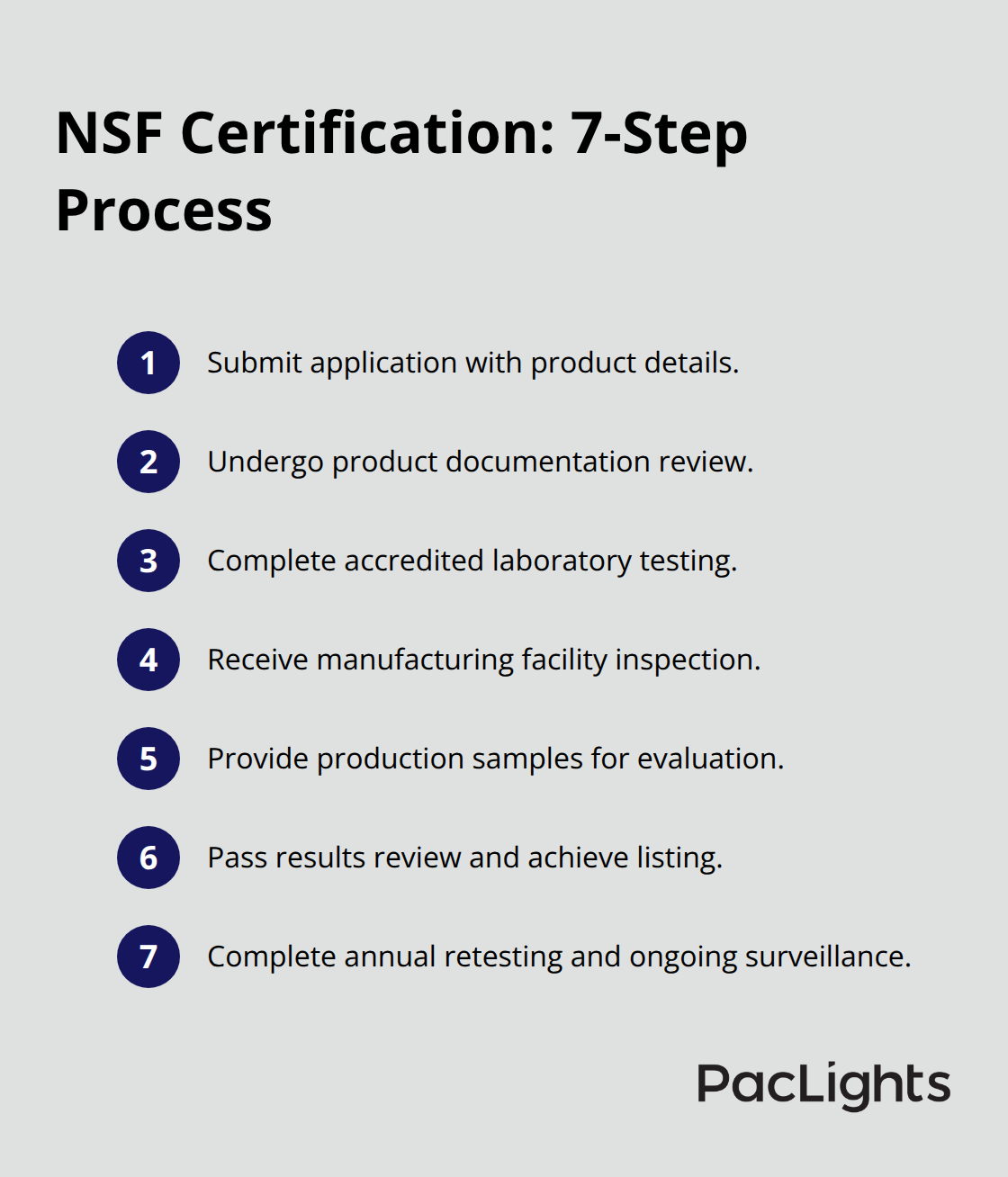
NSF certification isn’t about meeting a minimum standard-it’s about meeting the standards that prevent your facility from becoming a liability. NSF International, an independent third-party certifier, tests lighting fixtures against NSF/ANSI Standard 2 to verify they withstand the harsh realities of food processing, pharmaceutical manufacturing, and healthcare environments. The certification process involves seven steps: application, product evaluation, lab testing, manufacturing facility inspection, sampling, results review, listing, and annual retesting. This means a fixture with NSF certification has undergone physical testing in labs and its manufacturing facility has received inspection to confirm consistent quality. Non-certified fixtures might look similar, but they haven’t received this rigorous verification.
The difference matters because FDA Food Code and USDA regulations specify exact lighting requirements-at least 108 lux (10 footcandles) in walk-in refrigeration, 215 lux (20 footcandles) in food-service areas, and 540 lux (50 footcandles) where employees handle food directly. A fixture that meets brightness on paper but fails washdown durability or contamination resistance becomes a compliance violation waiting to happen.
Material Composition Determines Reliability
NSF-certified fixtures must use shatterproof polycarbonate or acrylic lenses instead of glass, corrosion-resistant housings, and sealed construction to prevent moisture and bacteria buildup. These aren’t aesthetic choices-they’re functional requirements. A fixture with a standard glass lens shatters during high-pressure washdowns common in food plants, introducing glass fragments into products and triggering recalls. Corrosion-resistant materials withstand sanitizing chemicals like bleach and quaternary ammonia without degrading, while sealed housings with smooth exterior surfaces eliminate crevices where pathogens hide. Non-certified fixtures often use standard aluminum or steel housings that corrode within months in these environments, leading to premature failure and frequent replacement. IP69K ratings on certified fixtures confirm they resist both dust intrusion and high-pressure, high-temperature water jets-the highest ingress protection available. Without this rating, moisture penetrates the fixture, compromises electrical safety, and shortens lifespan dramatically.
The Real Cost of Compliance Failures
Facilities operating non-certified lighting face regulatory violations that extend far beyond fines. A failed inspection results in fixture removal until compliant lighting is installed, production shutdowns until corrections occur, and potential facility closure in severe cases. USDA FSIS regulations require up to 200 foot-candles of illumination in inspection areas with a color rendering index of at least 85-specifications that demand fixtures specifically engineered for food safety, not generic industrial lights. When a non-certified fixture fails during operation, replacement costs multiply because the facility must source compliant alternatives quickly, often at premium pricing due to urgency. NSF-certified fixtures deliver 50,000 to 100,000-hour lifespans with LED technology, meaning fewer replacements over a decade. In cold storage environments, the advantage becomes even more pronounced-fluorescent light output drops by as much as 80 percent in freezers compared to LED equivalents, requiring more fixtures to meet FDA standards. Certified LED fixtures solve this problem with consistent output across temperature ranges, reducing the total fixture count needed and lowering installation costs upfront.
Why Washdown Environments Demand Certified Solutions
Food processing plants, beverage facilities, and pharmaceutical manufacturing sites subject fixtures to extreme conditions that separate certified from non-certified products. High-pressure washdowns, temperature fluctuations, and exposure to harsh chemicals occur daily in these operations. A fixture without NSF certification may function adequately in a standard warehouse but fails rapidly when exposed to these stressors. Sealed polymer and aluminum housings with chemically welded end caps (rather than gasketed seams) prevent moisture intrusion and maintain structural integrity through thousands of washdown cycles. Non-certified fixtures with standard seals deteriorate quickly, allowing water and contaminants to penetrate internal components. NSF-certified fixtures also feature seamless construction that eliminates dust accumulation points and simplifies cleaning protocols. This design philosophy directly supports HACCP compliance and reduces the risk of product contamination that could trigger recalls or facility shutdowns.
Making the Transition to Certified Lighting
Upgrading to NSF-certified fixtures requires understanding your facility’s specific requirements. Different zones demand different light levels and ratings-walk-in refrigeration needs 108 lux, while food-prep surfaces require 540 lux. Selecting fixtures with appropriate IP ratings (IP69K for full washdown capability, IP65 or IP66 for splash zones) ensures compliance without over-specifying. LED NSF-certified fixtures offer selectable color temperatures from 3000K to 5000K, allowing you to match lighting to your facility’s tasks and cleanliness standards. Many certified fixtures also qualify for DLC Premium status, which makes them eligible for utility rebates that offset initial investment costs. When you evaluate lighting solutions, verify NSF listing, confirm IP ratings match your environment, and check for shatterproof construction and sealed housings. These specifications transform your facility’s lighting from a compliance risk into a reliable operational asset that protects product quality and worker safety.
Industries That Require NSF Certified Lighting Most
Food and Beverage Processing Plants Face the Strictest Standards
Food and beverage processing plants operate under the strictest lighting requirements in commercial industry. The FDA Food Code mandates specific illumination levels that non-certified fixtures cannot maintain reliably.
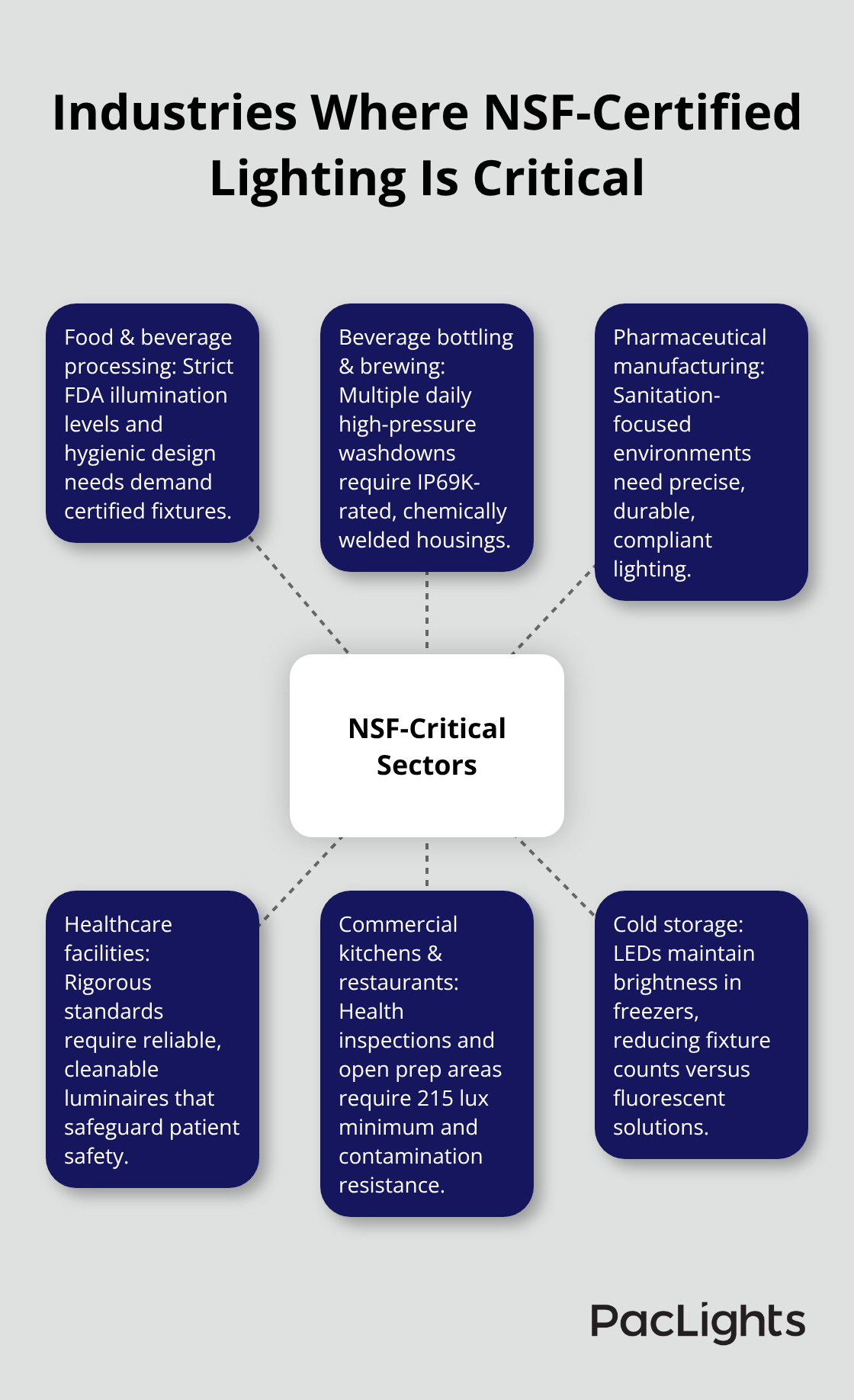
In processing areas where employees handle raw ingredients or packaged products, facilities must deliver 540 lux (50 footcandles) of light with a color rendering index above 80 to catch contamination and quality issues. Walk-in refrigeration and dry storage require at minimum 108 lux, but standard LED fixtures lose output in cold environments, forcing operators to install additional fixtures at higher costs.
NSF-certified LED fixtures maintain consistent brightness across temperature ranges from minus 20 degrees Celsius to plus 50 degrees Celsius, meaning you need fewer total fixtures to meet FDA standards. Beverage bottling and brewing operations face even harsher conditions because high-pressure washdowns occur multiple times daily. Non-certified fixtures corrode within months when exposed to sanitizing chemicals and moisture jets; NSF-certified fixtures with IP69K ratings and chemically welded housings survive thousands of washdown cycles without degradation.
The Real Cost Difference in Processing Facilities
The difference translates directly to maintenance budgets. A facility running 50,000 square feet of processing space might replace non-certified fixtures every 18 to 24 months, while NSF-certified LED solutions last 50,000 to 100,000 hours, reducing replacement frequency to once per decade or longer. This extended lifespan eliminates the constant cycle of purchasing, installation, and downtime that drains operational budgets.
Pharmaceutical Manufacturing and Healthcare Operations
Pharmaceutical manufacturing and healthcare facilities operate under equally rigorous standards but face different pressures. USDA FSIS regulations require up to 200 foot-candles in inspection areas with specific color accuracy, standards that demand fixtures engineered specifically for sanitation-heavy environments. These regulations exist because inadequate lighting directly compromises product safety and worker protection in environments where precision matters.
Commercial Kitchens and Restaurants Cannot Overlook Compliance
Commercial kitchens and restaurant operations cannot ignore NSF certification either, especially operations with open food preparation or self-service buffet areas that require 215 lux minimum. A single failed health inspection due to inadequate or contaminated lighting forces temporary closure and damages reputation permanently. Facilities that choose NSF-certified fixtures eliminate this risk entirely while gaining energy savings that offset initial investment through utility rebates. DLC Premium-rated NSF fixtures qualify for substantial rebates from most utility providers, reducing net costs significantly.
Making the Investment Decision
The path forward requires selecting fixtures that match your facility’s specific operational demands and environmental conditions. Different zones demand different ratings and brightness levels, and understanding these distinctions determines whether your lighting investment protects operations or creates compliance vulnerabilities. The next section examines how to evaluate NSF-certified fixtures and calculate the long-term financial benefits that make this investment one of the smartest decisions facility managers can make.
How NSF Certified Fixtures Cut Operating Costs
Replacement Cycles That Drain Budgets
NSF-certified LED fixtures eliminate the financial drain that non-certified lighting creates. A facility operating 50,000 square feet of processing space with non-certified fixtures replaces them every 18 to 24 months due to corrosion, moisture damage, and material degradation in washdown environments. Each replacement cycle costs thousands in parts, labor, and production downtime.
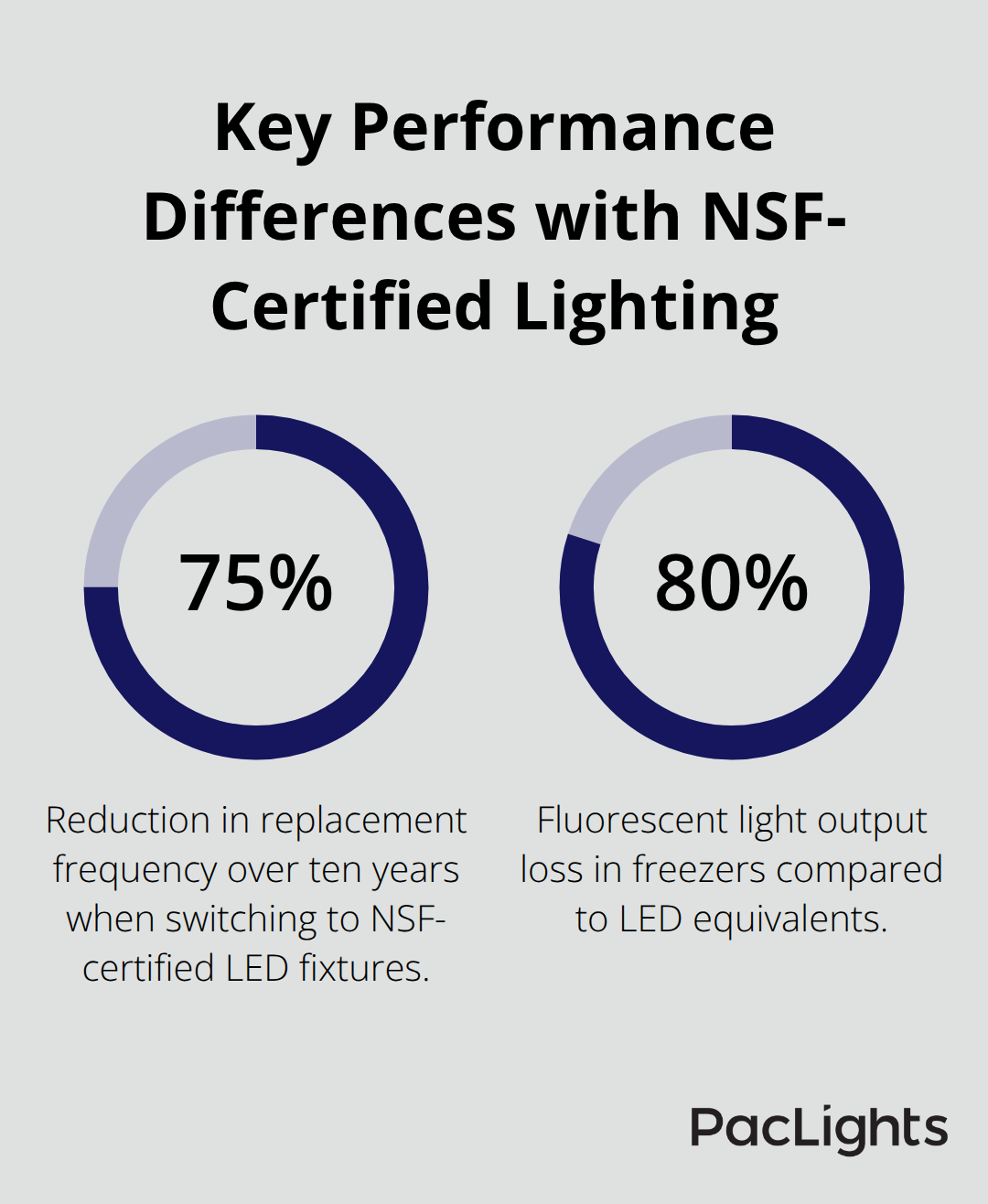
NSF-certified fixtures with 50,000 to 100,000-hour lifespans extend replacement intervals to a decade or longer, cutting replacement frequency by 75 percent or more over ten years. If a facility spends 15,000 dollars annually replacing failed non-certified fixtures, switching to certified solutions eliminates that recurring expense almost entirely.
Energy Consumption Cuts Electricity Bills in Half
Energy consumption creates the second major cost differential. LED NSF-certified fixtures deliver 130 lumens per watt or higher, compared to 60 to 80 lumens per watt for older fluorescent and metal halide systems. A 200-watt NSF LED high bay produces output equivalent to a 400-watt metal halide fixture, cutting electricity consumption in half. For a facility running 100 high bays continuously, this difference amounts to roughly 20,000 kilowatt-hours annually, translating to 2,000 to 3,000 dollars in energy savings depending on regional rates. Over a decade, energy savings alone exceed 20,000 dollars.
Many NSF-certified fixtures carry DLC Premium certification, which qualifies them for utility rebates ranging from 300 to 800 dollars per fixture in most regions. A facility installing 50 fixtures could capture 15,000 to 40,000 dollars in immediate rebates, cutting net installation costs dramatically and accelerating payback timelines to two to three years instead of five to seven years.
Regulatory Violations Cost Far More Than Fines
Regulatory compliance violations impose costs that dwarf all other expenses. A single failed inspection in a food processing facility triggers production shutdowns lasting days or weeks while non-compliant fixtures are removed and replacements installed. During shutdown periods, a mid-sized facility loses 5,000 to 15,000 dollars daily in revenue while fixed costs continue. Fines from FDA or USDA violations range from 1,000 to 100,000 dollars depending on severity, and repeat violations trigger escalating penalties. Worst-case scenarios result in facility closure until compliance is achieved, a financial catastrophe that destroys operational continuity. NSF-certified fixtures eliminate this risk entirely because they meet all regulatory lighting requirements from installation forward.
Cold Storage Requires Fewer Fixtures With LED Technology
Cold storage environments amplify cost advantages further. Fluorescent fixtures lose as much as 80 percent of light output in freezers, forcing facilities to install double or triple the fixture count to meet FDA minimum of 108 lux in walk-in refrigeration. NSF-certified LED fixtures maintain consistent output across temperature ranges from minus 20 to plus 50 degrees Celsius, requiring 30 to 50 percent fewer total fixtures in cold zones. This reduction in fixture count cuts installation labor, wiring, and materials significantly while lowering future replacement costs proportionally.
Maintenance Labor Drops With Seamless Construction
Maintenance labor represents another overlooked cost advantage. NSF-certified fixtures feature seamless polymer and aluminum construction with smooth exterior surfaces that resist bacteria buildup and simplify cleaning. Non-certified fixtures with crevices and exposed components create maintenance headaches, requiring specialized cleaning protocols and frequent inspections. Facilities operating NSF-certified solutions report reduced sanitation-related maintenance hours because fixtures integrate cleanly into facility design rather than creating contamination risks that demand constant attention and documentation.
Final Thoughts
NSF certified light fixtures transform facility lighting from a compliance burden into a financial asset that pays dividends across maintenance, energy, and regulatory costs. Facilities operating these fixtures spend less on replacements, consume less electricity, and eliminate the catastrophic costs of failed inspections and shutdowns. Over a decade, the savings compound dramatically-reduced replacement cycles alone save tens of thousands of dollars, while energy efficiency cuts electricity bills by 40 to 50 percent compared to older systems.
Selecting the right NSF certified light fixtures requires matching them to your facility’s specific zones and operational demands. Walk-in refrigeration needs different specifications than food-prep surfaces, and washdown environments demand IP69K ratings that standard fixtures cannot provide. Start by identifying your facility’s light level requirements based on FDA Food Code standards, then verify that candidate fixtures carry NSF certification, appropriate IP ratings, shatterproof construction, and sealed housings.
We at PacLights understand that facility lighting decisions require balancing compliance, performance, and cost. Contact PacLights today to discuss how NSF certified light fixtures can reduce your operating costs while protecting your facility from compliance risks.
Disclaimer: PacLights is not responsible for any actions taken based on the suggestions and information provided in this article, and readers should consult local building and electrical codes for proper guidance.