

NSF approved light fixtures aren’t just another compliance checkbox. They’re the difference between a facility that meets standards and one that actually protects its customers and staff.
At PacLights, we’ve seen firsthand how the right lighting certification prevents contamination risks, extends equipment lifespan, and keeps operations running smoothly. This guide walks you through what NSF approval means and why it matters for your business.
What NSF Approval Actually Protects
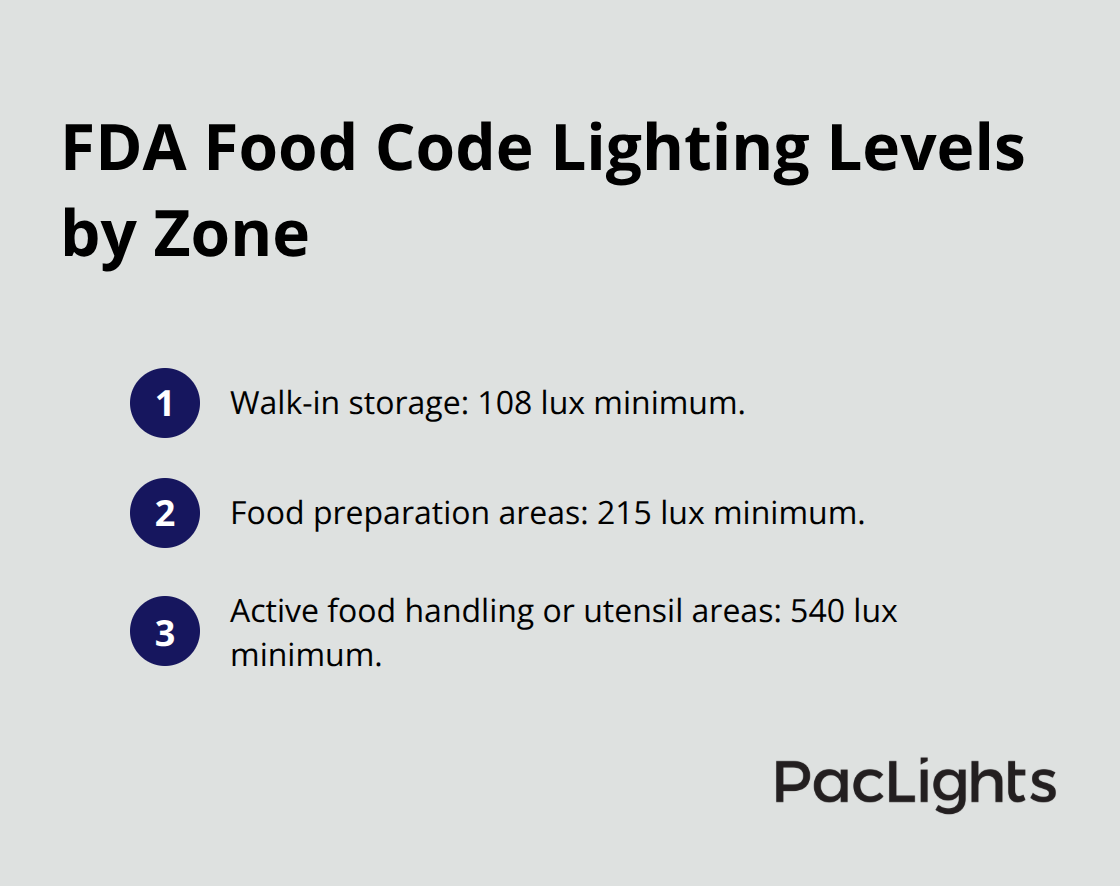
NSF certification means your lighting fixtures have passed rigorous third-party testing and annual facility inspections to meet NSF/ANSI 2 standards. This certification covers everything from shatterproof construction using polycarbonate or acrylic lenses to corrosion-resistant materials that withstand harsh cleaning chemicals. NSF-certified fixtures must achieve specific IP ratings-at minimum IP65 for standard environments, but IP69K for high-pressure washdown areas where food processing or intensive sanitation occurs. The FDA Food Code requires different lighting levels depending on the zone: 108 lux in walk-in storage, 215 lux where food is prepared, and 540 lux where employees handle food or utensils. NSF approval guarantees your fixtures meet these footcandle requirements while resisting water, dust, and contaminants that could compromise food safety or patient care.
The certification process itself involves seven steps, including product evaluation, lab testing, facility inspection, and annual re-inspection, which means NSF-certified manufacturers maintain compliance year after year rather than a one-time approval.
Why Shatterproof Design Eliminates Contamination Liability
Glass fixtures in food processing or healthcare environments create a contamination liability that NSF certification eliminates entirely. A single broken bulb or lens fragment can shut down an entire production line or force a facility closure until the area is deemed safe. NSF-certified fixtures use shatterproof materials and sealed housings that prevent any glass from entering food zones or sterile medical areas. This design reduces maintenance costs because your staff spends less time on emergency repairs and more time on operations. NSF-certified high bay lights operate in temperatures from -40°F to 113°F, and vapor-tight fixtures handle even colder environments in walk-in freezers, so you get durability across diverse facility conditions. The combination of IP69K protection, easy-to-clean smooth surfaces, and corrosion-resistant construction means these fixtures survive repeated washdowns and harsh cleaning agents without degrading performance.
Energy Efficiency and Compliance Reinforce Each Other
NSF-certified LED fixtures deliver around 130 lumens per watt in high bay applications, which translates to significant electricity cost reductions compared to traditional lighting. Many facilities report energy savings up to 70% when upgrading to NSF-certified LEDs, and these fixtures carry typical lifespans of 50,000 to 75,000 hours, cutting replacement frequency dramatically. DLC Premium certification on many NSF fixtures signals superior energy efficiency and often qualifies your facility for utility rebates and incentives.
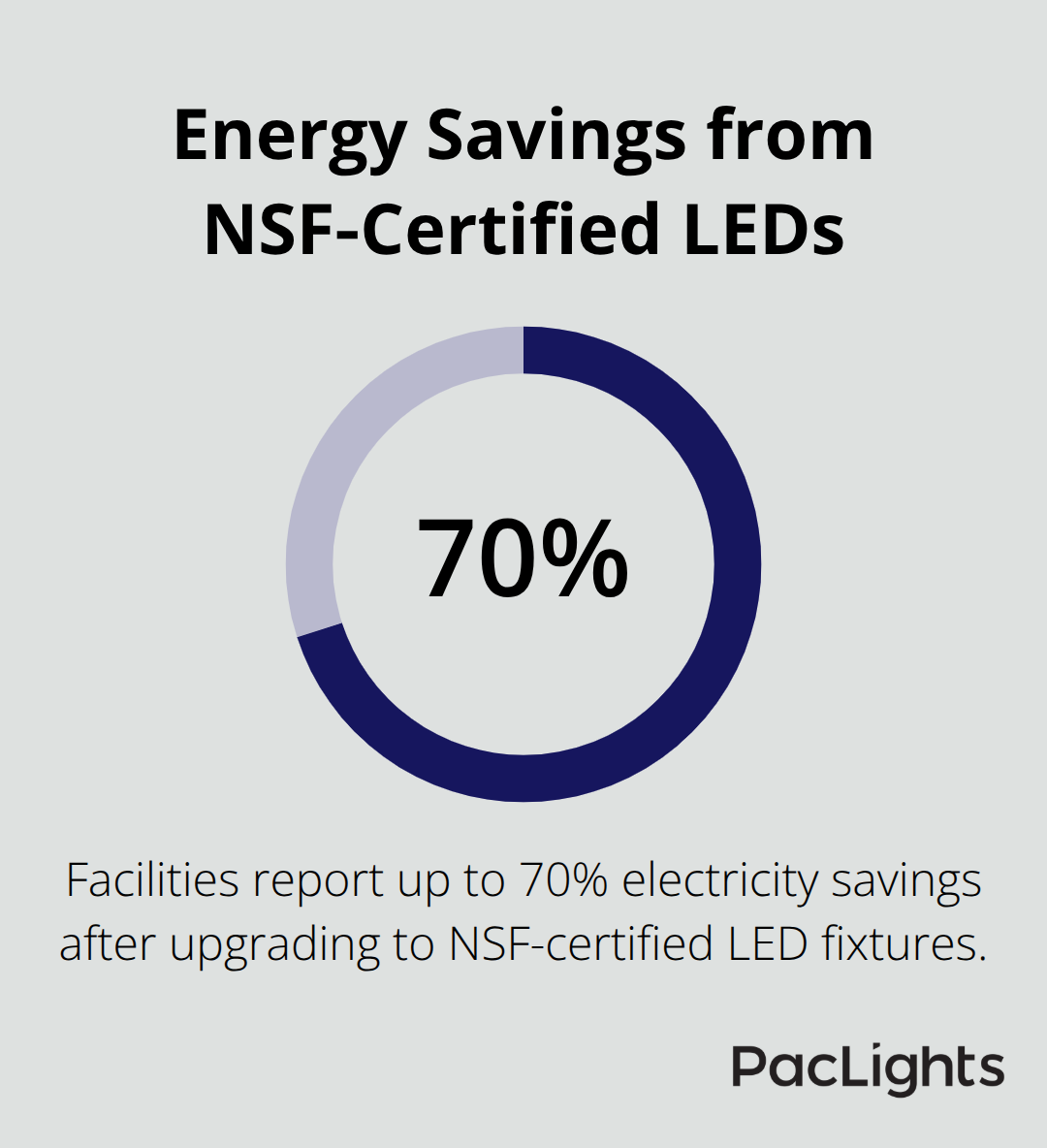
This means compliance and cost savings aren’t separate goals-they reinforce each other. Your facility meets regulatory requirements while reducing operational expenses, and the long-term durability ensures you avoid premature fixture replacement due to corrosion or performance degradation in harsh environments. When you select NSF-certified lighting, you’re investing in fixtures that protect your operation today and lower your costs tomorrow, which makes the selection process for the right fixtures a strategic business decision rather than a regulatory obligation.
Why NSF Approval Protects Your Bottom Line
Meeting Regulatory Requirements Without Costly Retrofits
Regulated environments demand lighting that goes beyond basic illumination. Food processing facilities, hospitals, and commercial kitchens operate under strict codes that NSF-certified fixtures are specifically engineered to satisfy. The FDA Food Code sets exact lighting requirements for different work zones: 108 lux for walk-in storage areas, 215 lux for food preparation surfaces, and 540 lux where employees actively handle food or utensils. NSF-certified fixtures meet these requirements while simultaneously resisting the washdown protocols that would destroy standard lighting. When your facility passes health inspections without citations, you avoid costly shutdowns and reputational damage. Non-compliance triggers violations that can force temporary closures until corrective action is completed, which means even a single day of downtime costs far more than investing in proper lighting upfront.
Eliminating Contamination Risks Through Material Design
Contamination prevention in food and beverage operations depends entirely on materials and design that NSF-certified fixtures provide as standard. A single glass fragment from a broken bulb can contaminate thousands of units of product, forcing recalls that damage brand reputation and drain resources. NSF-certified fixtures eliminate this risk through shatterproof polycarbonate or acrylic lenses and sealed housings that prevent any foreign material from entering food zones. The IP69K rating common to many NSF fixtures means they withstand high-pressure washdowns that reach 80 bars of force, which is the actual cleaning intensity used in modern food processing plants.
Durability Across Extreme Conditions
Vapor-tight fixtures handle extreme temperature swings from -40°F in walk-in freezers to 113°F in hot production areas, maintaining performance where standard lighting fails. Hospitals and medical facilities benefit equally: NSF-certified fixtures resist the aggressive disinfectants used in operating rooms and patient care areas without corroding or degrading. The corrosion-resistant aluminum housings and sealed construction mean your facility avoids replacing fixtures prematurely due to chemical damage.
Reducing Long-Term Operational Costs
LED technology in NSF-certified fixtures delivers 50,000 to 75,000 hour lifespans, so replacement cycles stretch from months to years, reducing labor costs and operational disruption. This durability translates directly to lower total cost of ownership because your facility spends less on emergency repairs, replacement inventory, and staff time managing fixture failures during critical operations. Healthcare facilities face similar pressures: sterile environments demand fixtures that prevent contamination while maintaining visibility for precision work. NSF certification guarantees your fixtures have passed annual facility inspections and ongoing third-party testing, so you’re not relying on a manufacturer’s word alone. This regulatory alignment means your lighting automatically satisfies health department requirements, eliminates the need for expensive retrofits when inspectors identify non-compliant fixtures, and provides documented proof that your facility meets established safety standards. The next section explores how to select and install the right NSF-approved fixtures to maximize these benefits across your operation.
How to Choose and Install NSF Fixtures Without Costly Mistakes
Match Your Facility’s Lighting Zones to Fixture Specifications
Selecting NSF-certified fixtures requires matching three specific criteria to your facility’s actual needs rather than assuming all certified products work equally. First, identify your lighting zone under the FDA Food Code: walk-in storage needs 108 lux minimum, food preparation areas require 215 lux, and active food handling zones demand 540 lux. This determines your wattage and lumen requirements immediately. A 150-watt NSF high bay delivers approximately 22,500 lumens at 150 lumens per watt, which works for 18-foot ceilings in processing areas but overshoots requirements in storage zones where a 42-watt fixture at 5,460 lumens suffices.
Second, specify your IP rating based on washdown intensity. IP65 protects against low-pressure spray in standard kitchens, but IP69K is mandatory for food processing lines using high-pressure washdown equipment that reaches 80 bars of force. Third, verify color rendering index and color temperature match your operation. Food facilities need CRI of 80 or higher with 4000K to 5000K color temperature for accurate product inspection, while hospitals prioritize 4000K for precise surgical work.
Avoid Common Installation Errors That Compromise Performance
Installation mistakes cost facilities thousands in downtime and compliance violations. The most common error occurs when installers treat NSF fixtures like standard commercial lighting, using standard mounting hardware without considering corrosion resistance. All fasteners, hooks, and electrical connections must resist the same chemicals and moisture that the fixtures themselves withstand. Standard steel hardware defeats the corrosion-resistant design of the fixture itself.
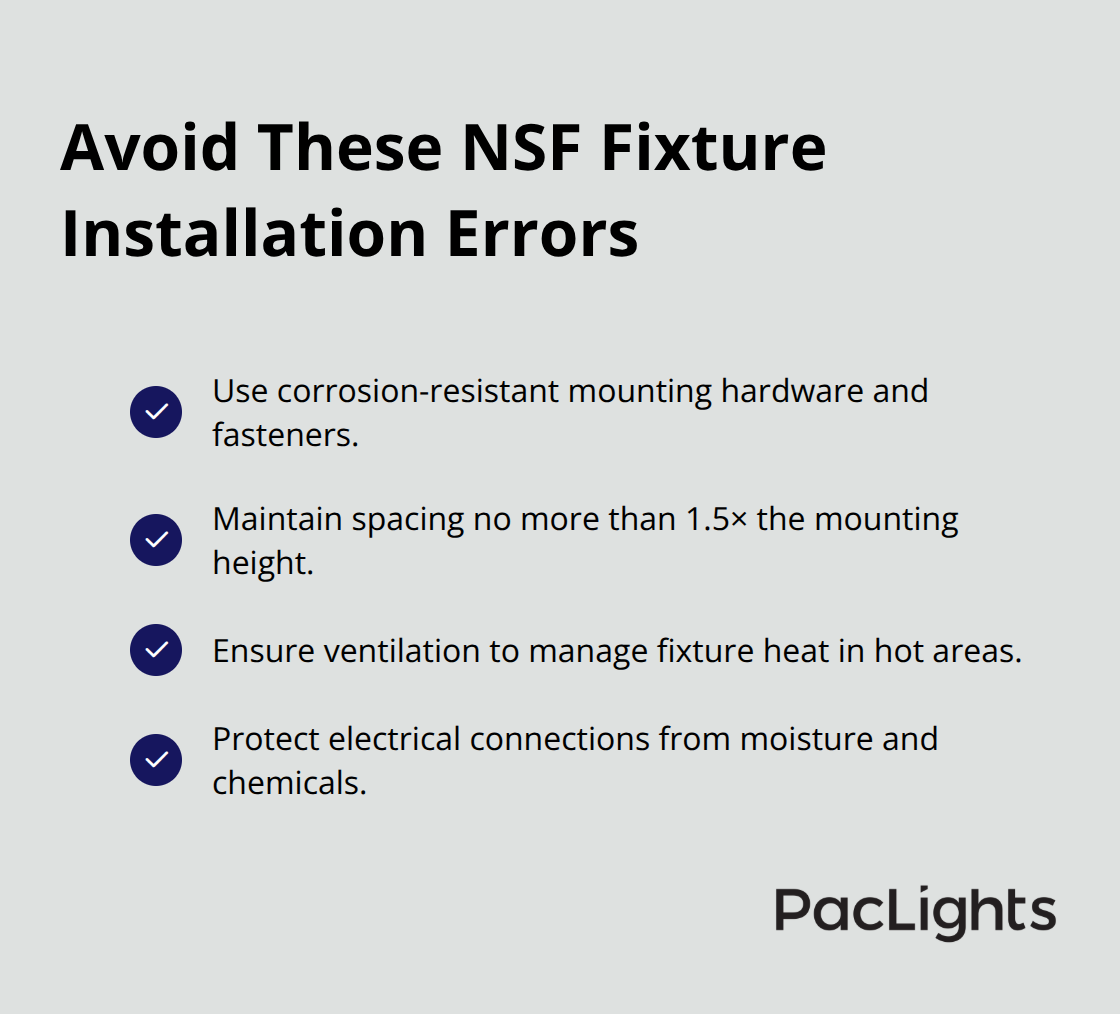
Second, improper spacing between fixtures creates dark zones where contamination hides from visual inspection and where employees cannot see food handling surfaces clearly. High bays should space no more than 1.5 times their mounting height apart, meaning 18-foot ceilings require spacing of 27 feet maximum between fixture centers. Third, many facilities fail to account for the fixture’s heat generation when planning ventilation, particularly in hot production areas where vapor-tight fixtures reach 113°F. Inadequate airflow reduces fixture lifespan and can trigger thermal shutdowns during peak production hours.
Maintain NSF Compliance Through Consistent Care
Maintenance practices directly determine whether your NSF certification remains valid throughout the fixture’s lifespan. NSF standards require regular cleaning with damp cloth and mild detergent, never allowing buildup of dust or residue that could harbor bacteria or compromise the sealed housing integrity. Monthly cleaning schedules work for food processing environments, while quarterly cleaning suffices in hospitals where washdowns occur less frequently.
Facilities that skip maintenance often discover during health inspections that fixture surfaces harbor contamination, forcing immediate replacement and potential facility citations. Document all maintenance activities because NSF compliance verification includes records proving that fixtures receive consistent care according to manufacturer specifications. Any damaged lens, cracked housing, or corroded fastener requires immediate replacement rather than repair, since NSF certification applies to complete fixture assemblies only. A single compromised component voids the fixture’s certification status and creates liability in contaminated environments.
Final Thoughts
NSF approved light fixtures transform how regulated facilities approach lighting decisions. Your facility avoids emergency repairs, premature replacements, and operational shutdowns that plague standard commercial lighting when you invest in certified fixtures with IP69K ratings and corrosion-resistant construction. Energy savings of up to 70% compared to traditional fixtures mean your investment pays for itself through reduced electricity costs, while fixture lifespans of 50,000 to 75,000 hours eliminate constant replacement cycles that drain maintenance budgets.
Matching your facility’s specific lighting zones, washdown intensity, and environmental conditions to fixtures engineered for those exact demands determines whether NSF approved light fixtures deliver maximum value for your operation. Health department violations, product recalls, and downtime cost far more than investing in proper lighting upfront, so the financial case for NSF-certified lighting becomes undeniable when you factor in avoided shutdowns and prevented contamination incidents. One-size-fits-all approaches fail in regulated environments where precision matters.
We at PacLights understand that your facility requires customizable lighting solutions tailored to your actual requirements. Connect with our team to evaluate your facility’s needs and receive recommendations for fixtures that protect your operation for years to come. Your next step is reaching out to lighting professionals who can ensure your lighting meets NSF standards while optimizing energy efficiency and long-term performance.
Disclaimer: PacLights is not responsible for any actions taken based on the suggestions and information provided in this article, and readers should consult local building and electrical codes for proper guidance.