

Data centers consume massive amounts of energy, and lighting accounts for a significant portion of that load. Traditional fixtures generate excess heat that forces cooling systems to work harder, driving up operational costs and reducing equipment lifespan.
At PacLights, we’ve seen firsthand how the right datacenter LED fixtures transform these environments. Modern LED solutions cut energy consumption while maintaining the precise illumination data rooms require.
Why Data Centers Need Specialized Lighting
The Heat Problem Traditional Fixtures Create
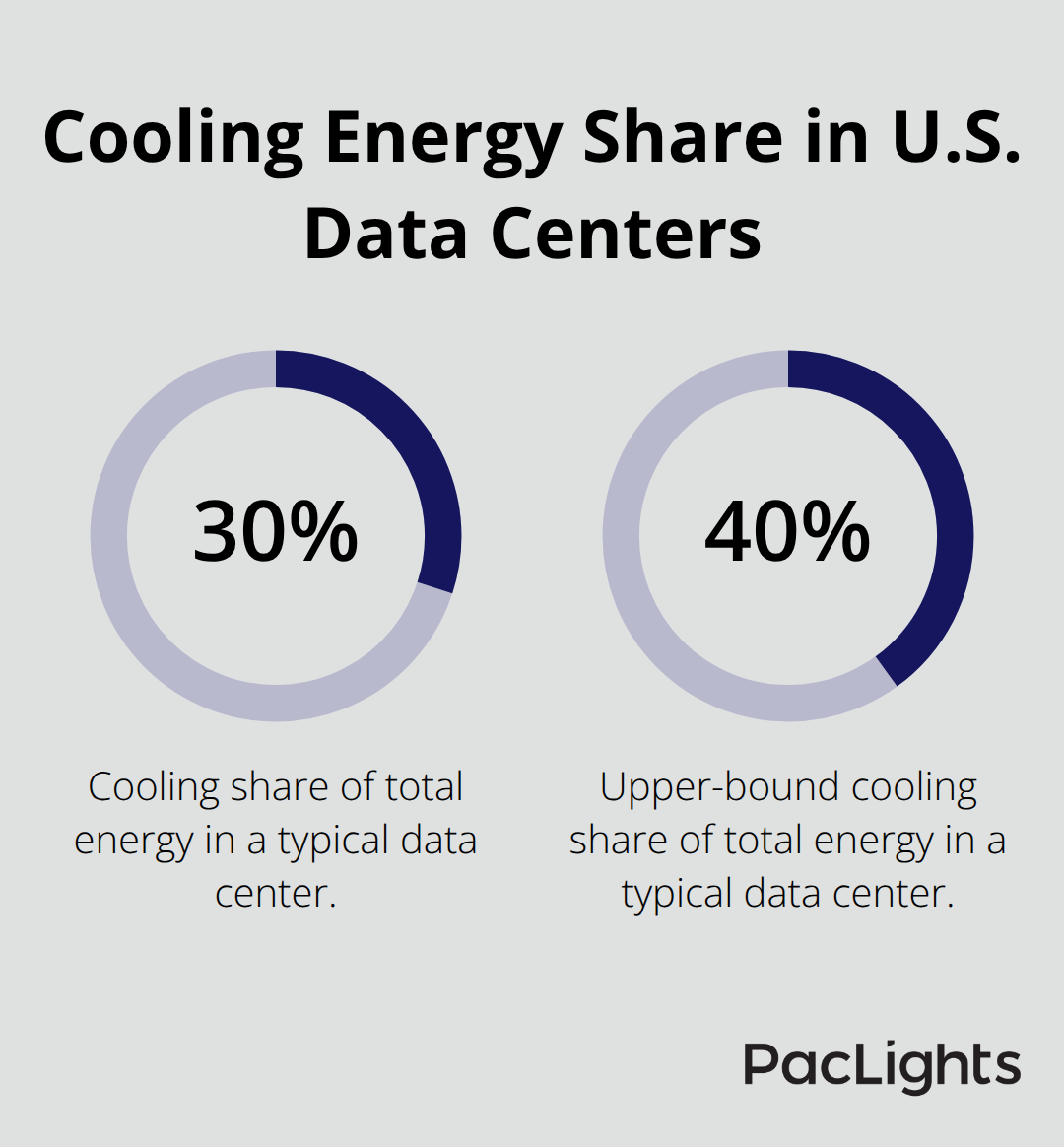
Data center operators face a hard truth: traditional lighting fixtures generate substantial heat that directly conflicts with cooling infrastructure. A typical data center spends between 30 and 40 percent of its total energy budget on cooling systems, according to industry reports from the U.S. Department of Energy. When conventional fluorescent or incandescent fixtures operate, they release heat that forces HVAC systems to work harder, creating a wasteful cycle where lighting costs multiply through increased cooling demands. This isn’t a minor inefficiency-a single kilowatt of heat from lighting triggers an additional 0.3 to 0.5 kilowatts of cooling load, meaning a 10-kilowatt lighting system effectively demands 13 to 15 kilowatts of total energy consumption when cooling is factored in.
Temperature Sensitivity and Equipment Lifespan
The equipment housed in these data rooms operates on razor-thin margins. Servers, switches, and storage arrays function optimally within specific temperature ranges, typically 64 to 80 degrees Fahrenheit. Excess heat from poor lighting choices degrades component lifespan significantly. Semiconductor reliability decreases by approximately 50 percent for every 15-degree Celsius rise in temperature above optimal operating conditions.
Regulatory Standards and Compliance Requirements
Data centers must comply with standards like ASHRAE TC 9.9 guidelines and TIA-942 specifications, which mandate strict environmental controls and lighting performance standards. Facilities that ignore these requirements risk equipment failures, data loss, and regulatory penalties. The lighting solution must therefore address three simultaneous demands: minimal heat generation, precise illumination for maintenance tasks, and compatibility with advanced environmental control systems.
Why LED Fixtures Solve the Problem
LED fixtures designed specifically for data center applications solve all three problems simultaneously. These fixtures deliver the low-heat output and energy efficiency that demanding data center environments require-and they accomplish this while maintaining the precise illumination that technicians need for equipment maintenance and troubleshooting. The transition from traditional lighting to LED solutions represents the most practical path forward for facilities looking to reduce operational strain on cooling systems.
LED Fixtures Built for Data Center Demands
Heat Reduction and Immediate Energy Gains
Modern LED fixtures engineered for data centers operate at dramatically lower temperatures than traditional alternatives. A standard LED fixture in a data center produces roughly 80 to 90 percent less heat than equivalent fluorescent systems, according to testing by the National Renewable Energy Laboratory. This difference matters enormously when you manage thermal loads. If your facility currently runs 100 kilowatts of lighting, switching to LEDs eliminates approximately 8 to 9 kilowatts of heat immediately.
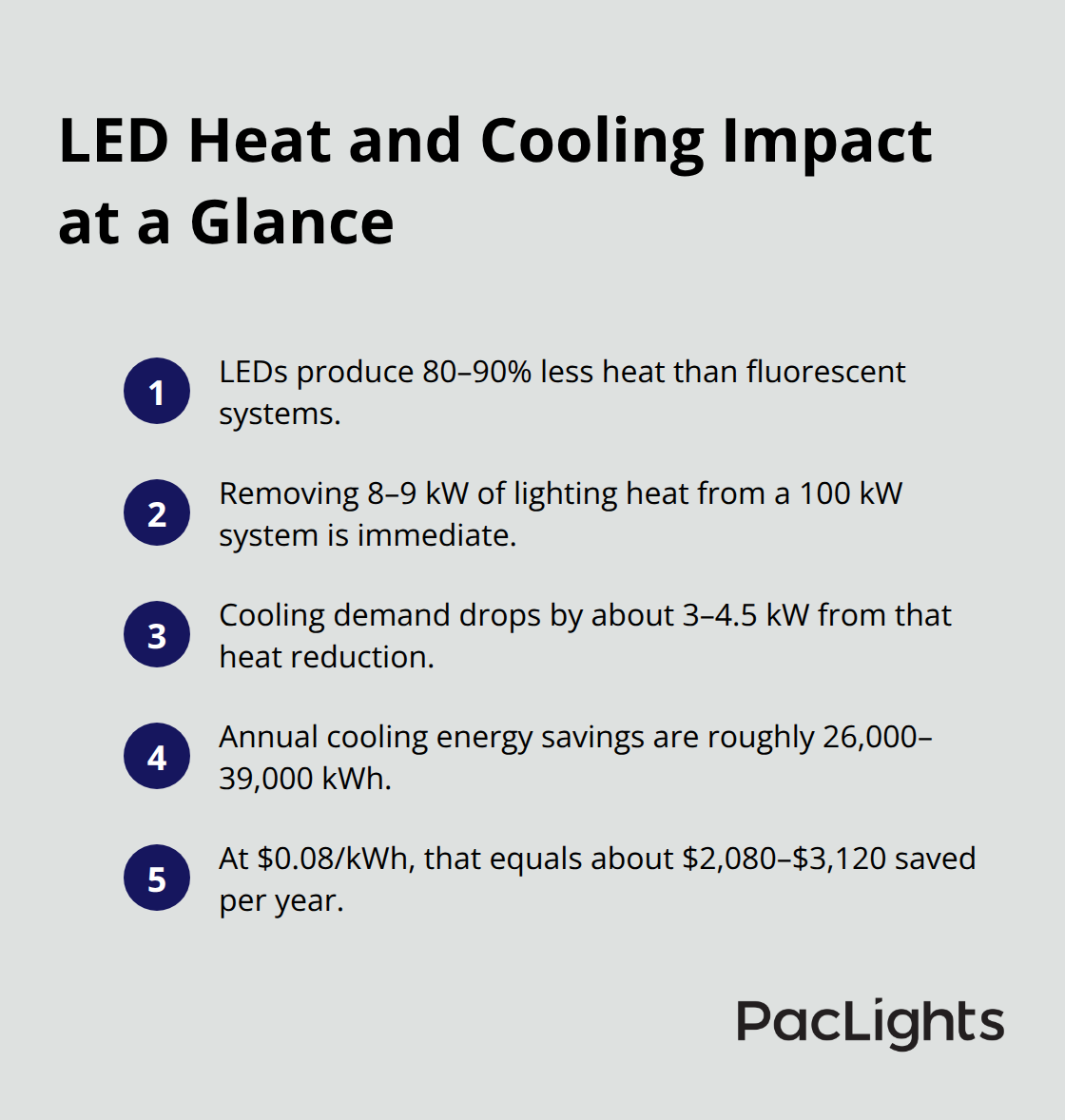
That reduction cascades through your cooling infrastructure. Since data centers require 0.3 to 0.5 additional kilowatts of cooling for every kilowatt of heat, removing 9 kilowatts of lighting heat can reduce your total cooling demand by 3 to 4.5 kilowatts. For a mid-sized facility operating continuously, that translates to roughly 26,000 to 39,000 kilowatt-hours of saved cooling energy annually. Energy costs vary by region, but at an average industrial rate of $0.08 per kilowatt-hour, that’s $2,080 to $3,120 in annual cooling savings from lighting alone.
Integration with Existing Cooling Systems
The real advantage emerges when you integrate LED fixtures with your existing cooling architecture rather than fighting against it. Data centers already invest heavily in precision environmental controls, hot-aisle containment, and variable-speed cooling systems. LED fixtures with low thermal output work harmoniously with these systems instead of overwhelming them. Your facility’s infrastructure adapts more efficiently when lighting no longer generates excessive heat that forces HVAC systems into overdrive.
Advanced Control Systems and Additional Savings
Advanced LED control systems take efficiency further. Networked lighting controls allow you to adjust illumination across different zones based on occupancy, maintenance schedules, and thermal conditions. Many facilities implement motion sensors in server racks and equipment corridors, reducing lighting to 30 percent output when technicians aren’t present. You can also integrate LED systems with HVAC monitoring, so lighting automatically dims during peak cooling demand periods. This coordinated approach cuts energy consumption by an additional 15 to 25 percent beyond the baseline LED efficiency gains. PacLights offers networked lighting controls and optional motion detection on their data center fixtures, allowing you to build these intelligent systems without requiring separate control infrastructure.
The next step involves calculating what these savings actually mean for your bottom line and understanding how to transition your existing facility to LED technology.
Practical Implementation and ROI Considerations
Calculate Your Baseline Energy Costs
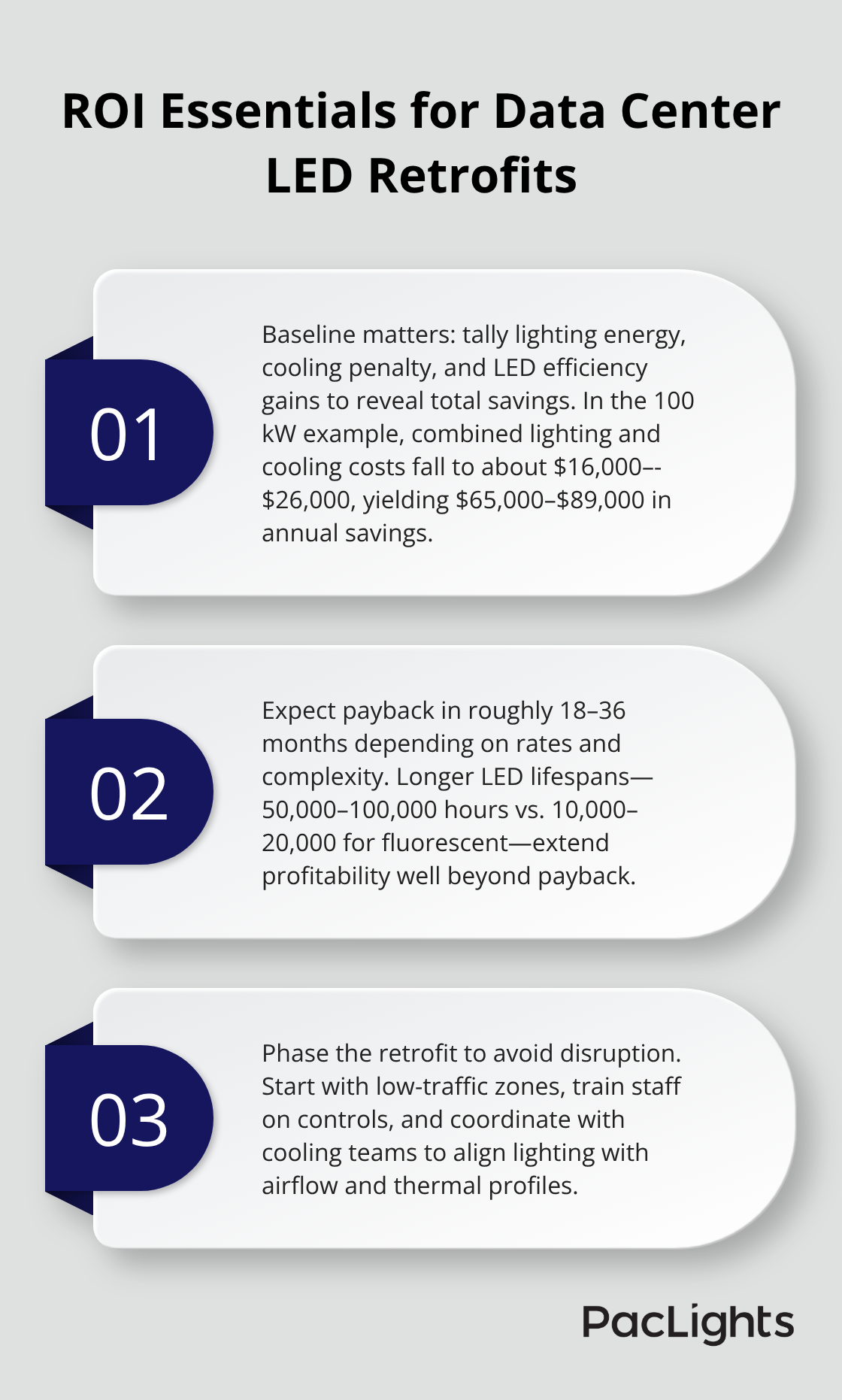
The financial case for LED conversion hinges on three concrete numbers: your current energy spend, the efficiency gains from LEDs, and the upfront equipment cost. Start by calculating your baseline. If your data center consumes 100 kilowatts of lighting continuously at $0.08 per kilowatt-hour, you’re spending roughly $70,000 annually on lighting energy alone. Add the cooling penalty-that additional 30 to 50 percent energy demand triggered by heat from traditional fixtures-and your true lighting-related energy cost climbs to $91,000 to $105,000 yearly. Switching to LED fixtures cuts lighting consumption by 75 to 85 percent while eliminating most heat generation, reducing your combined lighting and cooling costs to approximately $16,000 to $26,000 annually. That’s a savings range of $65,000 to $89,000 per year for a facility this size.
Understand Your Payback Timeline
The payback period typically spans 18 to 36 months depending on your current fixture count, retrofit complexity, and regional electricity rates. Facilities in high-cost energy regions like California or the Northeast see payback in under two years. Even in lower-cost regions, the five to seven year lifespan advantage of LED fixtures-they last 50,000 to 100,000 hours versus 10,000 to 20,000 hours for fluorescent systems-means you’ll recoup your investment and operate profitably for years afterward.
Phase Your Retrofit Strategy
Retrofitting an existing data center requires strategic planning rather than replacing everything at once. Most facilities operate continuously, so you cannot shut down lighting for a complete overhaul. Phase the conversion zone by zone: start with low-traffic areas like storage sections or backup equipment rooms where downtime creates minimal disruption. This approach lets you validate performance, train staff on new control systems, and adjust your timeline based on actual results before tackling critical server floor areas. Work with your cooling team during installation-they understand your thermal profiles and can help position new fixtures to optimize airflow patterns.
Select Fixtures Built for Demanding Conditions
Data center lighting fixtures must withstand demanding conditions: vibration from equipment, electromagnetic interference, temperature fluctuations, and continuous operation. LED fixtures rated for industrial environments handle these stresses far better than retrofitted commercial products. Try fixtures with IP65 or higher dust ratings and thermal management designs that prevent component degradation in temperature-sensitive spaces.
Reduce Maintenance Burden and Costs
Maintenance costs drop substantially with LEDs because you replace failed fixtures far less frequently. A traditional fluorescent system in a 24/7 data center requires bulb changes every 6 to 12 months across hundreds of fixtures. LED systems eliminate these recurring maintenance cycles almost entirely. PacLights offers LED retrofit solutions designed specifically for data center conditions, with optional motion control and advanced lighting controls that integrate with your existing infrastructure without requiring separate control systems or extensive rewiring.
Final Thoughts
The financial case for datacenter LED fixtures stands on solid ground: lower energy costs, reduced cooling demands, and minimal maintenance expenses compound into substantial savings over time. A mid-sized facility switching from traditional lighting captures annual savings between $65,000 and $89,000, with payback periods typically falling between 18 and 36 months depending on your region and current setup. These numbers reflect real operational improvements, not theoretical projections.
LED conversion addresses the fundamental conflict between data center operations and traditional lighting by eliminating excess heat, reducing strain on cooling infrastructure, and extending equipment lifespan simultaneously. The environmental impact matters too-data centers consume roughly 1 to 2 percent of global electricity, and switching to efficient datacenter LED fixtures cuts that consumption meaningfully. A facility reducing lighting and cooling energy by 75 percent eliminates hundreds of tons of carbon emissions annually, depending on your regional power grid composition.
Phased retrofitting lets you validate performance, train your team, and adjust timelines based on actual results without shutting down operations. Start with low-traffic areas to minimize disruption while building confidence in the new systems. Visit PacLights to explore retrofit options tailored to your specific data center requirements.
Disclaimer: PacLights is not responsible for any actions taken based on the suggestions and information provided in this article, and readers should consult local building and electrical codes for proper guidance.