

Commercial downlights energy saving isn’t just about switching bulbs-it’s about rethinking how your facility uses power. Most businesses waste thousands annually on outdated lighting systems that consume far more electricity than necessary.
At PacLights, we’ve helped countless commercial facilities cut their lighting costs by 40-70% through strategic upgrades and smart controls. This guide shows you exactly how to do the same.
What Traditional Downlights Really Cost Your Business
Traditional halogen and incandescent downlights waste approximately 90% of their input energy as heat, according to the Department of Consumer and Regulatory Affairs, while LED downlights convert roughly 80% into actual light. This fundamental difference translates directly to your electricity bills.
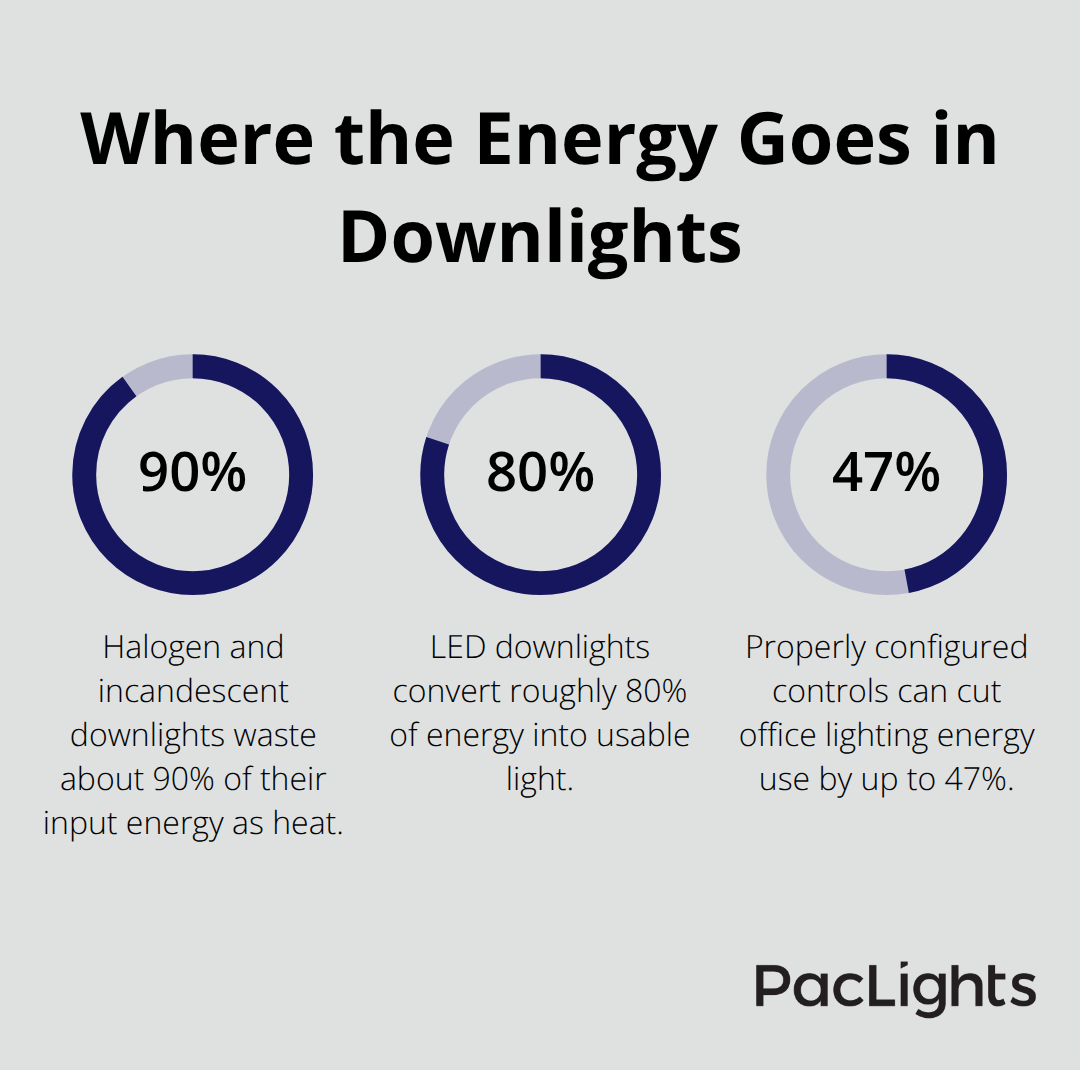
A 50W halogen downlight costs about $15–$25 per year to operate, whereas an equivalent 8W LED runs just $2–$4 annually, saving $55–$115 per fixture over five years. For a typical 10,000 square foot office, upgrading to LED can cut lighting electricity use by 65–80%, which means annual savings ranging from $2,925 to $6,800 depending on your current system and local electricity rates. The math is straightforward: if you operate 100 halogen fixtures at $20 per year each, you spend $2,000 annually on lighting alone. Switch those to LEDs and that drops to roughly $300. Most facilities see payback in 18–36 months when combining energy, maintenance, and cooling savings, with faster results in high-use buildings.
The Cooling Cost Nobody Mentions
The heat generated by traditional downlights forces your air conditioning system to work harder, especially in spaces with heavy downlight concentrations like retail stores or office lobbies. This thermal advantage of LEDs yields an additional 10–15% energy savings from reduced cooling needs in most climates. NorthShore University Health System achieved 78.25% total energy savings with LED lighting plus occupancy controls, with payback in just over one year. That’s not theoretical-that’s a real healthcare system with thousands of fixtures across multiple buildings. Your HVAC system doesn’t care whether the heat comes from outside or from your lighting; it still has to cool it. Eliminating that heat load means your compressor runs less frequently and less intensely, directly reducing your monthly utility bills.
Maintenance Savings That Compound
Traditional halogen downlights last roughly 4,000 hours, meaning you replace them every 12–18 months in most commercial settings. LEDs last 50,000–100,000 hours, reducing replacement frequency to once every 5–7 years. Raleigh, North Carolina’s parking garage retrofit saved approximately $3,325 annually in maintenance labor after switching to LEDs. When you account for labor costs, vehicle wear on access equipment, and business disruption from maintenance work, traditional downlights become exponentially more expensive than their energy consumption suggests. A single maintenance visit to replace 20 fixtures might cost $300–$500 in labor alone. With LEDs, you make that visit far less often.
Why Payback Happens Faster Than You Think
Over a decade, maintenance savings compound significantly and often exceed the energy savings themselves in facilities with high replacement rates. The combination of lower electricity consumption, reduced cooling load, and minimal maintenance creates a powerful financial advantage. Most businesses underestimate how quickly these three factors stack up. When you add utility rebates (typically covering 20–30% of retrofit costs) and tax incentives like Section 179D ($0.30–$0.60 per square foot), the payback timeline shrinks even further. These incentives transform what looks like a capital expense into a highly profitable investment. Understanding these hidden cost layers reveals why LED upgrades deliver such strong returns-and why waiting to upgrade costs you money every single month.
How to Actually Cut Downlight Energy Use in Your Facility
Switching to LED downlights alone won’t maximize your savings. The real gains come from treating your lighting system as an integrated strategy rather than a simple bulb replacement. Facilities that install efficient LEDs without optimizing placement or adding controls miss 30–40% of their potential savings. Start with a baseline measurement: walk your space at different times, document every fixture’s wattage and type, note replacement frequency, and identify areas with glare or dim spots. This data reveals whether your current layout wastes fixtures or energy.
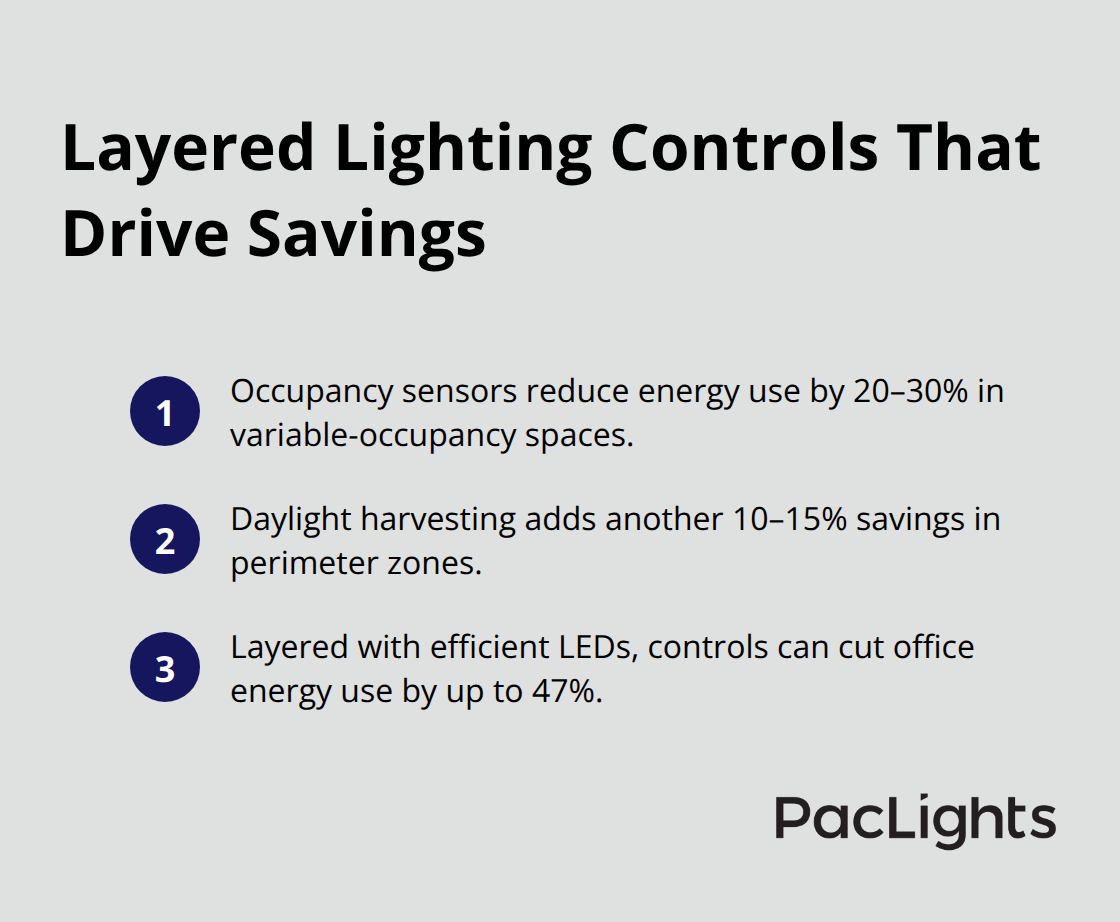
Many facilities operate with outdated spacing that requires far more downlights than necessary to achieve proper illumination. The Department of Energy reports that occupancy sensors reduce energy use by 20–30% in spaces with variable occupancy, and daylight harvesting adds another 10–15% in perimeter zones. Controls can cut office energy use by up to 47% when layered onto efficient hardware.
A Bristol Marriott Hotel replaced 145 halogen lamps with 4W LEDs and cut annual energy use by 43,822 kWh. They also installed motion controls that prevented lights from running in empty rooms-without those controls, the savings would have stopped at roughly 43% instead of reaching higher levels through behavioral optimization.
Spacing and Placement Drive Fixture Efficiency
Proper fixture spacing directly reduces the number of downlights you need. Placing fixtures 8–10 feet apart achieves even illumination and cuts fixture counts by 15–25%, lowering both upfront costs and ongoing energy consumption. Most facilities inherit poorly planned layouts from decades-old designs that assumed inefficient lighting required dense spacing. LED downlights produce directional light with minimal waste, so fewer fixtures deliver the same or better results.
Light Levels and Color Temperature Matter
Different spaces need different light intensities. Try 30–50 footcandles for kitchens, 10–20 for hallways, and adjust color temperature to your task-2700K for warm spaces, 4000K for offices, 5000K or higher for detail work. Choose downlights with color rendering index above 90 to preserve product appearance and reduce eye strain. These specifications prevent both energy waste and worker discomfort.
Tailor Your Approach to Facility Type
Warehouses operate long hours with continuous lighting, offices have peak morning and afternoon use with daylit perimeters, and parking garages run all night but remain empty for hours. One-size-fits-all fixture specs and layouts waste money. Request free ROI assessments and lighting layouts based on your actual operating hours and local electricity rates so you quantify net costs and payback accurately rather than guessing.
Wireless Controls Simplify Implementation
Wireless lighting controls simplify deployment across multiple zones and buildings, eliminating expensive wiring and enabling easy adjustments as your facility needs change. This flexibility matters when your space usage patterns shift or when you add new areas to your retrofit plan. The next step involves selecting the right control systems that work with your LED fixtures and building infrastructure.
Control Systems That Actually Pay for Themselves
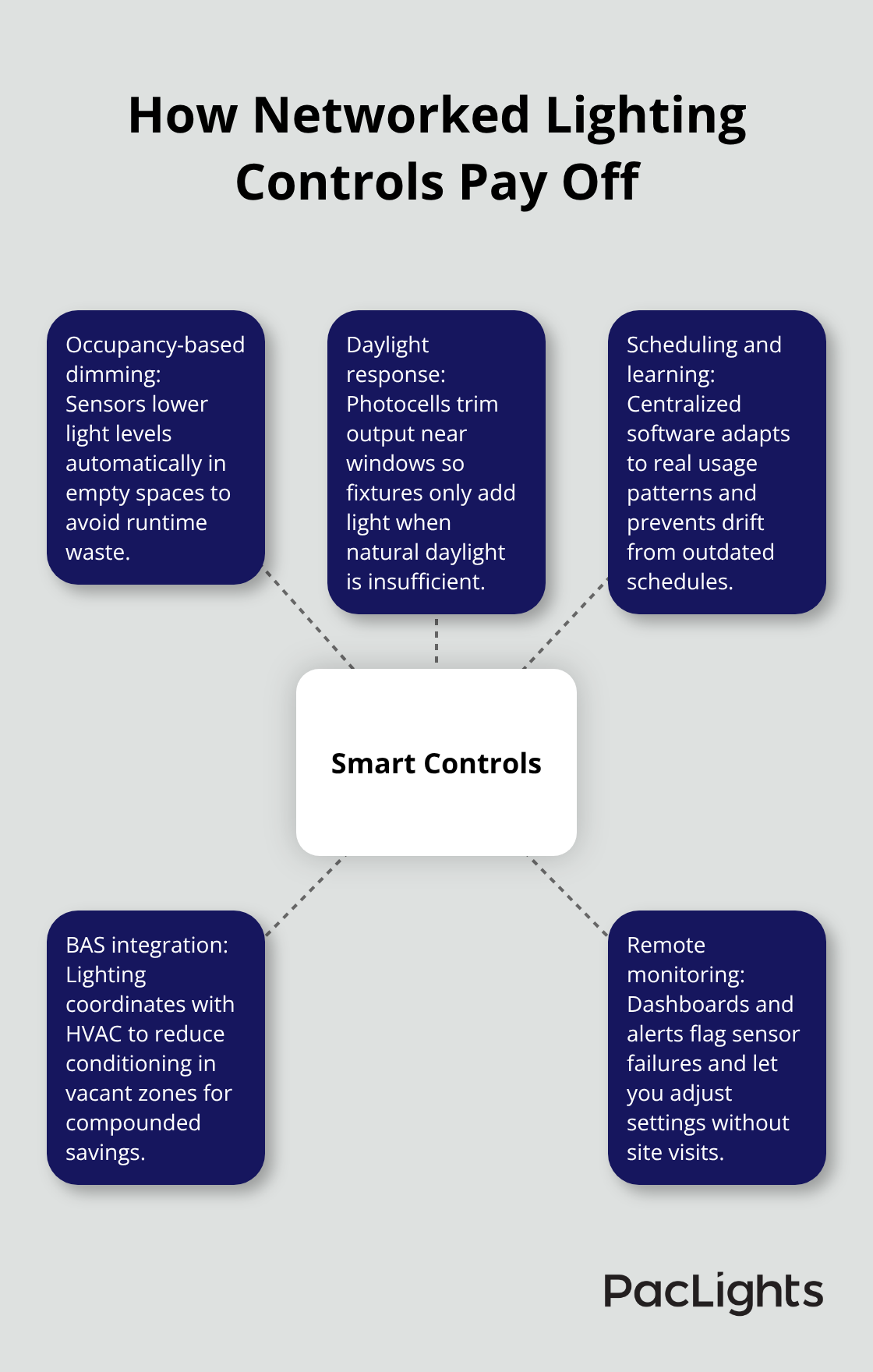
Networked lighting controls transform downlights from static fixtures into responsive systems that adapt to real occupancy and daylight conditions. The Department of Energy reports that controls can cut office energy use by up to 47% when properly configured, yet most facilities install controls haphazardly without integrating them into their building management infrastructure. This mistake leaves significant savings on the table. The right approach connects your LED downlights to a centralized management platform that communicates across zones, learns usage patterns, and automatically adjusts light levels based on sensors and schedules.
Wireless Controls Eliminate Installation Barriers
Wireless controls eliminate the expense of running low-voltage wiring through walls and ceilings, which can add 15–25% to retrofit costs in older buildings. This advantage matters most when you want to scale control implementation gradually across your facility without requiring a complete system overhaul. Start with high-variability spaces like conference rooms, break areas, and parking garages where occupancy swings dramatically throughout the day. These zones deliver payback in 18–24 months because the savings are immediate and measurable.
Building Automation Integration Multiplies Results
Integration with your building automation system amplifies control effectiveness because your lighting, HVAC, and occupancy data flow into a single decision engine. When motion sensors detect an empty conference room, the system dims lights to 10% and signals your HVAC to reduce conditioning to that zone, compounding savings beyond lighting alone. This layered approach (lighting plus thermal management) produces results that neither system achieves independently.
Real-Time Analytics Expose Hidden Waste
Real-time performance analytics reveal exactly which spaces waste energy and which controls perform as expected. Many facilities discover that their programmed schedules no longer match actual usage patterns-a floor that was occupied 8am–6pm in 2015 might now sit empty three days weekly after hybrid work adoption. Analytics expose these gaps so you adjust schedules without wasting energy on guesswork.
Request detailed performance dashboards from your control system vendor that show energy consumption by zone, fixture type, and time period. This granular visibility prevents the common scenario where facilities install controls, assume they work, and never verify actual performance.
Monitoring Confirms Controls Actually Deliver Results
The Bristol Marriott Hotel’s 43,822 kWh annual reduction came from combining efficient fixtures with motion controls that prevented runtime in empty spaces-but only because they monitored the system to confirm the controls actually functioned as designed. Facilities that implement controls without monitoring typically achieve only 60–70% of projected savings because occupancy sensors misfire, schedules drift, or dimming capabilities remain unused. Wireless systems simplify troubleshooting because you can adjust settings remotely and receive alerts when sensors fail, rather than discovering problems months later when your energy bills don’t match expectations. This proactive approach (remote adjustment plus failure alerts) prevents the performance gaps that plague traditional wired systems.
Final Thoughts
Commercial downlights energy saving delivers measurable financial returns that extend far beyond your monthly electricity bill. A 10,000 square foot office cutting lighting electricity use by 65–80% saves $2,925 to $6,800 annually, while a parking garage like Raleigh’s gains an additional $3,325 yearly from reduced maintenance alone. These documented results from real commercial facilities prove that the investment becomes profitable within 18–36 months, after which every dollar saved flows directly to your operating margin.
The environmental impact compounds alongside the financial gains-Los Angeles’s plan to replace 140,000 streetlights with LEDs will eliminate approximately 40,500 tons of CO2 annually while saving $48 million over seven years. Your facility contributes to this reduction while simultaneously improving your bottom line. Start by measuring your current consumption, documenting fixture wattages, replacement frequency, and operating hours across your space.
Request a free ROI assessment and lighting layout based on your actual electricity rates and usage patterns rather than industry averages. We at PacLights provide the fixtures, controls, and expertise to execute this strategy, and we offer customized plans tailored to your facility’s operating hours, space types, and electricity rates. Contact us today to quantify your specific financial opportunity.
Disclaimer: PacLights is not responsible for any actions taken based on the suggestions and information provided in this article, and readers should consult local building and electrical codes for proper guidance.