

Commercial facilities face strict health and safety regulations. NSF certified ceiling lights aren’t optional-they’re a requirement in food service, healthcare, and pharmaceutical environments.
At PacLights, we know that compliance isn’t just about passing inspections. The right lighting protects your operations, your customers, and your bottom line.
What NSF Certification Actually Protects
NSF International certifies lighting fixtures used in food processing, healthcare, and pharmaceutical environments to meet strict public health standards. NSF/ANSI 2 is the specific standard governing lighting in food safety zones, and it’s not a suggestion-it’s the benchmark that the FDA Food Code and USDA regulations expect facilities to follow. When a ceiling light carries NSF certification, the fixture has passed rigorous lab testing, facility inspections, and annual retesting to verify it won’t contaminate products or environments. The certification process involves seven formal steps: application, product evaluation, lab testing, facility inspection, test results review, contract and listing, and annual retesting. This isn’t paperwork theater. Facilities that skip NSF-certified lighting face regulatory violations, fixture removal orders, or temporary shutdowns during inspections.
The Material Difference That Matters
Non-certified ceiling lights often use glass lenses, exposed fasteners, and unsealed housings that create contamination risks. NSF-certified fixtures mandate shatterproof polycarbonate or acrylic lenses, smooth non-porous surfaces, and completely sealed housings with no exposed gaps or crevices.
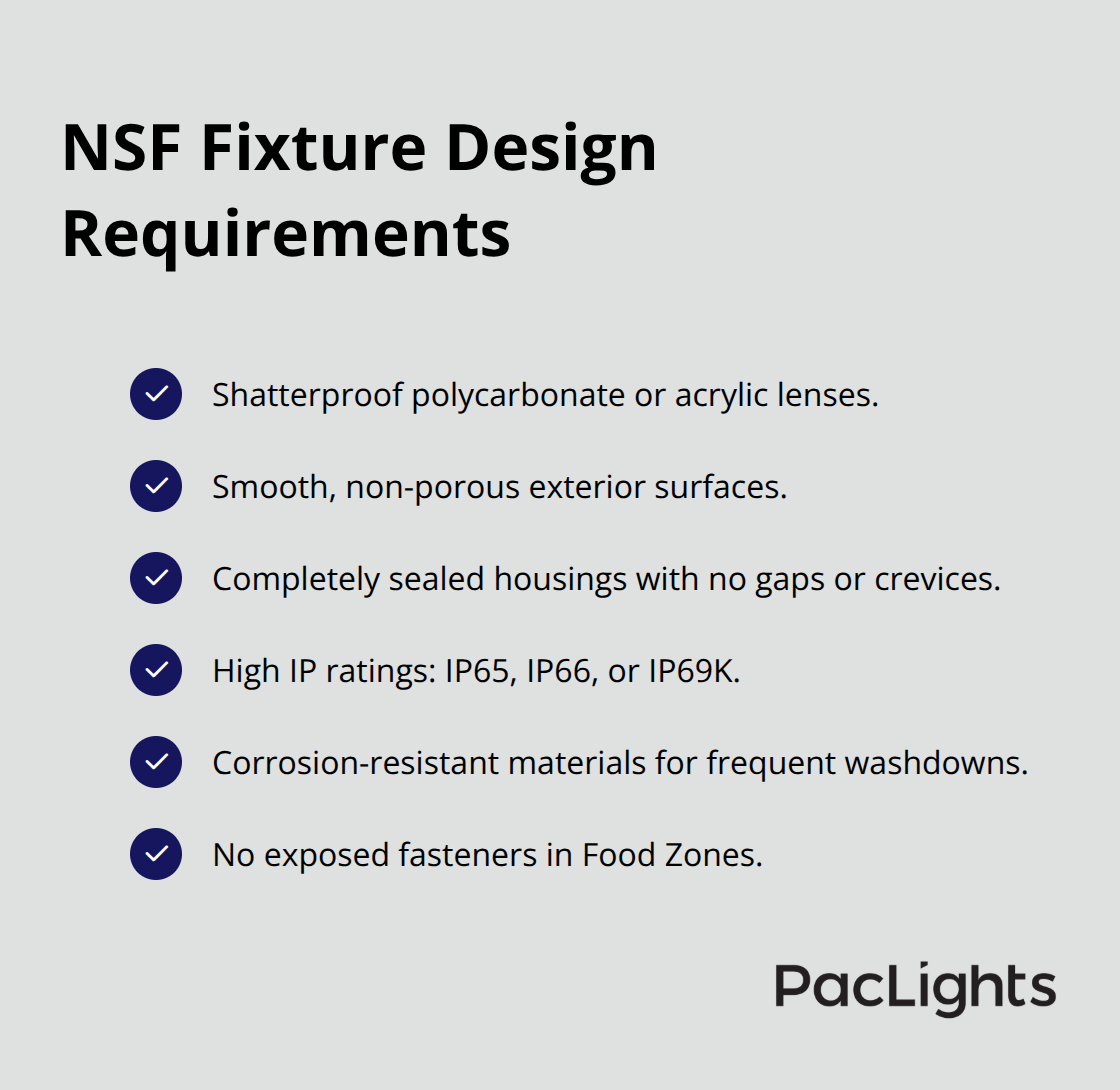
A standard LED ceiling light might save you money upfront, but the moment a glass lens shatters in a food prep area, you face product recalls, lost revenue, and regulatory fines. NSF-certified fixtures also feature high IP ratings-IP65, IP66, or IP69K-that protect against dust, moisture, and high-pressure washdowns. IP69K represents the highest protection level available, meaning the fixture survives direct high-pressure jets without water ingress. Non-certified lights simply don’t meet these requirements.
Where Compliance Actually Impacts Your Operations
The FDA Food Code specifies exact illumination thresholds: 108 lux in walk-in refrigeration units, 215 lux where food is stored or handled, and 540 lux on surfaces where employees work with food. NSF-certified ceiling lights are engineered to meet these thresholds consistently. They use corrosion-resistant materials that withstand sanitizers and aggressive cleaning routines, reducing maintenance downtime. LED NSF-certified fixtures deliver 50,000 to 75,000 hours of service life, meaning you replace them far less often than traditional metal halide or fluorescent alternatives. The sealed, gasketed design also minimizes bacterial harboring and dust accumulation, supporting HACCP compliance and reducing contamination detection risks during audits.
The Real Cost of Retrofit Decisions
Choosing non-certified lighting forces you to retrofit later, disrupting operations and multiplying costs. When you select NSF-certified fixtures from the start, you avoid the expense and operational chaos of mid-cycle replacements. Your facility maintains continuous compliance across all zones-Food Zone, Splash Zone, and non-food areas-without gaps that inspectors flag. The investment in proper certification upfront protects your reputation, your staff, and your customers. Your next step involves assessing your specific facility’s compliance needs and evaluating which NSF-certified products match your operational requirements.
Industries That Require NSF Certified Ceiling Lights
Food Service Operations Face the Harshest Compliance Environment
The FDA Food Code mandates NSF-certified lighting in every zone where food is processed, stored, or prepared. Walk-in coolers require 108 lux minimum, food prep surfaces demand 540 lux, and the fixture itself cannot shed glass or harbor bacteria on its surface. Restaurants and commercial kitchens operate in constant washdown cycles-high-pressure jets hit ceiling fixtures multiple times daily. Standard LED ceiling lights fail catastrophically in these conditions; water seeps into unsealed housings, corrodes components, and creates dark spots that compromise visibility during critical food handling tasks. NSF-certified vapor-tight fixtures with IP69K ratings survive these washdowns without degradation.
Healthcare Facilities Operate Under Equally Strict Requirements
Hospitals, surgical centers, and sterile storage areas cannot tolerate contamination from failing fixtures. The moment a non-certified ceiling light develops moisture issues or a lens cracks, that space becomes non-compliant for patient care. Healthcare administrators prioritize NSF certification because downtime in a medical facility costs thousands per hour, and regulatory violations trigger immediate corrective action orders. A single lighting failure can force facility closure until inspectors approve corrective measures.
Pharmaceutical and Laboratory Environments Demand Precision and Sterility
These facilities operate under FDA 21 CFR 110.20(b)(5) requirements, which explicitly govern lighting in areas where products are manufactured or tested. A polycarbonate-lens NSF-certified fixture with sealed gaskets prevents dust and microbial contamination that could compromise batch integrity or test results. Pharmaceutical labs specify NSF certification across all manufacturing zones because a single contamination event invalidates months of production and triggers recalls costing millions.
Regulatory Requirements Extend Across Multiple Food Processing Sectors
Meat and poultry processing plants follow USDA regulations that align with NSF standards. Beverage manufacturers, dairy processing facilities, and frozen food operations all require NSF-certified ceiling lighting to pass inspection. The common thread across all these sectors is straightforward: regulators expect facilities to eliminate contamination risks from lighting fixtures. Non-certified products create documented compliance gaps that inspectors document and escalate.
Specification Decisions Determine Your Compliance Path Forward
When you specify NSF-certified fixtures from the beginning, you eliminate contamination risk from lighting entirely. Your facility passes inspections faster, maintains continuous operational status, and avoids the cost and reputation damage of regulatory violations or recalls. The next step involves assessing your specific facility’s compliance needs and identifying which NSF-certified products match your operational requirements and performance standards.
How to Choose and Install NSF Certified Ceiling Lights
Map Your Facility’s Zones Before Selecting Products
Start with zone mapping, not product catalogs. Your facility contains three distinct zones according to NSF/ANSI 2: Food Zone where direct product contact occurs, Splash Zone where washdowns happen regularly, and non-food areas. Food Zone demands complete sealing with zero exposed fasteners and polycarbonate lenses rated IP65 minimum. Splash Zone requires IP66 or IP69K protection because high-pressure jets hit these fixtures daily. Non-food zones can use lower IP ratings but still need sealed construction if near moisture. Walk your facility with a floor plan and mark each zone. Most facilities underestimate their Splash Zone size, which leads to specification errors and compliance failures during inspection.
Once you map zones, cross-reference the FDA Food Code illumination requirements: 108 lux in walk-in storage, 215 lux in food handling areas, and 540 lux where employees perform detailed work. Measure your ceiling height and fixture spacing because lux requirements demand specific fixture output and placement. A 20-foot ceiling needs higher lumen fixtures than a 12-foot one to meet the same lux threshold. Calculate your total facility footprint in square feet, divide by the coverage area per fixture model, and add 15 percent for real-world placement constraints. This prevents undersizing, which creates dark zones that inspectors flag immediately.
Specify Materials and Performance Details That Prevent Failures
Material composition matters more than price. Specify stainless steel hardware for Food Zones and corrosion-resistant aluminum housings throughout. Polycarbonate lenses must meet impact resistance standards to survive accidental contact and thermal stress from washdown temperature swings. Request datasheets showing IP rating test results, not just the rating label. Verify color rendering index of 80 or higher for food inspection tasks where color accuracy determines product quality decisions.
Confirm voltage compatibility with your facility’s electrical system: standard commercial fixtures use 120–277V AC, but some older facilities run 277–480V industrial circuits. Dimming capability through 0–10V drivers provides flexibility for different tasks and energy savings during low-activity periods. Vapor-tight fixtures with stainless steel latches and gaskets cost more upfront but last 50,000 to 75,000 hours without failure, eliminating mid-cycle replacement disruptions. DLC Premium qualified fixtures unlock utility rebates that reduce net cost by 20 to 35 percent depending on your region and utility provider.
Obtain Competitive Quotes and Calculate True Cost
Request bulk pricing quotes from NSF-certified manufacturers rather than purchasing individual fixtures, which typically costs 30 to 40 percent more per unit. Compare total cost of ownership across fixture models by factoring in energy consumption, maintenance intervals, and expected service life. A fixture that costs more initially but delivers 75,000 hours of operation outperforms a cheaper alternative that fails at 40,000 hours and forces costly emergency replacement. Calculate the rebate value available through your utility provider before finalizing your purchase decision. Many facilities recover 20 to 35 percent of fixture costs through DLC Premium incentives, which shifts the financial advantage toward higher-quality, longer-lasting products.
Install Fixtures With Proper Sealing and Professional Expertise
Installation professionals must have NSF certification experience because improper mounting creates water entry points that void the fixture’s certification status. Specify sealed conduit entries, weatherproof junction boxes, and gasket replacement during maintenance to preserve the sealed assembly. A qualified installer understands that surface-mounted fixtures need smooth mounting surfaces with sealant applied around the base, while recessed installations require proper thermal management and sealed trim rings.
Your facility’s electrical contractor must pull permits and schedule inspections to verify compliance before energizing new fixtures. Rushing installation to avoid downtime creates compliance gaps that regulators document during audits. Proper installation takes time, but shortcuts cost far more when inspectors identify sealing failures or improper zone assignments during facility reviews.
Final Thoughts
NSF certified ceiling lights represent a straightforward business decision, not a compliance burden. Your facility gains documented protection against contamination, regulatory violations, and the operational disruptions that follow inspection failures. The FDA Food Code requirements, USDA standards, and NSF/ANSI 2 specifications exist because contamination from lighting failures causes real harm-when you install properly certified fixtures with sealed housings, shatterproof lenses, and corrosion-resistant materials, you eliminate that risk entirely.
The financial case strengthens over time. NSF certified ceiling lights deliver 50,000 to 75,000 hours of service life, cutting replacement frequency compared to traditional lighting technologies. Your maintenance costs drop because sealed designs prevent moisture intrusion and bacterial growth that force premature failures, while DLC Premium qualified fixtures unlock utility rebates worth 20 to 35 percent of your fixture costs depending on your region.
We at PacLights understand that your facility needs reliable lighting solutions tailored to your specific compliance requirements. Contact our team to assess your facility’s compliance needs and identify the NSF certified ceiling lights that match your operational requirements and performance standards.
Disclaimer: PacLights is not responsible for any actions taken based on the suggestions and information provided in this article, and readers should consult local building and electrical codes for proper guidance.