

Warehouse lighting takes a backseat in most facility plans until something fails. Moisture, chemical vapors, and temperature swings destroy standard fixtures within months, leaving dark corners and safety risks.
At PacLights, we’ve seen how vapor tight fixtures for warehouses transform storage operations. The right sealed lighting system cuts replacement costs, improves visibility, and keeps your facility compliant with safety codes.
Why Vapor Tight Fixtures Protect Warehouses
Moisture and Corrosion: The Silent Killers
Moisture destroys standard lighting fixtures in warehouses within months. Water vapor from washdown operations, humidity in cold storage areas, and condensation around loading docks penetrate unsealed housings and corrode internal components. Standard fixtures with lower IP ratings like IP44 allow dust and moisture to accumulate inside, degrading lumen output and creating safety hazards.
Vapor tight fixtures with IP65 or higher ratings seal out these contaminants entirely. The gaskets and reinforced polycarbonate or glass housings prevent water ingress even during aggressive washdowns or in freezing conditions. Beyond moisture, chemical vapors from cleaning agents, fertilizers, or processing materials attack standard fixtures. Sealed vapor tight designs isolate electrical components from corrosive environments, maintaining reliable operation where traditional fixtures fail within the first season.
Meeting Safety Standards and Regulations
Safety codes and building standards demand sealed lighting protection. OSHA safety standards require proper warehouse lighting to reduce accidents, and sealed fixtures meet these requirements without compromise. Facilities storing food products benefit from NSF International-certified vapor tight options that satisfy sanitation regulations alongside durability demands.
The Economics of Sealed LED Technology
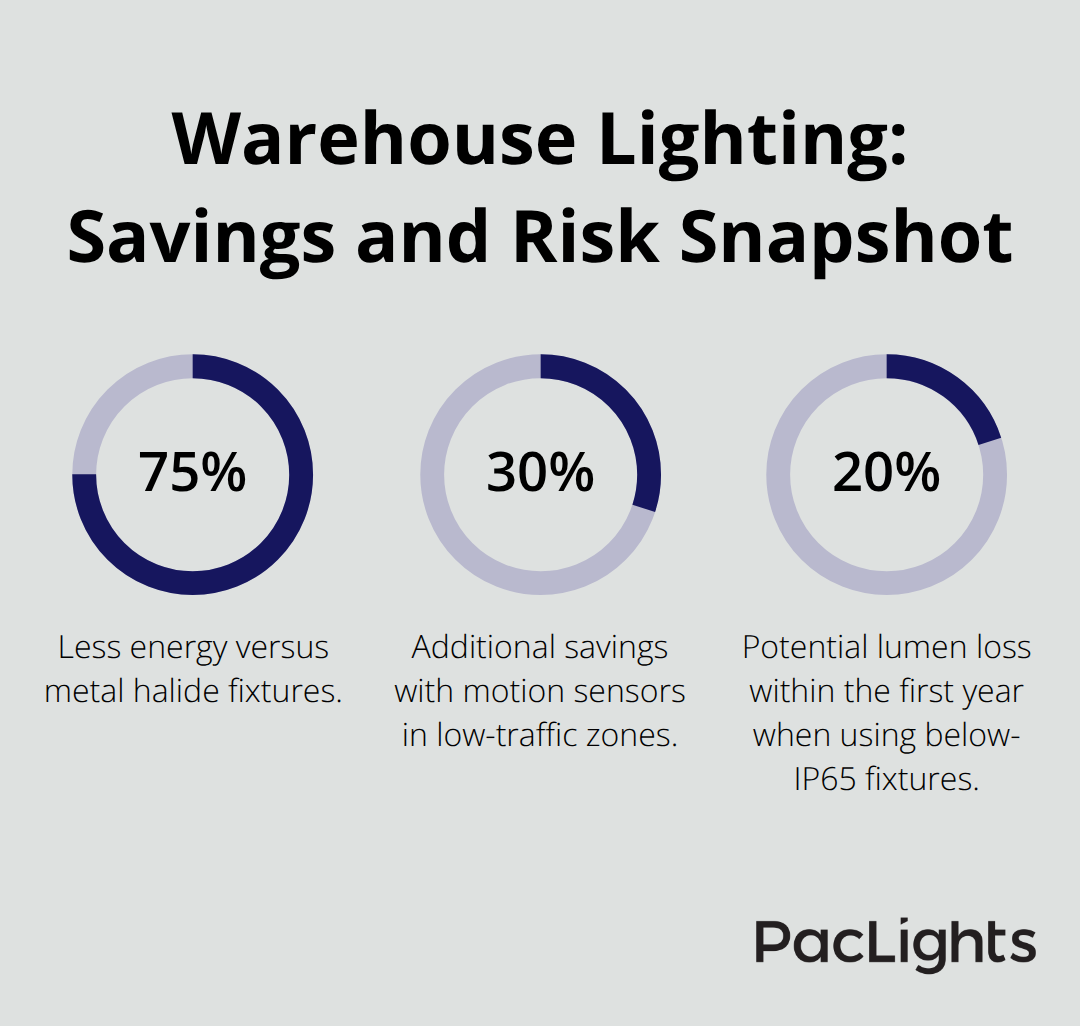
The long-term economics make vapor tight fixtures the only practical choice. High-bay LED vapor tight fixtures deliver over 50,000-hour lifespans, cutting replacement labor and downtime costs significantly compared to fluorescent or HID alternatives that require frequent maintenance. Energy consumption drops by up to 75% versus metal halide fixtures, lowering electricity costs year after year.
A warehouse upgrading 700 high-bay fixtures and 4,000 fluorescent tubes to LED vapor tight technology gains improved light quality, reduced maintenance interruptions, and faster inventory accuracy. The upfront investment pays back within three to five years through energy and labor savings alone, making sealed LED fixtures the financially sound decision for any serious warehouse operation.
Selecting the Right Sealed Fixture for Your Needs
The right vapor tight fixture depends on your specific warehouse conditions and operational demands. Ceiling height, moisture levels, chemical exposure, and task requirements all influence which sealed fixture type delivers the best performance and value for your facility.
What Specifications Matter Most for Warehouse Vapor Tight Fixtures
IP Ratings: Your First Line of Defense
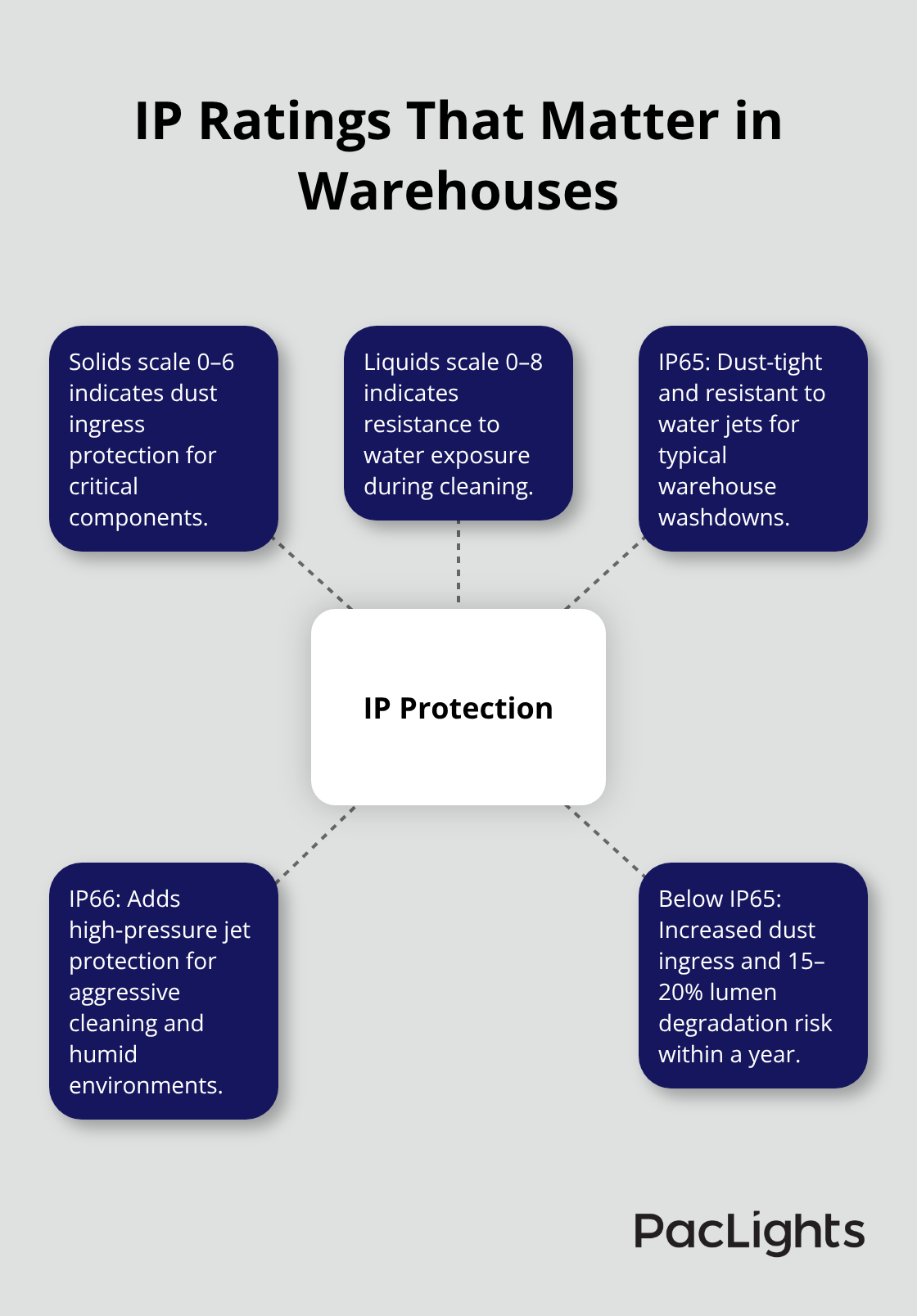
IP65 and IP66 ratings have become industry standards for warehouse vapor tight fixtures, and there’s a reason. The first digit in an IP code measures solid particle protection on a scale of zero to six, while the second digit measures liquid protection on a scale of zero to eight. IP65 means complete dust protection and water jet resistance, which handles most warehouse washdown scenarios. IP66 adds high-pressure water jet protection, making it the choice for aggressive cleaning environments like food processing or chemical storage facilities.
Anything below IP65 leaves your warehouse vulnerable to dust accumulation that degrades lumen output by fifteen to twenty percent within the first year. IP65 serves as the minimum threshold for standard warehouse operations, with IP66 recommended for facilities with regular washdown protocols or high humidity conditions.
Material Composition and Gasket Quality
Material composition directly impacts longevity in corrosive environments. Polycarbonate housings resist chemical attack better than aluminum, which oxidizes when exposed to cleaning agents or fertilizer vapors common in agricultural storage. Reinforced glass options provide superior clarity and chemical resistance but require careful handling during installation.
Gasket quality matters equally-EPDM rubber gaskets outperform standard silicone in temperature swings and chemical exposure, maintaining seals even when warehouses cycle between freezing cold storage and heated processing areas. These materials work together to create a barrier that protects internal components from moisture and corrosive vapors.
Energy Efficiency Through LED Technology
LED vapor tight fixtures now deliver fifty to seventy-five percent energy reductions compared to metal halide systems, translating to real savings on monthly utility bills. A warehouse consuming twelve kilowatts with traditional high-bay fixtures can drop to three kilowatts with equivalent LED vapor tight replacements.
Selectable wattage options across most modern fixtures allow you to tune brightness without replacing entire units-choose sixty, ninety, or one hundred twenty watts depending on ceiling height and task requirements. This flexibility means you pay only for the light you actually need.
Color Temperature and Brightness Control
Color temperature selection between four thousand and five thousand Kelvin improves worker visibility and reduces eye strain during long shifts, with some models offering broader ranges from twenty-seven hundred to seven thousand Kelvin for specialized applications. Dimmable LED vapor tight fixtures paired with motion sensors cut energy consumption another thirty to forty percent in low-traffic storage zones while maintaining full brightness in active picking areas.
Lifespan and Maintenance Impact
Lifespan specifications exceeding fifty thousand hours mean replacements occur every five to seven years instead of every one to two years with fluorescent systems, dramatically reducing maintenance labor and warehouse downtime. This extended performance window transforms your lighting from a constant maintenance burden into a reliable infrastructure investment.
These specifications directly influence which fixtures will perform best in your specific warehouse conditions. The next step involves matching these technical requirements to your actual facility layout and operational demands.
How to Select and Install Vapor Tight Fixtures in Your Warehouse
Assess Your Warehouse Conditions First
Start with a brutal assessment of what your warehouse actually endures. Walk your facility and document moisture sources-washdown areas near loading docks, cold storage condensation, humidity from outdoor air exchange-then map chemical exposure zones where cleaning agents or processing materials concentrate. Ceiling height matters enormously; warehouses with ceilings under fifteen feet need low-profile vapor tight fixtures or linear high bays that fit tight spaces, while facilities with fifteen-foot-plus clearances benefit from traditional high-bay configurations delivering up to twenty-seven thousand four hundred lumens in four-foot formats. Task requirements determine brightness: general warehouse storage needs twenty to thirty foot-candles, packing and inspection areas demand fifty or more foot-candles, while detailed workstations require seventy-plus foot-candles. Measure your current light levels with a basic foot-candle meter during peak operations to identify dark zones where fixtures fail or where productivity suffers.
Match Fixtures to Your Specific Needs
This data becomes your selection baseline-you need fixtures that deliver measurable brightness improvements in underlit areas while maintaining efficiency in zones already performing adequately. For standard warehouse operations with moderate moisture and dust, IP65-rated vapor tight fixtures serve as your minimum choice; IP66 becomes mandatory only in food processing, chemical storage, or facilities with aggressive washdown protocols. Eight-foot configurations deliver around eleven thousand seven hundred lumens, making them ideal for expansive floor areas, while four-foot variants offer flexibility with outputs ranging from three thousand to seven thousand lumens depending on wattage selection. Choose selectable wattage options-sixty, ninety, or one hundred twenty watts-allowing you to tune brightness for specific ceiling heights and aisle widths without replacing entire fixture bodies.
Install Fixtures Correctly for Maximum Performance
Installation requires disconnecting power completely, verifying wiring integrity before mounting, and positioning fixtures to achieve uniform coverage across picking zones and docks. Mount at appropriate heights per manufacturer specifications, then verify even light distribution before declaring completion. Proper placement prevents dark corners and ensures workers can read labels and operate forklifts safely throughout your facility.
Maintain Sealed Fixtures to Preserve Output
Maintenance becomes nearly effortless with sealed designs; clean fixtures monthly with a soft cloth to preserve lumen output, check electrical connections quarterly for corrosion, and address any flickering immediately by verifying voltage stability. Replacement parts must come from your original manufacturer or authorized dealers-substitutes compromise sealing performance and void warranties that protect your investment.
Calculate Your Return on Investment
The economic reality proves compelling: upfront costs exceed standard fixtures by twenty to thirty percent, but energy reductions of fifty to seventy-five percent combined with replacement intervals stretching to five to seven years instead of one to two years deliver payback within thirty-six months for most facilities. This financial advantage transforms sealed LED fixtures from a premium option into the only sensible choice for warehouse operations serious about controlling long-term costs.
Final Thoughts
Vapor tight fixtures for warehouses eliminate the constant cycle of fixture failures, maintenance interruptions, and safety risks that plague facilities relying on traditional lighting systems. Your warehouse gains energy reductions of fifty to seventy-five percent compared to metal halide systems, cutting electricity costs year after year. Replacement intervals stretch from one to two years with fluorescent fixtures to five to seven years with LED technology, dramatically reducing labor expenses and operational downtime. Most facilities recover their upfront investment within three years through energy savings and reduced maintenance alone.
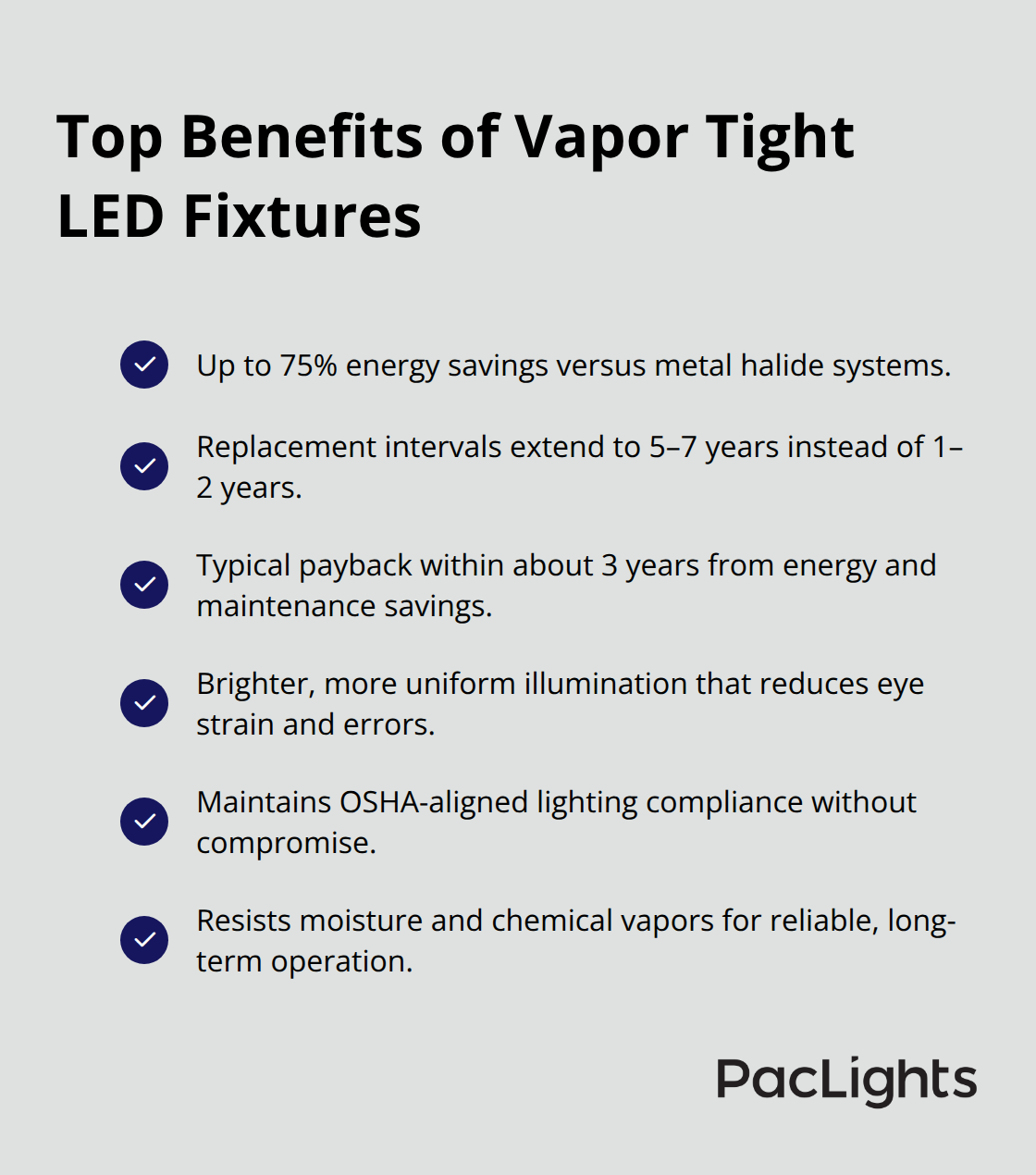
Workers benefit from brighter, more uniform illumination that reduces eye strain and improves picking accuracy in sealed fixture environments. Your facility maintains compliance with OSHA safety standards and building codes without compromise. Chemical and moisture exposure no longer degrades your lighting infrastructure, allowing you to focus on core warehouse operations instead of managing constant fixture replacements.
Start with an honest assessment of your moisture levels, chemical exposure, ceiling height, and task requirements. Then select fixtures with appropriate IP ratings, material composition, and brightness levels to address those conditions directly. We at PacLights offer free lighting assessments to help you identify the exact vapor tight fixtures your facility needs.
Disclaimer: PacLights is not responsible for any actions taken based on the suggestions and information provided in this article, and readers should consult local building and electrical codes for proper guidance.