

Moisture and harsh chemicals destroy standard lighting fixtures, leaving facilities in the dark and draining budgets. At PacLights, we’ve seen firsthand how the wrong fixtures fail in demanding environments like food processing plants, car washes, and chemical storage areas.
This vapor tight fixtures guide walks you through everything you need to know about selecting and installing LED fixtures that actually survive these conditions. You’ll learn which ratings matter, how to avoid costly installation mistakes, and why the right choice pays for itself in years of reliable performance.
What Vapor Tight Fixtures Actually Do
How Vapor Tight Seals Protect Your Lighting
Vapor tight fixtures seal out moisture, chemicals, and contaminants that destroy standard LED lights. These fixtures use gasket seals, epoxy-coated components, and fully enclosed designs to create a barrier against water vapor, salt spray, and corrosive fumes. The construction differs fundamentally from standard fixtures: vapor tight models feature sealed ballast compartments, gasketed lens covers, and corrosion-resistant hardware that prevent water penetration at every joint.
Where Standard Fixtures Fail
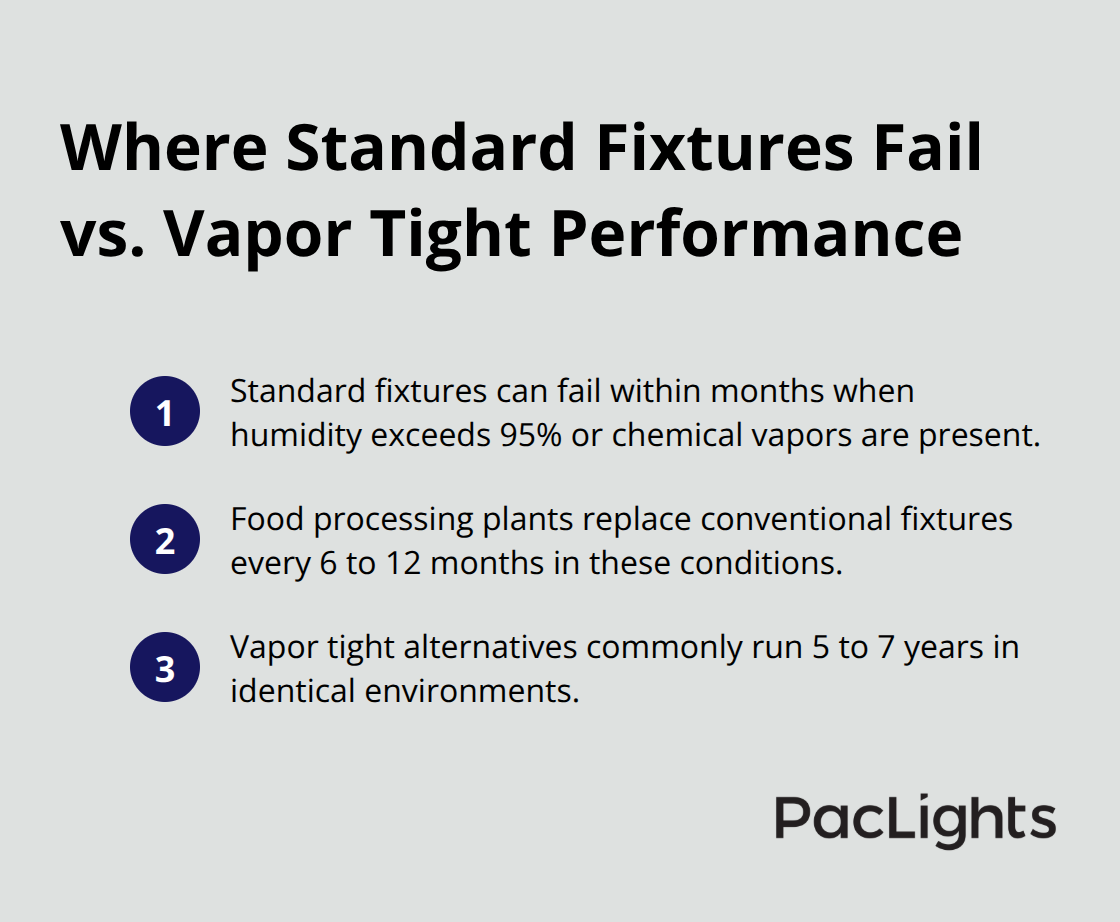
In environments where humidity exceeds 95 percent or chemical vapors are present, standard fixtures fail within months. Food processing plants report fixture replacement cycles of 6 to 12 months with conventional lighting, while vapor tight alternatives operate for 5 to 7 years in identical conditions. This isn’t about minor durability improvements-it’s about the difference between lights that function and lights that corrode.
Industries That Demand Vapor Tight Protection
Meat processing, seafood handling, chemical manufacturing, and car washes depend on vapor tight protection because moisture and salt air are constant threats. Commercial refrigeration facilities experience condensation cycles that attack standard fixtures relentlessly, while facilities using high-pressure water spray systems need sealed designs to survive daily exposure. Parking garages in coastal regions face salt-laden air that accelerates corrosion, and pharmaceutical manufacturing requires fixtures that won’t introduce contamination or fail during critical operations.
Standards and Performance Benefits
The NEMA Type 4X rating standard specifically addresses these environments, requiring fixtures to withstand salt spray testing and corrosive atmospheres. When you select vapor tight fixtures, you invest in operational continuity-facilities that choose sealed designs report 60 to 70 percent fewer emergency lighting repairs and significantly lower maintenance labor costs over a five-year period.
Moving Forward with the Right Selection
Understanding what vapor tight fixtures accomplish sets the foundation for choosing the right model. The next step involves evaluating the specific ratings and performance standards that match your facility’s conditions.
Selecting the Right Vapor Tight LED Fixture for Your Facility
IP Ratings and Sealing Standards That Matter
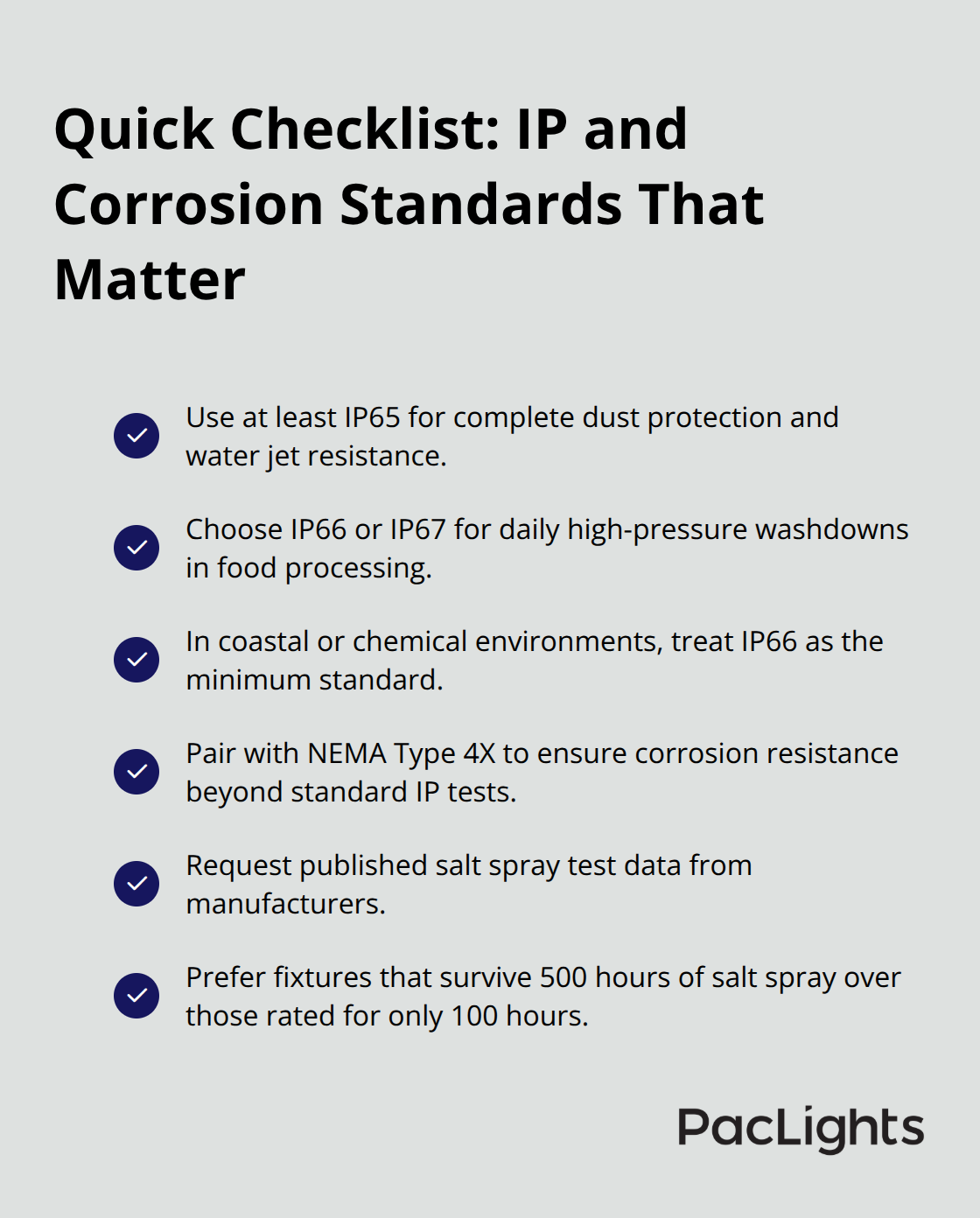
IP ratings determine whether a fixture survives your specific environment, and selecting the wrong rating wastes thousands in premature replacements. The IP code uses two digits: the first rates solid particle protection, the second rates liquid protection. For vapor tight fixtures, you need at least IP65, which means complete dust protection and water jet resistance. However, IP66 or IP67 ratings become necessary in food processing plants where high-pressure washdowns occur daily-IP65 alone won’t withstand the force of those spray systems.
In coastal facilities or chemical plants with salt spray or corrosive vapors, IP66 represents the minimum standard because these environments demand superior sealing. The NEMA Type 4X rating pairs with IP ratings and specifically tests corrosion resistance through salt spray exposure, which standard IP testing doesn’t cover. When you compare fixtures, verify that manufacturers publish actual test results rather than just claiming compliance. Request the salt spray test data and review how many hours the fixture withstood exposure before corrosion appeared. Fixtures that survive 500 hours of salt spray testing will outlast those rated for only 100 hours, and that difference compounds over years of operation.
Brightness and Energy Efficiency for Your Tasks
Brightness and energy efficiency requirements depend on your facility’s layout and task demands, not on what seems bright in a showroom. A meat processing plant needs 50 to 100 foot-candles on cutting and packaging surfaces, while a general warehouse requires only 20 to 30 foot-candles. LED vapor tight fixtures from reputable manufacturers now deliver 100 to 150 lumens per watt, which means you can achieve required brightness with less wattage than older fluorescent vapor tight models.
Calculate your actual lighting needs using foot-candle requirements for your specific tasks, then select fixtures that deliver those lumens while minimizing power draw. This approach prevents you from overspending on excessive brightness or undershooting performance requirements.
Mounting Compatibility and Infrastructure Fit
Mounting compatibility matters more than most facilities realize-retrofit projects often stall because existing infrastructure won’t accept standard vapor tight fixture mounting. If you upgrade from older fixtures, verify that the electrical infrastructure supports the new fixture’s voltage and ballast type before purchasing. Mismatched mounting or electrical requirements force costly facility modifications that inflate project budgets.
PacLights offers free lighting layout designs and ROI assessments that account for your facility’s actual conditions, your existing infrastructure, and your specific brightness needs. This approach eliminates guesswork and prevents expensive installation surprises. With these assessments in hand, you move forward with confidence into the installation phase.
Installation Best Practices for Vapor Tight LED Fixtures
Prepare Your Facility Before Installation Begins
Proper installation determines whether your vapor tight fixtures deliver five years of reliable performance or fail within months. Walk your facility and document existing electrical infrastructure, mounting heights, and environmental conditions before you order fixtures. Photograph areas where moisture collects, where chemical vapors concentrate, and where water spray systems operate. This documentation prevents installation teams from making assumptions that lead to incorrect fixture selection or mounting.
Electrical specifications matter enormously. Verify that your facility’s voltage matches the fixtures you’ve selected, confirm that existing wiring can handle the ballast requirements, and identify whether you need additional conduit protection in areas with chemical exposure. Many facilities discover mid-installation that their electrical panels lack capacity or that existing conduit routing won’t accommodate vapor tight fixtures without expensive rework.
Schedule a Pre-Installation Walkthrough
Schedule a pre-installation walkthrough with your electrician and lighting supplier at least two weeks before work begins. This meeting should address mounting locations, electrical connections, and any structural modifications needed to support heavier fixture designs. Vapor tight fixtures typically weigh 15 to 25 percent more than standard models due to sealed components and reinforced housings, so ceiling structures must support this additional load. Check building documentation or have a structural engineer verify weight ratings if you’re uncertain about ceiling capacity.
Avoid the Three Most Common Installation Mistakes
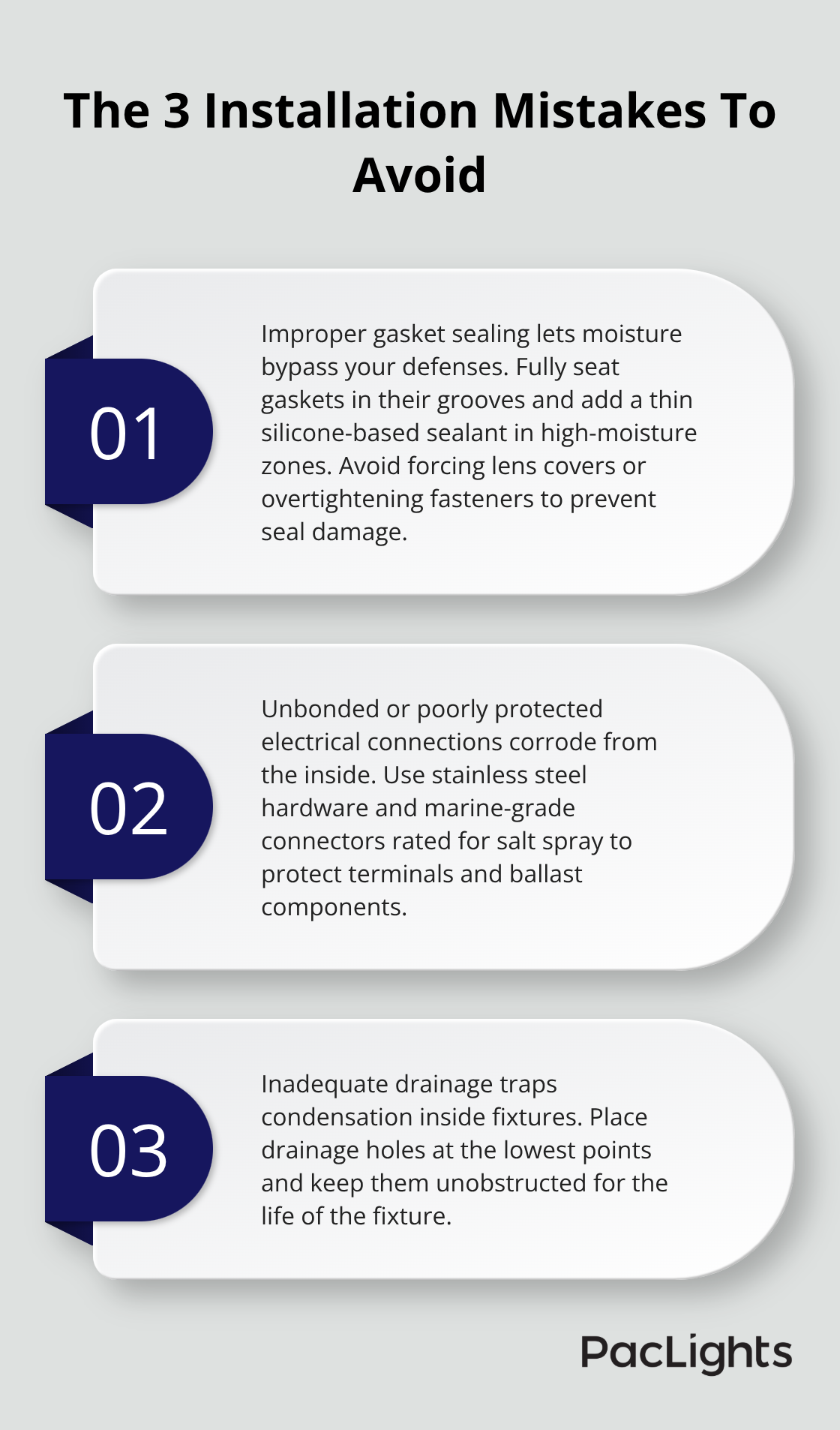
Installation mistakes cluster around three critical areas that facilities repeatedly overlook. First, improper gasket sealing during assembly creates moisture pathways that defeat the entire purpose of vapor tight protection. Gaskets must seat completely in their grooves, and you should apply a thin layer of silicone-based sealant around gasket perimeters in high-moisture environments. Never force lens covers over gaskets or overtighten fasteners because this damages seals and causes premature failure.
Second, failing to bond electrical connections in corrosive environments allows corrosion to attack terminals and ballast components from inside sealed enclosures. All electrical connections inside vapor tight fixtures should use stainless steel hardware and marine-grade connectors rated for salt spray exposure. Third, inadequate drainage planning in areas with condensation or water spray creates trapped moisture inside fixtures. Install vapor tight fixtures with drainage holes positioned at the lowest points, and verify that these holes remain unobstructed throughout the fixture’s life.
Test and Verify After Installation
Facilities in food processing plants report that condensation trapped inside poorly installed fixtures causes internal corrosion within 8 to 12 months, negating the fixture’s vapor tight design. After installation, test all sealed connections using moisture detection equipment before you activate fixtures. This verification step takes two to three hours per facility but prevents weeks of troubleshooting after fixtures fail prematurely. Schedule follow-up inspections at three months and six months to verify gasket integrity and identify any moisture intrusion before it causes damage.
Conclusion
Vapor tight fixtures solve a problem that standard lighting simply cannot address: survival in environments where moisture, chemicals, and salt air destroy ordinary equipment. Food processing plants spending $8,000 to $15,000 annually replacing failed standard fixtures recover their investment in vapor tight alternatives within two to three years, then operate with 60 to 70 percent fewer emergency repairs for the remainder of the fixture’s lifespan. Coastal facilities and chemical plants see similar returns because sealed designs eliminate the constant cycle of corrosion and replacement that drains maintenance budgets.
If you operate standard fixtures in high-moisture or corrosive environments, you already lose money to premature failures and emergency repairs. Planning a new facility or major renovation presents the opportunity to select vapor tight fixtures from the start and prevent costly retrofits later. This vapor tight fixtures guide provides the technical foundation you need to make that decision with confidence.
We at PacLights provide free lighting layout designs and ROI assessments that account for your facility’s specific environmental conditions, existing infrastructure, and brightness requirements. Contact our team with details about your facility’s conditions, and we’ll provide the data you need to move forward with certainty.
Disclaimer: PacLights is not responsible for any actions taken based on the suggestions and information provided in this article, and readers should consult local building and electrical codes for proper guidance.