

Choosing the right ceiling lighting means understanding what you’re actually paying for. Flush mount downlight prices vary widely depending on quality, efficiency, and features-and that variation matters when you’re planning a real budget.
We at PacLights know that most facility managers struggle to connect upfront costs with long-term savings. This guide breaks down exactly what drives pricing and shows you how to calculate actual return on investment.
What Really Drives Flush Mount Downlight Costs
LED Efficiency Creates the Biggest Savings
LED efficiency separates cheap fixtures from ones that actually save money. A 10-watt LED flush mount outputs around 800 lumens, matching a 60-watt incandescent while delivering about 75% energy savings. That difference compounds fast: over a 25,000-hour lifespan, a single LED downlight saves roughly $2,700 in electricity costs versus incandescent, translating to about $9 monthly savings per fixture.
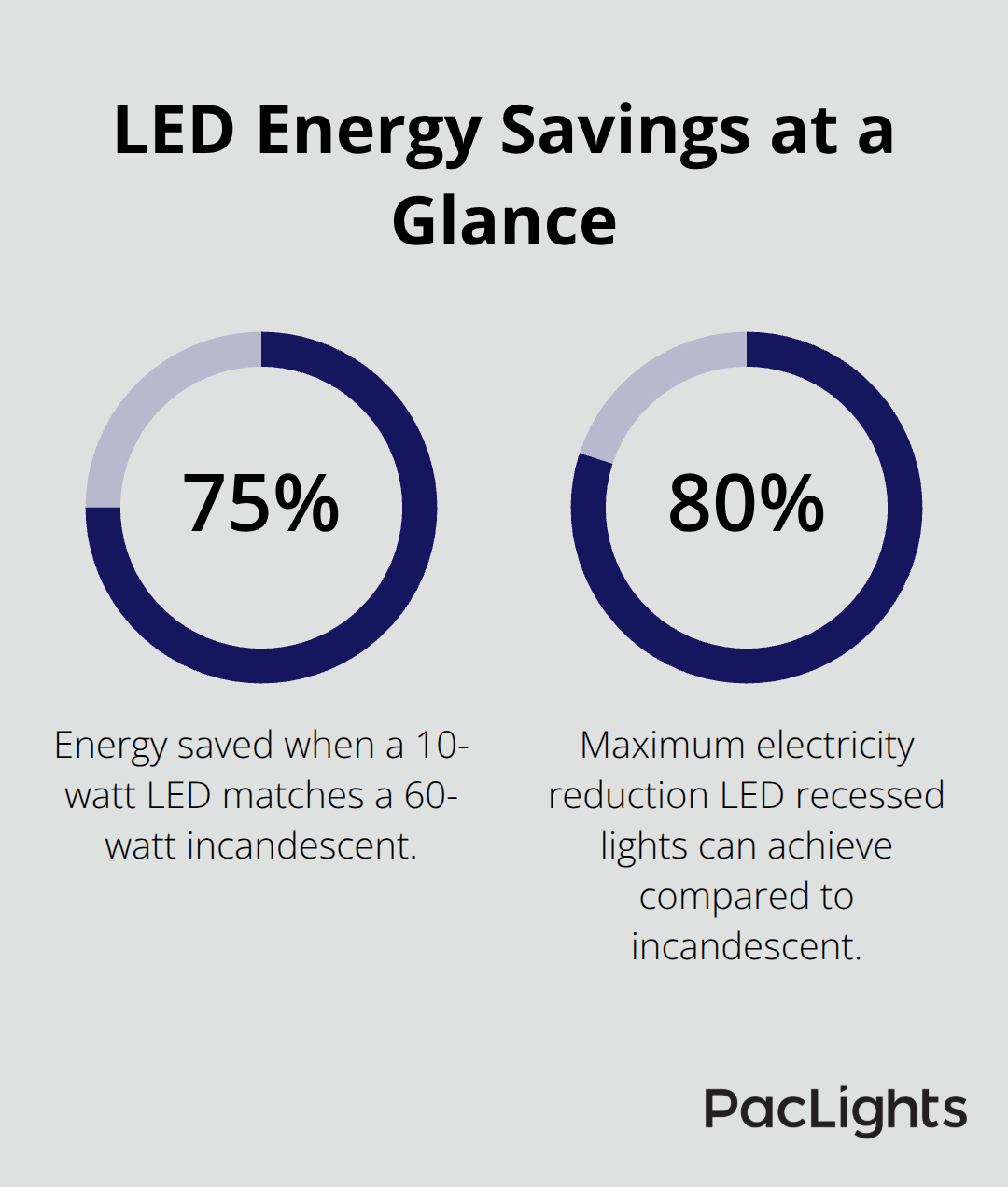
According to Angi’s 2026 data, LED recessed lights use up to 80% less electricity than incandescent options, saving about $10–$50 per year for a whole-home installation.
Material quality directly impacts this efficiency. Higher-quality fixtures with better thermal management keep LEDs cooler, extending their 25,000-hour lifespan compared to incandescent bulbs that last around 1,000 hours. Dimmable LED fixtures cost 15–25% more upfront (roughly $35–$50 per retrofit versus $20–$40 for non-dimmable), but dimming during low-usage periods extends fixture life and cuts energy further.
Installation Type and Upfront Costs
Installation type matters significantly for your budget. Retrofit work typically costs $60–$150 per fixture in labor, while new construction projects offer easier access and lower labor rates. Most flush mount ceiling lights are available under $200, making them a cost-effective option for upgrading ceiling lighting, though premium fixtures with smart controls run higher.
Smart Controls Transform Operating Costs
Smart control features shift the pricing equation entirely. Networked lighting controls let you schedule fixtures by time of day, occupancy, or daylight availability, creating measurable savings beyond what dimming alone achieves. For a 12×14 ft kitchen requiring six fixtures at roughly 500 lumens each, smart scheduling can reduce annual energy consumption by 15–30% depending on usage patterns.
Motion sensors work particularly well in hallways and bathrooms, where occupancy is sporadic; fixtures spaced 6–8 feet apart prevent dark spots while sensors eliminate wasted light in empty spaces. Color temperature consistency matters more than most facility managers realize. The Illuminating Engineering Society recommends 4000–5000K for food preparation spaces to improve color rendering and visibility. Mixing color temperatures in the same space creates visual tension and makes spaces feel poorly designed, so commit to one ceiling fixture temperature throughout your facility.
Design Details That Affect Performance and Price
Trim styles influence both aesthetics and light distribution. Flangeless trims create seamless contemporary looks, flanged trims add architectural emphasis, open trims maximize light output while baffled trims reduce glare. Adjustable trims allow about 30° aiming, letting you direct light precisely where it’s needed rather than wasting output in dead zones.
IC-rated (insulation-contact) housings cost slightly more but meet code requirements near attic insulation and prevent safety hazards, so they’re non-negotiable in retrofit projects where insulation proximity is uncertain. These design choices directly affect both your upfront investment and long-term performance, which means comparing fixtures across budget ranges requires understanding how each component contributes to total cost of ownership.
What to Spend at Each Budget Level
Basic Fixtures Under $200: When Low Cost Makes Sense
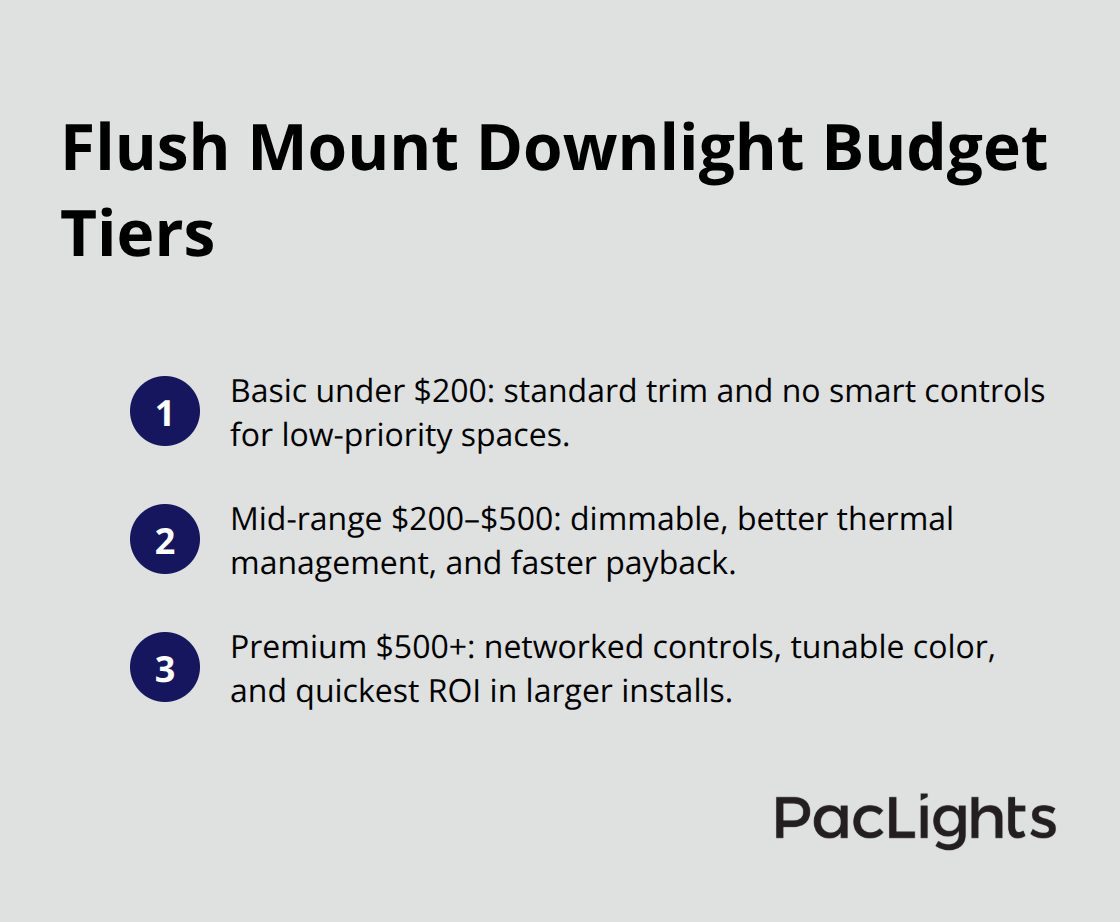
Most facility managers assume budget determines quality, but that’s only partially true. Under $200 per fixture, you purchase basic LED downlights with standard trim and minimal controls-adequate for storage areas, hallways, or spaces where light consistency matters less than upfront cost.
These models typically use 10-watt LEDs that deliver around 800 lumens, meeting baseline illumination without smart scheduling or dimming. The catch: you forfeit energy optimization opportunities. A basic retrofit in a 12-fixture hallway costs roughly $1,200–$1,800 in labor and materials combined, according to Angi’s 2026 data, but without occupancy sensors you light empty spaces regularly. For facilities with sporadic occupancy (bathrooms, storage, secondary hallways), this approach wastes 20–30% of annual energy spend.
Mid-Range Fixtures ($200–$500): The Sweet Spot for Most Facilities
Mid-range fixtures between $200–$500 add dimmable capability and better thermal management, which extends the 25,000-hour lifespan while cutting energy another 10–15% through scheduling flexibility. A kitchen or main work area with six fixtures at this level costs $1,400–$2,500 installed, and the dimming payoff compounds: over five years, dimming during low-activity periods saves roughly $300–$600 in electricity alone. Angi data shows mid-range LED downlights save $10–$50 annually per fixture versus incandescent, meaning a six-fixture kitchen recoups its dimming premium within 18–24 months. Mid-range fixtures work well for standard work areas where occupancy follows predictable patterns and manual control remains acceptable.
Premium Fixtures Above $500: Advanced Controls and Long-Term Savings
Premium fixtures above $500 integrate networked controls, allowing centralized scheduling, daylight harvesting, and real-time energy monitoring across your entire facility. These systems require higher upfront investment-a 10-fixture installation might run $3,500–$5,000-but deliver measurable ROI within 3–4 years through combined energy, maintenance, and labor savings. IC-rated housings, adjustable trim for precise light aiming, and color-tunable options (2700K–5000K) come standard at this tier, eliminating retrofit costs later when requirements change. Premium networked systems recover costs faster in larger installations where centralized scheduling eliminates manual adjustments and prevents the common mistake of leaving lights on in unoccupied zones.
Matching Fixture Tier to Your Facility’s Needs
The deciding factor isn’t fixture price alone; it’s occupancy patterns and operational hours. A 24-hour manufacturing facility with consistent lighting demand needs premium controls to justify the investment. A small office with standard 9–5 hours and stable layouts might max out mid-range fixtures without losing financial ground. Avoid the false economy of choosing the cheapest option available; basic fixtures in high-traffic areas create maintenance headaches when LEDs fail unevenly or thermal issues shorten lifespan below the promised 25,000 hours. The right choice matches fixture tier to your facility’s usage density and control sophistication-basic for low-occupancy support spaces, mid-range for standard work areas, and premium controls for facilities where energy optimization directly impacts your bottom line.
Understanding your facility’s actual lighting patterns reveals which tier delivers real value. The next step involves calculating whether your specific installation will recoup its investment through energy savings and reduced maintenance costs.
Calculating Real ROI From Flush Mount Downlights
Energy Savings Form Your ROI Foundation
ROI calculations for flush mount downlights require actual numbers, not assumptions. Start with energy consumption: a basic retrofit replacing six 60-watt incandescent fixtures with 10-watt LED equivalents cuts 300 watts from your circuit load immediately. If those fixtures run 40 hours weekly, that’s 624 kilowatt-hours annually per fixture, or 3,744 kWh for six fixtures. At the U.S. average commercial rate of roughly $0.12 per kilowatt-hour, you save approximately $449 annually on electricity alone. According to Angi’s 2026 data, LED recessed lights deliver $10–$50 in yearly savings per fixture compared to incandescent, so a six-fixture kitchen installation nets $60–$300 annually depending on usage intensity. This baseline matters because it anchors your payback timeline. A mid-range retrofit at $1,400–$2,500 installed recoups its cost within 3–5 years through energy savings alone.
Maintenance Costs Reveal True Total Cost of Ownership
Maintenance costs expose why fixture quality actually reduces total cost of ownership. An incandescent bulb lasts 1,000 hours; a quality LED reaches 25,000 hours. If your facility operates 50 hours weekly, that incandescent burns out every 5 months, while the LED runs for 9.6 years without replacement. Angi data shows typical fixture repairs run $50–$200 per unit when failures occur, but LED’s extended lifespan means you avoid those service calls almost entirely during the payback period. A six-fixture space replacing incandescent annually incurs roughly $300–$1,200 in annual maintenance labor alone; switching to LED eliminates that cost for nearly a decade. Multiply this across a facility with 20+ fixtures and maintenance savings reach $1,500–$4,000 yearly, accelerating payback to 2–3 years. The 50% rule from Angi states that if repair costs exceed half the fixture price, replacement becomes more cost-effective than repair. For basic under-$200 fixtures, a $100 repair triggers replacement, but premium fixtures above $500 justify repair investment, extending their lifespan value further.
Smart Controls and Occupancy Sensors Accelerate Payback
Premium networked systems add another layer: centralized scheduling and occupancy sensors prevent the common waste of lighting unoccupied zones. A facility with sporadic occupancy patterns (offices with variable schedules, manufacturing floors with shift changes) wastes 20–30% of lighting energy without occupancy control. Installing motion sensors or daylight harvesting on mid-range fixtures costs roughly $35–$75 per fixture but recovers that investment within 12–18 months through reduced runtime alone. These controls transform your facility from static lighting to dynamic systems that respond to actual occupancy and natural light availability.
Productivity and Workplace Comfort Drive Hidden Returns
Consistent 4000–5000K color temperature in work areas improves task visibility and reduces eye strain, lowering error rates in detail-oriented work. The Illuminating Engineering Society recommends this range specifically for food preparation and assembly areas because color rendering directly affects worker accuracy. A manufacturing facility reducing defect rates by just 2–3% through improved lighting clarity often sees savings that dwarf energy cost reductions. Workplace comfort also affects retention: facilities with poor overhead lighting generate complaints and turnover, while consistent, flicker-free LED lighting (especially dimmable models that prevent the harsh brightness transitions of older fixtures) creates environments where workers report higher satisfaction. These benefits resist quantification, but they’re real operational factors that justify mid-range and premium fixture investments beyond pure energy math.
Calculate Your Facility’s Actual Payback Timeline
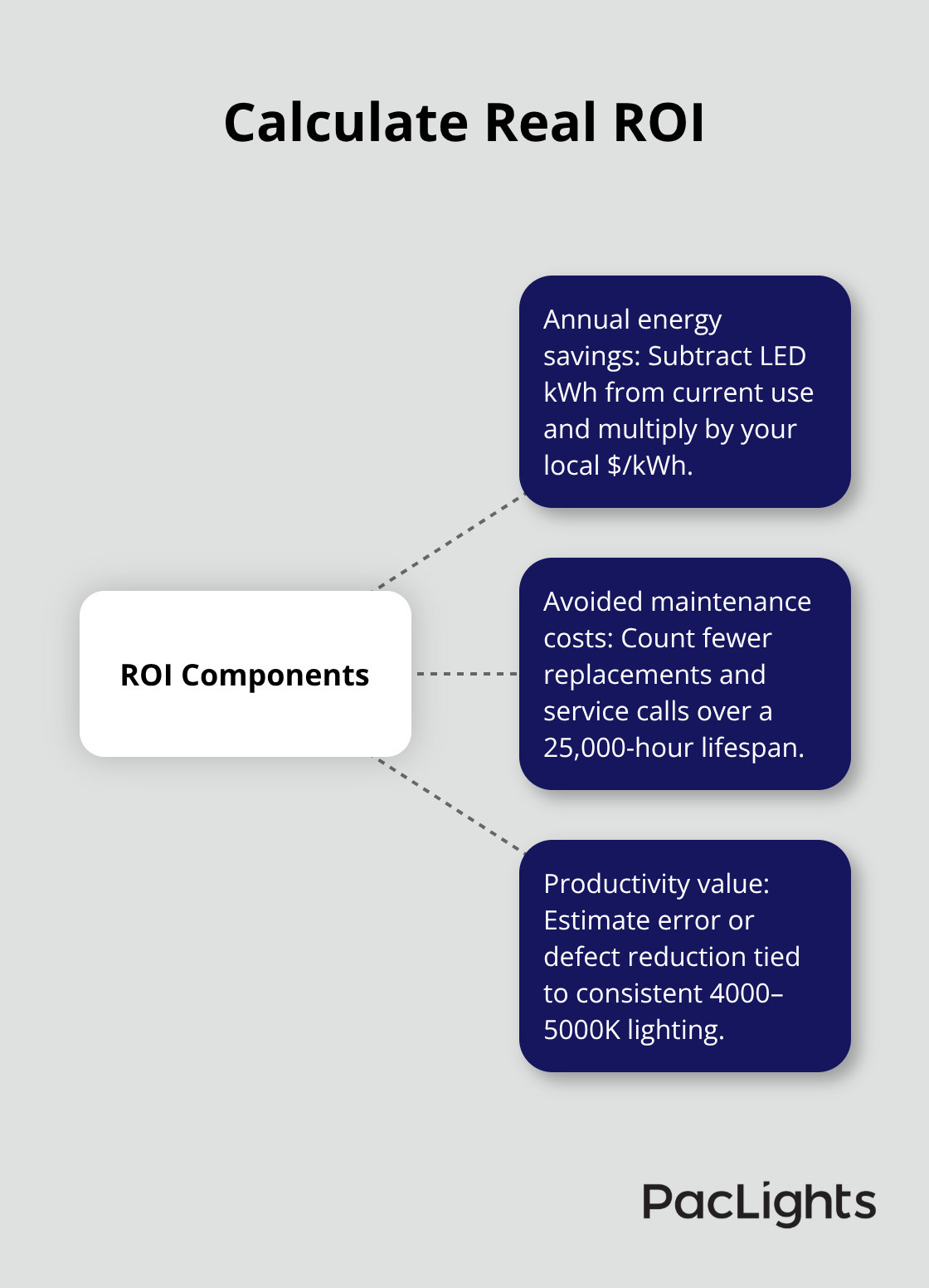
Calculate your facility’s actual ROI by totaling three components: annual energy savings (kWh reduction multiplied by your local rate), avoided maintenance costs (replacement labor and parts), and estimated productivity value (conservative estimate based on your operation’s error or defect rates). A six-fixture retrofit typically shows payback between 2–5 years depending on usage patterns and fixture tier chosen, but facilities with high occupancy variability or precision work requirements often see payback within 18–24 months when productivity factors are included conservatively. Your specific numbers will vary based on current fixture type, operational hours, and local electricity rates-factors that make generic ROI claims unreliable for your situation.
Final Thoughts
Flush mount downlight price reflects a straightforward reality: the cheapest option rarely delivers the lowest total cost. Basic fixtures under $200 work for low-occupancy spaces where energy optimization matters less than upfront simplicity, while mid-range fixtures between $200–$500 represent the practical choice for most facilities because dimming capability and better thermal management recover their premium within 18–24 months through energy savings alone. Premium systems above $500 justify their cost in larger installations where networked controls eliminate manual adjustments and prevent wasted lighting in unoccupied zones.
Your facility’s occupancy patterns determine which tier delivers real value. A manufacturing operation running 24 hours daily with variable shift schedules benefits immediately from occupancy sensors and centralized scheduling, whereas a standard office with predictable 9–5 hours may reach payback faster with mid-range dimmable fixtures and no additional controls. The critical mistake occurs when you choose based on fixture price alone rather than matching the system to your actual operational needs.
Calculate your specific ROI by combining three factors: annual energy savings from LED efficiency, avoided maintenance costs from extended lifespan, and productivity improvements from consistent lighting quality. We at PacLights understand that facility managers need reliable guidance beyond generic pricing claims, so contact our team to discuss your project and receive a customized analysis that connects flush mount downlight pricing to your facility’s actual savings potential.
Disclaimer: PacLights is not responsible for any actions taken based on the suggestions and information provided in this article, and readers should consult local building and electrical codes for proper guidance.