

Warehouse lighting controls are one of the easiest ways to cut energy costs without sacrificing visibility or safety. Most warehouses waste thousands of dollars annually on lighting that runs at full brightness even when spaces sit empty or natural light floods in.
At PacLights, we’ve seen facilities reduce their lighting energy consumption by 30-50% simply by switching to smart systems. The payback period typically arrives within two to three years, making this one of the fastest ROI investments available.
Three Technologies Cutting Warehouse Lighting Costs
Motion sensors eliminate wasted energy in warehouses faster than any other single upgrade. These sensors detect occupancy in specific zones and automatically switch lights off or dim them when nobody is present.
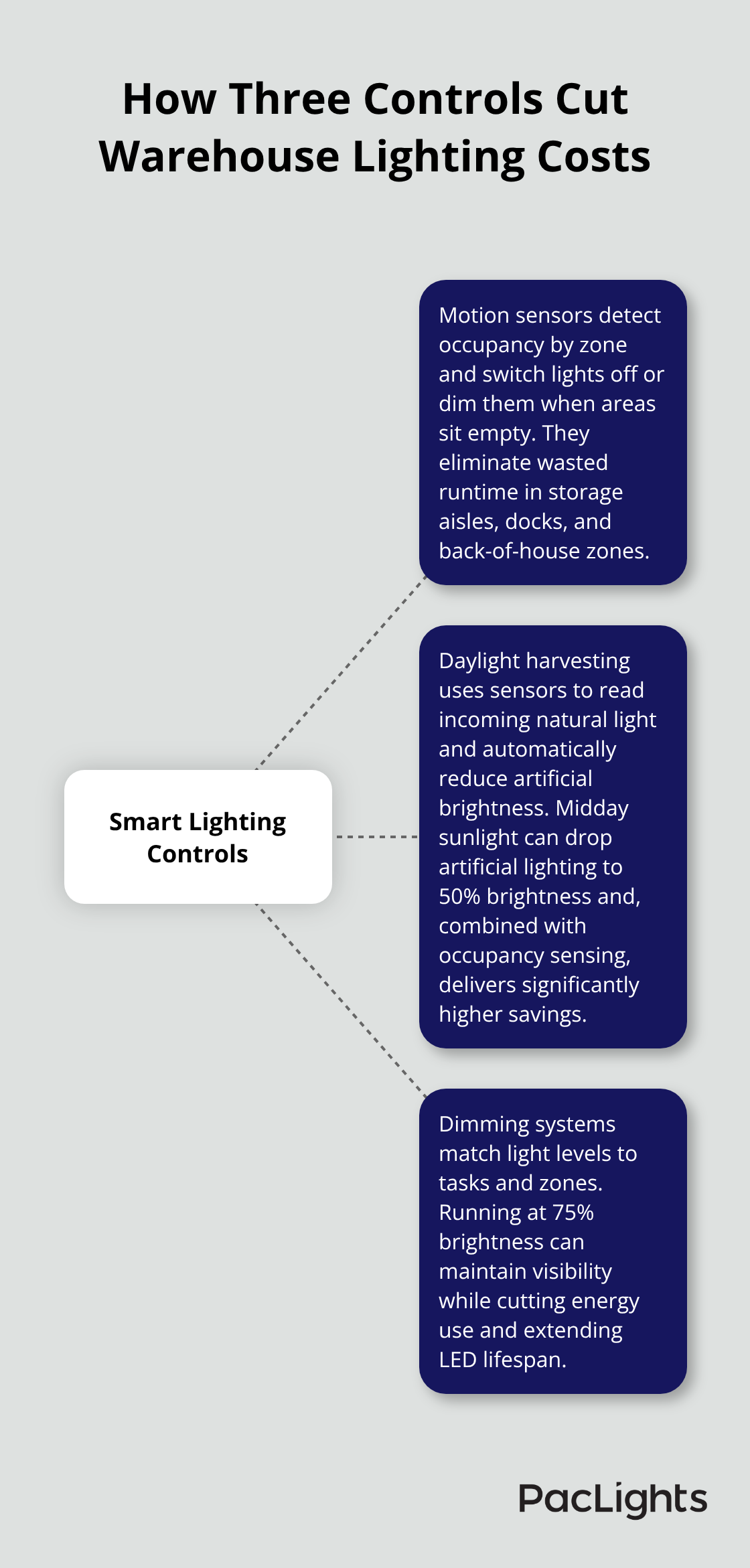
In a typical warehouse, 30-40% of lighting runs in spaces that sit empty during shifts, especially in storage areas, loading docks, and back-of-house zones. Motion sensors eliminate this waste instantly. A facility with 50,000 square feet can save between 8,000 and 12,000 kilowatt-hours annually just from occupancy-based controls, translating to $1,200-$1,800 in annual electricity costs depending on local rates. The sensors require minimal installation complexity, making them one of the easiest upgrades to deploy alongside existing fixtures.
Daylight Harvesting Captures Free Natural Light
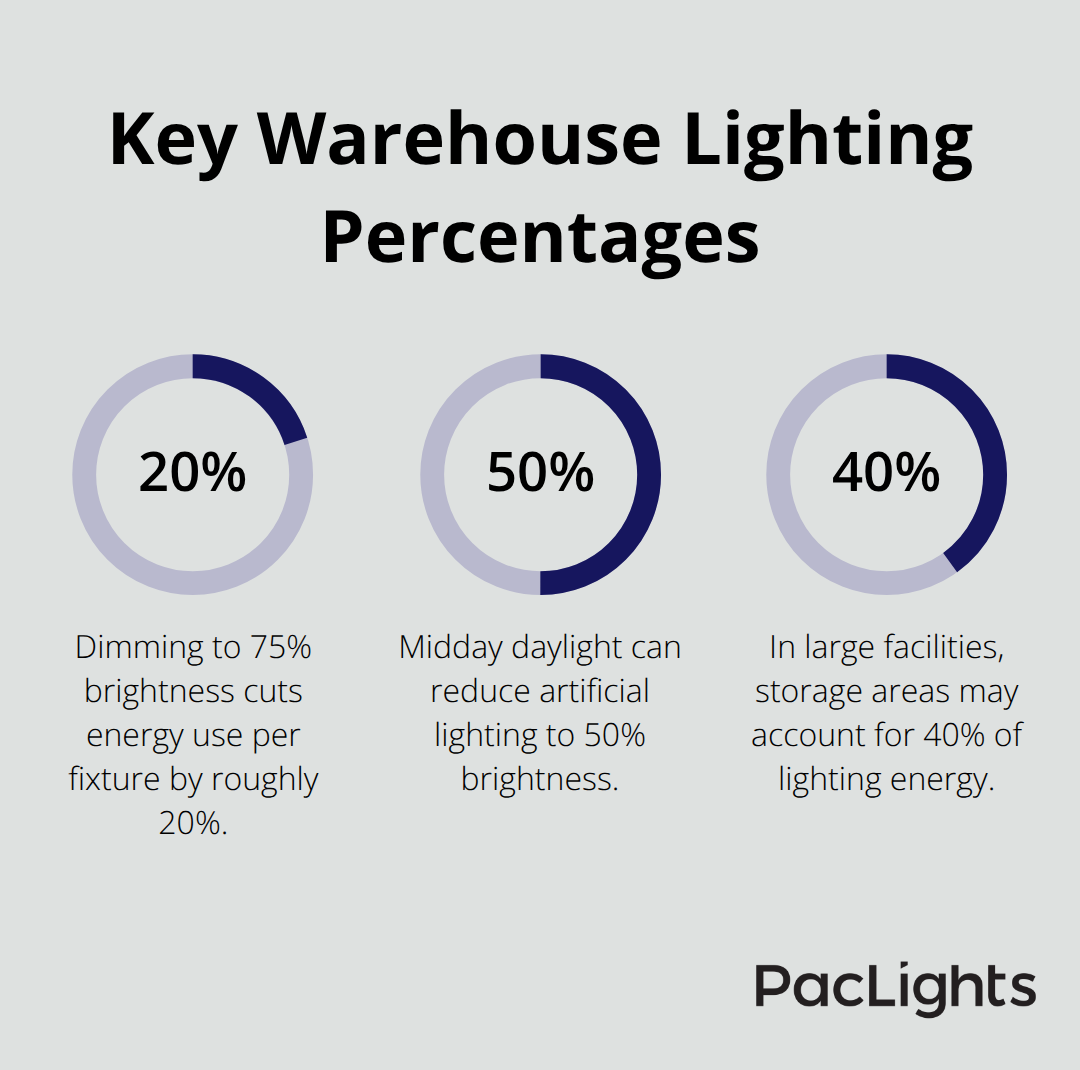
Daylight harvesting systems use light sensors to measure incoming natural light and automatically reduce artificial illumination accordingly. During midday hours when sunlight streams through warehouse skylights or windows, artificial lights can drop to 50% brightness or turn off entirely. Studies from the Lighting Research Center show that daylight harvesting combined with occupancy sensing delivers 50% higher energy savings than occupancy controls alone. A warehouse near windows or with skylights can recoup its sensor investment within 18-24 months through electricity savings alone. The key is positioning sensors where they accurately read natural light without shadows from racking or equipment blocking the readings.
Dimming Systems Match Light to Actual Tasks
Dimming controls address a fundamental problem most warehouses ignore: running all lights at full intensity regardless of actual need. Picking operations in well-stocked aisles need full brightness, but receiving areas during slow periods don’t. Dimmable LED fixtures let facility managers adjust brightness by zone, reducing energy draw without sacrificing visibility where it matters. Dimming to 75% brightness cuts energy consumption by roughly 20% per fixture while extending LED lifespan significantly. Fixtures with optional motion control and advanced networked lighting controls enable dimming strategies tailored to your specific warehouse layout and operational patterns.
Integration Multiplies Your Savings
Facilities that combine all three technologies-motion sensors, daylight harvesting, and dimming-unlock the real savings potential. Operations that implement this integrated approach typically see energy reductions exceeding 40%, with some achieving 50% cuts within the first year. The synergy between these systems means each technology amplifies the others’ effectiveness rather than simply adding savings together. This layered approach transforms lighting from a static expense into a dynamic system that responds to actual warehouse conditions and occupancy patterns. Understanding how these three pillars work together sets the stage for selecting the right implementation strategy that fits your facility’s unique layout and operational demands.
Advanced Features That Optimize Warehouse Operations
Real-Time Dashboards Reveal Lighting Performance
Centralized monitoring systems give warehouse managers immediate visibility into how lighting performs across every zone. Instead of burned-out fixtures going unnoticed during shifts or energy bills revealing waste weeks later, real-time dashboards show lighting status, energy consumption, and occupancy patterns as they happen. This data exposes operational inefficiencies instantly. A facility running lights at full brightness in receiving areas during night shifts when nobody works there becomes obvious within hours of deployment. Networked lighting controls track fixture-level performance, meaning you know exactly which zones consume the most energy and which adjustments deliver the biggest savings. Most systems generate alerts when fixtures underperform or fail, allowing maintenance teams to address problems before they impact operations. This proactive approach eliminates the reactive cycle of waiting for complaints or accidents before fixing lighting problems.
Alerts Stop Problems Before They Escalate
Performance monitoring systems flag issues the moment they occur rather than waiting for manual inspections. When a fixture fails or a zone consumes more energy than expected, alerts notify your team immediately. This early warning system prevents safety hazards in high-traffic areas and stops energy waste from compounding over weeks or months. Maintenance staff can schedule repairs during planned downtime instead of scrambling to fix emergency outages. The result is fewer disruptions to warehouse operations and lower overall maintenance costs.
Networked Controls Simplify Multi-Location Management
Warehouses managing multiple locations benefit significantly from centralized control platforms that govern lighting across all facilities from a single interface. This unified approach enables consistent energy policies and simplified oversight without requiring staff to manage different systems at each location. A manager can adjust brightness schedules, review energy consumption, and respond to alerts across ten warehouses from one dashboard. Training becomes straightforward since staff learn one system rather than navigating different controls at each location.
Retrofit Solutions Eliminate Infrastructure Barriers
Integration with existing warehouse systems removes the barriers that traditionally blocked lighting upgrades. Modern networked controls connect to building management systems without requiring complete rewiring or replacing working fixtures. Warehouses can add motion sensors and dimming capabilities to current LED installations through retrofit solutions, spreading costs across multiple years rather than demanding a massive upfront investment. This modular approach means a facility might start with motion sensors in storage areas, add daylight harvesting near windows the following year, and layer in dimming controls during the next equipment refresh cycle. The result is measurable progress toward energy goals without operational disruption or budget shock.
Phased Implementation Protects Your Budget
Spreading upgrades across multiple phases allows warehouses to validate results and adjust strategies before committing additional capital. After motion sensors prove their value in one section, expanding to other zones becomes easier to justify internally. This staged approach also lets your team learn the system thoroughly before managing more complex features like integrated daylight harvesting and dimming. Each phase builds confidence in the technology and demonstrates concrete ROI that supports funding for subsequent upgrades.
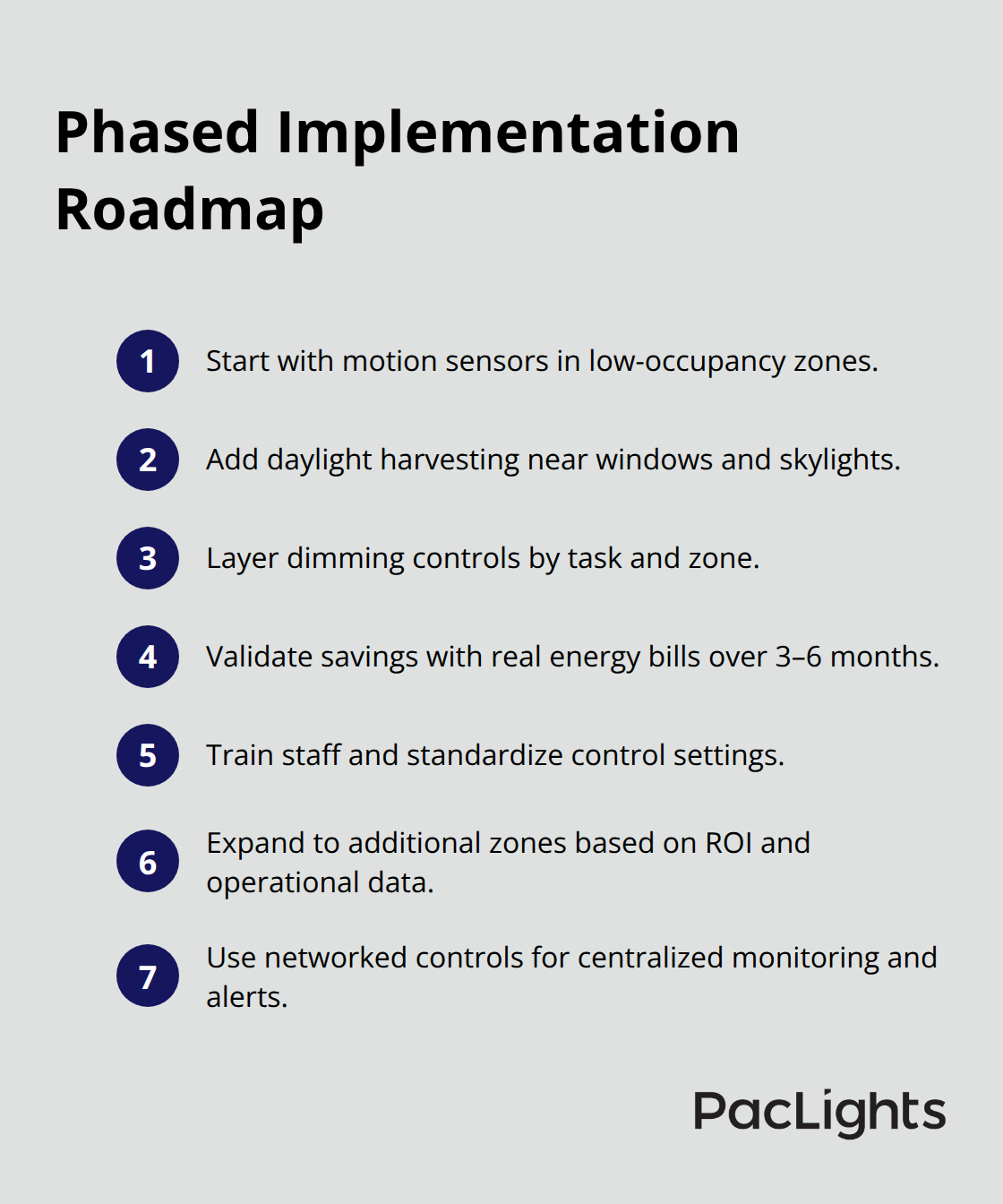
With real-time data proving performance improvements at every stage, your next investment decision becomes straightforward-and your implementation strategy for selecting the right controls becomes clear.
Starting Your Warehouse Lighting Upgrade
Establish Your Baseline with a Lighting Audit
Warehouse lighting projects fail without baseline data. The first step is conducting a professional lighting audit that measures current energy consumption, identifies which zones consume the most power, and reveals which fixtures underperform. This audit becomes your roadmap for prioritization. A facility with 100,000 square feet might discover that 40% of lighting energy flows to storage areas that sit empty most shifts, while receiving zones consume disproportionately little despite handling critical tasks. These insights determine where motion sensors deliver the fastest payback and which zones benefit most from daylight harvesting.
Many facilities install controls randomly and achieve 15-20% savings when they could reach 40-50% with strategic placement. The audit should also document existing fixture types, ages, and conditions since this affects whether you retrofit current installations or replace them entirely.
Calculate ROI to Justify Your Investment
ROI calculations separate projects that get funded from those that languish in proposal purgatory. Motion sensors in a 50,000 square foot warehouse typically cost $8,000-$15,000 installed and save $1,200-$1,800 annually from reduced occupancy-based energy waste alone, delivering payback in 5-7 years. Add daylight harvesting in zones with natural light and that timeline compresses to 3-4 years. Stack dimming controls on top and you’re looking at 2-3 year payback with 40-50% total energy reduction. Document these numbers precisely for your budget committee, then identify quick wins that deliver immediate results while you plan larger phases. Motion sensors in loading docks and storage aisles typically pay for themselves fastest because these zones run empty most often. Start there, validate the results with real energy bills over 3-6 months, then use that proven data to justify expanding to receiving areas and back-of-house zones.
Select Partners Who Understand Warehouse Operations
Experienced providers who specialize in warehouse lighting differ fundamentally from generic commercial installers. These specialists know that dock lighting needs different control strategies than picking aisles, and they design systems that match your actual workflow instead of forcing a one-size-fits-all approach. They should also handle training so your maintenance team understands the controls and can troubleshoot issues without constant vendor callbacks. Installation complexity matters too-retrofit solutions that work with your existing LED fixtures cost significantly less than complete system replacements. Modular approaches let you phase implementation across multiple budget cycles rather than demanding one massive capital expenditure. PacLights offers LED retrofit solutions and advanced lighting controls (including networked lighting controls) that integrate with existing systems, plus free lighting layout designs and ROI assessments to establish your baseline without cost.
Final Thoughts
Warehouse lighting controls transform how facilities manage one of their largest operational expenses. Motion sensors, daylight harvesting, and dimming work together to cut energy consumption by 40-50% while improving safety and operational visibility. Real warehouses achieve 30-50% energy reductions within the first year, with payback periods of two to three years that make this investment faster than most facility upgrades.
Real-time monitoring reveals exactly where your facility wastes power, allowing you to make data-driven decisions instead of guessing. Networked controls eliminate the complexity of managing multiple systems across different locations, and retrofit solutions mean you don’t need to replace working fixtures or overhaul your infrastructure. Strategic implementation matters more than the technology itself-starting with a lighting audit, calculating precise ROI, and selecting partners who understand warehouse operations separates projects that deliver results from those that underperform.
We at PacLights provide the fixtures and controls that make this transformation possible, including optional daylight and motion control plus advanced networked lighting controls to optimize energy use across your entire facility. Contact us to conduct a free lighting audit and ROI assessment that establishes your baseline and guides your implementation strategy without upfront cost.
Disclaimer: PacLights is not responsible for any actions taken based on the suggestions and information provided in this article, and readers should consult local building and electrical codes for proper guidance.