

Picking the right lighting for commercial spaces isn’t just about brightness. NSF certification separates fixtures that meet strict safety and sanitation standards from those that don’t.
At PacLights, we’ve seen firsthand how NSF certified lamps protect your facility and your bottom line. This guide walks you through finding and evaluating certified options that work for your industry.
What NSF Certification Actually Protects
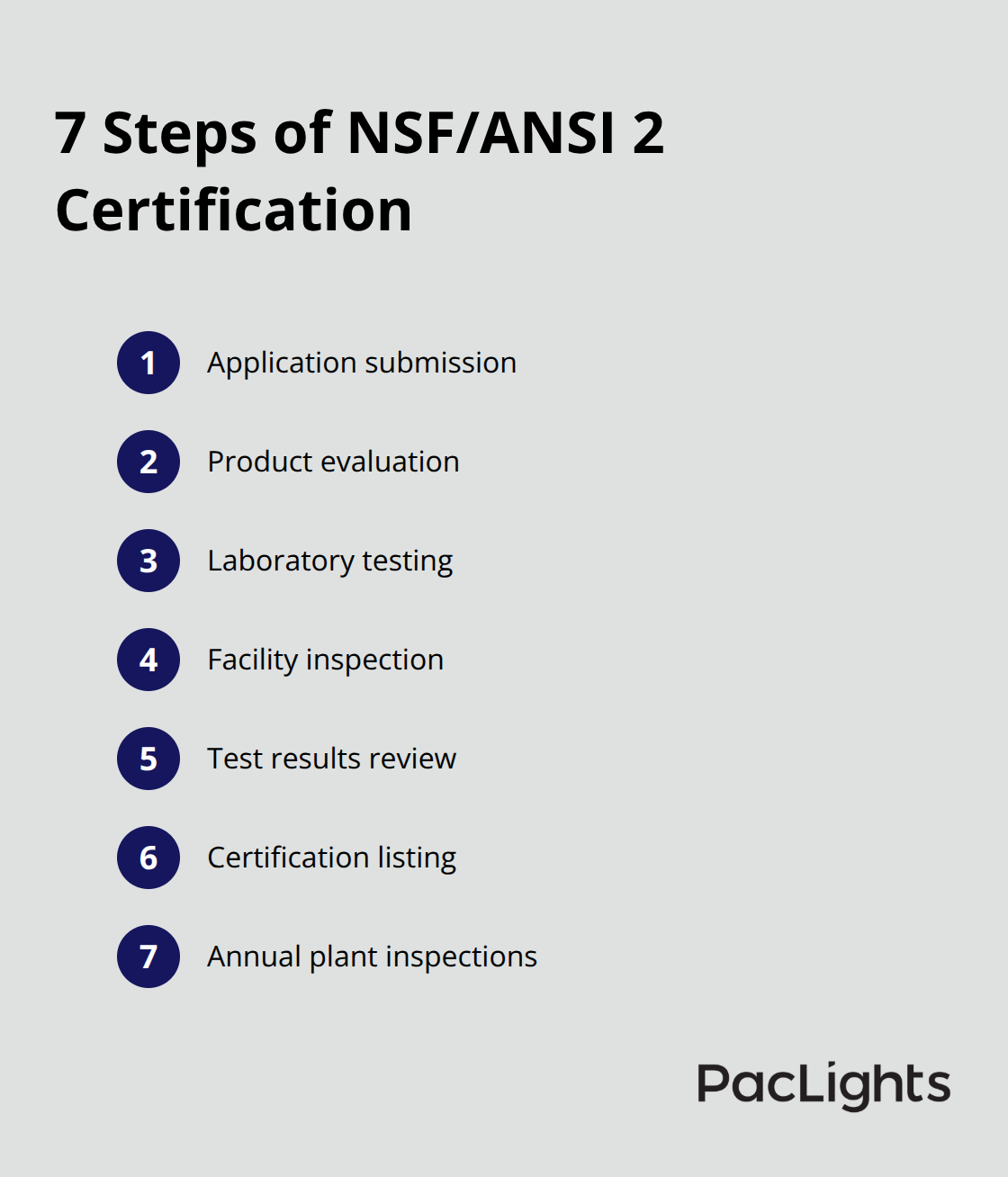
NSF International has certified lighting fixtures since 1944, establishing standards that separate fixtures designed for sanitary environments from standard industrial lighting. The NSF/ANSI 2 standard covers both lighting and food equipment, requiring fixtures to pass seven rigorous steps: application submission, product evaluation, lab testing, facility inspection, test results review, certification listing, and annual plant inspections. Manufacturers must pass annual inspections to maintain certification, which means the fixture you buy today has been verified recently and will continue to meet standards if properly maintained.
NSF-certified fixtures use polycarbonate or acrylic lenses instead of glass, stainless steel hardware, and sealed gaskets that prevent bacteria from accumulating in crevices. The certification confirms your fixture won’t shatter during sanitation, won’t corrode from cleaning chemicals, and has been tested to withstand the specific washdown pressures and temperatures your facility uses. Non-certified fixtures often have visible screws, unsealed housings, and materials that degrade under high-pressure washdowns within 18 to 24 months, forcing costly replacements.
Why the FDA Food Code Drives Your Lighting Choice
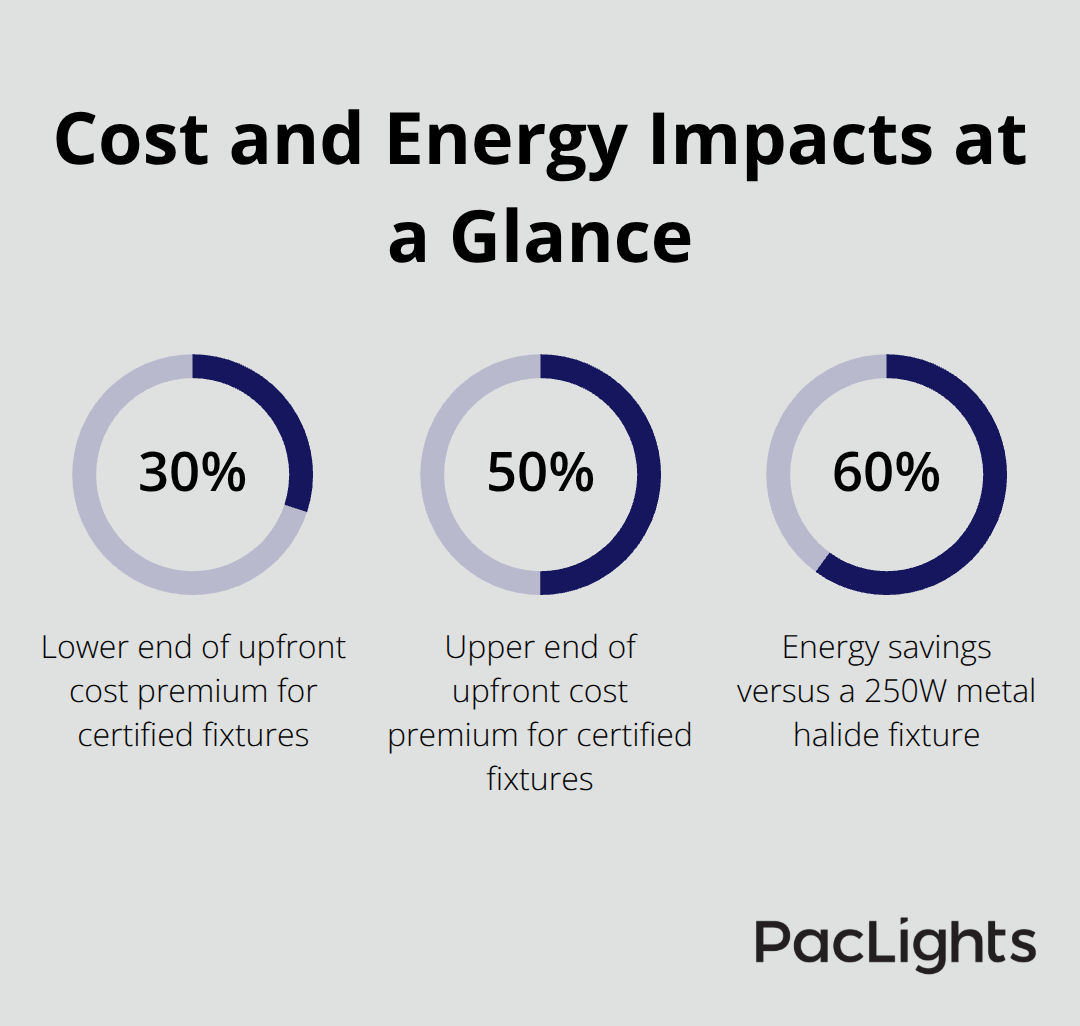
The FDA Food Code sets exact lux requirements by work zone: 108 lux in walk-in refrigeration and dry storage, 215 lux where food is prepared or served, and 540 lux where employees directly handle food or utensils. Standard fixtures rarely deliver these levels consistently, and non-certified ones certainly won’t hold performance after repeated washdowns. NSF-certified LED fixtures maintain their brightness output over 50,000 to 75,000 hours compared to 1,000 hours for incandescent, which means compliance becomes sustainable rather than a moving target. IP69K-rated NSF fixtures withstand high-temperature, high-pressure washdowns at 80°C without lens fogging or seal failure, a durability standard that non-certified fixtures cannot achieve. A 100W NSF-certified LED high bay delivers approximately 15,000 lumens at 5,000K while saving about 60% energy versus a 250W metal halide fixture, directly impacting your operating costs and regulatory standing.
Certified vs. Non-Certified: The Durability Gap
Certified fixtures cost more upfront, typically 30 to 50% higher than non-certified alternatives, but the payback period runs 3 to 5 years due to energy savings and eliminated replacement labor. Non-certified fixtures may require replacement within 18 to 24 months in washdown-heavy environments, erasing any initial cost advantage. The NSF database lists over 88 verified products across multiple manufacturers, offering genuine options rather than settling for whatever meets minimum brightness. When you evaluate NSF products, verify the certification number on NSF International’s certified products database before ordering-this takes five minutes and prevents purchasing fixtures with expired or incomplete certifications. Suppliers should provide formal NSF listings to confirm you’re not buying fixtures labeled as food-safe without actual certification backing them.
How to Verify Certification Before You Buy
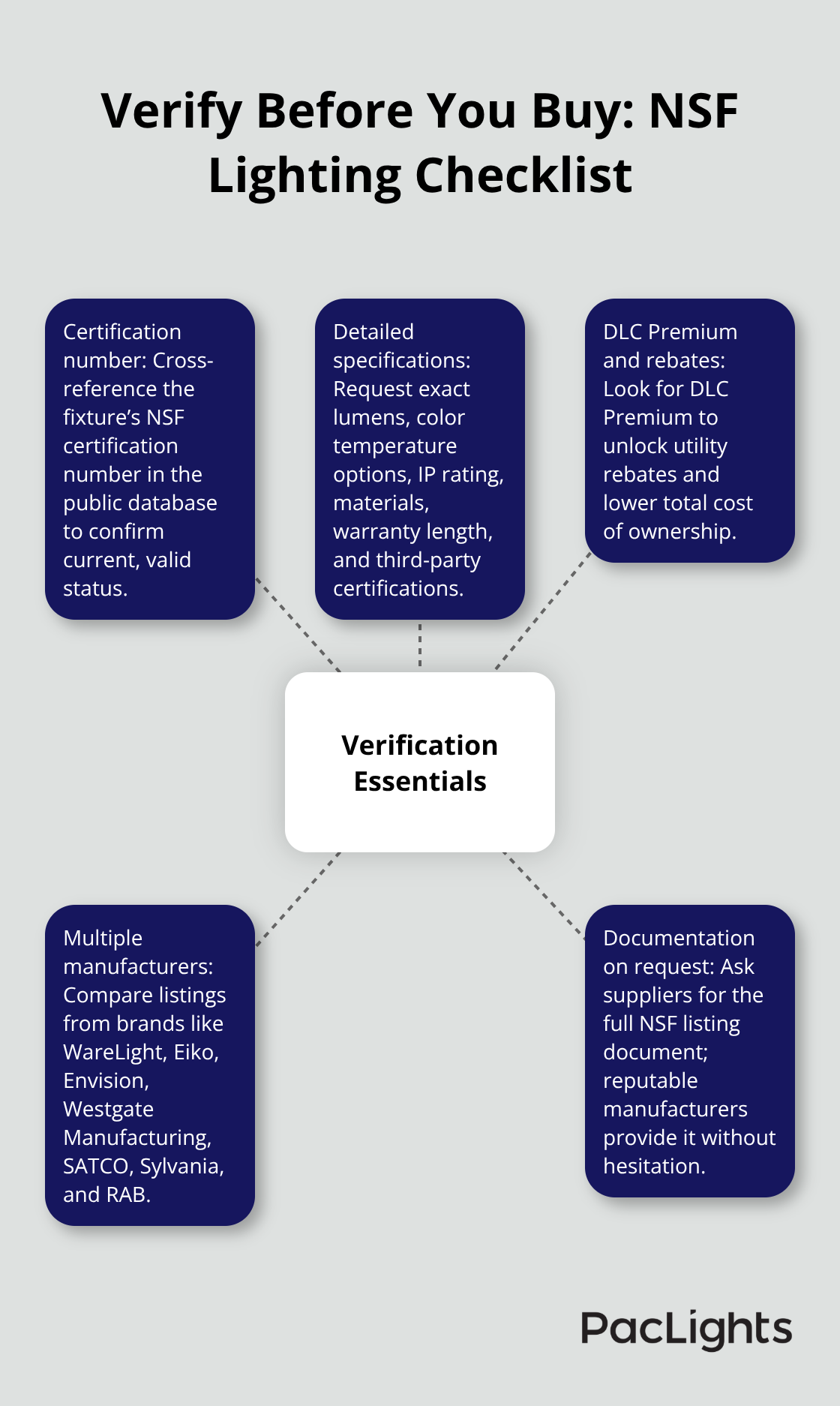
Each NSF-certified fixture carries a certification number that you can cross-reference against NSF International’s public database. This step protects you from suppliers who claim certification without documentation. Manufacturers across the industry-including brands like WareLight, Eiko, Envision, Westgate Manufacturing, SATCO, Sylvania, and RAB-offer NSF-certified options, so you have multiple sources to compare. Request detailed specifications from suppliers: exact lumen output, color temperature options, IP rating, materials, warranty length, and third-party certifications (DLC, UL, ETL). Many NSF fixtures also carry DLC Premium qualification, which can unlock energy rebates and incentives that further reduce your total cost of ownership. The combination of NSF certification plus DLC qualification means you’re buying a fixture that meets sanitation standards and qualifies for utility rebates in many regions.
What Happens Next in Your Facility
Once you select NSF-certified fixtures, the transition from non-certified lighting reveals immediate operational benefits. Your maintenance team spends less time replacing failed fixtures in washdown zones. Your facility passes inspections without lighting violations. Your energy bills drop as LED fixtures replace older metal halide or fluorescent systems. The next section walks you through finding these certified options and comparing them across manufacturers so you can make the right choice for your specific industry and space.
How to Find and Evaluate NSF Certified Lamps
Start by knowing what you’re looking for before you search. The NSF International certified products database contains over 88 verified lighting fixtures across multiple manufacturers, but browsing without criteria wastes time. Open the NSF database and filter by your specific requirements: the IP rating you need (IP65 for standard washdowns, IP69K for high-pressure 80°C sprays), the lumen output range that matches your FDA Food Code zone requirements, and the color temperature that suits your work. For food handling areas where employees work directly with food, you need 540 lux minimum per the FDA Food Code, which typically means a 100W NSF-certified LED high bay delivering around 15,000 lumens works well for spaces up to 12 feet high. For food prep and service areas, 215 lux is the baseline, and for walk-in refrigeration or dry storage, 108 lux suffices.
Manufacturers and Database Navigation
Manufacturers like WareLight, Envision, Westgate Manufacturing, SATCO, Sylvania, and RAB all list their certified products on the NSF database, so you can compare specifications side by side without contacting sales. Grab the certification number from each product listing and cross-reference it directly on NSF International’s site-this five-minute verification step confirms the fixture is currently certified and not expired. Never rely on supplier claims alone; the database is public and free, so there’s no reason to skip this step.
What Certification Numbers Reveal
A certification number on an NSF fixture proves the manufacturer submitted that exact model for testing and passed. The number format varies, but NSF International’s database lets you search by manufacturer and product type to pull complete test reports. When you find a fixture you’re considering, the database entry shows the exact materials used (polycarbonate lens, stainless steel hardware), the IP rating achieved, the operating temperature range (typically -40°F to 113°F for NSF-certified options), and any additional certifications like DLC Premium or UL listing. DLC Premium qualification matters because it signals high efficacy and unlocks energy rebates in many states and utility programs, effectively lowering your total cost. Request from suppliers the full NSF listing document for any fixture you’re seriously considering; legitimate manufacturers provide this without hesitation. The listing should specify exact lumen output at rated wattage, color rendering index (CRI), and warranty length-typically five years for NSF-certified LED fixtures. If a supplier can’t produce the NSF listing or certification number within 24 hours, move to a competitor.
Building a Comparison Spreadsheet
Create a simple spreadsheet with columns for fixture type, wattage, lumens, color temperature, IP rating, price, and certification numbers, then populate it with three to five options from different manufacturers that meet your basic requirements. The NSF database shows that LED vapor-tight fixtures around 54W deliver roughly 5,000 lumens, while LED high bays at 100W reach 15,000 lumens and 200W models hit 30,000 lumens for larger spaces. Price varies significantly-a 100W NSF high bay might range from $400 to $800 depending on the brand and additional features like dimming or sensor integration.
Calculating True Cost Differences
Calculate the annual energy cost difference between options: a 100W LED versus a 250W metal halide saves about 60% on energy per the typical performance data available from manufacturers. Over five years, that difference compounds into thousands of dollars. Check whether each option qualifies for energy rebates in your state. Prioritize fixtures with longer L70 ratings-50,000 to 75,000 hours means you replace them less frequently than shorter-lived alternatives. Request samples or site visits from manufacturers if you’re investing significantly; seeing how a fixture performs in your actual environment beats any specification sheet. PacLights offers free lighting layout designs and ROI assessments to help you quantify energy savings and calculate payback periods for your specific facility, turning abstract specifications into concrete financial projections that guide your purchase decision.
With your comparison spreadsheet complete and cost projections in hand, you’re ready to evaluate how NSF certified lighting performs across different industries and work environments.
Applications of NSF Certified Lighting in Different Industries
Food processing facilities operate under FDA Food Code requirements that demand 540 lux where employees handle food directly, 215 lux in prep and service areas, and 108 lux in cold storage. NSF-certified LED fixtures meet these standards without compromise because they’re designed to survive the environment, not just the initial installation. Poultry processing plants run washdowns at 80°C with high-pressure jets multiple times daily, and IP69K-rated NSF fixtures withstand this punishment where standard industrial lighting fails within months.
A poultry facility switching from metal halide to NSF-certified LED high bays at 100W each achieves roughly 15,000 lumens per fixture while cutting energy consumption by 60% compared to 250W metal halide systems. Over a facility with 50 such fixtures, that’s a difference of 7,500 watts in continuous load, translating to thousands in annual electricity costs. Beverage processing plants face similar washdown demands plus the challenge of cold storage areas where instant-on LED performance matters more than warm-up time needed by fluorescent or metal halide systems.
Pharmaceutical and Healthcare Environments
Pharmaceutical and healthcare environments enforce sterile conditions that require sealed, corrosion-resistant fixtures with no crevices where bacteria accumulate. NSF certification guarantees polycarbonate lenses instead of glass, eliminating shatter contamination risk in clean rooms where a single glass fragment triggers protocol violations and facility shutdowns. Operating temperature ranges from -40°F to 113°F on certified fixtures mean cold storage pharmaceutical warehouses maintain consistent brightness without performance degradation.
Water Treatment and Sanitation Systems
Water treatment and sanitation systems demand IP65 or IP69K protection because constant moisture and chemical exposure corrode non-certified materials within 18 to 24 months. Treatment plants that install NSF-certified fixtures avoid the cycle of premature replacement and maintenance labor that erases cost savings from cheaper alternatives.
Compliance Over Cost Considerations
Facilities operating under FDA or USDA oversight face inspection failures, product recalls, or operational shutdowns if lighting doesn’t meet standards. A non-certified fixture failure during an inspection creates liability that far exceeds the upfront cost difference of certified options. Healthcare facilities lose accreditation if sanitation protocols fail, making the 30 to 50% premium for NSF-certified fixtures a compliance expense, not a discretionary upgrade. Water treatment plants answer to state and federal regulators who require documented maintenance and equipment certification, making non-certified fixtures an audit risk.
The payback calculation shifts when compliance violations cost far more than the fixture premium. A facility investing in 50 NSF-certified LED high bays at $600 each spends $30,000 upfront but recovers that investment within 3 to 5 years through energy savings alone, plus gains 50,000 to 75,000 hour lifespan versus 1,000 hours for incandescent, eliminating replacement labor costs. Non-certified fixtures force replacement every 18 to 24 months in washdown environments, meaning you spend $30,000 multiple times over a decade while gaining no compliance protection.
Fixture Types Match Industry-Specific Demands
Food facilities need high bay fixtures for processing floors and vapor-tight models for cold storage where condensation risks damage unsealed housings. Pharmaceutical environments require sealed linear fixtures for clean rooms and high-output options for inspection stations where 540 lux supports quality control work. Water treatment plants install washdown-rated vapor-tight fixtures rated IP69K in chemical treatment areas and standard IP65 models in drier pump rooms (each environment demands different specifications, which is why the NSF database organized by fixture type and IP rating matters).
A poultry plant installing NSF-certified LED high bays with 0-10V dimming capability gains energy flexibility that non-dimmable fixtures cannot provide. A pharmaceutical warehouse using NSF-certified LED tubes with Type A+B ballast compatibility retrofits existing fluorescent infrastructure without rewiring, reducing installation time and cost. These practical advantages compound over time because certified fixtures integrate into your facility’s specific workflow rather than forcing adaptation to generic industrial lighting.
Final Thoughts
NSF certification transforms lighting from a commodity purchase into a compliance asset that protects your facility and your budget. Fixtures that pass NSF/ANSI 2 standards deliver consistent brightness across 50,000 to 75,000 hours, withstand washdowns at 80°C without degradation, and eliminate contamination risks that non-certified options create. Your facility avoids inspection failures, product recalls, and operational shutdowns that cost far more than the 30 to 50% premium for certified fixtures.
Start your upgrade by mapping your space against FDA Food Code requirements and measuring ceiling heights to compare current light levels against the 108, 215, or 540 lux minimums your work zones demand. Pull three to five options from the NSF certified lamp list that match your IP rating needs and lumen output, then verify each certification number on NSF International’s database before contacting suppliers. Calculate your energy savings by comparing wattage differences between your current fixtures and NSF-certified LED alternatives, then divide the upfront cost difference by annual savings to find your payback period, typically 3 to 5 years.
Implement your upgrade in phases, prioritizing high-usage washdown areas first to validate performance and energy savings before expanding facility-wide. We at PacLights provide free lighting layout designs and ROI assessments that quantify energy savings and payback for your specific facility, turning specifications into financial projections that guide your investment decision. Long-term value emerges not from the initial purchase but from eliminated replacement labor, sustained compliance, and energy costs that drop year after year.
Disclaimer: PacLights is not responsible for any actions taken based on the suggestions and information provided in this article, and readers should consult local building and electrical codes for proper guidance.