

Datacenters consume massive amounts of energy, with lighting often accounting for 20-30% of total facility power usage. At PacLights, we’ve seen firsthand how networked datacenter lighting controls transform this dynamic by enabling precise, automated management across entire facilities.
Centralized control systems eliminate the inefficiencies of manual adjustments and outdated fixed schedules. The result is lower energy bills, reduced carbon emissions, and operational simplicity that scales from single buildings to multi-site enterprises.
How Networked Datacenter Lighting Controls Operate
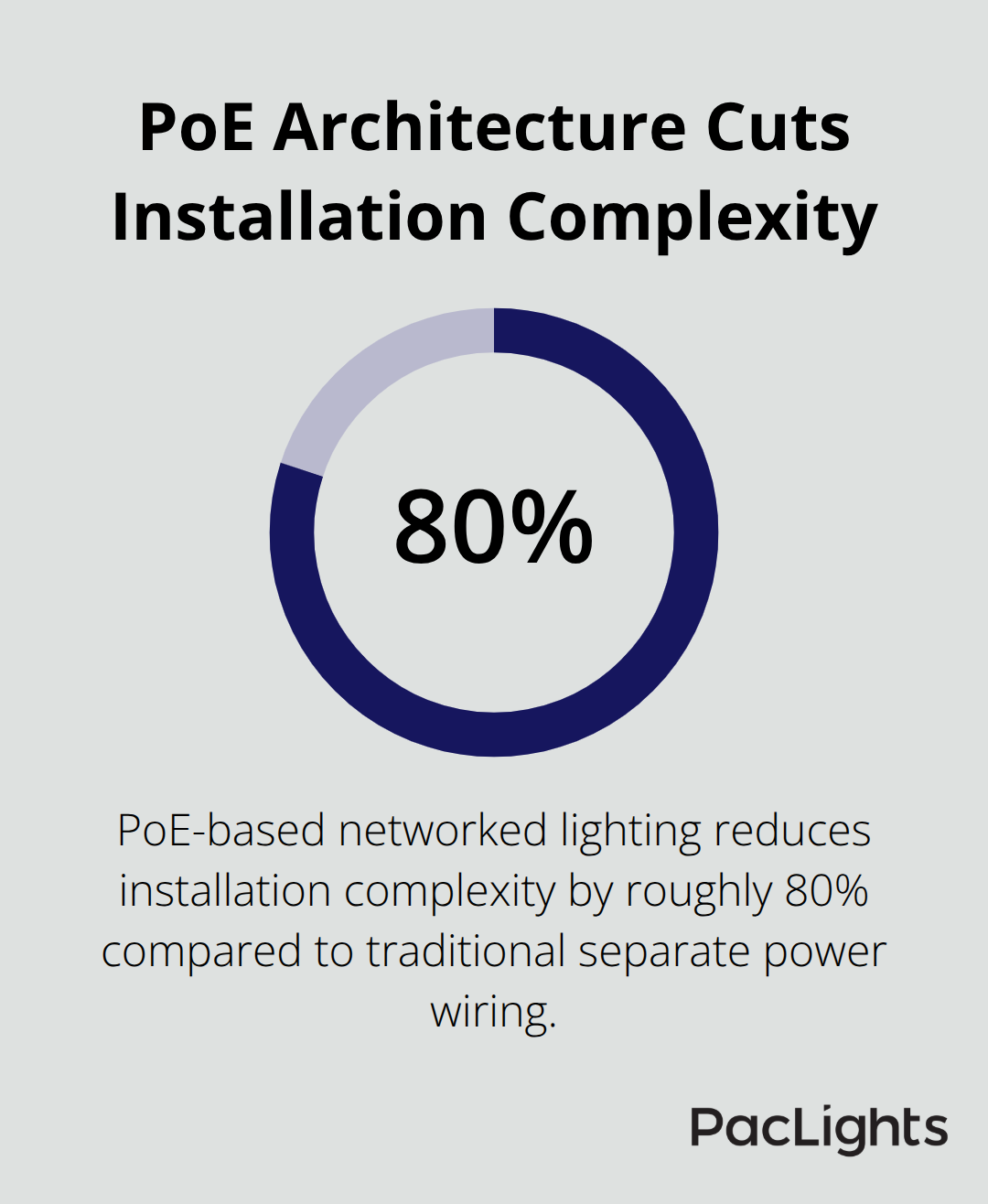
Networked datacenter lighting systems connect individual fixtures through Power over Ethernet technology, which supplies both power and data signals through standard network cables. This architecture eliminates the need for separate electrical wiring, reducing installation complexity by roughly 80% according to industry standards. Each luminaire becomes a node in a distributed network, equipped with edge microcontrollers and sensors that monitor occupancy, daylight levels, and local conditions in real time.
A centralized software platform aggregates data from thousands of fixtures simultaneously, enabling instantaneous adjustments across zones without manual intervention.
Real-time responsiveness activates occupancy-based dimming within seconds when areas become unoccupied, and daylight harvesting automatically reduces artificial light when ambient sunlight suffices. This level of granular control reveals exactly which zones consume the most energy-typically server aisles and equipment rooms running 24/7-allowing you to target optimization efforts where payback is fastest.
Integration with Building Management Systems
Integration with your existing Building Management System through protocols like DALI, Modbus, or BACnet provides a unified dashboard showing energy consumption by zone, time, and fixture type. This connectivity transforms lighting from an isolated utility into part of your facility’s broader operational intelligence. Real-time luminaire-level energy monitoring identifies consumption patterns that correlate with workload fluctuations, equipment failures, and thermal hotspots.
Remote access means you can adjust lighting policies, respond to alerts, and troubleshoot issues without on-site visits, which proves especially valuable for unmanned or geographically dispersed datacenters. A Malaysian facility deployed 300 motion-sensor luminaires and cut monthly on-site maintenance visits by 80%, demonstrating how centralized visibility reduces labor costs alongside energy savings.
Predictive Maintenance and Operational Efficiency
Automated alerts flag thermal issues, sensor faults, and fixture degradation 20–30 days earlier than manual inspections, reducing emergency dispatches and unplanned downtime. This predictive capability reduces emergency service calls by roughly 60%, freeing your maintenance team to focus on strategic improvements rather than reactive repairs. The separation of physical lighting infrastructure from operational management means you can scale control policies across thousands of fixtures without rewiring, adapting instantly to changing workloads and grid demand-response events.
These capabilities set the foundation for substantial energy and cost reductions. The next section explores how networked controls translate into measurable savings and faster return on investment.
Energy Savings and Cost Reduction with Centralized Controls
Rapid Payback Through Direct Energy Reduction
Networked datacenter lighting controls deliver measurable financial returns that justify upfront investment within three to five years. Energy savings typically range from 30% to 65%, with many deployments achieving around 50% reductions through automated controls and smart scheduling. A retrofit replacing 200-watt fluorescent fixtures with 50-watt LED fixtures paired with networked controls reaches payback in approximately 14 months at typical utility rates, making this one of the fastest ROI opportunities in datacenter operations. The math proves straightforward: if your facility spends $50,000 annually on lighting energy, a 50% reduction saves $25,000 per year. Even accounting for equipment costs of $25,000 to $40,000 depending on facility size, you recover your investment within 12 to 24 months, then operate with substantially lower bills for decades. Installation costs actually drop 40% to 50% compared to traditional electrical upgrades because networked systems eliminate separate wiring runs-Power over Ethernet delivers both power and data through existing network infrastructure, reducing labor and materials significantly.
Labor and Maintenance Cost Reductions
Automated occupancy-based lighting controls reduce datacenter lighting load by 30% to 40% in the first year alone, shifting from fixed schedules to responsive operation. This proves especially valuable in facilities with variable occupancy patterns. Predictive maintenance capabilities reduce emergency service calls by roughly 60%, cutting labor costs across your maintenance budget.
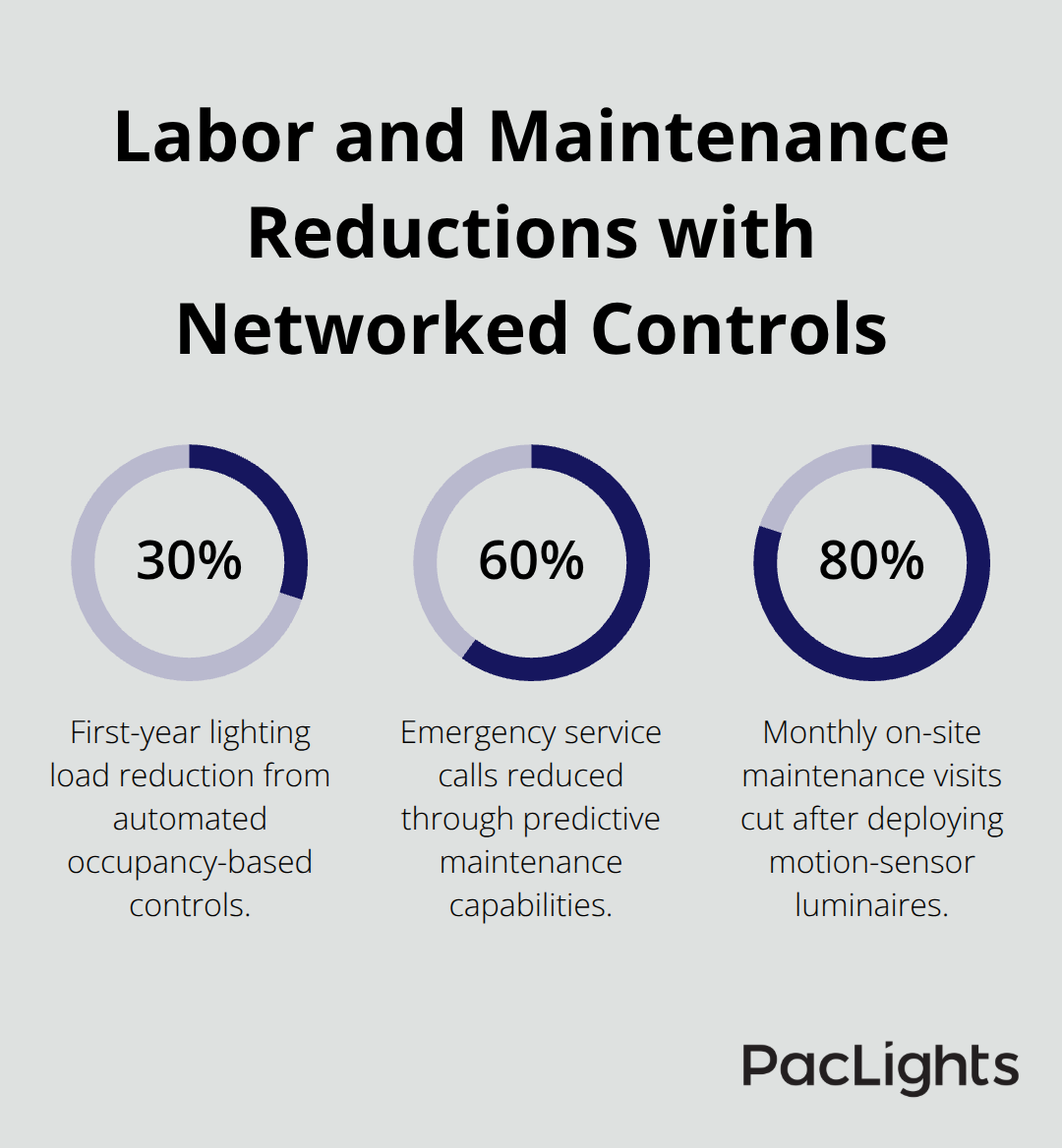
A Malaysian datacenter facility deployed 300 motion-sensor luminaires and cut monthly on-site maintenance visits by 80%, translating directly to salary savings and reduced travel expenses for geographically dispersed operations. Automated alerts flag thermal issues, sensor faults, and fixture degradation 20–30 days earlier than manual inspections, reducing unplanned downtime and freeing your maintenance team to focus on strategic improvements rather than reactive repairs.
Cooling Energy and Thermal Benefits
Lower LED heat output reduces cooling load and compressor runtime, delivering an additional 10% to 20% savings in cooling energy beyond direct lighting efficiency gains. Zone-based monitoring reveals which areas consume the most power-typically server aisles and equipment rooms running 24/7-so you can prioritize retrofits in highest-consumption zones first and validate ROI before expanding to lower-priority spaces. This phased approach limits financial risk and builds internal support for wider deployment. The separation of physical lighting infrastructure from operational management means you can scale control policies across thousands of fixtures without rewiring, adapting instantly to changing workloads and grid demand-response events.
Market Growth and Competitive Necessity
Global Market Insights projects the smart lighting market will grow from $15.7 billion in 2024 to $88.4 billion by 2034, reflecting datacenter operators’ recognition that networked controls are no longer optional but essential for competitive energy efficiency and operational visibility. This rapid expansion signals that facilities without centralized lighting controls face rising pressure to modernize or lose efficiency advantages to competitors. The financial case is clear, but implementation requires careful planning to avoid common pitfalls and maximize returns from day one.
How to Plan and Execute a Networked Lighting Retrofit
Assess Your Current Infrastructure
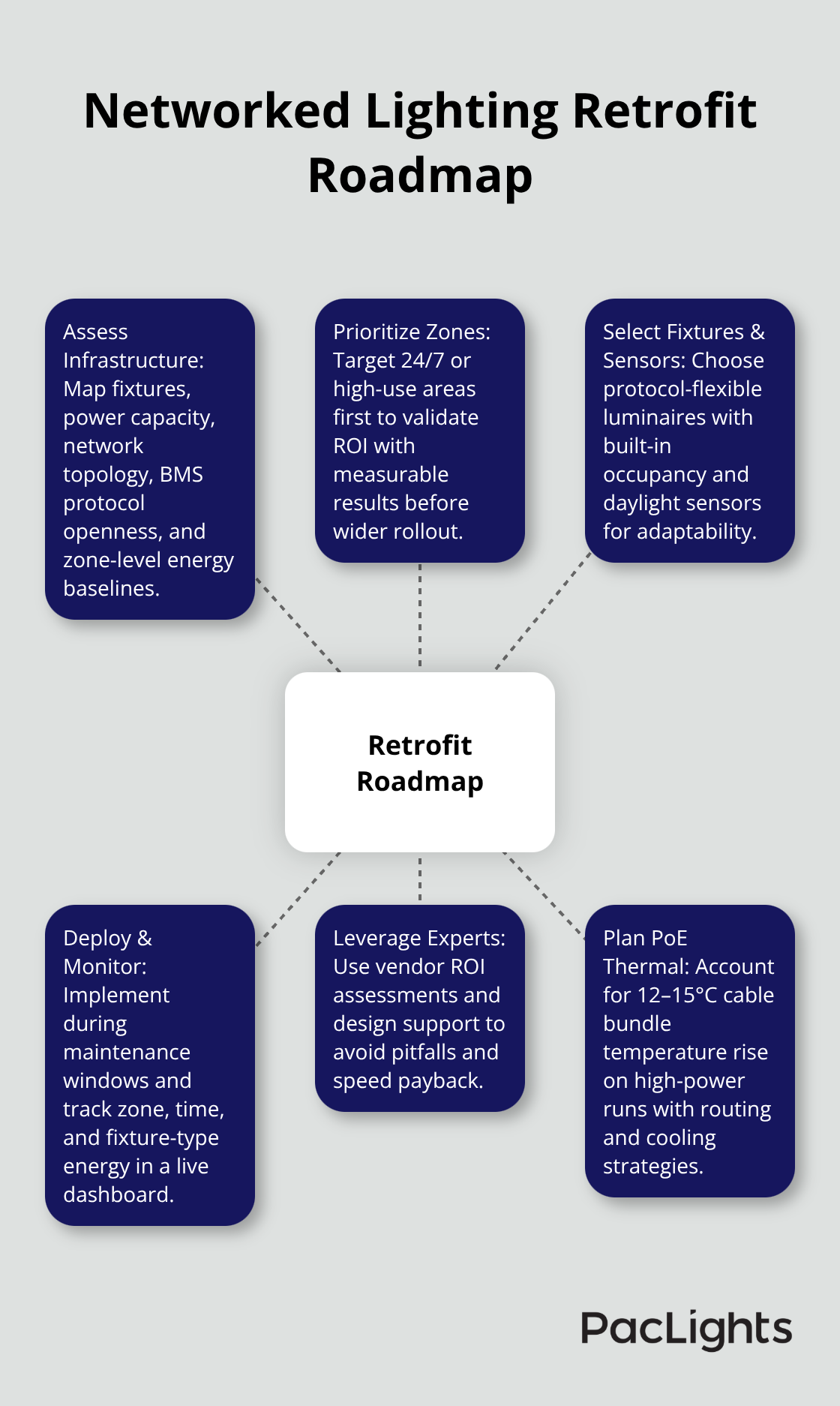
A comprehensive facility assessment maps your current lighting infrastructure, electrical capacity, network topology, fixture age, power consumption patterns, and Building Management System openness to integration protocols like BACnet or Modbus. This audit reveals which zones consume the most energy-typically server aisles and equipment rooms running 24/7-and identifies where retrofits deliver fastest payback. Document baseline energy consumption by zone so you can measure actual savings after deployment. About 62% of retrofit projects encounter interoperability challenges, so plan around open standards or gateway interfaces that bridge legacy systems with new networked controls.
Request a free lighting layout design and ROI assessment to identify high-payback zones before committing capital.
Prioritize High-Impact Zones First
Prioritize areas with consistent occupancy or 24/7 operation first, since these zones generate the strongest financial case. A phased rollout in high-use zones allows you to validate ROI with concrete data before broader deployment across the entire facility. Test a single zone for two weeks using your chosen control protocol-whether DALI for smaller facilities, Modbus or BACnet for larger networks, or PoE for simpler centralized installations-to reveal integration issues and environmental suitability before full investment.
Select Compatible Fixtures and Sensors
Select fixtures that support multiple protocols and include built-in sensors for occupancy and daylight harvesting, ensuring flexibility as your requirements evolve. Configure the initial phase around occupancy-based dimming and daylight harvesting, then layer in demand response capabilities as system understanding grows. High-power PoE runs can raise cable bundle temperatures by 12–15°C, so plan routing and cooling integration carefully to mitigate thermal impact.
Deploy and Monitor Performance
Schedule implementation during maintenance windows to minimize disruption, then deploy a real-time energy dashboard showing consumption by zone, time, and fixture type. Staff training should focus on dashboard interpretation, alert response procedures, and basic troubleshooting rather than complex system design-most operators need only understand how to monitor performance and escalate issues. Establish monthly performance reviews during year one, then transition to quarterly reviews, expecting 30–65% lighting energy reduction based on baseline conditions and control thoroughness.
Leverage Professional Guidance
PacLights offers energy-efficient fixtures with networked lighting controls tailored to datacenters, featuring optional motion and daylight sensors for further optimization, plus free ROI assessments to guide your specific implementation roadmap.
Final Thoughts
Networked datacenter lighting controls transform three critical operational areas: energy consumption, maintenance burden, and competitive positioning. The 30% to 65% energy reductions documented across real deployments translate directly to lower utility bills and smaller carbon footprints, while the shift from manual management to centralized, automated control frees your team from routine tasks and reactive troubleshooting. ROI arrives within three to five years, but the financial benefits extend far beyond that payback window-LED fixtures last 25 times longer than conventional sources, and predictive maintenance alerts catch equipment failures 20–30 days earlier than manual inspections, preventing costly downtime.
The competitive landscape shifts rapidly as the smart lighting market grows from $15.7 billion in 2024 to $88.4 billion by 2034, signaling that operators without centralized controls face rising pressure to modernize. Facilities that implement networked datacenter lighting controls today establish efficiency advantages that compound year after year, adapting instantly to changing workloads and grid conditions without rewiring. Your infrastructure scales through software adjustments rather than capital-intensive electrical upgrades, protecting your investment as your facility evolves.
Start by assessing your current infrastructure to identify high-payback zones, then validate ROI through a phased rollout in areas running 24/7 or with variable occupancy patterns. We at PacLights provide energy-efficient fixtures with networked lighting controls tailored to datacenters, plus free lighting layout designs and ROI assessments to guide your specific roadmap. Contact us to begin your transition toward centralized, efficient facility management.
Disclaimer: PacLights is not responsible for any actions taken based on the suggestions and information provided in this article, and readers should consult local building and electrical codes for proper guidance.