

Installing pendant lights safely starts with understanding pendant fixture weight. Most installers skip this step and end up with fixtures that sag or fail.
At PacLights, we’ve seen too many installations go wrong because the weight calculations were wrong from the start. Get this right, and your cylinder installation will hold strong for years.
What Do Manufacturers Actually List for Pendant Weight
How Manufacturers Report Weight Specifications
Manufacturers report pendant weight in inconsistent ways, and this inconsistency trips up installers constantly. Some list only the fixture weight, others include the canopy and mounting hardware, and a few add electrical components like drivers into the total. You need to contact the manufacturer directly or check the specification sheet line by line to get the real number. The interior of the box should be marked by the manufacturer with the maximum weight the box is permitted to support, so find that label before you finalize your installation plan.

Understanding NEC Standards and Box Ratings
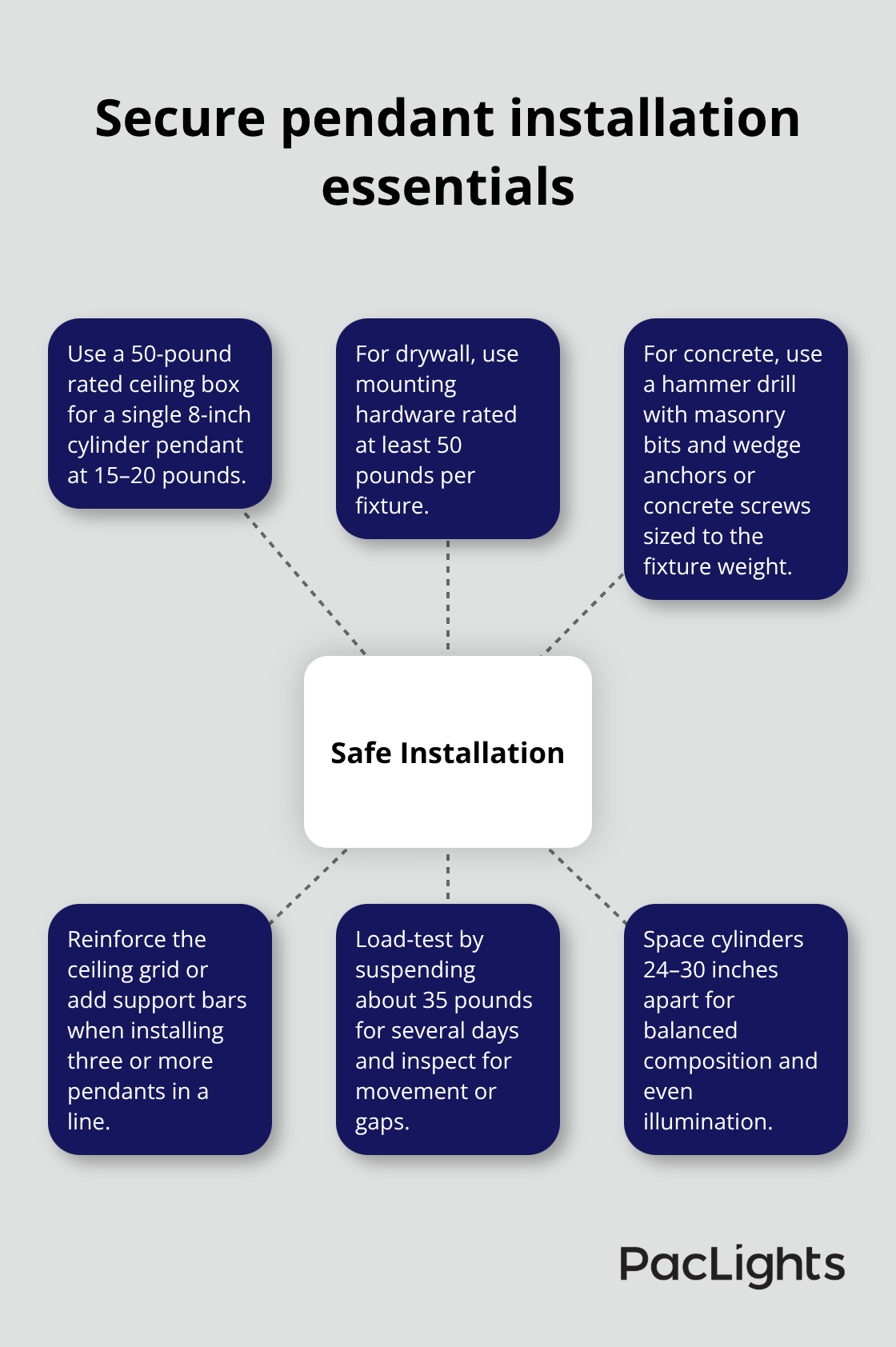
The National Electrical Code (NEC) Article 314.27(A)(2) requires ceiling outlet boxes used for lighting to support at least 50 pounds, but that’s a minimum standard, not a design target. Standard ceiling boxes hold up to 50 pounds when solidly installed into a structural member like a ceiling joist, though a pancake-style box with limited internal volume may only handle around 35 pounds if the mounting screws are coarse-thread and driven into the joist. Eight-inch cylinder pendants typically weigh 15–20 pounds fully assembled, which sits comfortably under that 50-pound threshold for a single fixture.
Weight Considerations for Multiple Pendants
When you stack multiple pendants on one circuit or mount them in a line, the cumulative weight and electrical load change everything. Four-inch pendants deliver about 1,230 lumens and eight-inch models about 1,500 lumens, so choosing the right size affects both brightness and structural demand. When you install three or more pendants in a line, you must reinforce the ceiling grid to carry the total weight and prevent sagging, or add support bars to distribute the cumulative load and improve stability.
Matching Hardware to Ceiling Type and Weight
Weight ratings mean nothing if your ceiling cannot actually support them. Drywall ceilings need mounting hardware rated at least 50 pounds per fixture to safely support a 15–20 pound pendant, and concrete ceilings require a hammer drill with masonry bits and wedge anchors or concrete screws sized to match the fixture weight. LED cylinder pendants offer energy efficiency and brightness while reducing heat output compared to traditional options, which means you can often achieve the same light levels with less wattage and lower thermal stress on mounting hardware.
Now that you understand what manufacturers report and how weight ratings connect to code standards, the next step involves calculating the total load your circuit can handle.
How to Calculate Total Weight and Electrical Load on Your Circuit
List Every Component That Hangs From Your Ceiling Box
Start by identifying every component that hangs from your ceiling box. The fixture itself represents only part of the equation. Add the canopy weight, the mounting bracket, any external LED driver if one exists separately from the fixture, and the wire or cord. For an 8-inch cylinder pendant at 15–20 pounds fully assembled, you might add another 2–3 pounds for canopy and hardware. Contact the manufacturer and request a complete weight breakdown rather than guessing. Many installers assume a fixture weighs what the spec sheet states, then discover mid-installation that the driver or canopy adds another 5 pounds they failed to account for. Write down every component’s weight and keep that list with your installation notes. This prevents costly mistakes when you move to the next step: checking whether your ceiling box and circuit can actually handle the total load.
Verify Your Electrical Circuit Capacity
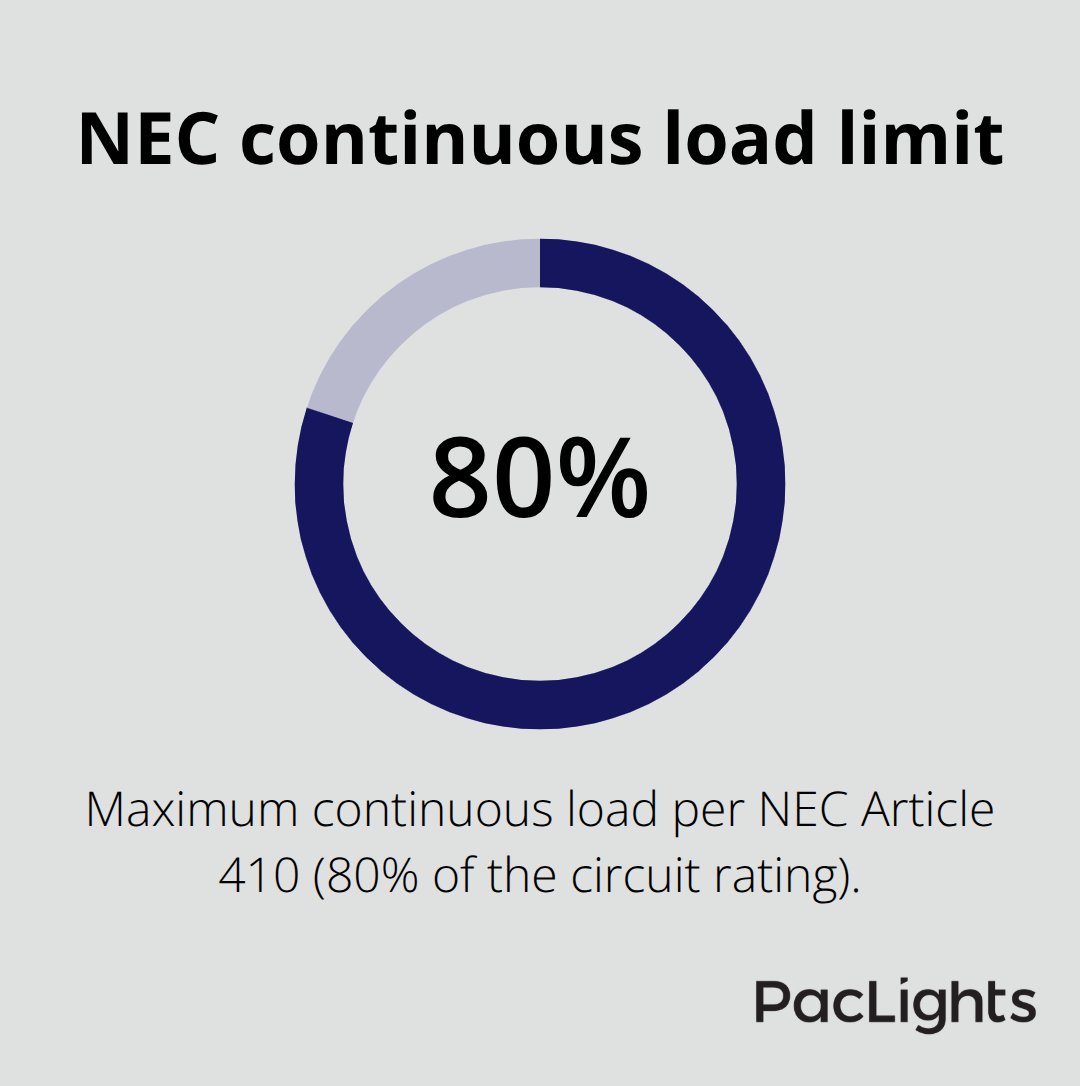
Your electrical circuit has a separate weight limit from your ceiling box. The National Electrical Code Article 410 requires that continuous loads on a circuit stay at or below 80 percent of the circuit rating. A standard 20-amp circuit carries no more than 16 amps continuously, and a 15-amp circuit maxes out at 12 amps. Three 8-inch LED cylinder pendants running at 60 watts each total 180 watts, which sits well under the 1,440-watt limit on a 15-amp circuit at 80 percent capacity.
LED pendants make this calculation far easier than traditional fixtures because they consume less wattage while delivering the same brightness.
If you run multiple pendants on one circuit, add up the wattage of every fixture, then verify it doesn’t exceed your 80 percent safety margin. This step protects both your electrical system and your installation’s longevity.
Cross-Reference Weight Against Your Ceiling Box Rating
Once you confirm the electrical load is safe, measure the total weight again and cross-reference it against your ceiling box rating. If your box is rated for 50 pounds and your total installation weight is 35 pounds or less, you remain within safe limits. If you approach or exceed 50 pounds, you must install a retrofit brace rated for 50–75 pounds that transfers the weight directly to the ceiling joists rather than relying solely on the outlet box. This dual-check approach-electrical load first, then structural weight-catches problems before installation and keeps your pendants secure long-term.
The next chapter covers the specific mounting hardware and ceiling preparation steps that transform these calculations into a stable, code-compliant installation.
Matching Hardware to Your Ceiling and Load Requirements
Select Hardware Rated for Your Fixture Weight
Your ceiling box rating and the hardware you select determine whether your pendant installation succeeds or fails. A 50-pound rated box works perfectly for a single 8-inch cylinder pendant at 15–20 pounds, but the moment you approach that limit, your hardware choice becomes critical. Drywall ceilings demand mounting hardware rated for at least 50 pounds per fixture to safely support a 15–20 pound pendant, while concrete ceilings require a hammer drill with masonry bits and wedge anchors or concrete screws sized specifically to match your fixture weight. The National Electrical Code Article 314.27(A)(2) sets the baseline at 50 pounds for ceiling outlet boxes, but that minimum assumes the box is solidly installed into a structural member like a ceiling joist.
Inspect and Reinforce Your Ceiling Structure
If your box mounts into drywall alone without backing, it will fail under load. Open the ceiling and inspect what sits behind your mounting point. If you find only plaster or drywall, install a solid wooden backing block anchored to the joists above, then secure your box to that backing. This single step prevents anchor pullout and distributes weight across structural members rather than relying on fasteners gripping drywall alone. For installations with three or more pendants in a line, reinforce the entire ceiling grid or add support bars that span multiple joists to carry the cumulative weight and prevent sagging over time.
Test the Installation Before Final Mounting
Test your installation before declaring it complete. Suspend approximately 35 pounds from your fixture strap and leave it in place for several days, then inspect the mounting for any movement, creeping screws, or visible gaps between the canopy and ceiling. If gaps appear, use shims to correct the level and prevent weight-induced separation that stresses electrical connections.
Position your mounting bracket so the junction box sits directly above the canopy, reducing stress on wiring from the pendant’s weight.
Plan Wire Routing and Electrical Verification
For ceilings taller than 10 feet, plan for longer wire runs and confirm the junction box accommodates extra cable length without creating tension on connections. After wiring is complete, test the circuit with a voltage tester to confirm power is off before mounting the canopy. When hanging over a table, ensure the pendant diameter is roughly half the table width, not exceeding two-thirds, to maintain visual balance and proper light distribution. Space cylinders 24–30 inches apart to achieve balanced composition and even illumination.
Upgrade Support When Approaching Weight Limits
If you cannot confirm your box’s rating or the bracket’s weight capacity, install a retrofit brace rated for 50–75 pounds that transfers weight directly to structural members rather than relying solely on the outlet box. Local electrical codes may require licensed electrician verification for heavier installations, so check your jurisdiction’s amendments to the NEC before finalizing your plan.
Final Thoughts
Getting pendant fixture weight calculations right separates safe installations from failures. You must identify every component hanging from your ceiling box, verify your electrical circuit stays below 80 percent capacity, and confirm your ceiling box or support system can handle the total load. Manufacturer specification sheets often omit canopy weight, mounting hardware, or external drivers, so contact the manufacturer directly and request a complete breakdown rather than guessing.
The National Electrical Code sets clear standards for ceiling box ratings and circuit capacity, but these standards represent minimums, not design targets. A 50-pound rated box works for most single 8-inch cylinder pendants, though approaching that limit means you need retrofit bracing or reinforced mounting. For multiple pendants or heavier fixtures, upgrade to support systems rated for 50–75 pounds that transfer weight directly to structural joists, and test your installation by suspending approximately 35 pounds from the fixture strap for several days before final mounting.
When weight calculations exceed your comfort level or your ceiling structure remains unclear, consult a licensed electrician, as local electrical codes may require professional verification for heavier installations. We at PacLights design fixtures with weight and installation safety in mind, offering energy-efficient options that reduce both wattage and structural demand. Your installation’s longevity depends on getting these calculations right from the start.
Disclaimer: PacLights is not responsible for any actions taken based on the suggestions and information provided in this article, and readers should consult local building and electrical codes for proper guidance.