

Generic pendant lights rarely fit your space perfectly. At PacLights, we design custom cylinder pendant lighting that matches your exact needs, from ceiling height to finish.
The right lighting transforms how your team works and how clients perceive your brand. This guide shows you how tailored illumination cuts energy costs while boosting aesthetics.
How Custom Cylinder Pendant Lighting Transforms Your Workspace
Focused Task Lighting Cuts Energy Waste
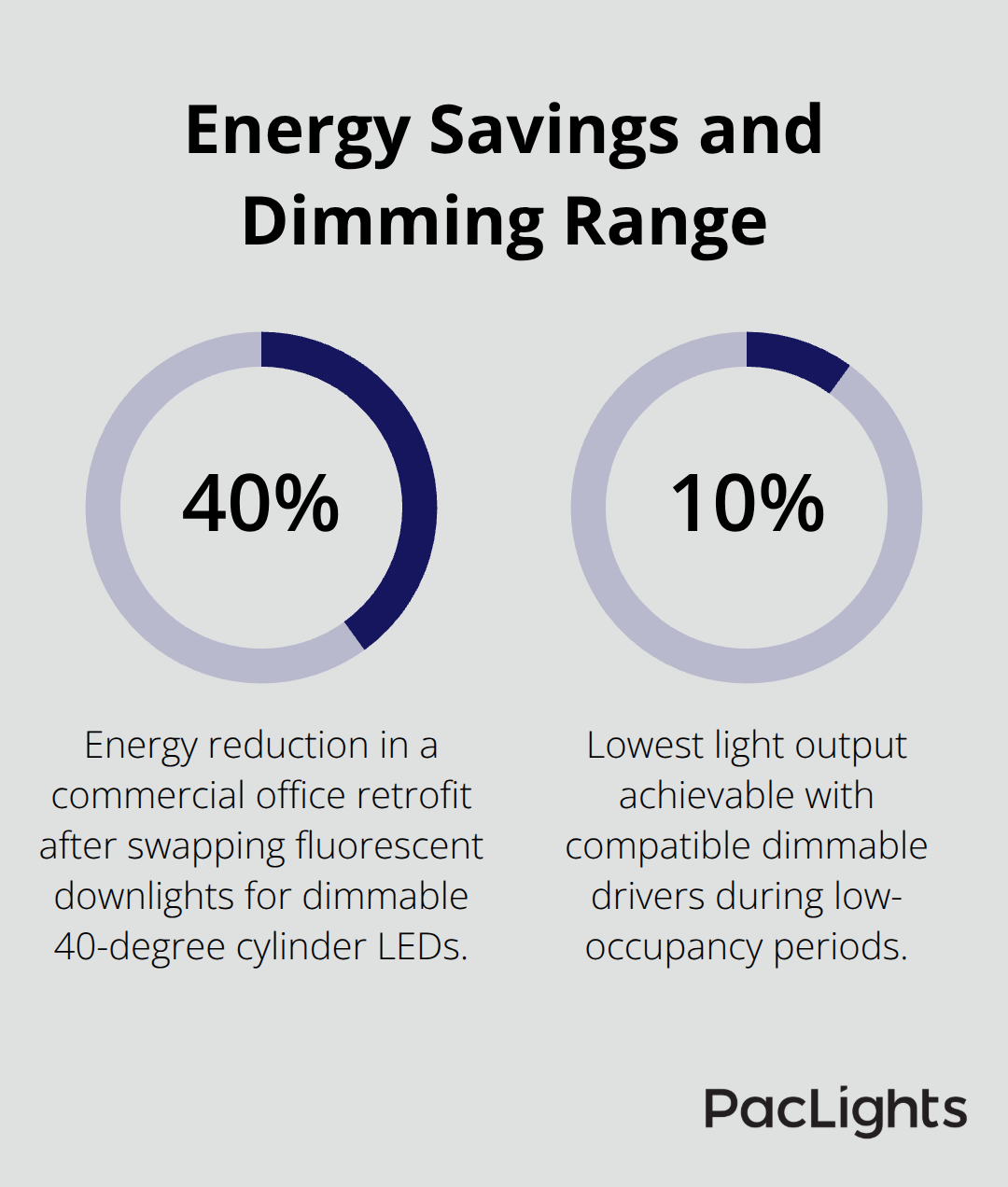
Focused task lighting directly impacts productivity and accuracy in commercial environments. When you install cylinder pendant fixtures above work surfaces-assembly stations, service counters, or inspection areas-you control exactly where light lands. Unlike generic overhead fixtures that waste energy lighting empty space, custom cylinders with focused illumination concentrate light where your team actually works. A commercial office retrofit that swapped fluorescent downlights for dimmable cylinder LEDs with a 40-degree beam reduced energy consumption by approximately 40% while improving visual comfort. The specificity matters because focused light reduces eye strain, cuts shadows that cause errors, and eliminates the need to over-light an entire room.
You specify aperture sizes at 70mm or 95mm and lengths at 95mm or 220mm to fit your exact ceiling constraints and work area dimensions.
Lighting That Reinforces Your Brand
Your commercial space communicates something the moment clients walk in. Dim, flickering, or mismatched lighting signals poor maintenance and cuts credibility. Custom cylinder pendants in finishes like brushed nickel, matte black, or stainless steel establish a cohesive, intentional aesthetic that aligns with your brand standards. The cylinders’ sleek modern form works across hospitality, retail, corporate, and healthcare settings because the design is inherently professional. Adjustable-height mounting lets you position fixtures to highlight architectural features or merchandise while maintaining sightlines-critical in retail where product visibility drives sales. Warm color temperatures around 3000K, common in hospitality settings, create approachable atmospheres, while cooler 4000K or 5000K options suit clinical or technical spaces. This level of customization means your lighting reflects your brand identity instead of fighting against it.
LED Efficiency Compounds Across Your Facility
LED cylinder pendants deliver typical luminous efficacy exceeding 100 lumens per watt-substantially higher than older halogen or incandescent systems. The cylinders support driver compatibility across 120–277V AC electrical systems, so retrofit installations work in older buildings without rewiring. Field-replaceable optics allow you to upgrade beam angles or swap fixtures on-site without replacing entire units, protecting your capital investment. With lifespans commonly exceeding 25,000 hours, you replace bulbs far less frequently than traditional fixtures, cutting labor costs and facility downtime. Dimmable LED options let you adjust brightness to match occupancy and daylight conditions throughout the day-a simple tactic that compounds energy savings when applied across dozens of fixtures. LED retrofit solutions specifically address aging systems, letting you capture these efficiency gains without complete replacement.
Design Flexibility Meets Installation Reality
Cylinder pendant fixtures adapt to your existing infrastructure rather than forcing costly modifications. The lightweight design (approximately 11 oz per fixture) eases installation and reduces ceiling load concerns, which matters in older commercial buildings with weight restrictions. Surface, pendant, track, and wall mounting options accommodate different ceiling types and room geometries without requiring structural changes. You choose from multiple canopy options for surface and pendant mounting, which simplifies the installation process across varied spaces. This flexibility means you move forward with upgrades faster and with lower installation costs than fixtures that demand custom framing or electrical rework.
The ability to customize every element-from beam angle to finish to mounting type-sets the stage for solving specific lighting challenges in your facility. The next section explores how to select the right specifications for your exact application and ceiling constraints.
Matching Fixtures to Your Actual Ceiling and Space
Ceiling Height and Mounting Options Shape Your Installation
Ceiling height and structure determine which cylinder pendant configurations work in your facility, and mismatched specs waste money during installation. Standard commercial ceilings run 9 to 10 feet, but older buildings often sit at 8 feet while modern open-plan spaces reach 12 feet or higher. The 95mm and 220mm length options let you choose proportions that suit your ceiling without creating visual clutter or dangling fixtures too low for safe headroom. A 220mm cylinder works better in high-ceiling retail or hospitality spaces where it creates visual interest without obstruction, while 95mm fixtures fit tighter office environments.
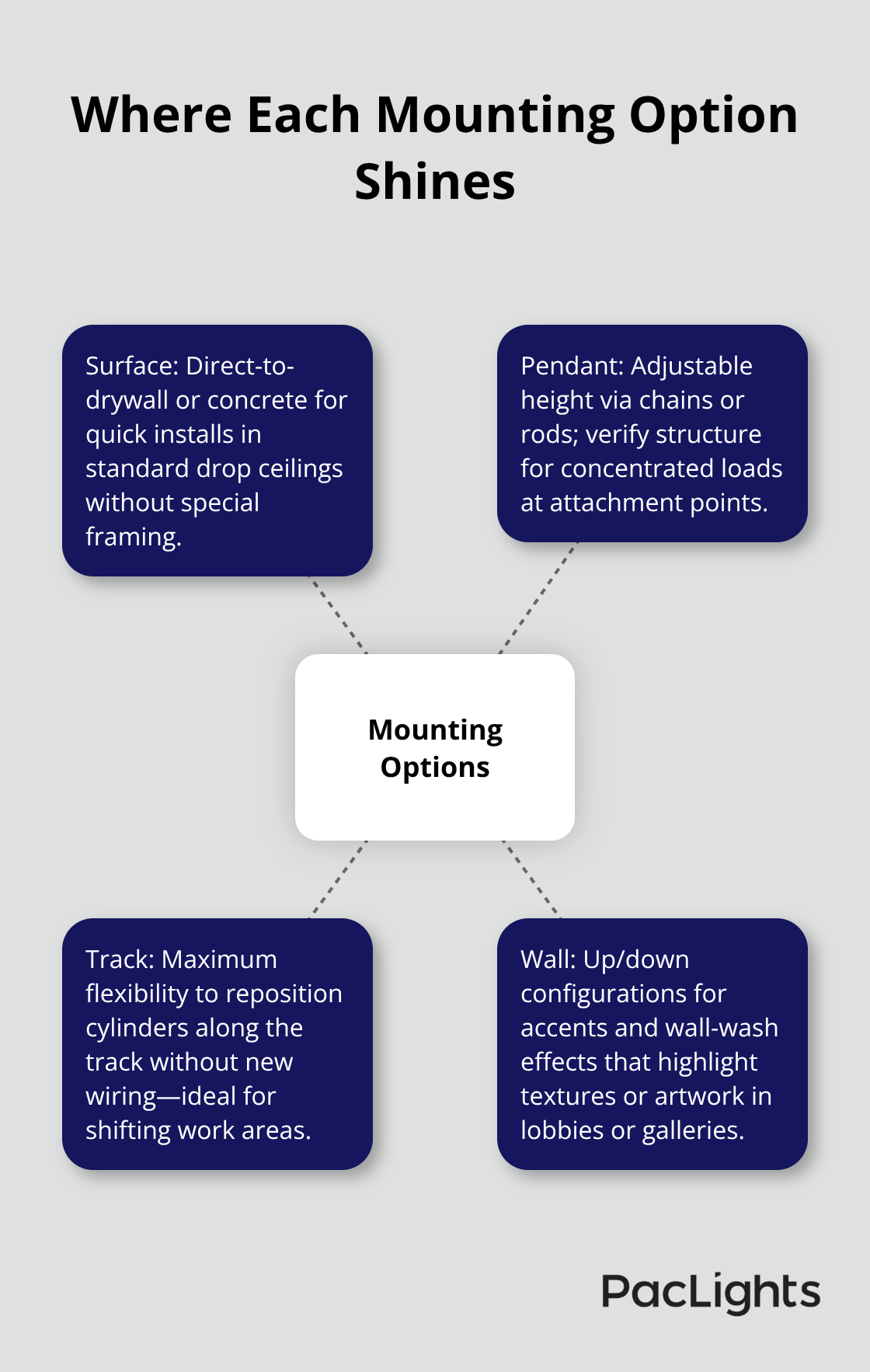
Surface mounting attaches directly to drywall or concrete, eliminating the need for special framing in standard drop ceilings. Pendant mounting requires adequate structural support but offers adjustable-height installation through chains or rods, letting you fine-tune positioning after the fixture hangs. Track mounting provides the most flexibility-you position cylinders anywhere along the track without additional wiring, which matters when your work areas shift or you need to add fixtures later. Wall mounting creates up and down configurations for accent lighting or wall-wash effects, useful in retail galleries or hospitality lobbies where you want to highlight textures or artwork.
The lightweight 11-ounce design means most ceiling types handle multiple fixtures without reinforcement, unlike heavier traditional pendants that demand structural engineering.
Material Finishes and Durability in High-Traffic Spaces
Material and finish choices directly affect how light behaves and how quickly fixtures show wear in commercial environments. Brushed nickel and stainless steel resist fingerprints and oxidation, making them practical for high-traffic areas or kitchens where moisture and handling are constant. Matte black absorbs light and suits modern, minimalist spaces but requires more frequent cleaning to avoid dust visibility. Custom finishes let you match existing hardware or brand colors, though lead times typically run 4 to 6 weeks for non-standard options.
Dimming Controls and Beam Angles Optimize Performance
Dimming compatibility matters more than most facility managers realize-dimmable LED drivers supporting Triac, ELV, 0-10V, or DALI/2 control let you adjust output from 100 percent down to 10 percent, which cuts energy consumption during low-occupancy hours and extends LED lifespan. A 40-degree beam angle suits focused task work, while 25-degree angles concentrate light tightly for accent or retail display, and 60-degree spreads provide broader ambient illumination. Field-replaceable optics mean you can swap beam angles on-site without replacing entire fixtures, protecting your investment if lighting needs change.
Occupancy sensors paired with dimmable fixtures automate brightness reduction in conference rooms or break areas, delivering passive energy savings without requiring staff to adjust controls. Color temperature selection between 3000K warm white and 5000K cool white shapes how spaces feel-warmer tones in service areas encourage approachability, cooler tones in technical or medical spaces support precision work and reduce visual fatigue during detailed tasks.
These specifications form the foundation for selecting the right configuration, but the actual installation process determines whether your investment performs as intended. The next section covers the mounting techniques and electrical considerations that transform specifications into working light.
Getting Cylinder Pendants Right During Installation and Beyond
Mounting Techniques for Different Ceiling Types
Mounting cylinder pendants correctly the first time prevents costly rework and ensures fixtures perform at rated brightness. The 11-ounce weight eliminates the structural engineering headaches that plague heavier traditional pendants, but installation still demands attention to ceiling type and electrical capacity. Surface mounting on drywall or concrete requires locating studs or using appropriate anchors rated for the fixture weight plus vibration loads-standard toggle bolts or expansion anchors rated for at least 25 pounds work reliably in most commercial drywall. Pendant mounting through chains or rods demands you verify the ceiling can support concentrated loads at attachment points; drop ceiling grids alone cannot hold fixtures, so you must anchor to the structural deck above. Track mounting simplifies positioning since you run wiring once and position cylinders anywhere along the track without additional electrical work, making this option ideal when work areas shift or you need future flexibility. Wall mounting for up and down configurations requires secure fastening into studs or concrete, never into hollow drywall alone.
Electrical Capacity and Circuit Planning
Verify your electrical system supports the total wattage of all cylinders before installation. A 40-watt fixture running eight hours daily consumes about 117 kilowatt-hours annually per fixture, so twenty fixtures add up quickly and may require circuit upgrades in older buildings. Have a licensed electrician verify voltage compatibility with your building’s 120–277V AC system and confirm breaker capacity before you hang anything. This assessment prevents overloaded circuits that reduce fixture lifespan and create fire hazards.
Monthly Cleaning and Inspection Schedules
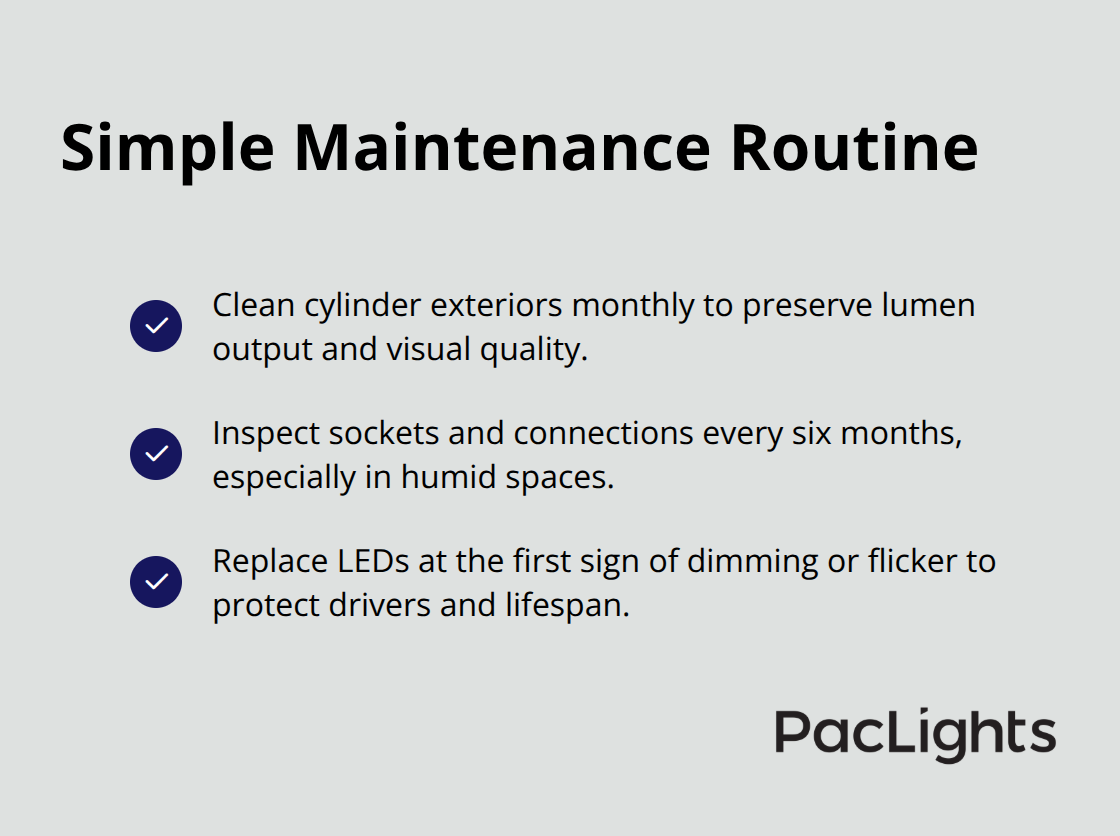
Clean cylinder surfaces monthly with a soft, lint-free cloth and mild soap solution, then dry immediately to prevent water spots that reduce light transmission-this simple step preserves the 100+ lumens-per-watt efficacy that justifies your investment. Inspect sockets and connections every six months for corrosion or loose wiring, especially in humid environments like kitchens or bathrooms where moisture accelerates degradation. Replace LED bulbs the moment they dim noticeably or flicker; waiting until complete failure stresses drivers and shortens fixture lifespan.
Field-Replaceable Optics and Beam Angle Upgrades
Field-replaceable optics allow you to swap beam angles on-site if lighting needs change without replacing entire units, protecting capital invested in mounting and wiring. This flexibility means you adapt to shifting work areas or new tasks without major expenditure. When you need to modify light distribution, you simply change the optics rather than reinstall complete fixtures.
LED Retrofit Projects and Integration
LED retrofit projects targeting aging fluorescent or halogen systems should prioritize fixtures with dimmable drivers supporting 0-10V or DALI/2 control, which integrate with existing building automation systems and avoid expensive rewiring. Schedule retrofits during low-occupancy periods to minimize disruption, and test dimming and color temperature settings thoroughly before full deployment. Professional lighting layout designs help you determine exact placement before installation, eliminating guesswork and ensuring your fixtures perform as intended while reducing costs and carbon footprints.
Final Thoughts
Custom cylinder pendant lighting delivers measurable returns that extend far beyond initial installation. A 40-percent energy reduction documented in commercial office retrofits translates directly to lower utility bills month after month, while LED lifespans exceeding 25,000 hours cut labor costs and facility downtime substantially. A facility running twenty 40-watt cylinders eight hours daily saves roughly 117 kilowatt-hours per fixture annually, which compounds across your entire installation and justifies the upfront investment within two to three years for most commercial spaces.
The real advantage lies in flexibility and control. Field-replaceable optics allow you to adapt to changing work areas without replacing entire fixtures, while dimmable drivers supporting 0-10V or DALI/2 control integrate with your building automation system and automate brightness adjustments based on occupancy and daylight. Warm 3000K color temperatures in service areas and cooler 5000K options in technical spaces shape how your team works and how clients perceive your brand, all without costly redesigns.
Selecting the right solution requires matching specifications to your actual ceiling height, electrical capacity, and work area requirements-surface, pendant, track, and wall mounting options eliminate the structural modifications that inflate costs. We at PacLights understand that one-size-fits-all lighting fails your facility, which is why we offer free lighting layout designs and ROI assessments to help you determine exact placement and calculate long-term savings before you commit.
Disclaimer: PacLights is not responsible for any actions taken based on the suggestions and information provided in this article, and readers should consult local building and electrical codes for proper guidance.