

Industrial downlights face constant pressure from heat, moisture, and vibration. When these fixtures fail prematurely, production stops and replacement costs spike.
At PacLights, we’ve seen firsthand how surface mount durability separates fixtures that last decades from those that fail within years. The difference comes down to materials, construction, maintenance, and how well you manage the environment around them.
What Makes Industrial Downlights Last
Material Selection Determines Corrosion Resistance
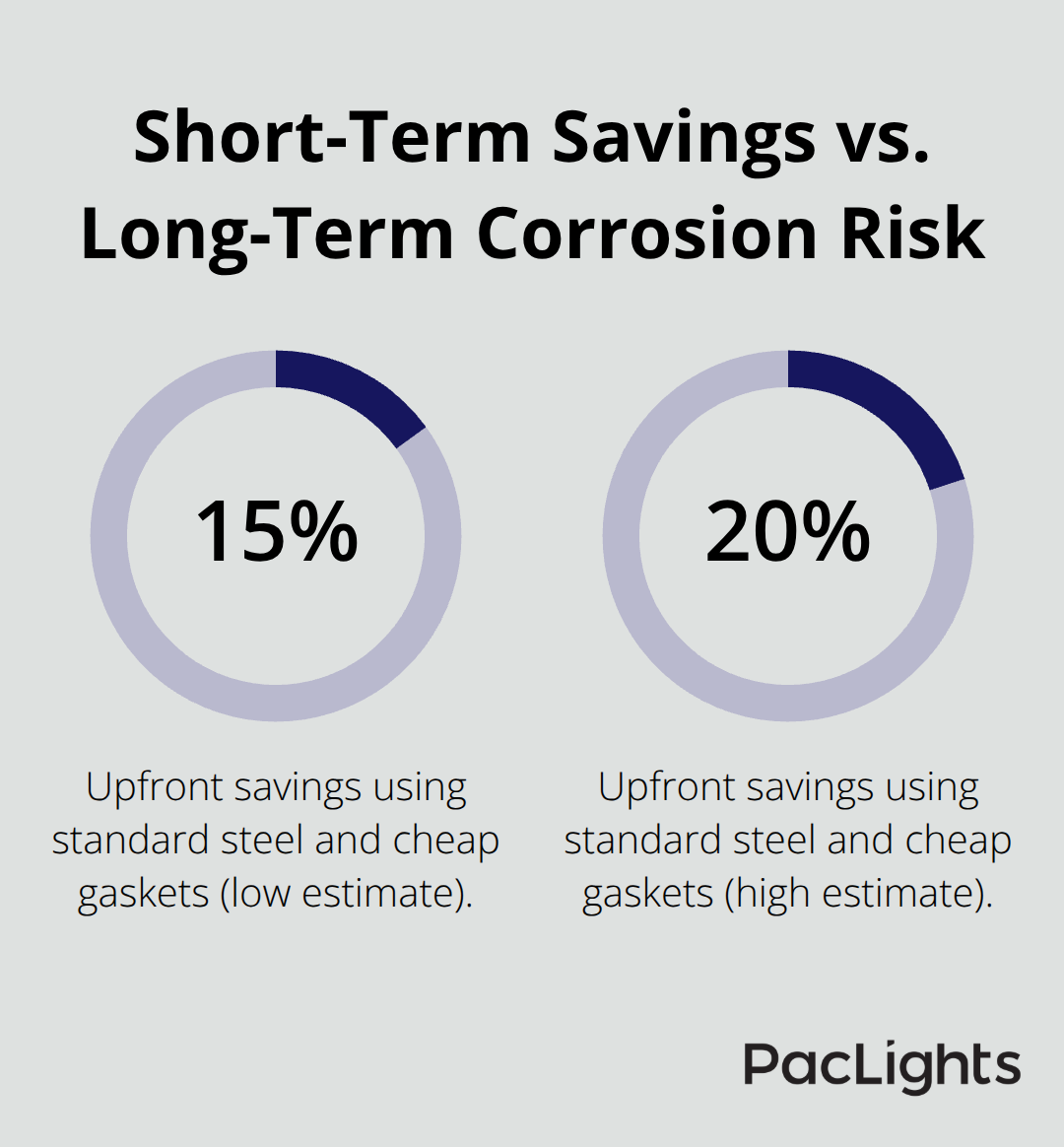
Aluminum and stainless steel dominate industrial downlight construction because they resist corrosion in harsh environments. Aluminum housings withstand salt spray and chemical exposure far better than steel, while stainless steel hardware and silicone gaskets prevent rust at connection points. Copper-free aluminum paired with fiberglass-reinforced polyester (GRP) creates a foundation that handles washdowns, steam, and temperature swings from -40°F to 140°F without degradation. Corro-free epoxy powder coats add another layer of protection against corrosion. When you cut corners on materials, you guarantee premature failure-a fixture built with standard steel and cheap gaskets saves 15–20% upfront but corrodes within 3–5 years in humid or chemical-heavy facilities.
Heat Sinks and Airflow Control Lifespan
Thermal management directly determines how long your downlights survive. Heat kills LED drivers and phosphor coatings faster than any other factor. Robust heat sinks and proper airflow minimize driver stress and prevent lumen depreciation over time. With optimized thermal design, downlights reach 170,000 hours of life at ambient temperatures between 25°C and 55°C. Isolating the driver from the LED engine reduces junction temperature and extends overall luminaire lifetime significantly. Poor ventilation around fixtures causes internal temperatures to spike, shortening lifespan by years. Cramped ceiling spaces, stacked fixtures, or blocked vents are installation mistakes that cost you dearly.
Installation Quality Separates Durable Systems from Failing Ones
Fixtures mounted with adequate spacing, proper airflow paths, and aluminum heat sinks perform consistently across decades. Sealed construction using silicone gaskets and waterproof caulking prevents moisture and dust from reaching internal components, which would otherwise trigger corrosion and electrical failures. Gasket selection must match your specific environment; marine-grade silicone outperforms standard rubber in high-humidity zones. Accelerated aging and marine hose tests validate long-term sealing performance, so demand those certifications when selecting fixtures for wet or corrosive environments. The durability of downlights hinges on three parts-lamp/module, housing, and trim-so selecting robust heat-management and protective housings proves essential for harsh industrial environments.
These material and thermal foundations set the stage for understanding how external conditions push fixtures to their limits.
What Environmental Stresses Break Industrial Downlights
Temperature Swings Crack Seals and Degrade Components
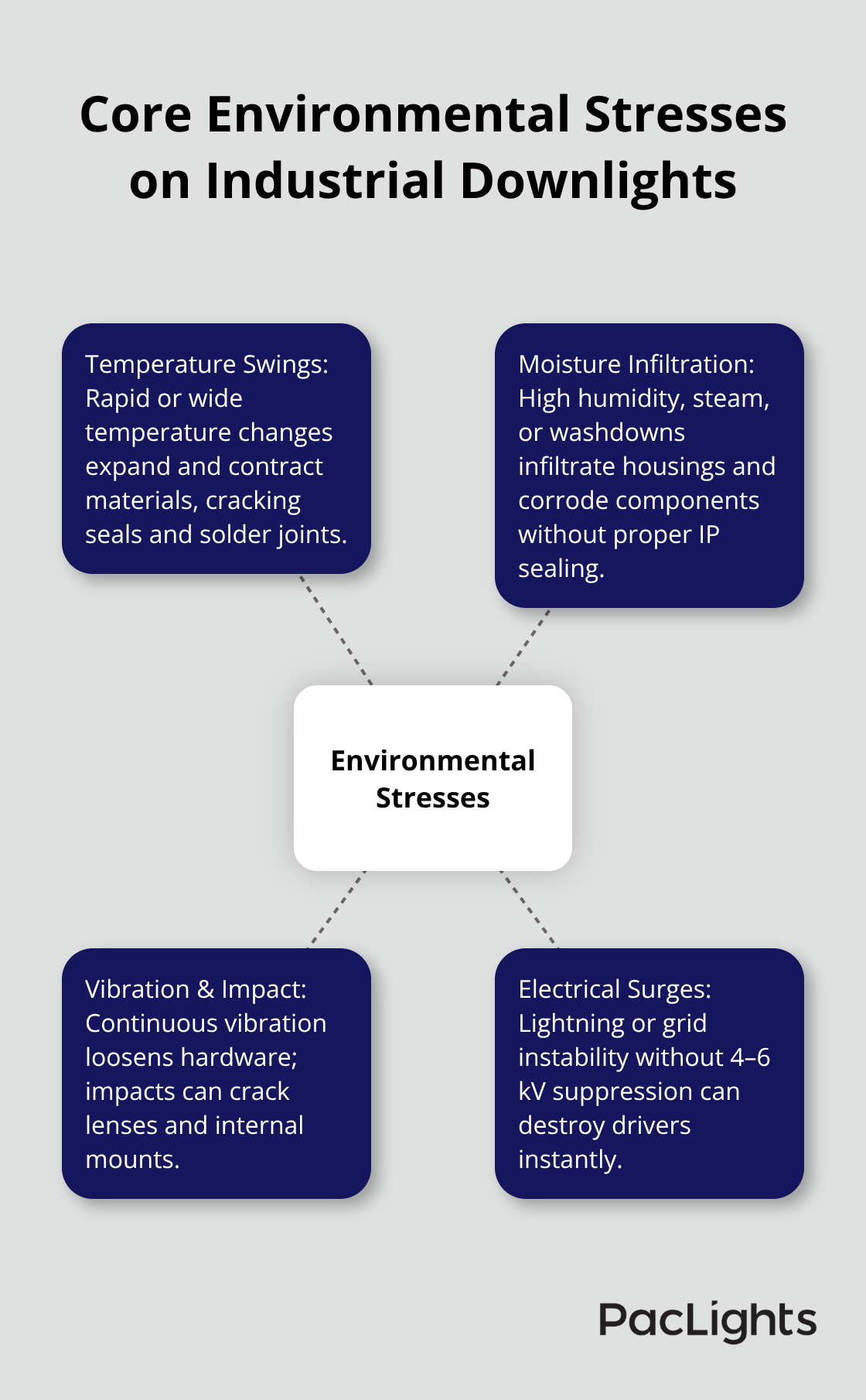
Ambient temperature swings between -40°F and 140°F create thermal stress that accelerates component failure if your fixtures lack proper thermal isolation. Most industrial downlights operate safely at ambient temperatures up to 65°C, but the real risk emerges when fixtures sit in spaces with extreme or rapid temperature changes. A warehouse with no climate control experiences 50°F temperature swings between winter nights and summer days, forcing materials to expand and contract repeatedly. This cycling loosens gasket seals, cracks solder joints on LED driver boards, and degrades phosphor coatings faster than steady-state operation. Thermal ratings follow T-codes from T1 to T6, where T1 fixtures handle the coldest hazardous environments and T6 fixtures work in the hottest zones.
Your facility’s ambient temperature must match or stay below your fixture’s T-rating, or you guarantee premature failure within 2–3 years instead of the promised 25,000–50,000 hour lifespan.
Moisture Infiltration Triggers Corrosion and Electrical Shorts
Humidity and moisture present an equally brutal threat to fixture longevity. IP65-rated fixtures withstand heavy water jets and steam, while IP44 models only handle splashing near sinks. Industrial washdowns, chemical spray systems, and high-humidity zones like food processing plants demand IP65 as a minimum standard. Moisture infiltration causes corrosion inside housings, shorts electrical connections, and triggers failures in weeks rather than years. Silicone gaskets and sealed wire entries prevent humidity from reaching internal components, but gasket material selection matters enormously. Marine-grade silicone withstands salt spray and chemical exposure for decades, while standard rubber gaskets degrade in harsh environments within months.
Vibration and Impact Damage Loosen Components
Vibration and mechanical stress from machinery, heavy equipment movement, or impact damage accelerate component loosening and solder joint failure. Industrial facilities with punch presses, conveyor systems, or high-traffic areas subject fixtures to constant vibration that exceeds standard UL 844 testing baselines. Manufacturers that conduct 3-axis vibration tests at 1G or higher for 6-hour durations exceed minimum standards and deliver fixtures that survive real-world conditions. A 1 kg weight dropped from 40 cm onto the lens reveals whether a fixture’s construction can handle accidental impacts during installation or maintenance without cracking. Fixtures that fail impact tests crack internally, allowing moisture infiltration and electrical hazards even if the external lens appears intact.
Surge Protection Prevents Lightning Damage
Built-in surge suppression rated 4–6 kV protects against lightning strikes and power surges that would otherwise destroy LED drivers instantly. Facilities in lightning-prone regions or with unstable electrical grids cannot afford fixtures without surge protection, as a single strike wipes out an entire row of downlights and halts production. These environmental pressures demand fixtures engineered to withstand real-world conditions, which is why proper maintenance and monitoring practices become your next line of defense against unexpected failures.
How to Keep Industrial Downlights Running Strong
Establish a Preventive Maintenance Schedule
Preventive maintenance stops failures before they happen, and the cost of a cleaning schedule is negligible compared to unplanned downtime. Inspect fixtures every six months in standard industrial environments and every three months in high-humidity or corrosive settings like food processing plants or coastal facilities. During inspection, check for moisture inside the lens by looking for condensation or discoloration around gasket seals. Wipe down fixture housings with a dry cloth to remove dust and debris that traps heat and accelerates thermal stress.
In washdown areas, inspect gasket condition closely-silicone gaskets degrade after 3–5 years of exposure to chemicals and steam, so plan replacement cycles accordingly. Test each fixture’s light output using a handheld lux meter and compare readings to baseline measurements taken at installation. Output drops of 15–20% signal driver degradation or phosphor coating failure, indicating replacement is imminent rather than optional.
Track Performance Trends Over Time
Document light output readings monthly to track trends; a steady decline over six months means you have time to budget replacements, but sudden drops suggest electrical or thermal failure is underway. Monitor voltage stability at the fixture terminals using a digital multimeter during operation-voltage swings above or below rated input by more than 5% stress LED drivers and phosphor coatings, so unstable electrical systems require voltage regulators or dedicated circuits to protect expensive fixtures.
Execute Proper Installation from the Start
Installation mistakes compound over years, so verify mounting during the initial setup rather than discovering problems later. Mount fixtures with 12–16 feet spacing on 8-foot ceilings to maintain proper thermal airflow and prevent heat accumulation. Use masonry anchors and impact drills for concrete ceilings, ensuring the mounting base sits perfectly level to avoid water pooling on top of the fixture.
Strip wiring 5 mm and secure connections with appropriate connectors rated for your voltage and amperage; loose connections generate heat and cause flickering that degrades drivers prematurely. Check polarity using a multimeter-reversed polarity won’t destroy fixtures immediately but causes erratic behavior and component stress that shortens lifespan by years. Test each fixture before closing up ceiling work and again after one week of operation to catch early failures.
Optimize Controls to Reduce Thermal Stress
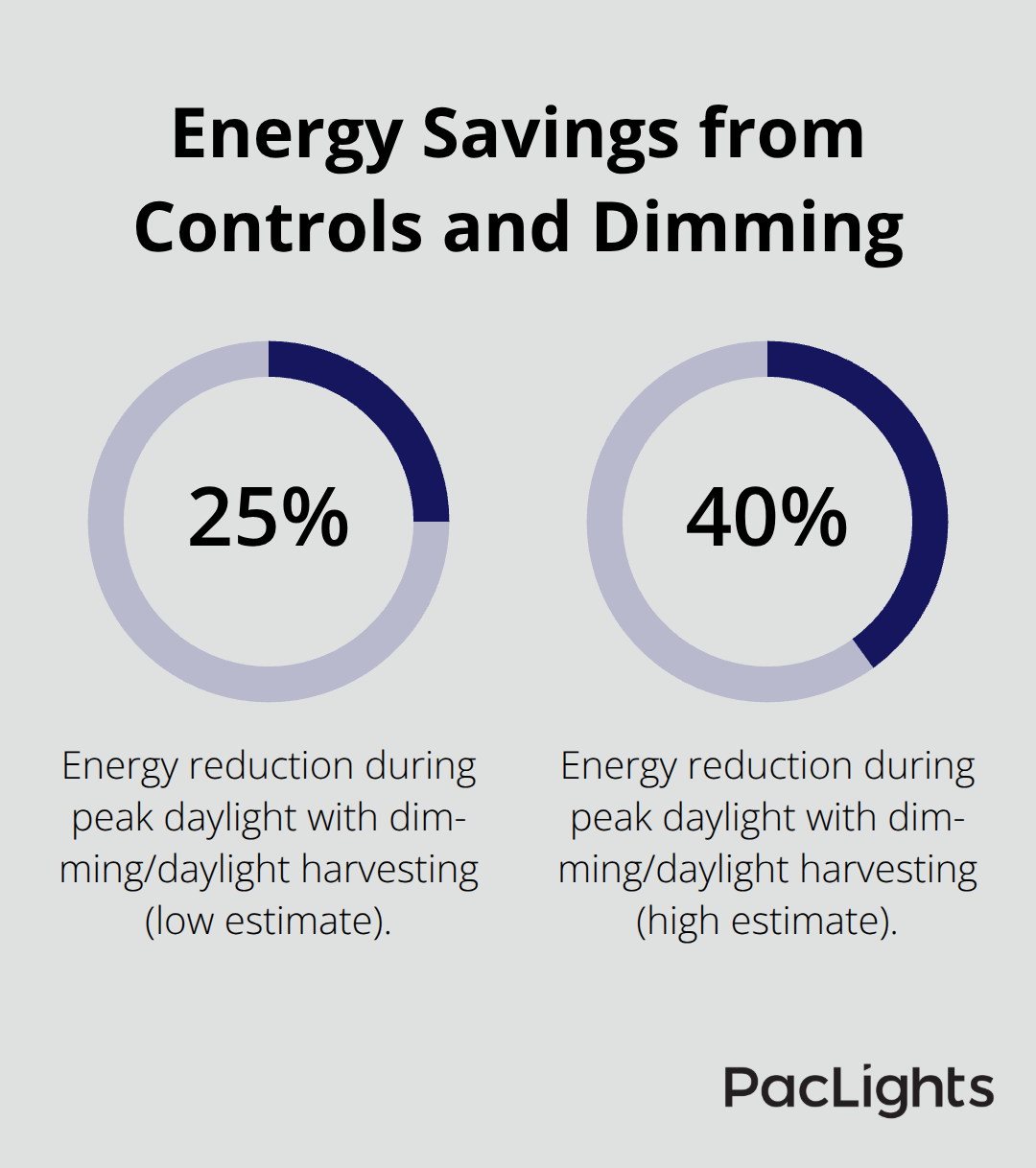
In taller spaces above 10 feet, pair motion sensors with daylight harvesting controls to prevent fixtures from running at full brightness when unnecessary; dimming to 70% during peak daylight cuts lighting energy by 25–40% according to the Department of Energy, which also reduces thermal stress and extends luminaire life significantly.
Final Thoughts
Surface mount durability in industrial facilities rests on three factors that directly impact your bottom line: material quality, thermal management, and environmental protection. Fixtures built with copper-free aluminum, stainless steel hardware, and marine-grade silicone gaskets survive decades in harsh conditions, while cheap alternatives corrode within 3–5 years. Heat sinks and proper airflow extend lifespan to 170,000 hours or beyond, whereas poor ventilation cuts that timeframe dramatically.
Investing in quality downlights pays dividends through reduced maintenance costs and extended operational life. A facility switching to durable LED surface mount fixtures realizes 60–75% energy savings within 18–24 months, with payback periods that justify the upfront investment immediately. Preventive maintenance schedules costing pennies per fixture prevent unplanned downtime that costs thousands per hour, and fixtures lasting 25,000–50,000 hours eliminate the constant replacement cycles that drain budgets and disrupt production.
Selecting durable downlights requires matching fixture specifications to your facility’s actual conditions-verify ambient temperature ratings against your T-code requirements, confirm IP ratings match moisture and dust exposure levels, and demand certifications like UL and DLC that signal rigorous testing and performance standards. We at PacLights offer free lighting assessments and ROI calculations to help you identify fixtures engineered for your exact environment, ensuring surface mount durability and long-term reliability.
Disclaimer: PacLights is not responsible for any actions taken based on the suggestions and information provided in this article, and readers should consult local building and electrical codes for proper guidance.