

Harsh lighting ruins retail experiences. When customers squint at products or feel eye strain while shopping, they leave-and they don’t come back.
At PacLights, we’ve seen how cylinder pendant glare directly impacts sales. The right glare control transforms your store into a space where customers linger, see products clearly, and actually want to buy.
How Glare Damages the Shopping Experience
The Stress Response That Empties Aisles
Glare in retail environments isn’t just uncomfortable-it actively kills sales. When customers experience eye strain from excessive brightness, their bodies trigger a stress response that makes them want to leave the store faster. Studies show that discomfort glare and disability glare both reduce how long shoppers spend examining products and making purchasing decisions. Glossy cylindrical packaging for beverages, cosmetics, and canned goods becomes especially problematic under harsh lighting because reflections intensify the glare hitting customers’ eyes directly. This means your most visually appealing products actually become harder to inspect, not easier.
The result is predictable: shoppers move through aisles quickly without lingering, compare fewer items, and abandon purchases they might have made in a comfortable environment. Research indicates that low-glare environments boost concentration and well-being, which translates directly to longer dwell time in product zones and higher perceived quality of merchandise. When customers feel comfortable, they’re willing to spend more time evaluating options, which increases the likelihood of higher-value purchases.
The Hidden Cost to Your Staff
Poor glare control also strains your staff. Employees working under harsh lighting experience fatigue and reduced focus, which degrades customer service quality and increases errors at checkout or during product recommendations. A fatigued team cannot deliver the attentive service that turns browsers into buyers.
Why Brighter Doesn’t Mean Better
The visibility problem cuts both ways. While you might assume brighter lighting always shows products better, excessive glare actually obscures product details by washing out colors and creating harsh shadows that distort how items look on shelves. Proper glare control using diffused cylinder pendant lights with warm color temperatures between 2700K and 3000K prevents this distortion and allows the true appearance of products to shine through.
Placement matters enormously-positioning cylinders within 600 to 900 millimeters of high-margin products ensures visibility without forcing customers to squint. A layered lighting approach combining ambient light with targeted shelf illumination delivers the best results because it reduces overall brightness while concentrating light exactly where it matters most. This strategy prevents the harsh, single-source glare that makes retail spaces feel institutional or uncomfortable.
The Energy and Durability Advantage
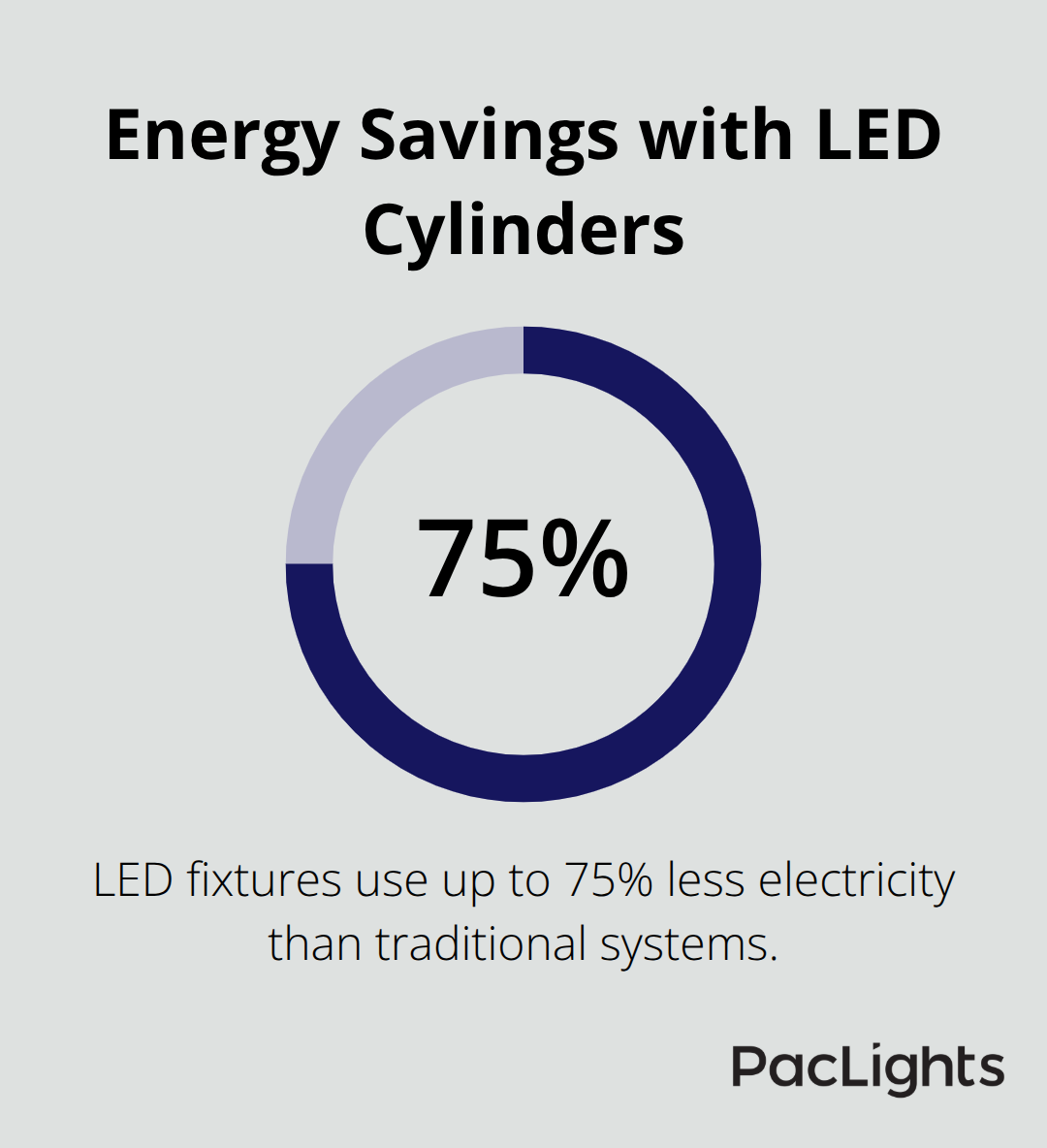
Dimmable LED cylinder pendants give you flexibility to adjust brightness throughout the day without rewiring, allowing you to respond to natural daylight conditions and reduce glare during peak sun hours. The energy savings compound the benefit-LED fixtures cut electricity use by up to 75 percent compared to traditional systems, and they last over 50,000 hours, meaning fewer maintenance disruptions that would otherwise interrupt your glare control strategy.
These performance gains set the stage for understanding which specific features in cylinder pendant lights actually control glare most effectively.
What Makes Cylinder Pendants Effective at Stopping Glare
Diffusers and Advanced Optics Control Light Direction
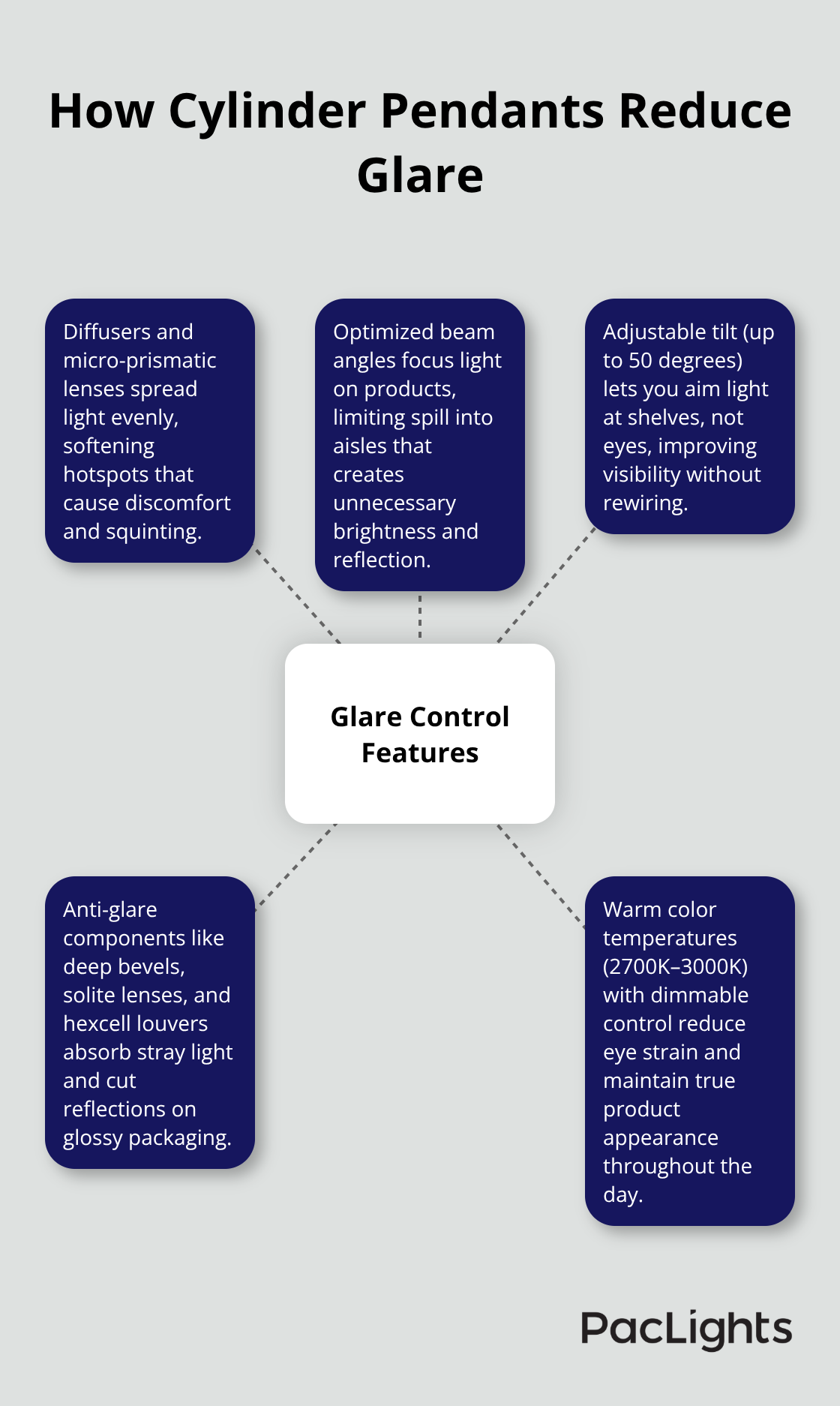
Diffusers form the first line of defense against glare-they scatter light instead of concentrating it into harsh beams that strike customers’ eyes directly. Micro-prismatic lenses and advanced diffuser materials break up brightness across a wider area, reducing the intensity of any single glare hotspot. This technology prevents the concentrated beam that causes discomfort when shoppers look at products or move through aisles. Without proper diffusion, light travels in straight lines and reflects off glossy packaging, intensifying the glare that reaches customers’ eyes.
Beam Angle and Fixture Placement Work Together
Beam angle optimization gives you precise control over where light travels. A 15-watt to 20-watt cylinder with a tightly focused beam covers display zones between 600 and 900 millimeters without spilling brightness across aisles where it creates unnecessary glare. This targeted approach matters because unfocused light bounces off ceiling surfaces and reflects back into customers’ line of sight, turning what should be ambient illumination into a discomfort problem. Retailers often make the mistake of oversizing fixtures or widening beam angles to cover larger areas, but this actually increases glare because more light reaches shoppers’ eyes at uncomfortable angles. Fixtures with adjustable tilt up to 50 degrees allow you to aim light precisely at shelves rather than at eye level, eliminating the need to rewire or reposition entire installations.
Material Selection and Color Temperature Reduce Eye Strain
Anti-glare coatings and material choices complete the picture. Deep bevels, solite lenses, and hexcell louvers on cylinder housings absorb stray light and prevent reflections that amplify glare on glossy product packaging. Aluminum housings with effective heat management maintain consistent light output over the 50,000-hour lifespan of LED fixtures, so glare control does not degrade as the bulb ages. Warmer color temperatures between 2700K and 3000K are less harsh on eyes than cooler, bluish tones, making them the practical choice for retail displays. Dimmable LED cylinders give you the flexibility to reduce brightness during peak daylight hours or promotional events without rewiring, which means you can adapt glare control to changing conditions throughout the day.
TCP Lighting research shows that proper visibility from well-designed cylinder lighting leads to faster purchasing decisions and higher perceived product quality, but only when glare is managed. This is why fixture selection is not about maximum brightness-it is about delivering the right amount of light to the right place without forcing customers to squint. Understanding these design principles sets the foundation for actually implementing them in your store layout, where placement height, spacing, and layering with other light sources determine whether your glare control strategy succeeds or fails.
Implementation Strategies for Retail Spaces
Measure Your Space Before Selecting Fixtures
Accurate measurements form the foundation of effective glare control. Measure the distance from your ceiling to the top of your merchandise, then subtract 150 to 200 millimeters to find your ideal pendant height. This spacing prevents light from bouncing off the ceiling and creating glare hotspots above eye level. Next, measure the depth of your display zones and map where your highest-margin products sit. Position cylinder pendants within 600 to 900 millimeters of these key items, not scattered randomly across shelves.
A 15-watt to 20-watt cylinder at this distance covers most shallow to mid-depth displays without overshooting into aisles where it wastes energy and creates unnecessary brightness. The inverse square law means light intensity drops significantly with distance, so placement precision directly controls whether customers experience comfortable illumination or harsh glare.
Avoid the Oversizing Trap
Most retailers mount pendants too high or too far from products, then compensate by increasing wattage. This approach fails because it floods the entire space with brightness instead of targeting displays. Lower, closer, more focused fixtures deliver glare-free visibility exactly where sales happen. Oversized wattage (40W on shallow shelves, for example) intensifies the problem rather than solving it, forcing customers to squint and reducing dwell time in product zones.
Layer Your Lighting Design
Layering creates powerful glare control. Combine your cylinder pendants with indirect lighting, wall sconces, or cove lighting that bounces light off ceilings or walls rather than projecting it directly at customers. This layered approach reduces the total ambient brightness while keeping display zones well-lit, which eliminates the contrast that causes glare and eye strain.
If your store has natural daylight, add photocell controls to your cylinders so they dim automatically during bright daytime hours. This prevents the washout effect that happens when artificial light competes with sun and creates confusing shadows on product shelves.
Adapt Color Temperature and Brightness to Your Products
For stores with multiple product categories, warmer color temperatures like 2700K suit premium items where glare perception matters most, while 4000K neutral white works for general merchandise. Dimmable LED cylinders let you adjust brightness for promotions or seasonal events without rewiring, maintaining glare control as your displays change throughout the year.
Conduct a Glare Audit and Plan Your Layout
Photograph glare hotspots during different times of day, note where customers squint or move quickly, and identify reflective surfaces like polished floors or glass storefronts that amplify brightness. This formal audit reveals exactly where your current space creates discomfort. PacLights provides free lighting layout designs and ROI assessments that translate these measurements into a specific fixture plan tailored to your space, eliminating guesswork and ensuring your glare control strategy actually works when customers walk through your doors.
Final Thoughts
Cylinder pendant glare control directly impacts your bottom line. When you eliminate harsh brightness and eye strain, customers spend more time examining products, staff performs better, and your store feels intentionally designed rather than institutional. LED cylinder fixtures cut energy consumption by up to 75 percent compared to traditional systems, and with lifespans exceeding 50,000 hours, maintenance costs drop dramatically-a store spending $8,000 monthly on lighting could save approximately $7,200 annually by switching to properly configured LED cylinders with glare management.
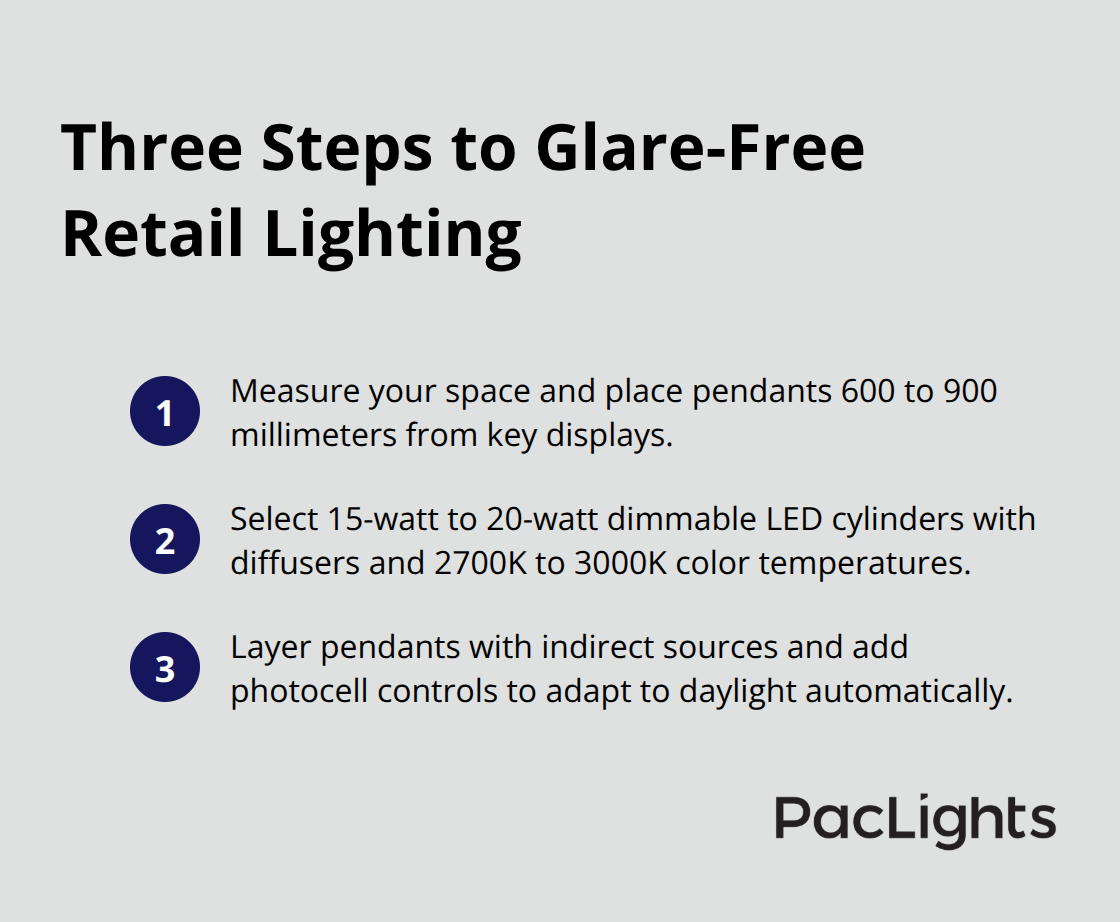
The path forward requires three concrete steps: measure your space precisely and map high-margin products to determine optimal fixture placement between 600 and 900 millimeters from displays, select 15-watt to 20-watt dimmable LED cylinders with diffusers and warm color temperatures between 2700K and 3000K, and layer your lighting with indirect sources and photocell controls to adapt brightness throughout the day. We at PacLights understand that cylinder pendant glare control requires more than fixture selection-it demands a tailored strategy that fits your specific retail environment.
Contact PacLights to schedule your complimentary lighting audit and receive a free lighting layout design that translates your space measurements into an implementation plan with exact ROI projections.
Disclaimer: PacLights is not responsible for any actions taken based on the suggestions and information provided in this article, and readers should consult local building and electrical codes for proper guidance.