

Outdoor cylinder wall finishes take a beating from salt spray, UV rays, and temperature swings. Most standard coatings fail within a few years in harsh environments, leaving your facility looking worn and requiring expensive replacements.
At PacLights, we’ve seen firsthand how the right finish can extend light lifespan by decades. This guide covers the corrosion-resistant options that actually work and how to maintain them properly.
What Damages Cylinder Wall Lights Most
Salt spray, temperature fluctuations, and intense UV radiation attack outdoor cylinder lights relentlessly. In coastal environments, salt particles deposit on fixtures continuously, accelerating corrosion rates dramatically. Steel exposed to salt spray corrodes at roughly 30 times faster than steel in dry conditions, according to galvanization research. Aluminum surfaces oxidize within weeks of salt exposure if left unprotected, turning from bright metal to a dull, chalky gray. Temperature swings between freezing nights and hot days cause expansion and contraction cycles that crack protective coatings and create pathways for moisture infiltration. UV radiation degrades organic coatings like paint and lacquer at rates that depend on sun exposure intensity, with southern and western exposures fading 20-40% faster than northern faces on the same building.
Materials That Fail Fastest
Bare aluminum without any coating ranks among the worst performers in harsh environments. While aluminum has a natural oxide layer that provides baseline corrosion resistance, this layer offers minimal protection against salt spray and provides no UV defense. Painted aluminum fails even faster because standard paint coatings peel and chip within 2-3 winters in freeze-thaw cycles, leaving bare metal exposed underneath. Uncoated steel corrodes within months in coastal settings, making it unsuitable for cylinder lights in marine zones. Polished or mirror-finished aluminum loses its luster quickly under UV exposure, becoming dull and pitted within a year.
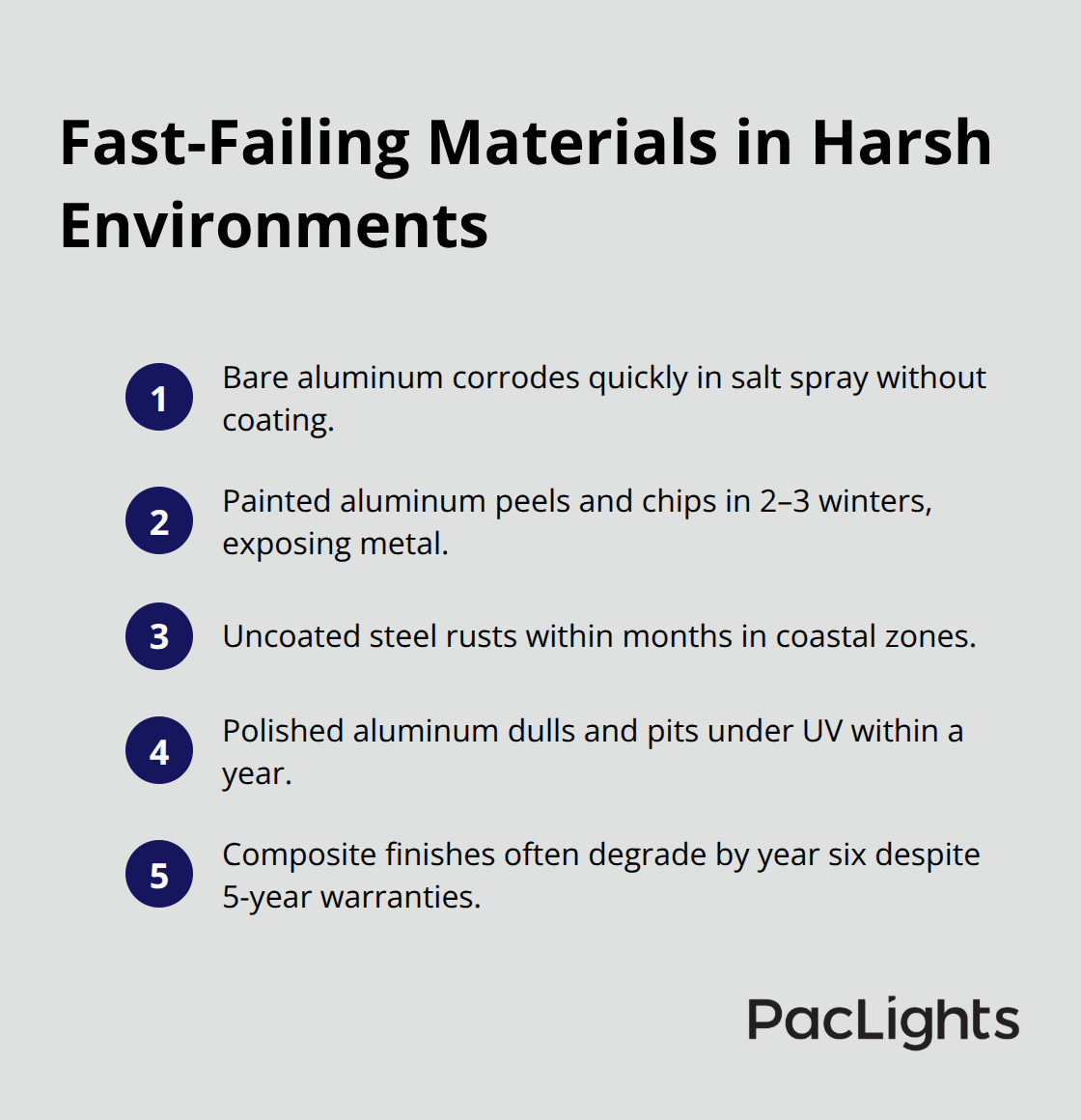
Composite finishes on fixtures carry typical warranties of only five years, implying manufacturers expect significant degradation by year six-which means more frequent and costly replacements.
How UV Radiation Breaks Down Protective Coatings
UV radiation doesn’t just fade colors; it breaks down the polymer bonds in protective coatings, causing them to become brittle and crack. Powder-coated finishes, while excellent for corrosion resistance, show noticeable color shifts after 3-5 years of direct sun exposure unless they include UV-stable topcoats. Organic coatings like paint and lacquer offer the lowest durability against UV, typically lasting 2-3 years before chalking and peeling begin. Anodized aluminum finishes resist fading better than painted surfaces because the anodized layer is integral to the metal rather than a surface coating, but the dye colors used in anodizing can still lighten over time.
The Compounding Effect of Salt and Sun
The combination of salt spray plus intense UV creates a compounding damage effect where moisture penetrates through UV-damaged coating, then salt accelerates corrosion beneath the surface. High-exposure coastal sites experience this dual attack most severely, reducing fixture life from an expected 10+ years down to 3-4 years if finishes are inadequate. This reality makes material selection at the outset far cheaper than replacing fixtures prematurely. Understanding which finishes resist both corrosion and fading allows you to select cylinder lights that maintain their appearance and function for decades rather than years.
Finishes That Actually Stop Corrosion and Fading
Powder Coating: Durability Meets Customization
Powder coating stands as the most practical choice for cylinder wall lights in demanding environments because it delivers both corrosion resistance and aesthetic control in a single application. The process applies dry powder electrostatically to aluminum or steel, then cures at approximately 400°F in an oven for around 20 minutes, creating a thick, continuous barrier that resists scratches, chipping, and chemical attack far better than liquid paint. For coastal installations, powder coating with a zinc-rich primer followed by an epoxy intermediate coat or polyurethane topcoat meets ISO 12944 C5-M standards, which specify at least 15 years of durability in marine environments-a genuine protection timeline that composite finishes simply cannot match.
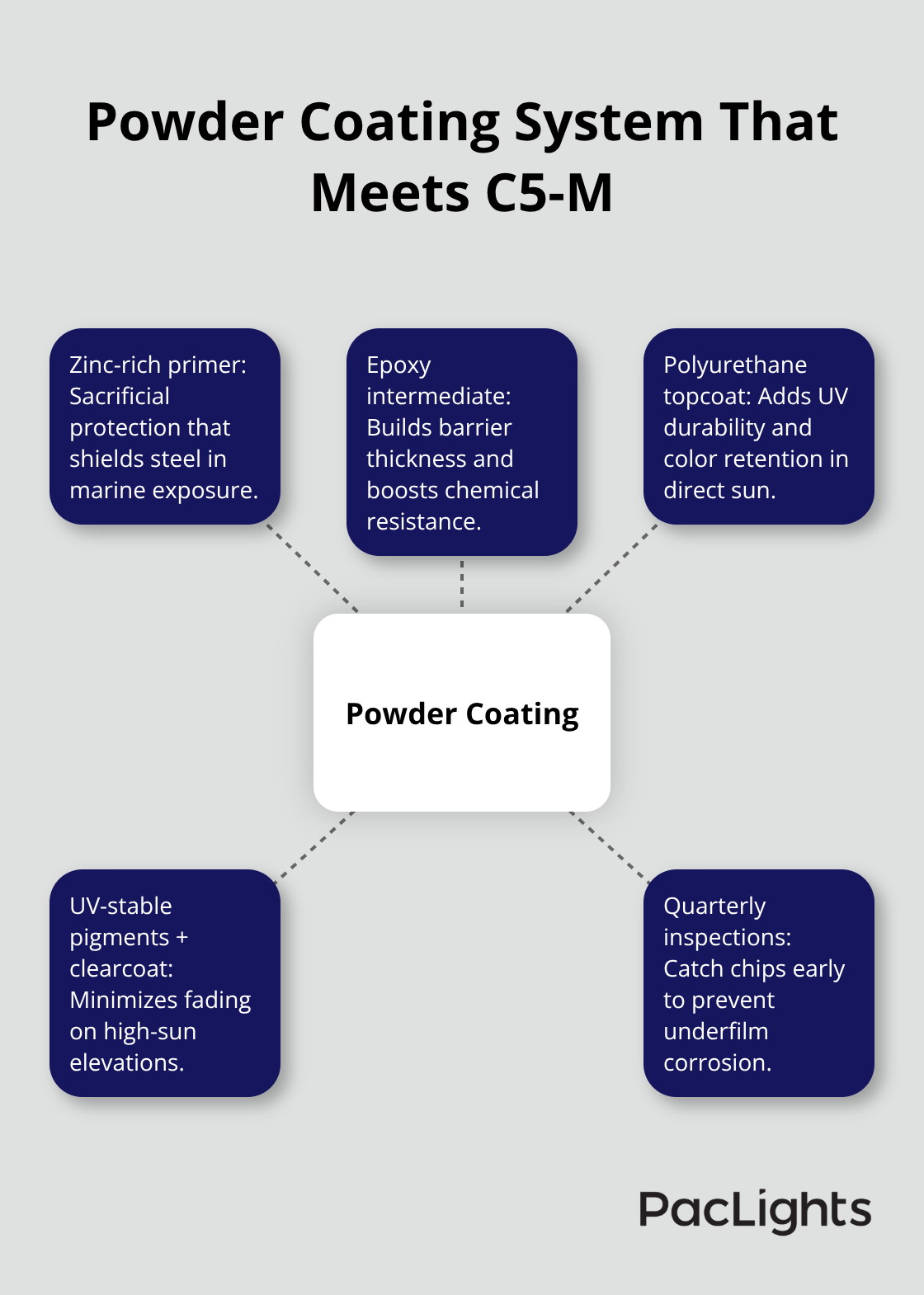
The maintenance requirement is real: powder coatings demand prompt repair of any chips or damage to prevent moisture from seeping beneath the coating and corroding the substrate. In high-exposure coastal sites, quarterly inspections catch damage early and save thousands in premature replacements. For facilities where appearance matters equally with durability, powder coating with UV-stable pigments and a protective clearcoat provides the best balance, though recoating damaged areas every 3–5 years remains mandatory.
Anodized Aluminum: Fade Resistance Built Into the Metal
Anodized aluminum offers superior fade resistance because the protective layer bonds metallurgically with the metal itself rather than sitting as a surface coating. Anodizing thickens aluminum’s natural oxide layer through electrolytic treatment, and the process is dyeable for color variety while maintaining inherent corrosion resistance. The anodized finish does not peel, bubble, or require repainting like organic coatings, and it resists salt spray far more effectively than bare or painted aluminum.
Dye colors in anodized finishes can lighten over 5–10 years under intense UV exposure, so anodizing performs best when combined with a protective topcoat like Everbrite Coating, which adds UV protection and extends recoating intervals to every 5–10 years depending on sun and salt exposure. This combination approach transforms anodized aluminum into a long-term solution for coastal cylinder lights.
Galvanized Steel and Stainless Steel: Maximum Corrosion Protection
For truly severe marine settings, hot-dip galvanizing (HDG) substrate combined with a protective topcoat provides unmatched durability because the galvanized zinc layer reduces corrosion rates to roughly 1/30 that of bare steel and continues protecting even if small rust spots emerge. Stainless steel is often mentioned for marine use but represents overkill in cost for most applications; industry practice favors galvanized steel or anodized aluminum with proper topcoats because they deliver equivalent protection at roughly half the material expense.
Choosing the Right Finish for Your Environment
The real decision point is whether you prioritize color customization and aesthetic flexibility (powder coating wins here) or maximum corrosion resistance with minimal maintenance (anodized aluminum or galvanized steel with topcoat wins here). Each finish strategy addresses different facility priorities, and the choice depends on your specific exposure conditions and maintenance capacity.
The next section examines how to maintain these finishes properly and when to reapply protective coatings to keep your cylinder lights performing for decades rather than years.
Maintain Your Cylinder Lights for Decades of Performance
Maintenance separates fixtures that last 3 years from those that deliver 10+ years of reliable performance. Quarterly cleaning schedules work best for any cylinder wall light in coastal or industrial environments because salt deposits, dust, and UV-degraded coating fragments accumulate faster than most facility managers expect. For coastal installations, clean fixtures every three months with a soft brush and non-abrasive cleaner like mild soap and water, then dry thoroughly to prevent water spots that trap moisture against the metal surface. Industrial areas near chemical plants or salt production facilities require the same quarterly rhythm because corrosive particles settle on housings and lenses continuously.
During these inspections, check for condensation inside the lens because internal moisture indicates a failing seal. Prompt lens replacement prevents moisture from reaching the LED driver and causing premature failure. Tighten mounting bolts quarterly as well since vibration and thermal expansion cycles gradually loosen hardware, creating gaps where water infiltrates the housing.
Repair Damaged Coatings Before Corrosion Spreads
Powder-coated cylinder lights need inspection for chips or peeling every 12 months in coastal zones, and any damage requires immediate repair to prevent moisture from seeping beneath the coating and triggering corrosion. For a single damaged area, localized recoating with a matching powder coat or epoxy paint stops the problem, typically costing $50–150 per fixture versus $400–800 for a complete fixture replacement. This cost difference makes early intervention far more economical than waiting for widespread failure.
Anodized aluminum with a protective topcoat like Everbrite Coating extends recoating intervals to every 5–10 years depending on sun intensity and salt exposure. Application involves cleaning the surface with EZ Prep Cleaner or a baking soda solution, then applying two coats with an hour between applications, requiring no buffing afterward. Galvanized steel fixtures rarely need recoating if the zinc layer remains intact, but if rust spots emerge, a protective topcoat applied within weeks prevents deep corrosion from establishing.
Track Maintenance to Prevent Costly Surprises
For facilities in high-exposure coastal sites, a documented maintenance log tracking cleaning dates, inspections, and any coating repairs prevents costly surprises and extends fixture life by 3–5 years compared to reactive maintenance. This simple record-keeping practice transforms maintenance from guesswork into a predictable, budgetable process.
Adjust Your Schedule to Match Local Conditions
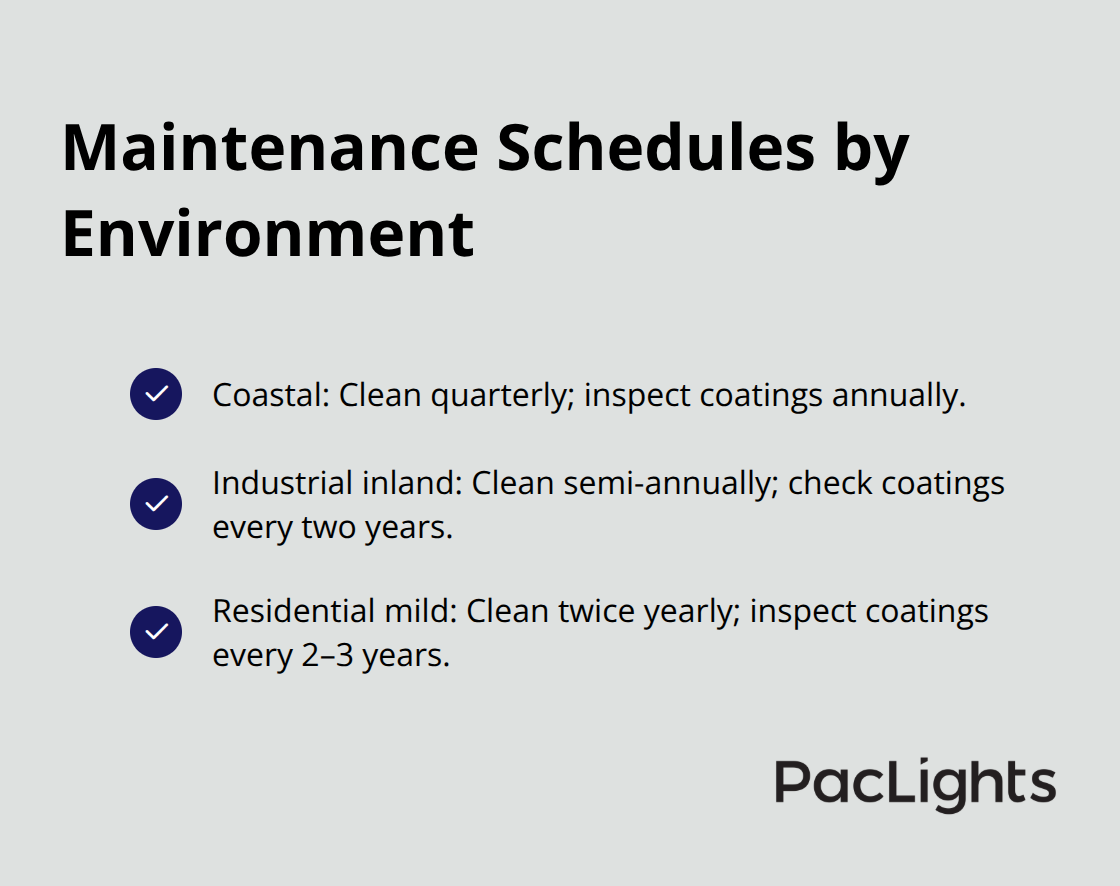
Coastal facilities with salt spray exposure demand quarterly cleaning and annual coating inspections because the combination of salt and moisture accelerates degradation faster than sun exposure alone. Industrial inland areas near highways or factories benefit from semi-annual cleaning and biennial coating checks because dust and chemical particles accumulate more slowly than salt spray. Residential installations in mild climates can extend cleaning to twice yearly and inspect coatings every 2–3 years.
The critical factor is matching your maintenance intensity to actual exposure conditions rather than following generic schedules. If your facility sits on a hillside facing the ocean, maintenance costs and frequency increase significantly compared to an inland location 20 miles away, so budget accordingly. Facilities that implement quarterly inspections and prompt repairs on damaged coatings report 40–50% longer fixture lifespans than those waiting for visible failure before acting, making the small upfront maintenance investment return substantial savings over the life of your installation.
Final Thoughts
Coastal salt spray environments demand anodized aluminum or galvanized steel with protective topcoats, while high-sun exposures require UV-stable powder coatings or anodized finishes with clearcoat protection. Inland facilities can prioritize cost-effective powder coating without marine-grade specifications. Cylinder wall finishes that match your actual exposure conditions eliminate the cycle of premature replacements that drain maintenance budgets and extend service life by decades.
Quality finishes cost more upfront but deliver measurable savings over time. A powder-coated fixture lasting 12+ years costs roughly 40–50% less per year than a composite finish requiring replacement every five years, and galvanized steel with topcoat protection extends service life by 50–100 years beyond bare steel. Facilities implementing quarterly inspections and prompt coating repairs report 40–50% longer fixture lifespans than reactive maintenance approaches, transforming maintenance from a cost center into a profit-generating investment.
Evaluate three factors when selecting cylinder wall lights: your specific exposure conditions, your maintenance capacity, and your budget timeline. We at PacLights offer durable outdoor wall lights with customizable finishes and advanced controls to match your exact requirements, and our free lighting layout designs help you calculate long-term ownership costs and select fixtures that balance performance with budget reality.
Disclaimer: PacLights is not responsible for any actions taken based on the suggestions and information provided in this article, and readers should consult local building and electrical codes for proper guidance.