

Ceiling lighting doesn’t have to be bulky or power-hungry. Thin wafer downlights deliver a sleek, modern look while cutting energy costs and improving light quality across any space.
At PacLights, we’ve seen firsthand how the right lighting transforms buildings. This guide covers everything you need to know about upgrading to thin wafer downlights.
What Sets Thin Wafer Downlights Apart
Thin wafer downlights operate in a completely different dimension than traditional recessed cans. Where standard fixtures demand 6 to 8 inches of ceiling clearance, wafer downlights fit into spaces under 2 inches deep. This isn’t just a minor convenience-it fundamentally changes what’s possible in retrofit projects. A 10,000-square-foot office with a 7 to 9 inch plenum can accommodate wafer downlights without ceiling reconstruction, saving $500 to $1,500 in labor and materials per fixture. The installation process itself is straightforward: cut a hole, connect wires, secure the fixture with spring clips. No separate electrical boxes, no heavy housings, no complications.
Energy Savings That Add Up Fast
According to the U.S. Department of Energy, a 1,200-lumen wafer consumes 12 to 15 watts and matches the light output of a 75-watt incandescent from decades past. That’s roughly 80 to 90 percent energy reduction per fixture. Ten fixtures running for five hours daily save approximately 2,000 kilowatt-hours annually, translating to about $240 in energy costs at typical U.S. electricity rates.
LED wafers achieve over 150 lumens per watt compared to about 60 lumens per watt for older fluorescent systems, which drives substantial savings in large retrofit scenarios. A representative retrofit swapping 20 metal halide fixtures for LED wafers generates about $2,737 in annual energy savings, with payback typically occurring in 9 to 14 months.
Light Quality Without Compromise
Color rendering and brightness matter more than wattage numbers suggest. Wafer downlights deliver 800 to 2,500 lumens per fixture in a footprint smaller than a dinner plate, with CRI above 80 and lifespans exceeding 50,000 hours (roughly 45 years at 3 hours daily).
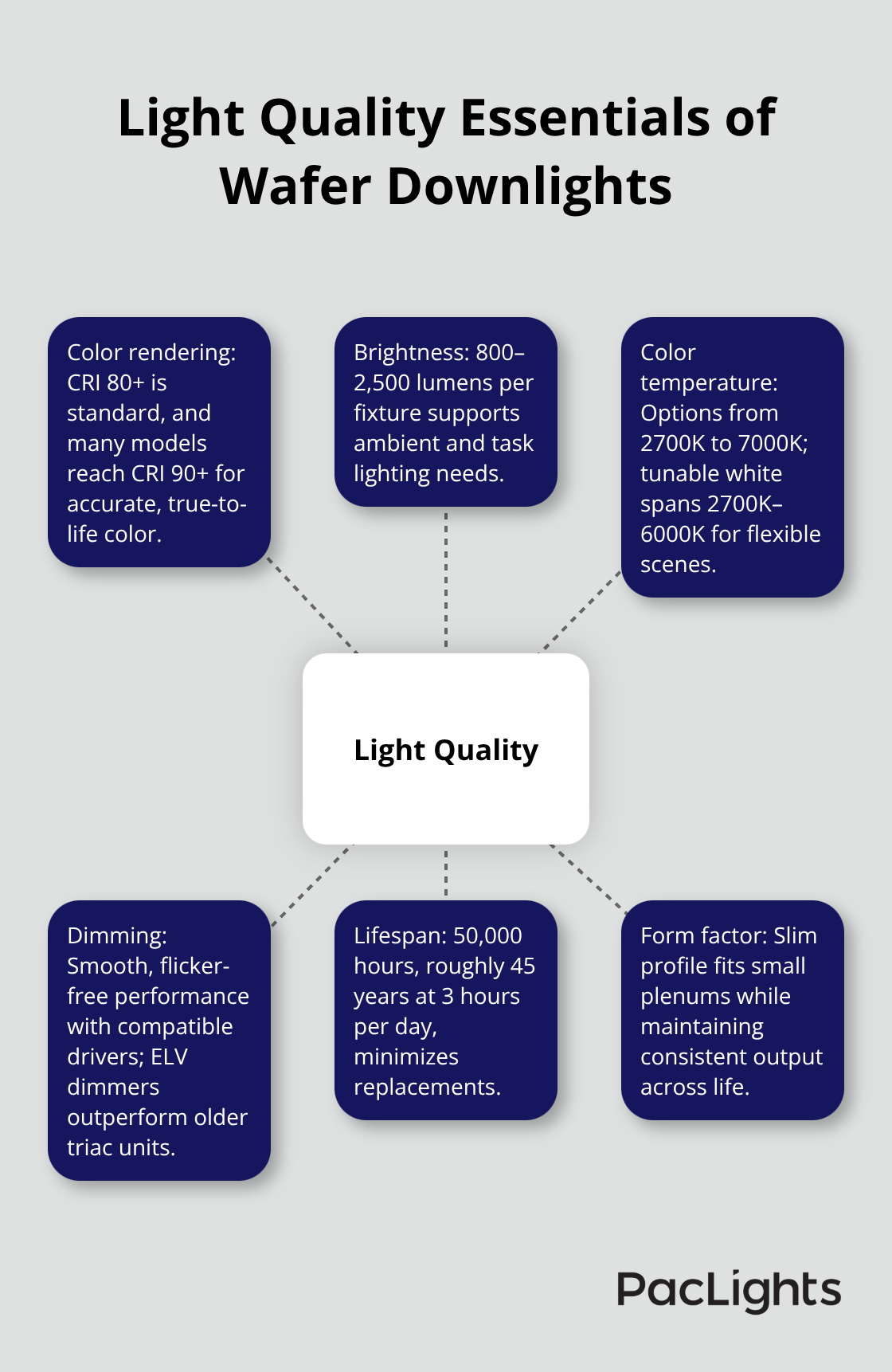
Many models offer CRI 90 or higher for true-to-life color perception, and color temperatures span 2700K to 7000K across lineups. Dimmable variants enable smooth, flicker-free control when paired with compatible drivers; older triac dimmers can introduce flicker, while ELV dimmers tend to perform reliably. Tunable white options let you switch between 2700K and 6000K without rewiring, adapting the space for morning focus, daytime tasks, or evening relaxation.
Maintenance Reality and Long-Term Value
Wafer LEDs last 50,000 hours versus 6,000 to 15,000 hours for metal halide, reducing maintenance costs by roughly $13,000 over 20 fixtures across two decades. Most manufacturers back their products with 7-year warranties, reflecting confidence in durability. The slim profile frees ceiling space for HVAC ducts, fire suppression lines, and electrical conduits (easing code constraints that plague traditional installations). Heat output drops significantly compared to incandescent systems, reducing summer air conditioning loads and amplifying overall savings.
Installation Preparation
Measure your ceiling cavity depth in multiple spots to confirm clearance requirements before you cut any holes. Use IC-rated fixtures if insulation sits directly above the ceiling to prevent overheating and warranty issues. These preparation steps matter far more than most people realize-they determine whether your retrofit succeeds or fails. The next section covers how these fixtures perform across different commercial environments, from retail floors to hospital patient rooms.
Where Thin Wafer Downlights Perform Best
Retail Spaces: Precision Lighting That Drives Sales
Retail spaces demand constant visual precision, and thin wafer downlights deliver exactly that. A 5,000-square-foot retail store typically requires 60 to 80 traditional recessed fixtures to maintain proper illumination. Switching to wafer downlights reduces that number to 40 to 50 fixtures while maintaining roughly 500 lux and CRI above 80, cutting peak power consumption by 30 to 40 percent. The color temperature choice matters significantly: 3000K creates warmer ambiance that encourages lingering and purchase decisions, while 4000K provides higher visibility for product evaluation and comparison. Dimmable drivers enable adaptive brightness throughout the day-brighter during peak shopping hours, dimmer during slower periods-which cuts energy use without sacrificing merchandise visibility.
Hospitality Environments: Aesthetics Meet Efficiency
Hotels and restaurants face pressure to reduce operating costs while maintaining upscale aesthetics, and wafer downlights accomplish both. The slim profile disappears into modern ceiling designs, creating clean sightlines that enhance perceived space. Typical retrofit payback in hospitality settings ranges from 18 to 24 months with noticeable aesthetic improvements that guests actually notice and appreciate.
Office Spaces and Energy Control
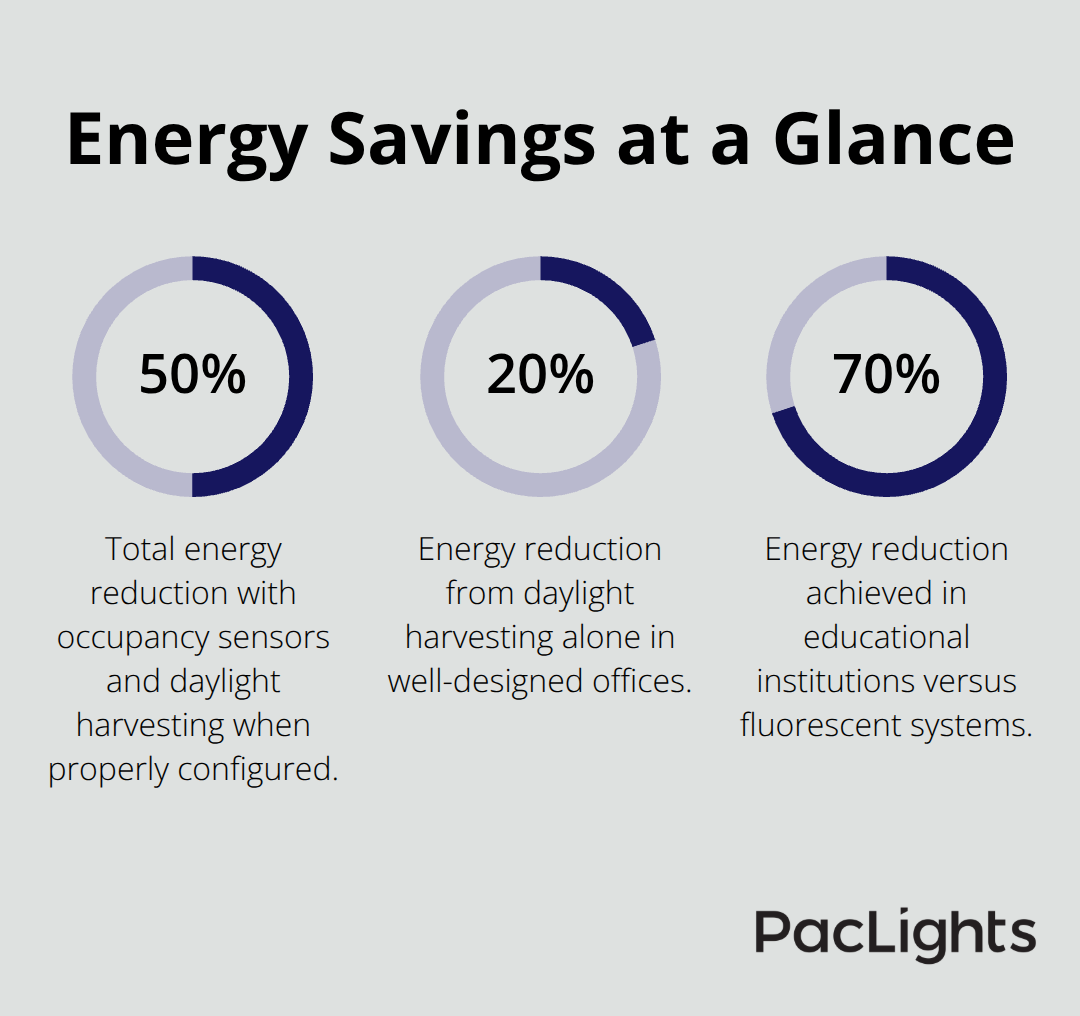
Office buildings represent the largest opportunity for wafer downlight retrofits. A 10,000-square-foot office can drop from 80 to 100 recessed fixtures to 60 to 70 wafer downlights while meeting identical illumination standards, reducing peak power from 8 to 10 kilowatts down to 5 to 6 kilowatts. That power reduction directly lowers HVAC cooling loads during summer months. Smart controls amplify savings further: occupancy sensors and daylight harvesting cut total energy use by 35 to 50 percent when properly configured. Sensors consume only 1 to 2 watts each, making them nearly invisible to your electrical budget. In a 10,000-square-foot office, occupancy and daylight controls alone add 25 to 35 percent energy savings, with daylight harvesting contributing 15 to 20 percent independently. Educational institutions achieve 60 to 70 percent energy reduction versus fluorescent systems, with typical payback of 9 to 14 months-making them ideal candidates for budget-constrained school districts.
Healthcare Facilities: Specialized Lighting for Patient Care
Patient care areas require specific lighting parameters that wafer downlights handle exceptionally well. These spaces need 1,500 to 2,000 lumens with narrow beam angles around 40 degrees and CRI 90 or higher to support accurate clinical observation and patient comfort. Flicker-free constant-current drivers protect sensitive patients and reduce eye strain during extended procedures. Operating rooms and diagnostic imaging areas cannot tolerate color shifts or inconsistent brightness, and wafer downlights maintain stable output across their 50,000-hour lifespan. The low heat output matters in these environments too-reducing thermal stress on temperature-sensitive equipment and medications stored near fixtures.
Institutional Buildings: Reliability Across Extended Hours
Libraries and administrative buildings benefit from the same reliability and efficiency gains as healthcare facilities. These spaces typically operate extended hours, making the 45-year lifespan advantage particularly valuable. Maintenance staff spend far less time replacing failed fixtures, and facility managers appreciate the predictable replacement schedules that come with 50,000-hour ratings versus the 6,000 to 15,000-hour lifespans of older technologies. Understanding how wafer downlights perform in these diverse settings reveals why installation planning matters so much-the next section covers the practical steps that determine retrofit success.
Installation Excellence and Long-Term Performance
Preparation Determines Success
Retrofitting ceiling lighting demands precision at every stage, and wafer downlights reward careful planning with decades of trouble-free operation. The installation process itself is far simpler than traditional recessed fixtures, but that simplicity creates a false sense of ease that leads contractors and facility managers to skip critical preparation steps. Measure your ceiling cavity depth at three different locations before cutting any holes-depth varies in older buildings, and discovering a 1.5-inch plenum after you’ve already cut holes for 2-inch fixtures wastes time and materials.
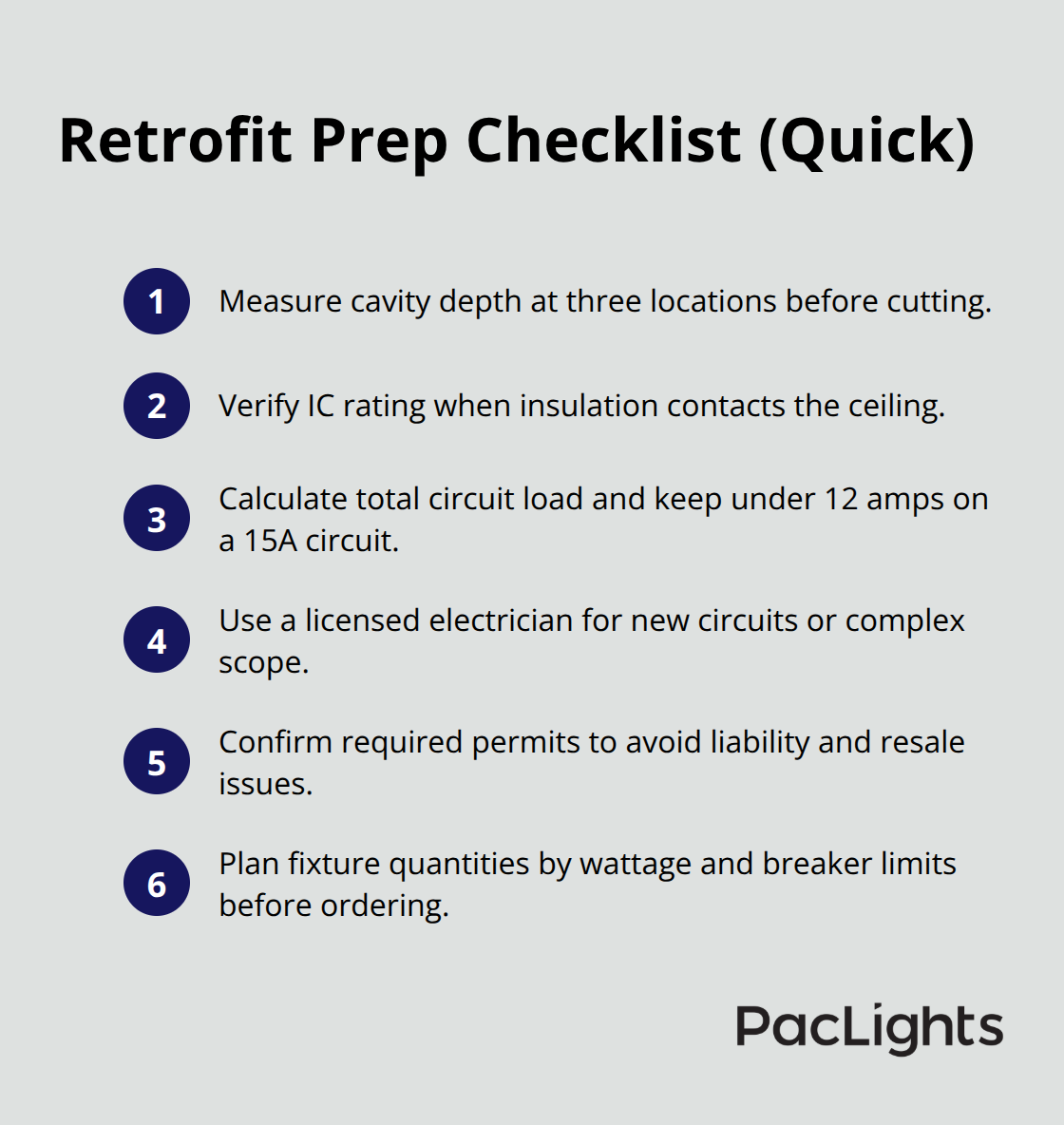
Use IC-rated fixtures if insulation sits directly above the ceiling; non-IC-rated housings require 3 inches of clearance and will void warranties if installed in contact with insulation. On a 15-amp circuit, you can typically run 10 to 12 fixtures rated at 10 to 15 watts each, so calculate total load as (fixture wattage × quantity) / 120 and stay under 12 amps to avoid nuisance breaker trips. Hire a licensed electrician for new circuits or complex work; permits vary by jurisdiction and skipping this step creates liability and resale complications.
Wiring and Cutting Techniques
Wire connections must follow black-to-black, white-to-white, ground-to-ground patterns, twisting wires clockwise 3 to 4 times before applying wire nuts-loose connections cause flicker and premature failures that appear months after installation when contractor callbacks become expensive. Cut holes perpendicular to the ceiling using a 4.25-inch hole saw for standard 4-inch fixtures or 6.25-inch for 6-inch models, then vacuum dust immediately to prevent it from settling into junction boxes and creating thermal hotspots. Run electrical cable with 12 to 16 inches of slack at each hole and staple cables to joists every 4.5 feet; sagging cables eventually contact sharp edges and create fire hazards that inspectors catch during final walkthroughs.
Fixture Installation and Alignment
Spring clips deploy smoothly when fixtures sit flush with drywall, but trim rings must align perfectly to avoid visible gaps that undermine the clean aesthetic that justifies the retrofit cost in the first place. Wafer downlights last 50,000 hours-roughly 45 years at 3 hours daily operation-which means most facilities will never replace them, making initial installation quality the difference between a 20-year asset and a 45-year investment.
Maintenance and Long-Term Value
Maintenance stops being a routine expense; instead of replacing metal halide or fluorescent fixtures every 6 to 15 years, your maintenance staff handles occasional lens cleaning and perhaps a single ballast replacement across two decades. That 50,000-hour lifespan versus the 6,000 to 15,000-hour ratings of older technologies reduces maintenance costs by roughly $13,000 over 20 fixtures, which translates to freeing maintenance budgets for other facility priorities. Most manufacturers back products with 7-year warranties, but the real value emerges after year 7 when traditional fixtures demand replacement cycles and wafer downlights continue delivering full output.
Dimming Compatibility Planning
Dimming compatibility requires attention during the retrofit planning phase-older triac dimmers introduce flicker with many LED fixtures, while ELV dimmers perform reliably; testing a single fixture with your existing dimmer before the full installation prevents discovering incompatibility after 50 fixtures are wired.
Final Thoughts
Thin wafer downlights transform how commercial buildings approach ceiling lighting through minimal clearance requirements, dramatic energy savings, and superior light quality. A 10,000-square-foot office saves $500 to $1,500 per fixture in installation costs by avoiding ceiling reconstruction, while annual energy reductions of $2,737 on a 20-fixture retrofit deliver payback in under 15 months. These fixtures free ceiling space for HVAC and fire suppression systems, reduce maintenance budgets by roughly $13,000 over two decades, and deliver consistent light quality across 50,000-hour lifespans.
Installation success depends on careful planning at every stage. Measure ceiling depth at multiple locations, confirm IC-rating requirements, calculate circuit loads accurately, and test dimming compatibility before committing to a full retrofit. These preparation steps determine whether your investment delivers 20 years or 45 years of trouble-free operation, making the difference between a standard upgrade and a transformational facility improvement.
We at PacLights offer free lighting layout designs and ROI assessments that quantify your specific savings before installation begins. Contact us to explore how thin wafer downlights transform your facility’s efficiency and aesthetics.
Disclaimer: PacLights is not responsible for any actions taken based on the suggestions and information provided in this article, and readers should consult local building and electrical codes for proper guidance.