

Cylinder pendant light fixtures do more than illuminate a room-they define it. At PacLights, we’ve seen how the right pendant transforms a space from ordinary to exceptional, whether you’re lighting a kitchen island or a retail showroom.
This guide walks you through modern designs, ideal installation spots, and how to pick the perfect fixture for your ceiling and décor.
Modern Cylinder Pendant Light Designs
The Geometry That Works
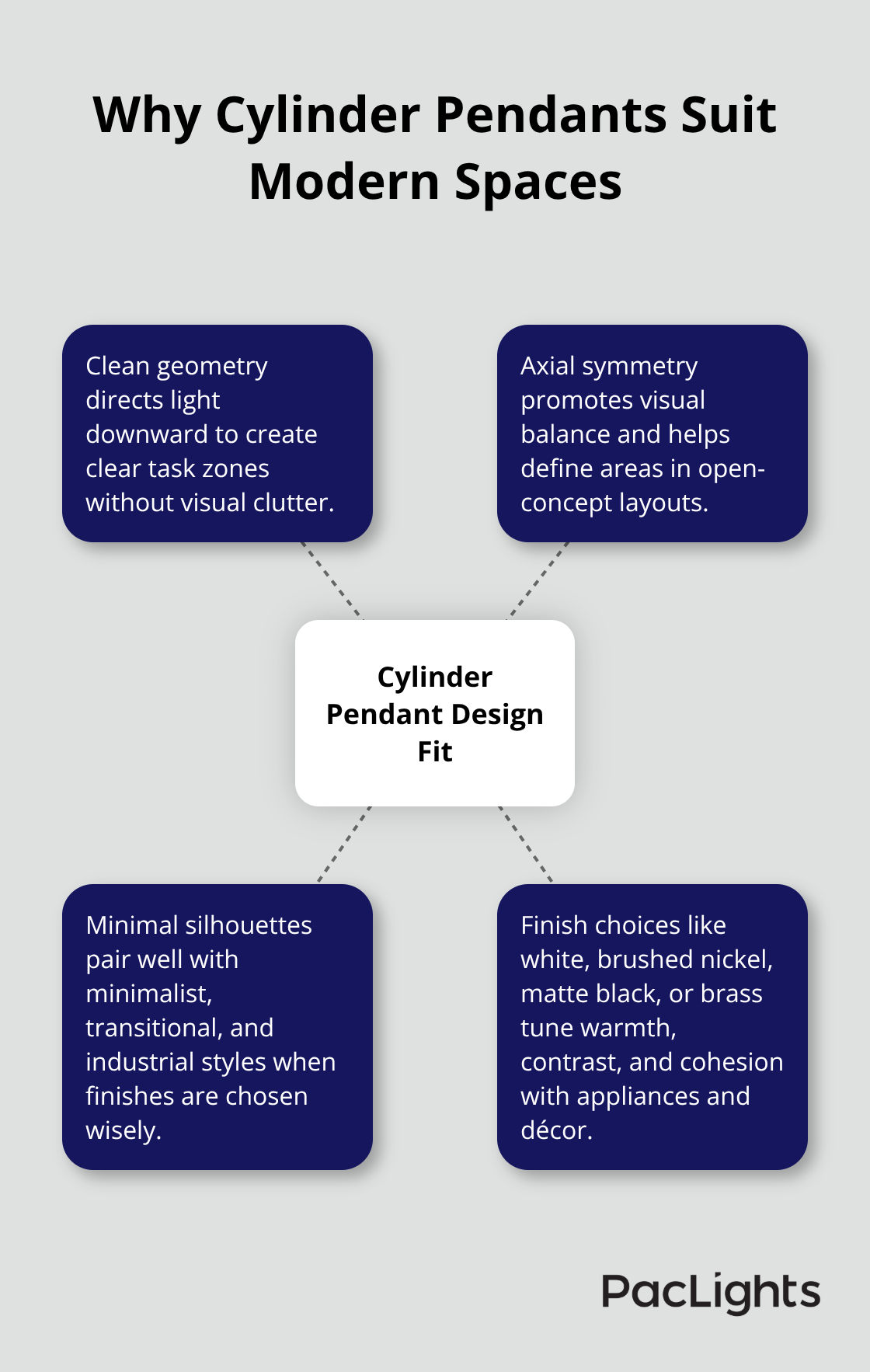
Cylinder pendant lights have become the default choice for contemporary spaces because they deliver clean geometry without unnecessary ornamentation. The cylindrical form creates an unobstructed light path downward, which means you get focused task lighting over kitchen islands or dining tables without the visual clutter of traditional bell-shaped or dome-style fixtures. This geometric simplicity pairs exceptionally well with minimalist interiors, but it also works in transitional and even industrial spaces when you select the right finish. The axial symmetry of a cylinder creates visual balance in a room, which is why designers favor these fixtures for defining zones in open-concept layouts.
When you install a trio of white or brushed nickel cylinders in a row above an island, they establish rhythm along the ceiling and anchor the space without overwhelming it. The uncluttered silhouette allows the fixture to recede visually while still commanding attention as a focal point.
Material Choices Shape Function and Feel
The material you choose dramatically affects both function and aesthetic. Metal cylinders in brushed nickel or matte black dominate contemporary kitchens because they resist fingerprints and coordinate with appliance finishes, while brass or gold-toned metals inject warmth into spaces that would otherwise feel cold. Glass cylinders offer transparency, which makes smaller rooms feel more spacious and allows light to scatter rather than concentrate-a practical advantage if you want to avoid harsh shadows. Ceramic options remain niche but deliver texture and warmth, particularly in farmhouse or artisanal-leaning interiors.
Each material responds differently to light and aging, so consider maintenance requirements alongside aesthetics when you make your selection.
Size and Scale Determine Success
Size matters more than most people expect. A single large cylinder pendant works as a statement piece above a dining table for four to six people, whereas a cluster of three smaller cylinders suits islands that are eight feet or longer. Oversized cylinders hung too low obstruct sightlines and create safety hazards, so measure your ceiling height and the drop distance carefully before ordering.
Standard pendant drops range from twelve to twenty-four inches, but adjustable cables let you customize height after installation, which is essential when you balance aesthetics with practical task lighting needs. This flexibility transforms installation from a fixed decision into an adaptive process that responds to your actual space.
Where Cylinder Pendants Perform Best
Kitchen Islands: Task Lighting That Works
Kitchen islands demand cylinder pendants positioned twenty-four to thirty inches above the work surface, which provides adequate task lighting without obstructing sightlines across the counter. A standard island eight feet long accommodates three cylinders spaced evenly, while a ten-foot island works better with four fixtures. This spacing prevents dark zones and ensures even illumination across prep areas. Adjustable height becomes critical here because ceiling heights vary dramatically-a nine-foot ceiling needs different drop lengths than a twelve-foot vaulted space.
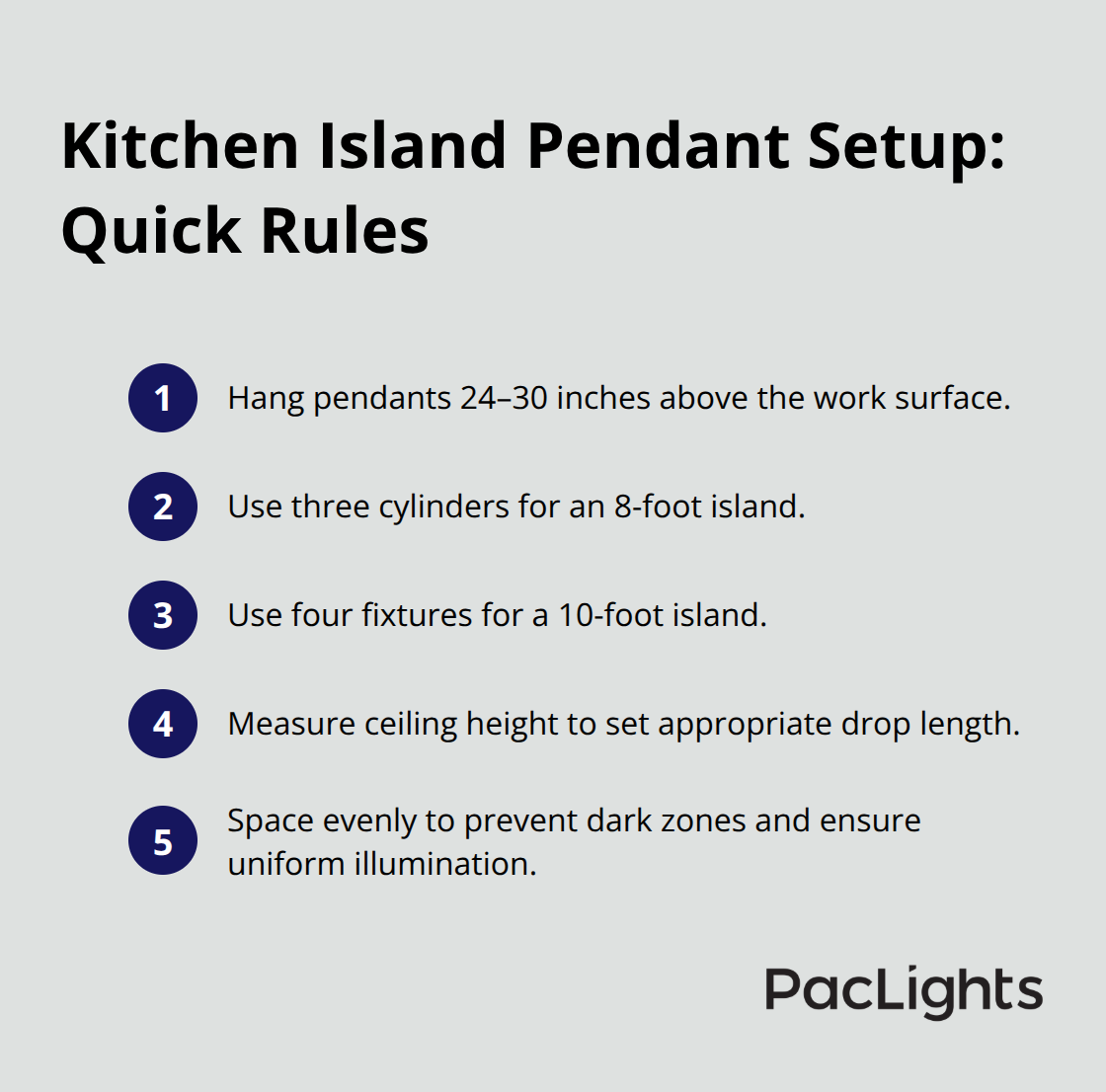
Measure your exact ceiling height and island dimensions before selecting a fixture, since undersized pendants look lost while oversized ones create visual and practical hazards.
Dining Tables: Creating the Right Atmosphere
Dining tables benefit from a single large cylinder centered above, or a cluster of two to three smaller ones if your table exceeds five feet in length. The pendant should hang eighteen to twenty inches above the table surface to frame the dining experience without blocking eye contact between guests. This positioning transforms the fixture into both a functional light source and a design statement that anchors the room. Dimmable LED cylinders allow you to transition from bright settings for casual meals to intimate ambiance for special occasions, which influences how guests experience the space.
Entryways and Hallways: First Impressions Matter
Narrow hallways benefit from slender cylinders mounted at seven to eight feet high to guide movement without creating obstacles, while wider entryways can accommodate larger statement pieces that establish first impressions. The fixture you select here sets the tone for the entire home or commercial space, so choose materials and finishes that reflect your design intent.
Commercial Spaces: Retail and Hospitality Applications
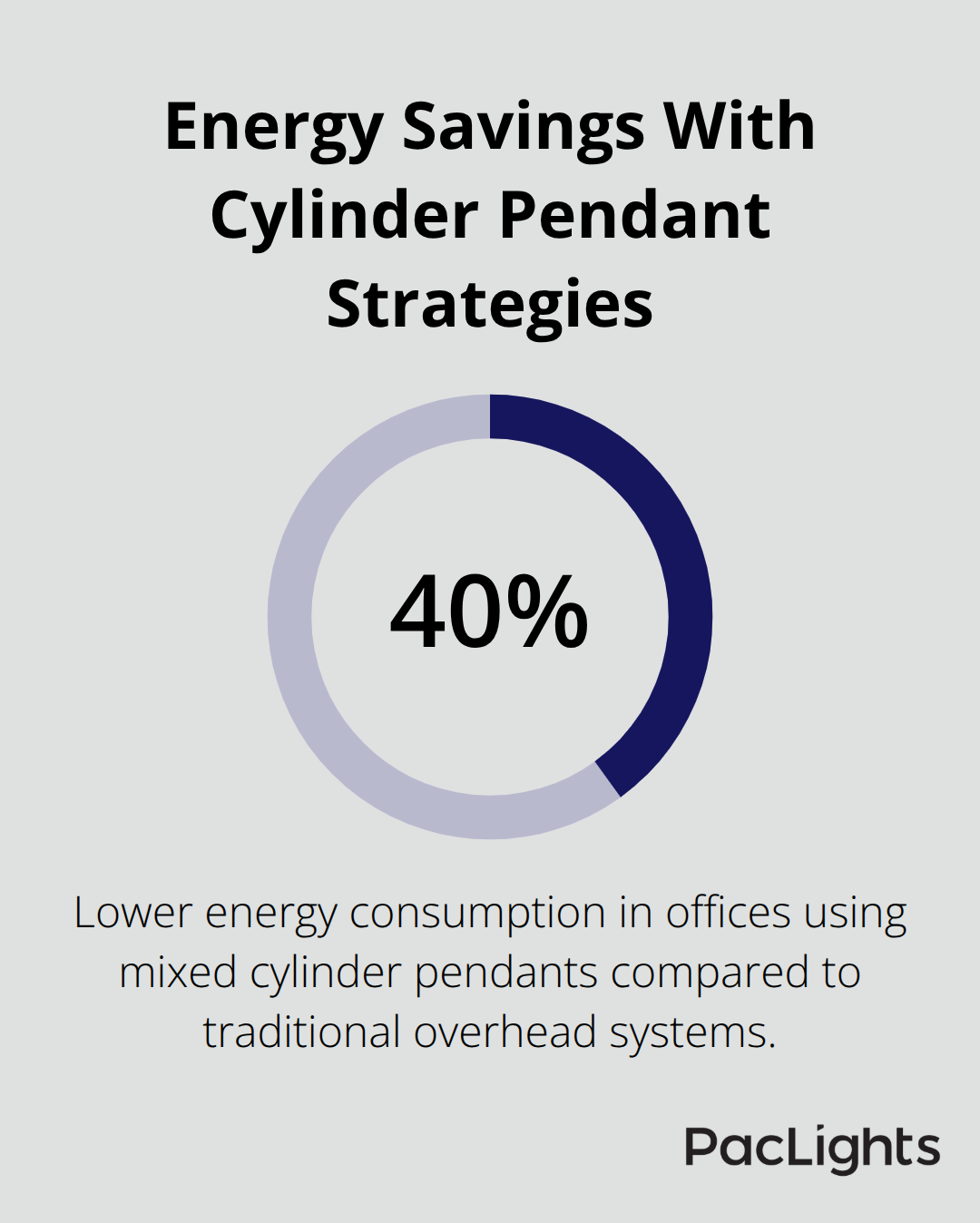
Commercial spaces like retail environments and hospitality venues require high-CRI LED cylinder pendants that render colors accurately, which directly impacts product visibility and customer perception. A restaurant using dimmable LED cylinders can transition from bright daytime settings for lunch service to intimate evening ambiance for dinner-research shows this flexibility influences reservation patterns and social media engagement. Retail environments with proper cylinder pendant placement achieve better product accuracy and improved sales visibility compared to flat overhead lighting. Office settings benefit from a mix of large statement cylinders paired with smaller task-focused pendants, which boosts collaboration zones while reducing overall energy consumption by approximately forty percent compared to traditional overhead systems.
Selecting the Right Fixture for Your Space
The key across all installations is matching fixture size to ceiling height and space dimensions, then selecting finishes and brightness levels that serve both functional lighting needs and design intent. Once you understand where your cylinders will live, the next step involves choosing the specific fixture that aligns with your aesthetic vision and practical requirements.
How to Choose the Right Cylinder Pendant for Your Space
Calculate the Perfect Drop Length
Ceiling height determines everything about pendant selection, and most people miscalculate this critical measurement. A nine-foot ceiling demands a twelve-to-eighteen-inch drop length, while a twelve-foot ceiling accommodates twenty-four-to-thirty-inch drops without obstructing sightlines. Install your pendant too low and you create a collision hazard; hang it too high and the light scatters ineffectively across work surfaces. Measure your exact ceiling height first, then subtract the depth of your fixture and canopy to calculate true hanging distance. For kitchen islands, the bottom of the cylinder should sit twenty-four to thirty inches above the work surface, which means a nine-foot ceiling with a four-inch fixture depth requires approximately seventeen inches of cable or chain. Adjustable hanging systems solve this problem entirely because they let you fine-tune height after installation, transforming a fixed specification into an adaptive solution that responds to your actual space conditions.
Space Dimensions and Fixture Quantity
Standard island dimensions of eight feet accommodate three evenly-spaced cylinders with roughly two feet between centerlines, while ten-foot islands work better with four fixtures. Undersized cylinders above large islands create visual imbalance and inadequate task lighting, whereas oversized fixtures make the space feel cramped and obstruct sightlines during meal preparation. This spacing prevents dark zones and ensures even illumination across prep areas. Measure your exact island dimensions before selecting a fixture, since the wrong quantity leaves portions of your work surface poorly lit.
Material and Finish Selection
Material and finish selection directly impact maintenance burden and long-term satisfaction, so choose based on your lifestyle rather than aesthetics alone. Brushed nickel and matte black resist fingerprints and coordinate with stainless steel appliances, making them practical choices for active kitchens where daily cleaning matters. Brass and gold-toned metals require occasional polishing but deliver warmth that cooler finishes cannot match, particularly in spaces with warm wood cabinetry or earth-tone walls. Glass cylinders scatter light more broadly than metal, reducing harsh shadows on work surfaces, though they show dust and fingerprints more readily.
Brightness and Color Temperature
For brightness, select LED cylinders with color temperature options between 2700K for warm ambiance and 4000K for task-focused neutral light, then verify lumen output matches your space size. A standard kitchen island eight feet long with three pendants needs approximately 750 to 1000 lumens per fixture to eliminate dark zones, while dining tables work well with 500 to 750 lumens per pendant (depending on ceiling height and surrounding ambient lighting). Dimmable LED options cost more upfront but deliver flexibility that transforms a single fixture into multiple lighting scenarios, from bright settings for food preparation to intimate ambiance for evening meals.
Final Thoughts
Cylinder pendant light fixtures succeed when three elements align: the right style for your space, proper installation measurements, and finishes that match both your aesthetic and maintenance capacity. Material selection-whether brushed nickel, brass, glass, or ceramic-shapes how the fixture performs functionally and how it ages over time, so select based on your actual lifestyle rather than appearance alone. Installation accuracy determines whether your cylinders deliver focused task lighting or scatter ineffectively across your space.
Brightness and color temperature complete the picture. Select LED cylinders with 2700K to 4000K options and verify lumen output matches your space size (750 to 1000 lumens per fixture for kitchen islands, 500 to 750 for dining tables). Dimmable options cost more upfront but transform a single fixture into multiple lighting scenarios, from bright task lighting to intimate ambiance.
We at PacLights understand that lighting decisions extend beyond residential spaces. Whether you design a retail environment, hospitality venue, or office, contact our team for free lighting layout designs and ROI assessments to optimize your installation.
Disclaimer: PacLights is not responsible for any actions taken based on the suggestions and information provided in this article, and readers should consult local building and electrical codes for proper guidance.