

Glass cylinder pendant lights have become a staple in modern lobby design, and for good reason. They combine clean aesthetics with practical illumination, making them far more versatile than most people realize.
At PacLights, we’ve seen these fixtures transform spaces well beyond corporate entrances. This guide covers everything you need to know about selecting and implementing them effectively.
Why Glass Cylinder Pendants Dominate Modern Lobbies
Glass cylinder pendant lights command attention in modern lobbies because they solve a fundamental design problem: how to create visual impact without overwhelming the space. A single cylinder pendant above a reception desk immediately anchors the area and guides visitor flow, while clusters at varying heights transform a plain ceiling into an architectural feature. The clean geometry works because it doesn’t compete with surrounding elements-it complements them. Lobbies with high ceilings benefit most from this approach. According to design resources from lighting specialists, glass cylinder pendants paired with metal accents like brass or nickel create the high-contrast contemporary look that hospitality venues and corporate spaces demand. The key is proportion: a 6-inch diameter pendant suits intimate seating areas, while 10 to 12-inch cylinders work better over larger reception zones. Spacing matters too. Pendants positioned 4 to 6 feet apart create rhythm without visual clutter, and adjustable suspension lengths accommodate vaulted or sloped ceilings common in modern architecture.
Functional Illumination That Matches Aesthetic Appeal
Cylinder pendants deliver practical light that matches their visual impact. Opaque glass versions direct light downward for focused task lighting on desks and counters, reducing glare that frustrates visitors and staff. Translucent or clear cylinders distribute light more evenly across the room, creating ambient warmth that makes lobbies feel inviting rather than cold. LED options with color temperatures between 2700K and 3000K enhance the welcoming effect-research on hospitality lighting shows this warmth range increases perceived comfort.
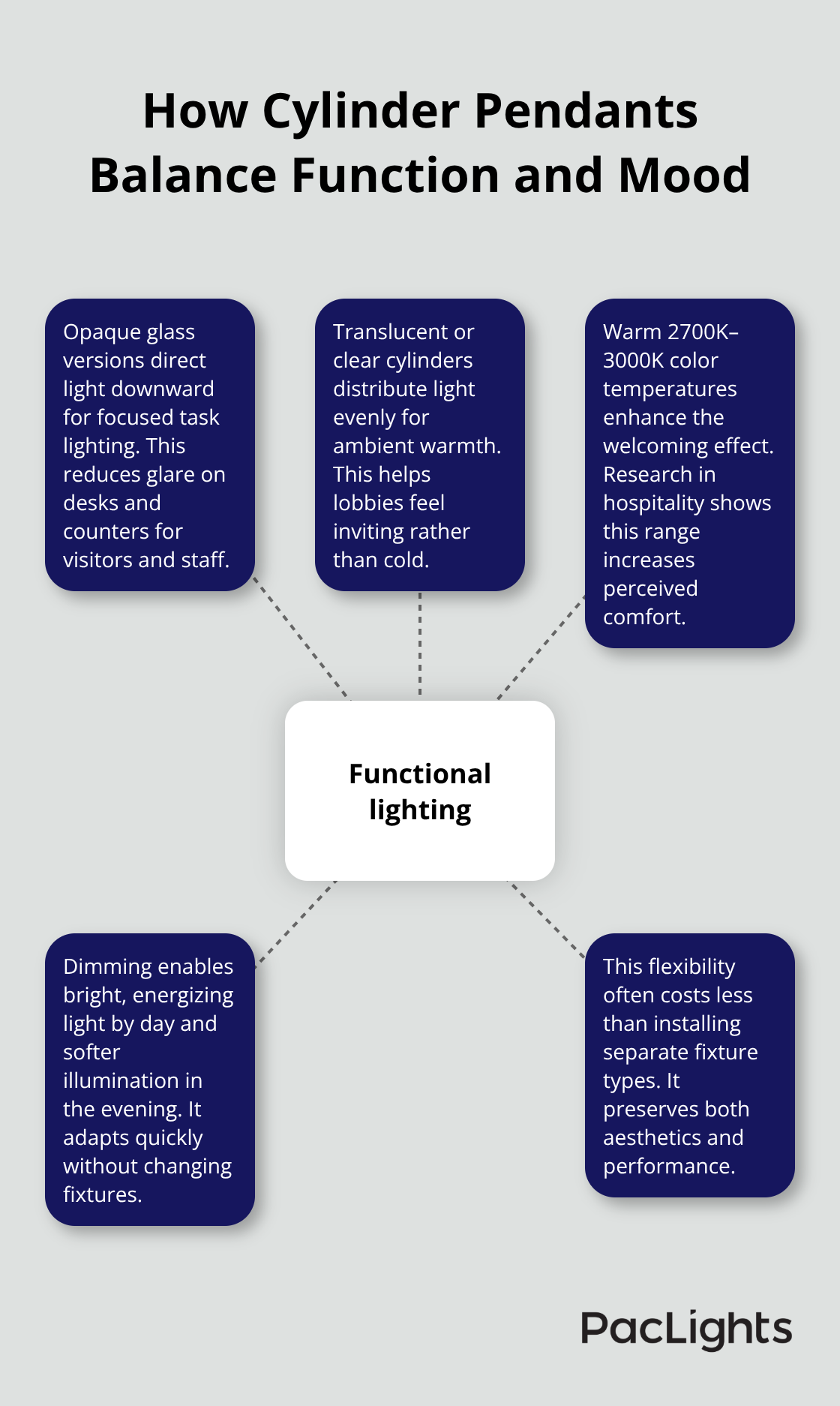
Dimming controls add another layer of practicality. A lobby that needs bright, energizing light during business hours can shift to softer illumination for evening events or after-hours security. This flexibility costs less than installing separate fixture types.
Energy Savings That Compound Quickly
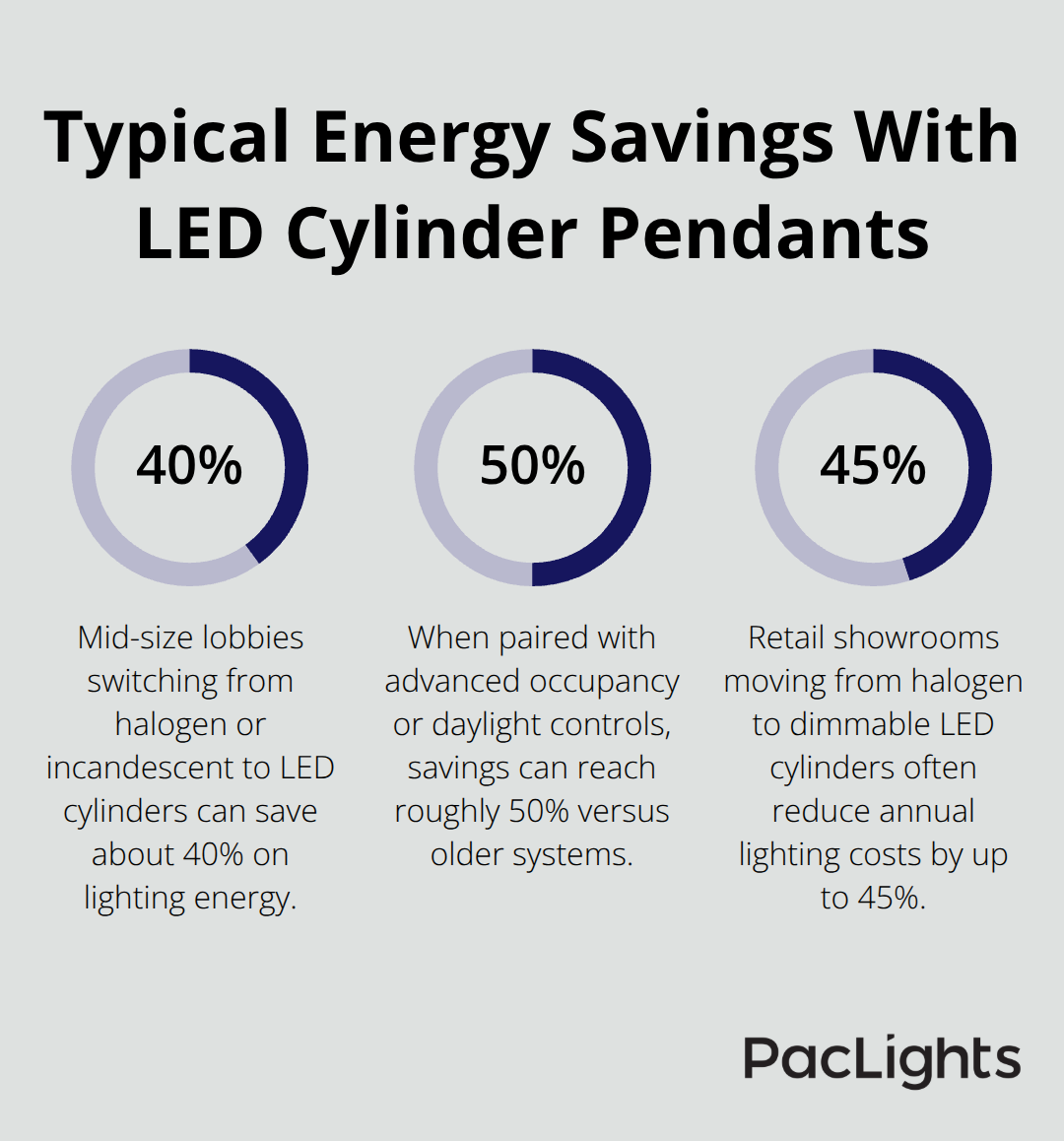
Energy efficiency gains mount rapidly with LED glass cylinder pendants. These fixtures consume a fraction of the power traditional fixtures require, and when paired with dimming or daylight harvesting controls, they reduce operational costs substantially. A mid-size lobby with eight pendant fixtures might save 40 to 50 percent on lighting energy compared to older halogen or incandescent systems. The payback period shortens further when facilities integrate advanced lighting controls that optimize usage patterns throughout the day.
Integration With Contemporary Design
Glass pendants integrate seamlessly with contemporary design because their simplicity doesn’t demand attention from other architectural features. They work alongside linear or recessed fixtures without creating visual conflict. Pairing cylinders with reflective surfaces (backlit marble walls, polished concrete, or glass railings) amplifies their impact by creating reflections that enhance perceived depth. Pendant scale relative to furniture and ceiling height prevents them from looking out of place. A lobby with 12-foot ceilings and modest furniture needs smaller cylinders; a soaring atrium with 25-foot ceilings demands larger diameter options or more dramatic clustering. Material coordination matters. Brass or bronze finishes complement warm wood tones and earth-colored walls, while satin nickel and black work with cooler palettes of gray concrete and cool-toned stone. The cylinder shape itself appeals because it echoes modern design language without referencing outdated styles. Unlike ornate chandeliers or trendy sculptural fixtures, cylinders remain relevant across design cycles.
Beyond the Lobby: Where Else These Fixtures Shine
The versatility of pendant lighting extends well beyond corporate entrances. Retail showrooms use them to highlight merchandise displays, while restaurants and hospitality venues rely on them to create intimate dining atmospheres. Residential entryways benefit from their ability to make first impressions, and living areas gain sophistication from their clean lines. This adaptability across different spaces makes them worth exploring in applications beyond traditional lobby settings.
Where Glass Cylinder Pendants Perform Beyond Corporate Entries
Retail Showrooms and Boutiques
Retail showrooms and high-end boutiques leverage glass cylinder pendants to highlight merchandise without the theatrical excess of spotlights. A single pendant above a display table draws the eye directly to products while maintaining ambient lighting that keeps shoppers comfortable browsing. Retail environments benefit most from dimmable LED versions. Showrooms can brighten displays during peak hours and reduce intensity during slower periods, cutting energy costs while extending LED lifespan. A typical retail space with eight pendant fixtures running 12 hours daily might reduce annual lighting costs by 35 to 45 percent when switching from halogen to dimmable LED cylinders compared to traditional systems.
Hospitality Venues and Dining Spaces
Restaurants and hotels discovered this advantage years ago. Pendant clusters over dining tables or bar counters create intimate zones within larger spaces, and the warm 2700K to 3000K color temperatures standard in these fixtures make food appear appetizing while encouraging lingering. Hospitality designers favor opaque cylinders for restaurants because downward-directed light eliminates glare on place settings and reduces reflections on wine glasses that distract from the dining experience. Restaurants gain similar advantages to retail spaces, plus the ability to adjust ambiance for lunch service versus evening dining without changing fixtures.
Residential Applications
Residential applications reveal why these fixtures transcend commercial settings. An entryway pendant creates a welcoming first impression without the formality of a chandelier, while living room clusters work particularly well above seating arrangements or accent walls. Homeowners appreciate that cylinders don’t accumulate dust like ornate fixtures, reducing maintenance. The design flexibility matters here too. A 6-inch diameter pendant suits a modest hallway, while 8 to 10-inch options anchor larger living spaces without dominating proportions.
Material choices expand possibilities further. Clear glass cylinders in kitchens and dining areas maintain visibility and brightness, while frosted or tinted versions soften light for bedrooms and lounges. Brass finishes attract designers working with warm, transitional interiors, whereas satin nickel and black coordinate with modern minimalist schemes.
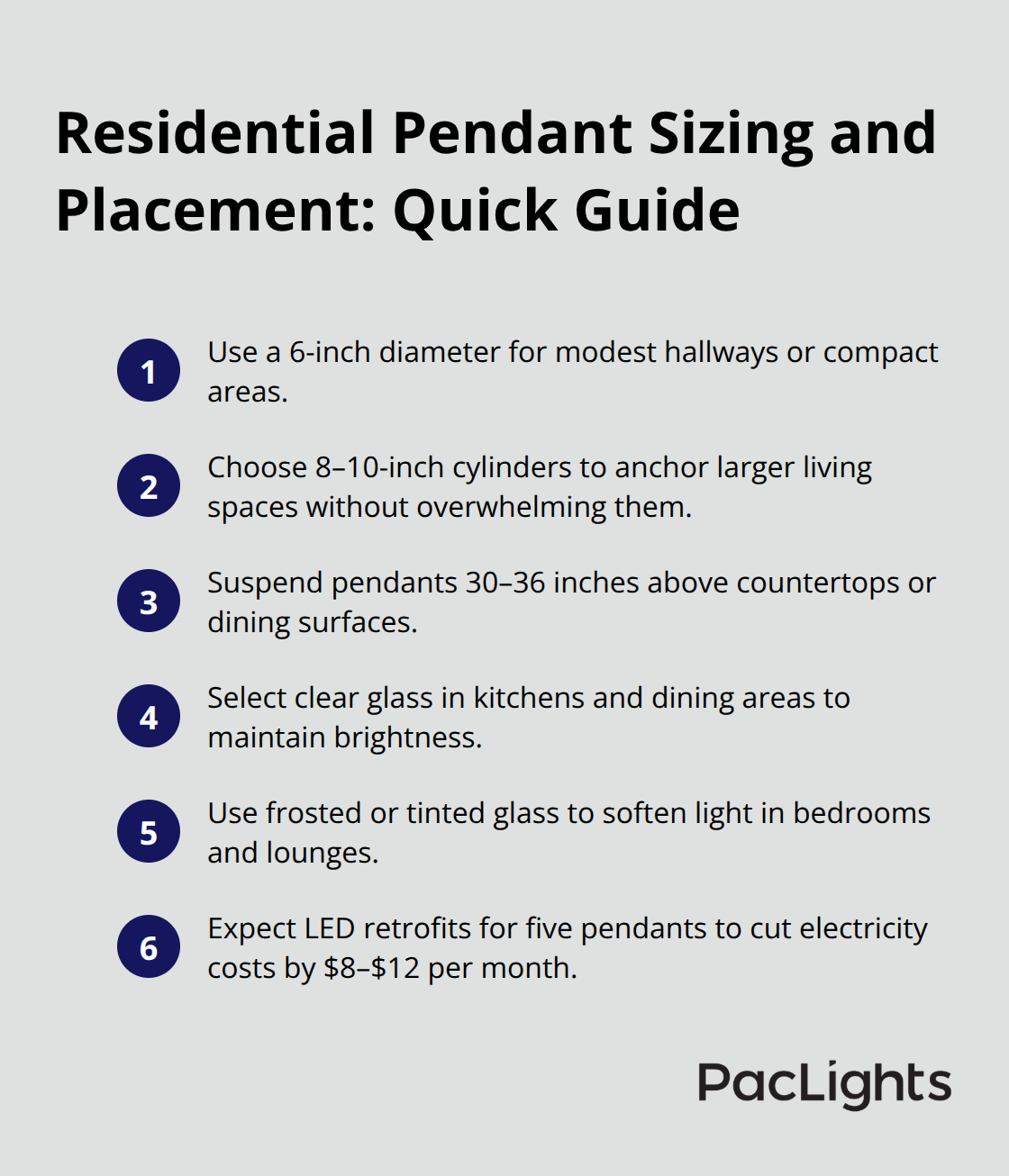
Residential installations rarely require dimming but gain from LED efficiency. A homeowner replacing five traditional incandescent pendants with LED equivalents typically sees monthly electricity reductions of 8 to 12 dollars depending on local rates and usage patterns.
Why Simplicity Drives Versatility Across Applications
The versatility across these applications stems from simplicity. Glass cylinders work in luxury hotels because they convey refinement, in casual cafes because they feel unpretentious, and in homes because they complement any decor direction. This adaptability makes them the practical choice for anyone seeking fixtures that transcend trends and serve multiple design purposes without compromise. The next step involves understanding the specific design considerations that determine whether a cylinder pendant will truly succeed in your particular space.
Design Considerations When Choosing Glass Cylinder Pendants
Selecting the Right Size and Scale
Choosing the correct diameter and drop length determines whether a cylinder pendant enhances or disrupts your space. A 6-inch diameter works for intimate areas like bedside tables or small high-top seating, while 8 to 10-inch cylinders suit standard reception desks and dining tables. Larger 12 to 15-inch pendants anchor expansive lobbies and open floor plans without appearing undersized. The critical rule: pendant diameter should occupy roughly one-third to one-half the width of the surface below it. A reception desk spanning 5 feet calls for a 10-inch cylinder, not a 6-inch one that looks abandoned.
Drop length matters equally. Pendants suspended 30 to 36 inches above countertops or dining surfaces create functional task lighting while maintaining sightlines. Lobbies with 12-foot ceilings accommodate 48 to 60-inch drops comfortably, whereas vaulted or sloped ceilings demand adjustable suspension systems that accommodate uneven mounting heights without looking crooked. Most quality fixtures offer height adjustment at installation, preventing costly remounting.
Coordinating Materials and Finishes
Material and finish coordinate with surrounding surfaces to prevent visual conflict. Brass and bronze finishes warm spaces with natural wood or earth-toned walls, while satin nickel and black suit concrete, cool-toned stone, and minimalist schemes. Clear glass transmits maximum light for kitchens and task areas, whereas frosted or tinted versions soften illumination for bedrooms and lounges where harsh downlighting causes discomfort.
Layering With Existing Fixtures
Layering pendants with existing recessed or linear fixtures prevents over-reliance on a single light source and enables precise control over ambiance and functionality. A lobby combining glass cylinders with recessed ceiling lights allows staff to brighten the entire space during business hours while dimming pendants for evening events. Restaurants achieve similar flexibility by clustering pendants over dining tables alongside ambient wall sconces that create separate lighting zones.
Maximizing Energy Efficiency and Performance
Energy efficiency gains accelerate when LED cylinders include dimming capability and color temperature options between 2700K and 3000K. Research on hospitality lighting indicates this warmth range increases perceived comfort while reducing operational costs by 40 to 50 percent compared to older halogen systems when paired with occupancy controls. Dimmable LED versions also extend fixture lifespan significantly-a pendant running at 50 percent brightness instead of full intensity lasts substantially longer before requiring replacement.
Residential installations rarely justify complex dimming infrastructure, but homeowners replacing five traditional incandescent pendants with LED equivalents typically reduce monthly electricity costs by 8 to 12 dollars. Specifying fixtures with field-adjustable directional switches enables on-site tweaks to light distribution without rewiring, accommodating changes to furniture layouts or traffic patterns months after installation.
Final Thoughts
Glass cylinder pendant lights succeed because they solve real problems without creating new ones. They anchor spaces visually, deliver practical illumination, and adapt to virtually any design direction without looking dated or out of place. Whether you’re designing a corporate lobby, retail showroom, restaurant, or residential entryway, the fundamental principles remain consistent: match the diameter to your space, coordinate finishes with surrounding materials, and layer with existing fixtures for maximum flexibility.
The most successful implementations respect proportion-a pendant that’s too small disappears, while one that’s oversized dominates awkwardly. They account for drop length and ceiling height to maintain functional task lighting and comfortable sightlines. They leverage LED efficiency and dimming controls to reduce operational costs while extending fixture lifespan, and these factors compound over time (a lobby switching from halogen to dimmable LED cylinders typically recovers its investment within two to three years through energy savings alone).
Measure your ceiling height, identify the surfaces where pendants will hang, and note the surrounding finishes and materials. Consider whether you need task lighting, ambient warmth, or both, then determine if dimming capability matters for your application. We at PacLights offer free lighting layout designs and ROI assessments to help you make informed decisions about glass cylinder pendant lights and complementary lighting solutions tailored to your space.
Disclaimer: PacLights is not responsible for any actions taken based on the suggestions and information provided in this article, and readers should consult local building and electrical codes for proper guidance.