

Wet environments destroy standard lighting fixtures. Corrosion, moisture damage, and frequent replacements drain budgets and disrupt operations.
Vapor tight fixtures are built differently. At PacLights, we’ve seen firsthand how the right fixtures eliminate these problems, lasting years longer while cutting maintenance costs.
What Vapor Tight Fixtures Actually Are
Vapor tight fixtures are sealed, gasketed luminaires engineered to withstand direct exposure to moisture, humidity, dust, and corrosive atmospheres. Unlike standard indoor fixtures with open designs, vapor tight units feature polyurethane or fiberglass outer shells paired with metal inner housings, creating a barrier that prevents water vapor and contaminants from infiltrating electrical components. These fixtures typically come in 2 to 8 foot lengths and carry IP ratings of IP65 or higher, with IP67 representing the most robust protection available for submerged or high-pressure washdown scenarios. The sealed design stops condensation buildup inside, prevents salt deposits from accumulating on circuit boards, and halts corrosion that accelerates component failure.
Where Vapor Tight Fixtures Outperform Standard Options
Parking garages with their combination of vehicle exhaust, road salt spray, and constant humidity destroy standard fixtures within two to three years. Food processing plants with washdown protocols and high moisture levels see standard fixtures fail even faster because water and cleaning chemicals seep into housings and corrode metal components. Coastal facilities face the harshest conditions: ISO 12944 standards classify coastal atmospheres as C4 or C5 corrosivity levels, meaning unprotected aluminum and steel fixtures experience rapid pitting and oxidation.
A facility operating 100 fluorescent wet location fixtures incurs electricity costs exceeding $7,000 annually, yet standard fixtures require lamp replacement every 10,000 to 30,000 hours and maintenance costs around $24,000 over three years. Vapor tight fixtures eliminate these recurring expenses through sealed designs that resist salt spray, dust ingress, and humidity damage, extending service life to 7 to 10 years or more.
Understanding IP Ratings and Protection Levels
The IP rating system communicates protection levels clearly: the first digit (0–6) indicates dust protection, while the second digit (0–9) indicates moisture protection. IP65 means dust-tight with protection against water jets from any direction, while IP67 provides protection against temporary immersion in water. This standardized approach removes guesswork when selecting fixtures for specific environments.
Why Materials and Corrosion Class Matter
Standard fixtures use basic aluminum or steel housings without protective coatings, making them vulnerable to galvanic corrosion when dissimilar metals contact in the presence of moisture. Vapor tight fixtures employ die-cast aluminum with powder coating, stainless steel hardware, or marine-grade housings paired with epoxy resin or galvanization to resist corrosion in defined ISO 12944 classes.
For coastal and pool environments, C4 and C5 rated fixtures pass 1000-hour salt spray testing according to ASTM B117 standards, proving durability in extreme salinity and moisture. Indoor dry environments require only C1 classification, but outdoor facilities in humid zones need C3 or higher, while offshore structures demand CX classification for maximum protection.
Matching Fixtures to Your Environment
Selecting the wrong corrosion class or material composition means premature rust, filiform corrosion under paint, and fixture replacement cycles that drain maintenance budgets. The choice between vapor tight options comes down to your specific environmental exposure: assess pollution levels, humidity duration, salt proximity, and washdown frequency, then specify fixtures rated for that corrosion class with materials proven through accelerated testing. Once you understand your facility’s exposure profile and the protection levels available, the next step involves evaluating how vapor tight fixtures perform in real-world conditions and what long-term advantages they deliver compared to traditional lighting systems.
How Vapor Tight Fixtures Slash Long-Term Costs
Corrosion Resistance Extends Fixture Lifespan
Vapor tight fixtures deliver performance gains that compound over years of operation. The sealed construction prevents moisture from reaching circuit boards and metal components, which stops corrosion before it starts. In coastal environments classified as C4 or C5 under ISO 12944 standards, unprotected fixtures experience pitting and oxidation within months, while vapor tight units rated for these corrosion classes remain structurally sound through salt spray exposure equivalent to 1000 hours of ASTM B117 testing. This difference translates directly to lifespan. Standard fixtures in wet locations typically survive two to three years before corrosion compromises performance or safety, whereas vapor tight fixtures with proper material selection and protective coatings operate reliably for seven to ten years or longer.
Maintenance Costs Drop Dramatically
The maintenance burden shrinks dramatically because sealed designs eliminate condensation buildup that forces frequent lamp replacements and electrical repairs. A facility running 100 standard fluorescent wet location fixtures faces three-year maintenance costs around $24,000 due to lamp cycling every 10,000 to 30,000 hours and component failures from moisture infiltration. Vapor tight fixtures reduce this through extended lamp life, eliminated moisture damage, and resistance to salt deposits that corrode connections. Sealed designs prevent water vapor from accumulating inside housings, which means technicians spend less time troubleshooting electrical failures and replacing corroded components.
LED Technology Multiplies Energy Savings
Energy efficiency in vapor tight systems depends heavily on the transition from fluorescent to LED technology. Standard four-foot fluorescent vapor tight fixtures consume 40 to 160 watts per unit, while LED equivalents draw 12 to 55 watts, delivering 40 to 60 percent energy reductions across comparable installations. A facility with 100 fixtures currently spending $7,000 annually on electricity can cut that figure substantially through LED vapor tight options.
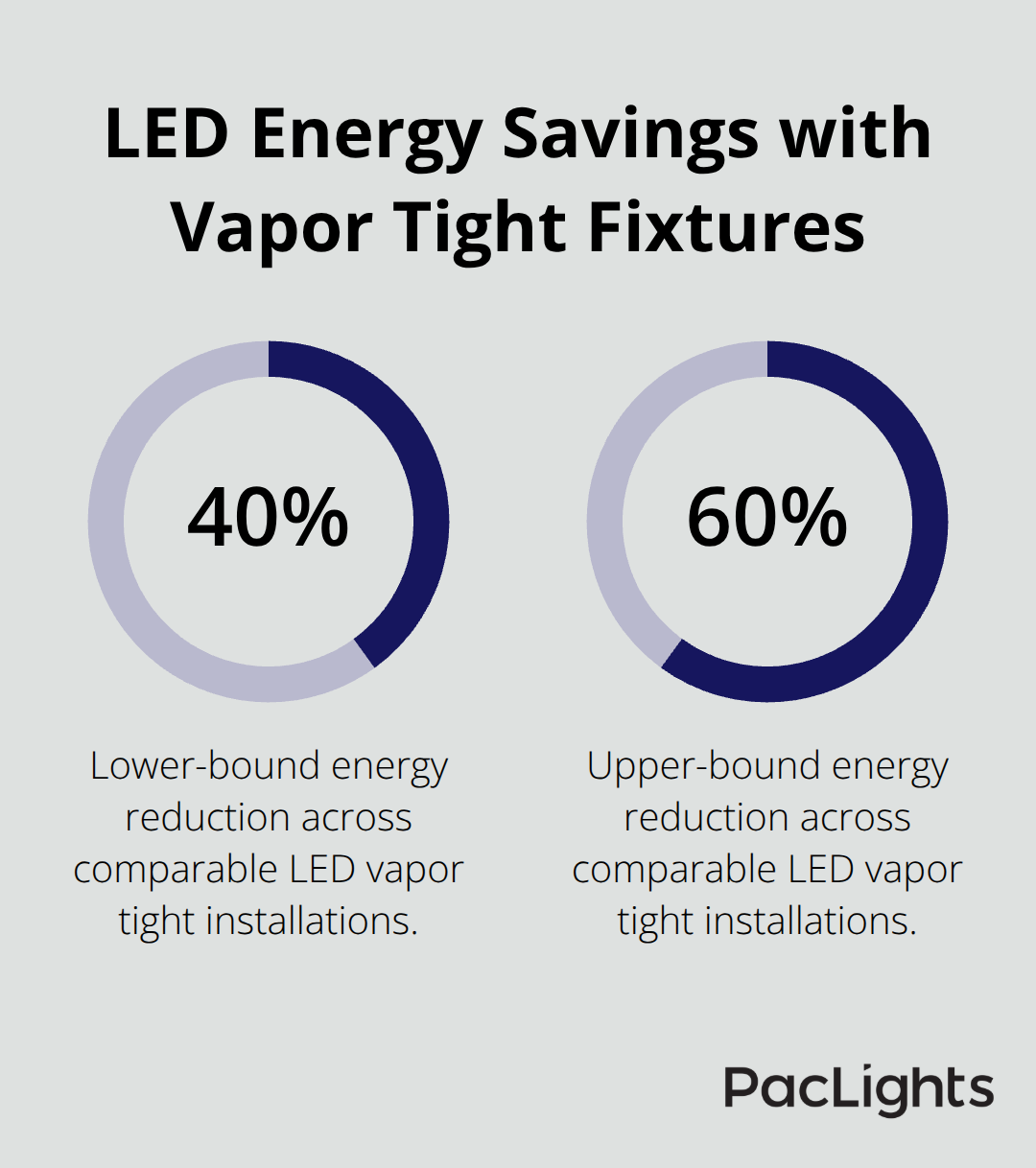
LED vapor tight fixtures also excel in cold environments where fluorescent performance degrades, maintaining consistent lumen output in refrigerated spaces and outdoor winter conditions.
Performance in Cycling-Heavy Environments
The sealed LED design resists frequent on-off cycling without the degradation that shortens fluorescent tube life, making LED vapor tight fixtures ideal for spaces where occupancy sensors or seasonal operation create switching patterns. Fluorescent tubes lose lifespan rapidly when switched on and off repeatedly, but LEDs tolerate this cycling without performance loss. Facilities with motion-activated lighting or seasonal demand patterns experience significantly longer fixture life when they switch to LED vapor tight options.
Calculating True Lifecycle Costs
When evaluating upgrades, calculate lifecycle costs including initial purchase price, energy consumption over seven to ten years, maintenance labor, and replacement cycles rather than focusing solely on upfront investment. Many facilities find that LED vapor tight fixtures pay for themselves within three to five years through combined energy and maintenance savings, after which they operate at near-zero cost for years beyond. The next step involves understanding which fixture types and materials work best for your specific environment, and how to assess your facility’s exposure conditions to select the right solution.
How to Match Vapor Tight Fixtures to Your Facility
Assess Your Facility’s Exposure Profile
Start by documenting your facility’s actual exposure profile rather than guessing. Walk the space and note where moisture accumulates, where salt spray reaches, what cleaning chemicals are used, and how often equipment gets wet. A parking garage near ocean air needs different protection than an inland food processing plant. ISO 12944 corrosivity classification depends on these real conditions: C1 for dry indoor spaces, C2 for unheated indoor areas with occasional condensation, C3 for outdoor humid zones or coastal areas without heavy salt, C4 for coastal splash zones and high-salinity environments, and C5 for extreme offshore or industrial pollution.
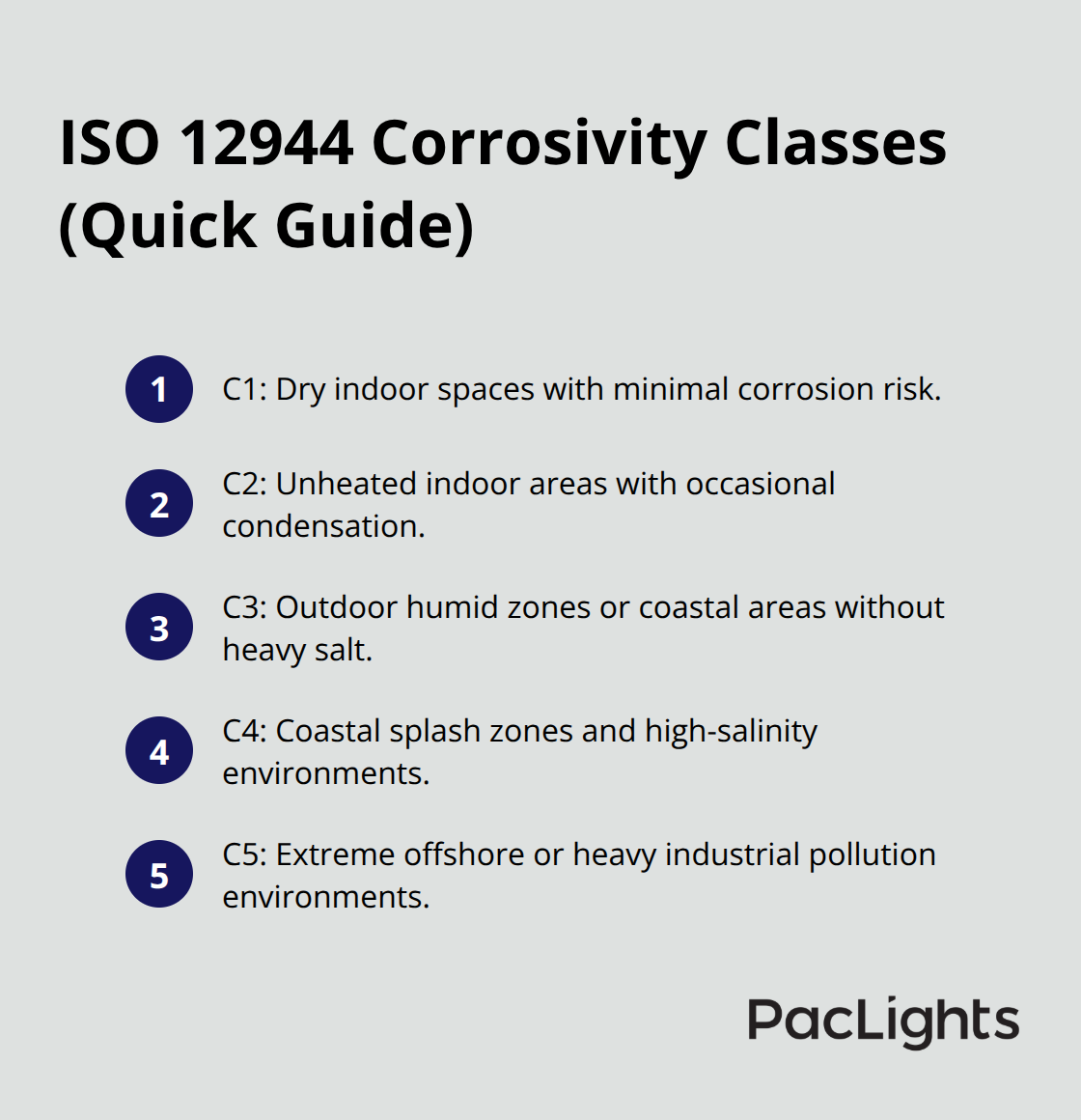
If your facility sits within 500 meters of seawater, assume C4 minimum. If it’s in an active splash zone or uses saltwater washdown systems, specify C5 rated fixtures. Indoor facilities with high humidity but no direct water exposure typically need C2 or C3 protection.
Verify Performance Through Testing Standards
Once you’ve classified your environment, verify that fixtures have passed accelerated salt spray testing according to ASTM B117 standards, which simulate 1000 hours of real-world coastal exposure in controlled lab conditions. This matters more than marketing claims about corrosion resistance. Request test reports from manufacturers and confirm the corrosion class rating explicitly in purchase orders to avoid receiving under-rated equipment. The data proves durability far better than vendor promises.
Select Materials That Match Your Corrosion Class
Material selection directly impacts durability in your classified environment. Die-cast aluminum housings with powder coating work well for C2 and C3 environments but struggle in C4 zones without additional epoxy resin protection. Stainless steel hardware prevents galvanic corrosion where dissimilar metals contact, which is critical because standard steel screws corroding against aluminum housings can compromise seals within months. For C4 and C5 environments, marine-grade aluminum or stainless steel housings with protective coatings outperform basic options consistently. NSF certification matters in food processing facilities where hygiene standards require sealed, washdown-resistant fixtures that prevent contamination pathways.
Install Fixtures Correctly for Maximum Protection
Installation quality determines whether material advantages translate to actual lifespan gains. Qualified electricians must verify that gasket seals are properly compressed, drainage holes remain unobstructed, and grounding connections are corrosion-resistant to prevent moisture infiltration that negates the fixture’s sealed design. After installation, inspect fixtures quarterly in high-corrosion environments to catch early seal degradation before water penetrates housings. This proactive approach protects your investment and prevents costly emergency replacements.
Final Thoughts
Vapor tight fixtures solve the core problem that standard lighting cannot: they survive wet, corrosive environments without constant replacement cycles. The sealed construction, corrosion-resistant materials, and proper IP ratings eliminate moisture infiltration that destroys ordinary fixtures within two to three years. When you specify fixtures rated for your facility’s actual corrosion class and verify performance through ASTM B117 salt spray testing, you gain seven to ten years of reliable operation instead of recurring maintenance emergencies.
The financial case is straightforward.
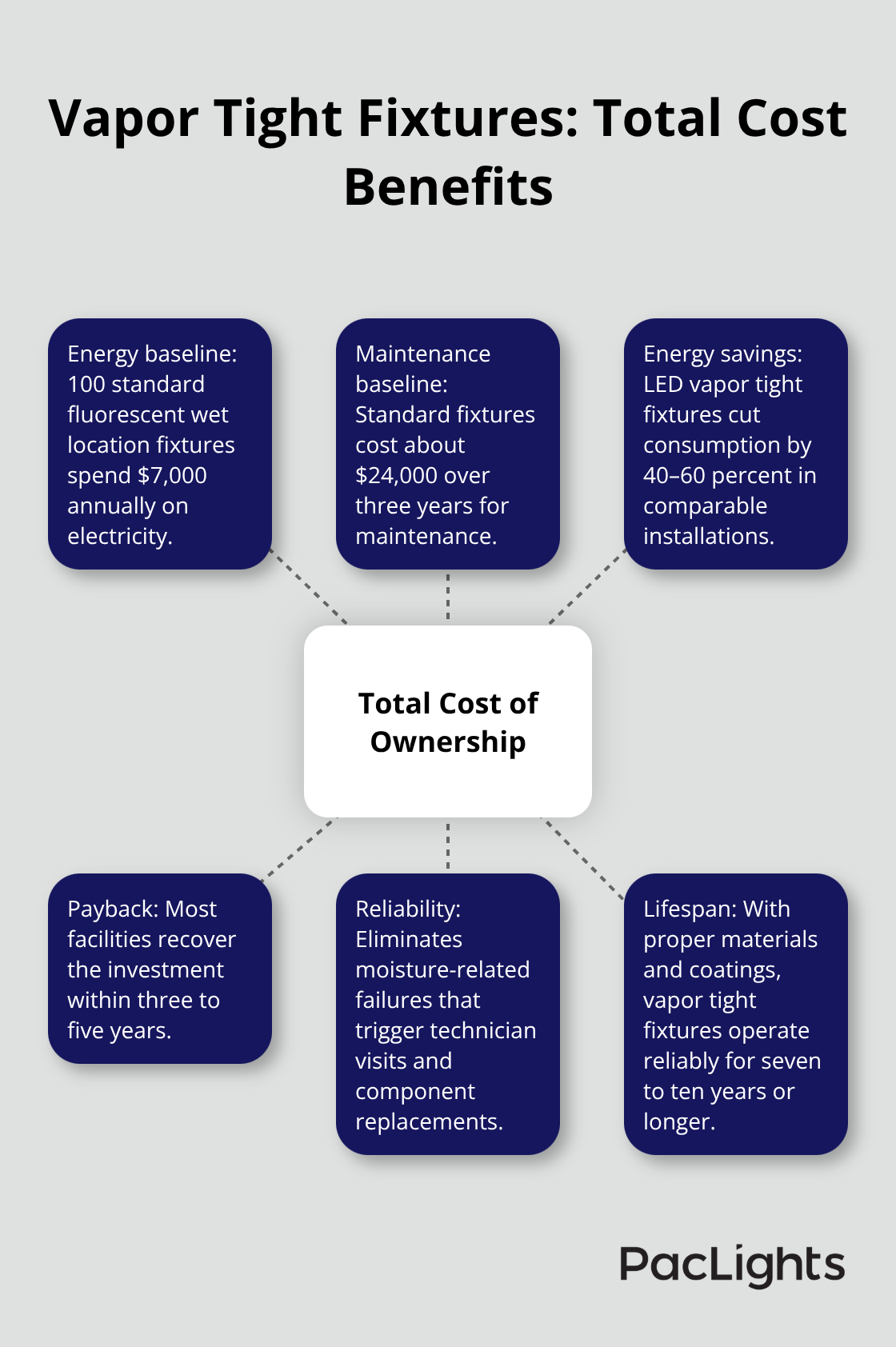
A facility with 100 standard fluorescent wet location fixtures spends $7,000 annually on electricity and $24,000 over three years on maintenance. Switching to LED vapor tight fixtures cuts energy consumption by 40 to 60 percent while eliminating moisture-related failures that force technician visits and component replacements. Most facilities recover their investment within three to five years, then operate at near-zero cost for years beyond.
Your next step is assessing your facility’s actual exposure profile by documenting where moisture accumulates, measuring salt spray proximity, and classifying your environment using ISO 12944 standards. Then specify fixtures with materials and protective coatings proven through accelerated testing for that corrosion class. Contact our team at PacLights to discuss your facility’s conditions and receive a performance-based recommendation tailored to your needs.
Disclaimer: PacLights is not responsible for any actions taken based on the suggestions and information provided in this article, and readers should consult local building and electrical codes for proper guidance.