

Moisture and humidity can destroy lighting systems in industrial facilities. At PacLights, we know that understanding vapor tight fixture ratings is the difference between equipment that lasts years and fixtures that fail within months.
The right enclosure certification protects your investment and keeps your operations running safely. This guide walks you through the standards, ratings, and practical steps to select fixtures built for your specific environment.
What Vapor Tight Ratings Actually Protect
How Vapor Tight Ratings Work
Vapor tight ratings measure how well a fixture resists moisture, dust, and environmental contaminants from entering the housing and damaging internal components. Two main systems communicate these protections: IP codes and NEMA classifications. An IP65 rating means the fixture is dust-tight and withstands water jets from any direction. IP67 adds temporary immersion protection up to 3 feet for 30 minutes. IP68 allows permanent submersion, which matters in food processing plants where steam and washdown cycles run constantly. NEMA ratings work similarly but focus on North American standards-NEMA 4 and 4X provide robust protection against water spray and corrosion, while NEMA 6 adds submersion resistance.
Vapor Tight vs. Vapor Proof: What Sets Them Apart
The difference between vapor tight and vapor proof comes down to enclosure strength. Vapor proof fixtures use reinforced fiberglass or polycarbonate with higher-grade sealing, making them suitable for the harshest environments like tunnels and marine facilities. Vapor tight fixtures use structural seals at joints, waterproof connectors like PG-type and M-type threaded fittings, and potting or sealing to block moisture from reaching circuitry. Without these protections, standard fixtures fail in 6 to 18 months in wet industrial settings.
Why Industrial Facilities Require Vapor Tight Protection
Moisture destroys fluorescent ballasts, LED drivers, and electrical connections within weeks in industrial facilities. Food processing plants, car washes, cold storage facilities, and parking garages all require these ratings to maintain operational safety and avoid costly equipment replacement. Warehouses with high humidity or outdoor areas exposed to rain and sea spray also depend on proper enclosure ratings. The NEC Article 410 standard mandates appropriate IP or NEMA ratings for wet and damp locations, and failing to meet these requirements creates liability and code violations.
Selecting the Right Fixture Type for Your Space
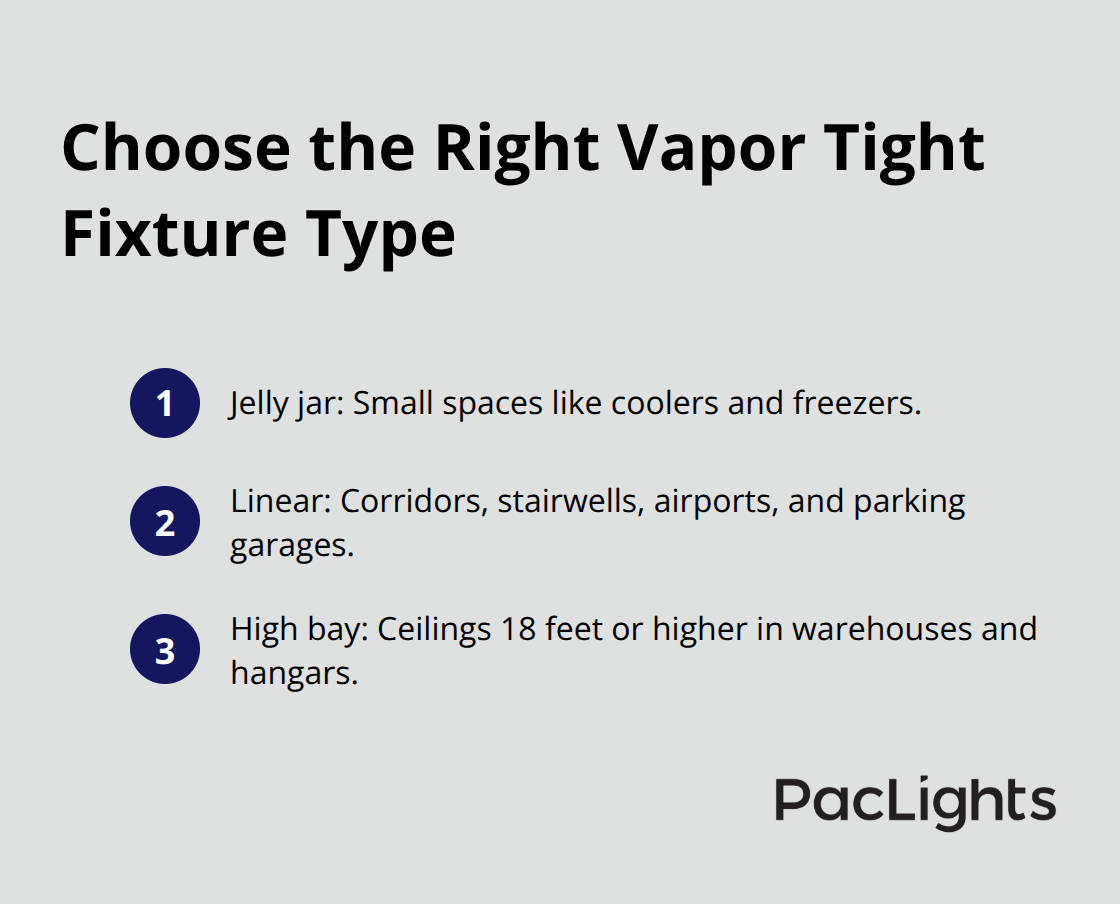
Jelly jar fixtures work well for small spaces like coolers and freezers, while linear vapor tight fixtures replace fluorescent tubes in corridors, stairwells, and airports. High bay vapor tight fixtures serve spaces with ceilings 18 feet or higher, delivering powerful illumination in warehouses and hangars without moisture damage.
LED vapor tight fixtures offer significant advantages over older technology-they use 50 to 75 percent less energy than fluorescent equivalents, last 25,000 to 50,000 hours compared to 10,000 to 20,000 hours for CFL, and turn on instantly without warm-up time.
Assessing Your Facility’s Protection Needs
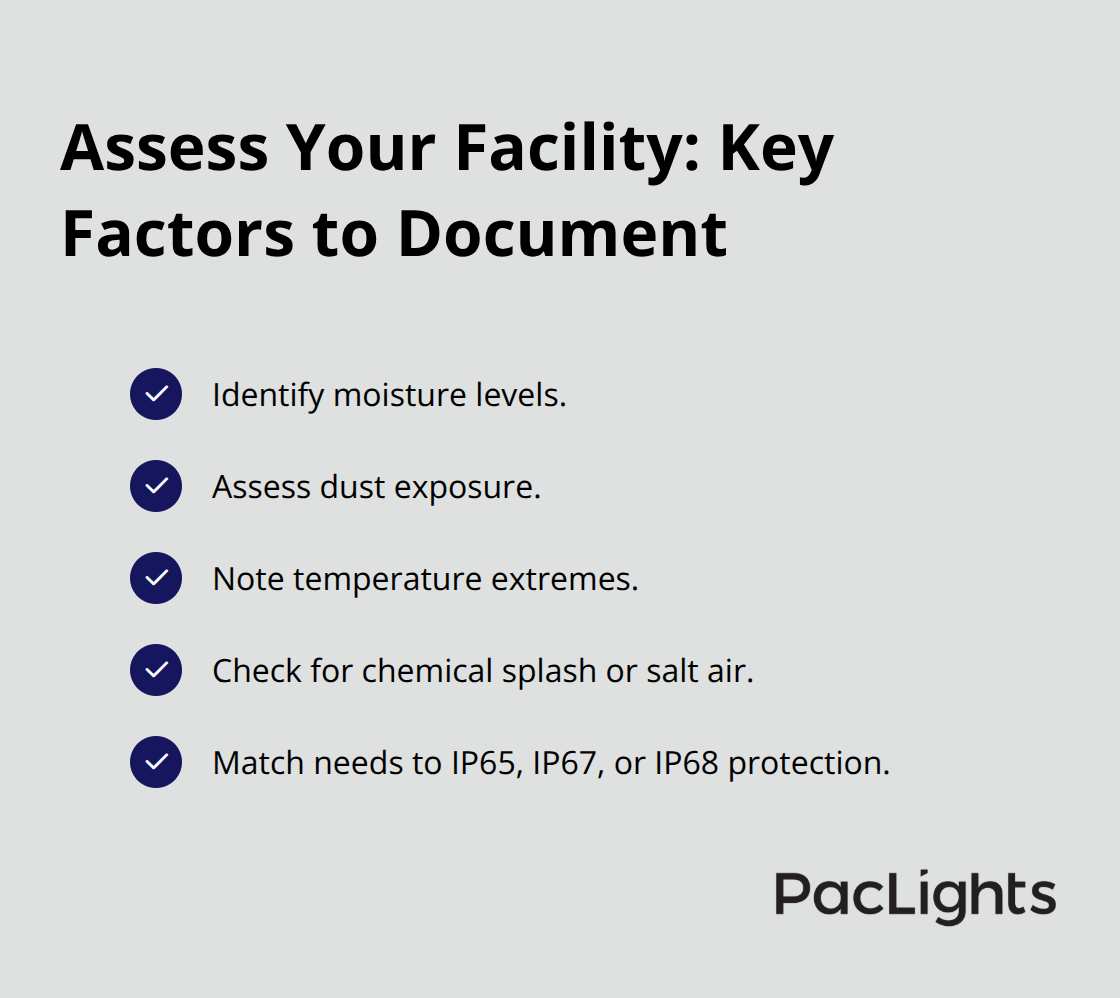
When you assess your facility, identify moisture levels, dust exposure, temperature extremes, and potential chemical splash to determine whether IP65, IP67, or IP68 protection is necessary. These environmental factors directly influence which enclosure certification your fixtures must carry. Understanding your specific conditions sets the foundation for selecting fixtures that actually perform in your space-and that’s where enclosure certifications and standards come into play.
Understanding IP and NEMA Standards for Vapor Tight Fixtures
How IP Ratings Communicate Protection Levels
IP ratings follow the IEC standard and use a two-digit code where the first digit (0–6) indicates protection from solid objects like dust, and the second digit (0–8) indicates water protection. IP65 means dust-tight with protection against water jets from any angle. IP67 adds temporary immersion up to 3 feet for 30 minutes. IP68 allows permanent submersion, which matters in food processing plants where steam and washdown cycles run constantly. These numbers tell you exactly what environmental hazards the fixture can withstand, making IP ratings the clearest way to match fixtures to your facility’s conditions.
NEMA Classifications for North American Facilities
NEMA ratings, governed by NEMA Standard 250, focus on North American industrial environments and use numerical classifications like NEMA 4, 4X, and 6. NEMA 4 protects against water splashes and some corrosion. NEMA 4X adds stainless steel construction for corrosive environments like coastal facilities or food processing plants. NEMA 6 provides temporary submersion protection. These classifications address the specific moisture and chemical challenges that North American industrial facilities face, making them the standard reference point for equipment selection in the United States and Canada.
Comparing IP and NEMA: Why Direct Mapping Fails
These standards do not map one-to-one, and this distinction matters when you select fixtures. NEMA 4 roughly equals IP55, while NEMA 4X approximates IP66, but the testing methods differ significantly. NEMA 4’s water test uses a hose at 31 kilopascals and 240 liters per minute from 3 meters away, whereas IP66’s test applies a water jet at 100 kilopascals and 100 liters per minute from 1 meter away. A fixture rated NEMA 4X and IP66 simultaneously (like the Bud NBB Series enclosures) demonstrates genuine robustness across both testing protocols. When you select vapor tight fixtures, verify both ratings if the fixture will be used in North America, and cross-reference them against your actual environmental exposure rather than assuming higher numbers automatically mean better protection.
UL and ETL Certifications: Third-Party Safety Verification
UL and ETL certifications verify that a fixture meets electrical safety standards before it reaches your facility, and this third-party testing protects you from unsafe installations and liability. UL certification comes from Underwriters Laboratories, which has tested electrical products for over a century and maintains extensive industry recognition globally. ETL Listed certification comes from Intertek and follows the same safety standards as UL but typically completes the certification process faster. Both certifications evaluate vapor tight fixtures against the National Electrical Code and applicable safety standards to confirm that sealing, grounding, and electrical components perform safely in wet locations.
Selecting Certified Fixtures and Verifying Compliance
ETL’s streamlined process often means products reach market 4 to 8 weeks faster than UL certification, which can matter if you need fixtures quickly. However, UL’s longer history and broader brand recognition sometimes influence purchasing decisions in conservative markets. The practical reality is that either certification demonstrates compliance with NEC Article 410 and industry expectations for vapor tight lighting in wet and damp locations. When you evaluate vapor tight fixtures, demand documentation of certification and verify that the label matches the product you receive. Some manufacturers claim waterproof or sealed designs without certification backing, which creates compliance gaps and puts your facility at risk during inspections. Ask suppliers for test reports or certification data from the testing organization, not just marketing claims. In regulated industries like food processing, NSF certification may be required in addition to UL or ETL to verify hygiene-related performance, so check your local codes before finalizing your selection. Once you understand these standards and certifications, the next step involves assessing your specific facility conditions to determine which ratings your fixtures actually need.
Which Vapor Tight Rating Does Your Facility Actually Need
Assess Your Actual Environmental Exposure
Walk through your facility and document what happens there. A food processing plant with daily washdown cycles at 80 pounds per square inch needs IP67 or IP68 protection, while a warehouse in a dry climate with occasional dust exposure performs adequately with IP65. Most facility managers select the highest rating available without understanding their actual exposure. IP68-rated fixtures cost 30 to 50 percent more than IP65 alternatives, and overspending on protection you don’t need drains budgets that could fund other facility improvements. Undershooting your rating guarantees early failure and emergency replacement costs that exceed the initial savings.
Document three specific conditions at your site: how often water or moisture contacts the fixtures, whether that contact involves spray, splashing, or immersion, and whether chemical exposure or salt air accelerates corrosion. A parking garage in Minnesota experiences moisture from snow and salt but no direct spray, making IP65 or NEMA 4 sufficient. A coastal facility in Florida faces salt-laden air that corrodes standard materials, requiring NEMA 4X with stainless steel construction. A car wash operates under constant high-pressure spray, demanding IP67 minimum.
Match Environmental Conditions to Ratings
Temperature extremes matter significantly. Freezers and cold storage facilities experience condensation cycles that create moisture stress even without direct water contact, often requiring IP67 protection despite appearing dry. Outdoor areas exposed to rain or coastal environments need corrosion-resistant materials alongside appropriate water ratings. The NEC requires fixtures in wet or damp locations to be rated accordingly, but it doesn’t specify which rating suits which environment-this assessment falls on you.
Once you document these conditions, matching them to IP or NEMA ratings becomes straightforward rather than guesswork. A facility with high humidity and occasional spray needs IP66 or NEMA 4X. One with constant immersion or steam exposure requires IP68 or NEMA 6. This systematic approach prevents costly oversizing and ensures your fixtures actually survive in your space.
Select the Right Fixture Type for Your Space
Jelly jar fixtures work well in confined areas like coolers or tunnels where space constraints limit installation options, but they concentrate light in smaller patterns than linear or high bay alternatives. Linear vapor tight fixtures replace fluorescent tubes in corridors, stairwells, and parking garages, offering flexible 2-foot, 4-foot, and 8-foot lengths that fit existing infrastructure. High bay vapor tight fixtures serve spaces with 18-foot-plus ceilings, delivering the lumens warehouses and hangars require without moisture damage.
LED vapor tight fixtures use 50 to 75 percent less energy than fluorescent equivalents while lasting 25,000 to 50,000 hours compared to 10,000 to 20,000 hours for CFL, making the higher upfront cost recover within two to four years through electricity savings alone. Request actual performance data from suppliers, not estimated figures. Ask for measured lumens per watt efficiency, real-world lifespan data from similar installations, and warranty terms that cover both the fixture and sealed components.
Evaluate Total Cost of Ownership
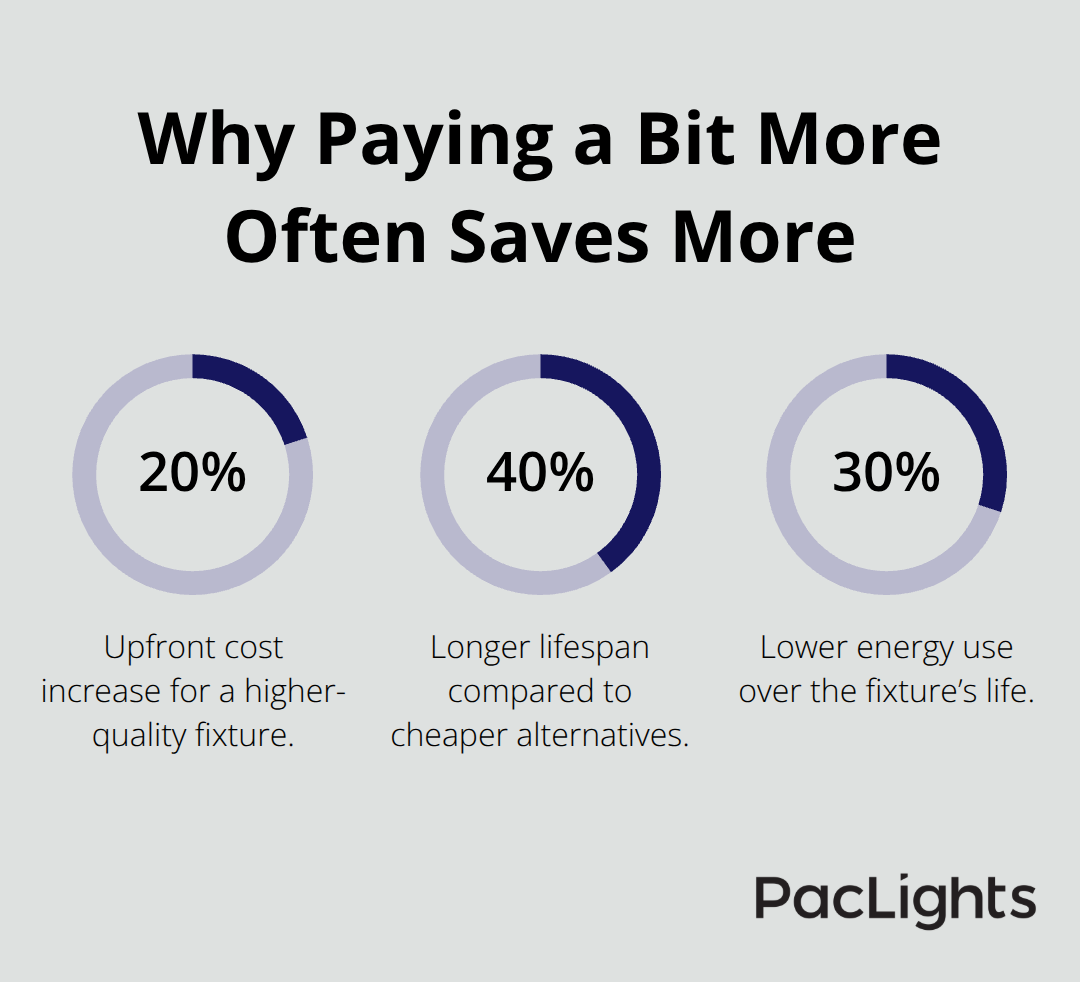
Cheap vapor tight fixtures with poor thermal management fail prematurely because heat buildup inside sealed enclosures degrades LED drivers and reduces light output. Compare total cost of ownership, not just purchase price. A fixture costing 20 percent more but lasting 40 percent longer and using 30 percent less energy delivers better financial performance over five to ten years.
Facilities spending under $5,000 annually on lighting maintenance often overlook this calculation, but those with $15,000 or higher maintenance budgets recognize that durability and efficiency directly impact profitability. Request certification documentation proving UL or ETL compliance, verify IP or NEMA ratings match your environmental assessment, and confirm that sealed components like drivers and gaskets carry wet-location ratings. Avoid suppliers who claim waterproof designs without third-party certification backing those claims.
Final Thoughts
Vapor tight fixture ratings protect your facility from moisture damage that costs thousands in emergency replacements and operational downtime. The standards and certifications covered in this guide-IP codes, NEMA classifications, UL and ETL verification-exist because industrial environments demand equipment that performs under real-world conditions, not marketing promises. Your facility’s specific exposure determines which ratings you actually need, and matching environmental conditions to appropriate ratings prevents overspending on unnecessary protection while avoiding the false economy of undersized fixtures that fail prematurely.
Document your moisture levels, spray exposure, temperature extremes, and chemical contact, then cross-reference these conditions against IP and NEMA standards. Demand third-party certification documentation from suppliers rather than accepting unverified claims about waterproof or sealed designs. LED vapor tight fixtures deliver measurable advantages over older technology-50 to 75 percent energy savings, 25,000 to 50,000 hour lifespans, and instant-on performance that fluorescent systems cannot match (benefits that compound over five to ten years, making higher upfront costs recover through reduced electricity and maintenance expenses).
Request actual performance data, warranty terms covering sealed components, and certification proof before committing to any fixture. We at PacLights understand that selecting the right vapor tight fixture ratings requires more than product catalogs, and our team offers free lighting layout designs and ROI assessments to help you match fixtures to your facility’s actual needs while quantifying long-term savings. Contact PacLights to discuss your vapor tight lighting requirements and receive a customized recommendation based on your environmental conditions and budget constraints.
Disclaimer: PacLights is not responsible for any actions taken based on the suggestions and information provided in this article, and readers should consult local building and electrical codes for proper guidance.