

Transparent cylinder pendant lights have become a go-to choice for anyone who wants lighting that actually looks good. They’re not just functional-they’re a statement piece that works in virtually any room.
At PacLights, we’ve seen firsthand how these fixtures combine smart design with real performance benefits. Whether you’re renovating your home or upgrading a commercial space, there’s a lot to gain from understanding what makes them work so well.
Why Transparent Glass Works Better Than Solid Shades
The Visibility Advantage
Transparent cylinder pendants deliver what solid shades cannot: visibility into the light source itself. This matters far beyond aesthetics. When you see the bulb, you immediately understand the light quality and intensity. A warm LED filament looks inviting. A bright white LED reads modern and clean. This transparency eliminates the guesswork that comes with opaque fixtures, where the actual light output remains hidden until installation. The glass panes create clean lines that suit minimalist interiors, but the real advantage is practical: you see what you’re getting before you commit.
Clear glass maximizes light transmission, so less output wastes on the fixture itself. If the light feels too harsh once installed, a dimmer switch adjusts brightness without replacing the entire pendant. For spaces where light quality matters-kitchens where you prep food, offices where you work on screens-this transparency gives you control and visibility from day one.
Design Flexibility Across Settings
The versatility of transparent cylinders works across residential and commercial settings because the design adapts to nearly any color palette or architectural style. Black cylinders add depth to contemporary kitchens. Brass or chrome finishes blend traditional warmth with modern geometry. Neutral metal finishes step back so the glass becomes the focal point.
Kitchen islands typically benefit from three to four pendants spaced evenly to create a visual line and balanced illumination. A single pendant handles task lighting over a sink or small workspace. Commercial applications-restaurants, retail showrooms, office lobbies-use transparent cylinders to create focal points without visual clutter. The glass doesn’t compete with surrounding décor; it enhances it.
Spacing and Installation Precision
Spacing matters significantly when you install multiple pendants. The recommended distance between pendant centers equals the pendant’s diameter, which keeps light distribution even and proportional. For a standard 8-foot table with 10-inch diameter cylinders, install centers roughly 2 feet apart. This formula adapts to any surface length.
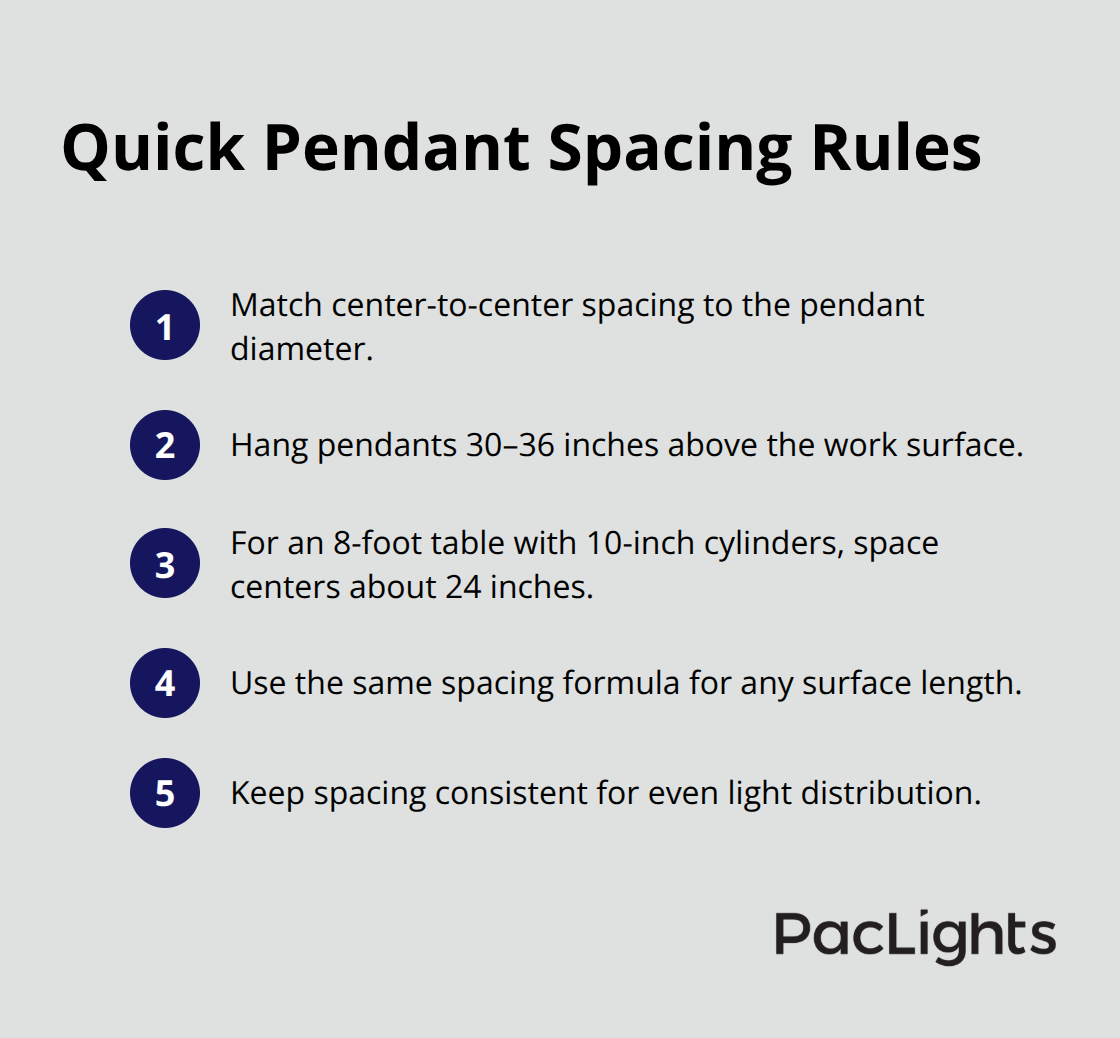
Hang pendants 30 to 36 inches above the work surface to maintain proper proportion and preserve headroom. The simplicity of these fixtures means they work in Scandinavian minimalist spaces, Mid-Century Modern homes, industrial lofts, and corporate environments with equal effectiveness. Once you understand how to position them correctly, you unlock performance that matches the aesthetic appeal.
How Much Can You Really Save with LED Cylinder Pendants
The Math Behind LED Energy Savings
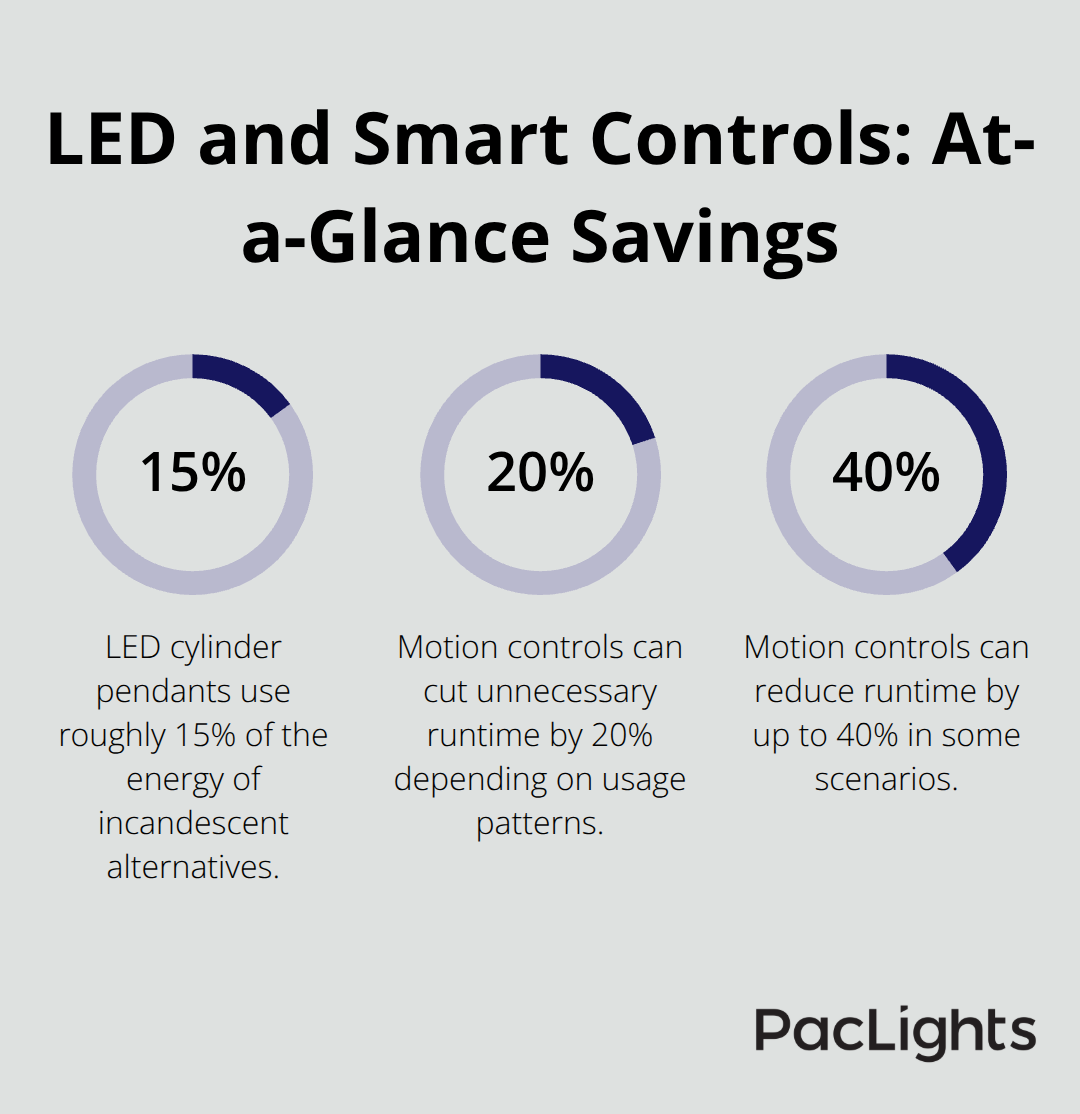
LED cylinder pendants cut energy consumption dramatically compared to incandescent or halogen alternatives. A standard 60-watt incandescent bulb draws roughly 60 watts of power, while an equivalent LED produces the same light output at 8 to 10 watts. Over a year, that difference compounds fast. If you run pendant lights over a kitchen island for 5 hours daily, switching from incandescent to LED saves approximately 250 kilowatt-hours annually per fixture. At the US average electricity rate of 16 cents per kilowatt-hour, that translates to about 40 dollars per pendant per year in utility costs. For a kitchen with three pendants, you’re looking at 120 dollars in annual savings. Commercial spaces see even steeper returns because pendant lights often stay on 10 to 12 hours daily. A restaurant or office with eight cylinder pendants running continuously could save 400 to 500 dollars yearly just on electricity. The payback period for LED conversion typically falls between 18 and 36 months, after which the savings become essentially free.
Lifespan Advantages That Eliminate Replacement Costs
LED bulbs last 25,000 to 50,000 hours compared to 1,000 hours for incandescent bulbs. That translates to replacing an LED bulb roughly once every 5 to 7 years versus multiple times annually with older technology. Labor costs for replacements disappear. In commercial settings where changing fixtures requires ladders, permits, or after-hours work, this lifespan advantage eliminates significant operational headaches and reduces downtime substantially.
Smart Controls Amplify Your Savings
Motion sensors and daylight controls amplify efficiency further when paired with transparent cylinder pendants. Motion controls shut lights off in unoccupied spaces, cutting unnecessary runtime by 20 to 40 percent depending on usage patterns. Daylight sensors automatically dim or turn off pendants when natural light is sufficient, reducing daytime energy consumption substantially. These controls work seamlessly with modern smart lighting systems, letting you manage brightness and scheduling from a mobile app.
The combination of LED technology, extended lifespan, and intelligent controls transforms transparent cylinder pendants from a stylish choice into a financially smart investment. Installation and proper placement of these fixtures determine whether you maximize both the aesthetic and financial benefits they offer.
Installation and Practical Considerations
Mounting Transparent Cylinders on Any Ceiling Type
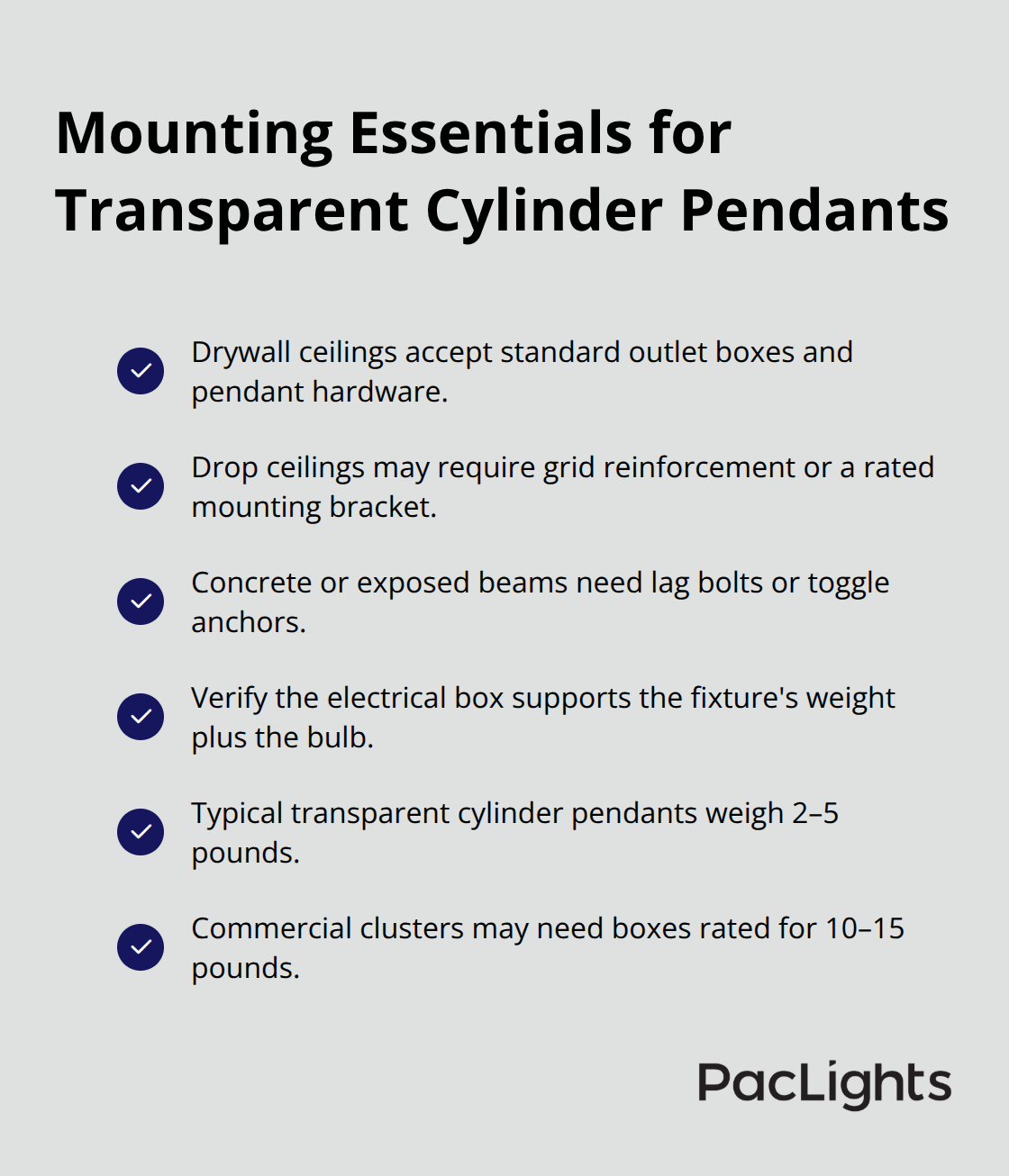
Mounting transparent cylinder pendants correctly determines whether they perform as intended or become a frustrating afterthought. Most ceiling types accommodate these fixtures without complications. Drywall ceilings accept standard outlet boxes and pendant hardware directly. Suspended drop ceilings work equally well, though you’ll need to reinforce the grid or use a dedicated mounting bracket rated for pendant weight. Concrete or exposed beam ceilings require lag bolts or toggle anchors, depending on your specific installation.
The critical step is verifying that your electrical box can handle the fixture’s weight plus the bulb. Most transparent cylinder pendants weigh between 2 and 5 pounds, well within standard residential outlet box capacity, but commercial installations with larger fixtures or multiple-pendant clusters demand reinforced boxes rated for 10 to 15 pounds. Check your fixture’s specifications before purchasing, not after delivery arrives. Incorrect mounting creates flickering, loose connections, and potential safety hazards that no amount of aesthetic appeal compensates for.
Positioning Height and Spacing for Optimal Light Distribution
Height and spacing directly control whether your pendants deliver the light distribution and visual balance you expect. Hang cylinders 30 to 36 inches above your work surface, whether that’s a kitchen island, dining table, or office desk. This distance maintains proper proportion and prevents the fixture from obstructing sightlines across the space.
For multiple pendants, space the centers apart by a distance equal to each pendant’s diameter. A 10-inch diameter cylinder means 10 inches between center points, roughly. This formula keeps light distribution even and prevents dark spots between fixtures. On an 8-foot surface, three pendants spaced this way create a cohesive visual line without overcrowding. For an odd number of pendants, position the center fixture directly above the midpoint, then space the remaining fixtures symmetrically outward. For an even number, place the two middle pendants equidistant from center, then extend outward. Subtract 12 inches from your surface dimensions to ensure at least 6 inches of clearance on all sides, preventing the fixture from hanging too close to walls or edges.
Integrating Smart Lighting Controls
Smart lighting controls integrate seamlessly with modern transparent cylinder pendants, provided your fixtures support dimmable LED bulbs and your electrical system includes compatible wiring. Dimmer switches reduce harsh glare from clear glass while lowering energy consumption during daylight hours or when full brightness isn’t necessary.
Motion sensors and daylight harvesting controls work with transparent cylinders as effectively as they do with any other fixture, automatically adjusting output based on occupancy and ambient light levels. Networked lighting control systems let you manage multiple pendants across different zones through a single interface or mobile app, critical for commercial applications where precision scheduling optimizes energy use across dozens of fixtures. Verify that your chosen pendant accepts smart-compatible LED bulbs before installation, as not all fixtures support all control types. Retrofit installations benefit from wireless smart bulbs that don’t require rewiring, though hardwired systems offer more reliable performance in high-use environments where consistent operation matters.
Final Thoughts
Transparent cylinder pendant lights deliver what most fixtures cannot: a combination of visual appeal and measurable financial returns. LED versions cut energy consumption to roughly 15 percent of incandescent alternatives, translating to 40 dollars annually per fixture in utility savings for residential applications and significantly more for commercial spaces running lights 10 to 12 hours daily. Extended lifespan eliminates replacement labor and downtime, while smart controls amplify these savings further through automatic adjustments based on occupancy and daylight availability.
Installation precision determines whether these fixtures perform reliably and safely across any ceiling type. Proper mounting, correct spacing, and appropriate height create balanced light distribution that prevents dark spots and visual clutter, while integration with modern smart lighting systems gives you control through mobile apps and automated scheduling. Transparent cylinder pendant lights adapt seamlessly to residential kitchens, commercial restaurants, office spaces, and retail environments without compromise.
We at PacLights understand that lighting decisions require both aesthetic confidence and financial justification. Visit PacLights to explore how the right fixtures transform your environment while protecting your budget.
Disclaimer: PacLights is not responsible for any actions taken based on the suggestions and information provided in this article, and readers should consult local building and electrical codes for proper guidance.