

Cylinder pendant light designs have become a staple in modern interiors, offering a perfect balance of form and function. At PacLights, we’ve seen firsthand how these fixtures transform spaces with their clean lines and versatile appeal.
Whether you’re renovating a kitchen, dining area, or living room, the right pendant lighting makes all the difference. This guide walks you through everything you need to know about selecting and installing cylinder pendant lights that work for your home.
What Makes Cylinder Pendants Work in Modern Design
The Form Solves a Real Problem
Cylinder pendants succeed in modern interiors because they solve a real problem: how to deliver focused light without visual clutter. The cylindrical shape creates an unobstructed downward light path, so you get clean illumination exactly where you need it-over kitchen islands, dining tables, or work surfaces-without the bulk of traditional fixtures. A 4-inch diameter matte black cylinder delivers roughly 800 lumens with a 10W LED, providing enough light for detailed tasks while maintaining the minimal aesthetic that defines contemporary spaces. The vertical form actually lengthens ceiling lines visually, making rooms feel more spacious, which is why architects and interior designers favor them in open-plan homes and commercial settings.
Material Choice Drives Performance and Maintenance
Material choice directly impacts both performance and maintenance demands. Satin or brushed nickel finishes resist fingerprints and coordinate with stainless appliances, making them practical for kitchens where smudging happens constantly. Brass or copper tones work better in spaces aiming for warmth-research from Scandinavian design studios shows that 2700K warm-toned cylinders with frosted diffusers make spaces feel 15–20% more inviting than neutral 4000K alternatives. Glass cylinders scatter light evenly and help smaller rooms feel more open, but they show dust readily, so they work best in low-traffic dining areas rather than active kitchens. Metal cylinders with matte finishes eliminate this maintenance burden entirely.
Spacing and Height Create Even Illumination
For eight-foot islands, space three pendants approximately two feet apart centerline-to-centerline to prevent gaps and dark zones. Ten-foot islands need four pendants to cover the surface evenly. Hang them 24–30 inches above work surfaces for optimal task lighting and clear sightlines. These specific measurements matter because poor spacing creates shadows that defeat the purpose of adding pendants at all. Professional lighting layout designs help you determine exact placement before installation, eliminating guesswork and ensuring your fixtures perform as intended. With the right spacing and height established, you’re ready to explore how these fixtures integrate with your home’s electrical infrastructure.
Where Cylinder Pendants Perform Best
Kitchen Islands Deliver Concentrated Task Light
Kitchen islands remain the strongest application for cylinder pendants, and the numbers back this up. A standard eight-foot island with three properly spaced pendants delivers 2,400–2,500 lumens of concentrated task lighting, enough to handle food prep, reading recipes, and detailed work without shadows. Ten-foot islands require four pendants for 3,200–3,300 lumens, preventing the dark zones that plague undersized installations. The cylindrical form creates an unobstructed downward light path, so illumination reaches work surfaces directly rather than scattering across the room.
Dining Tables and Entryways Require Different Approaches
Dining tables benefit from a different strategy than kitchen islands. Hang one large cylinder or two to three smaller pendants 18–20 inches above the surface to frame the table without blocking sightlines across conversation. Entryways and hallways work well with slender cylinders mounted at 7–8 feet high to guide movement without creating visual obstruction, especially valuable in narrow spaces where pendant bulk matters. This height prevents head bumps while maintaining the architectural presence that defines modern entryways.
Commercial Spaces Demand Color Accuracy
Commercial applications demand higher color rendering index LEDs to show product colors accurately, which is why retail showrooms pair 4000K cylinder pendants with 18–24 inch spacing and glass or crystal diffusers for even light distribution without harsh shadows. The precise color rendering helps customers see merchandise as it actually appears, improving purchase confidence and reducing returns.
Electrical Infrastructure Supports Standard Installations
Standard residential wiring supports pendant drops up to 24 inches without reinforcement, though adjustable cables let you fine-tune height post-installation to match actual ceiling conditions, a flexibility that saves rework costs. Nine-foot ceilings typically use 12–18 inch drops while twelve-foot ceilings accommodate 24–30 inch drops to maintain proper proportions and task illumination. For commercial spaces, networked lighting controls using DALI-2 or wireless systems enable real-time dimming and occupancy-based automation, cutting energy consumption by 40–60% when combined with motion sensors and daylight harvesting.
Smart Controls Deliver Measurable ROI
Payback for smart cylinder systems typically ranges 18–24 months through energy savings and reduced maintenance, making the upfront control investment rational for commercial buildings running systems 12 hours daily. These systems also reduce lamp replacement frequency, lowering operational costs beyond energy alone. Understanding your electrical setup and control options positions you to select fixtures that align with both your budget and performance goals, which brings us to the energy efficiency advantages that make cylinder pendants a smart long-term investment.
Why LED Cylinder Pendants Cut Energy Bills by 75 Percent
The Math Behind LED Savings
LED cylinder pendants deliver approximately 75 percent energy savings compared to incandescent alternatives, which shows up immediately on your electricity bill. A 10W LED cylinder produces roughly 800 lumens, while an incandescent reaching the same brightness consumes 60W or more. For a typical residential installation with four pendants running 12 hours daily over a year, LED saves around $180 annually at standard rates. Commercial installations see dramatically larger returns: a 50-fixture installation in an office environment running 12 hours per day reduces annual energy costs by approximately $1,050.
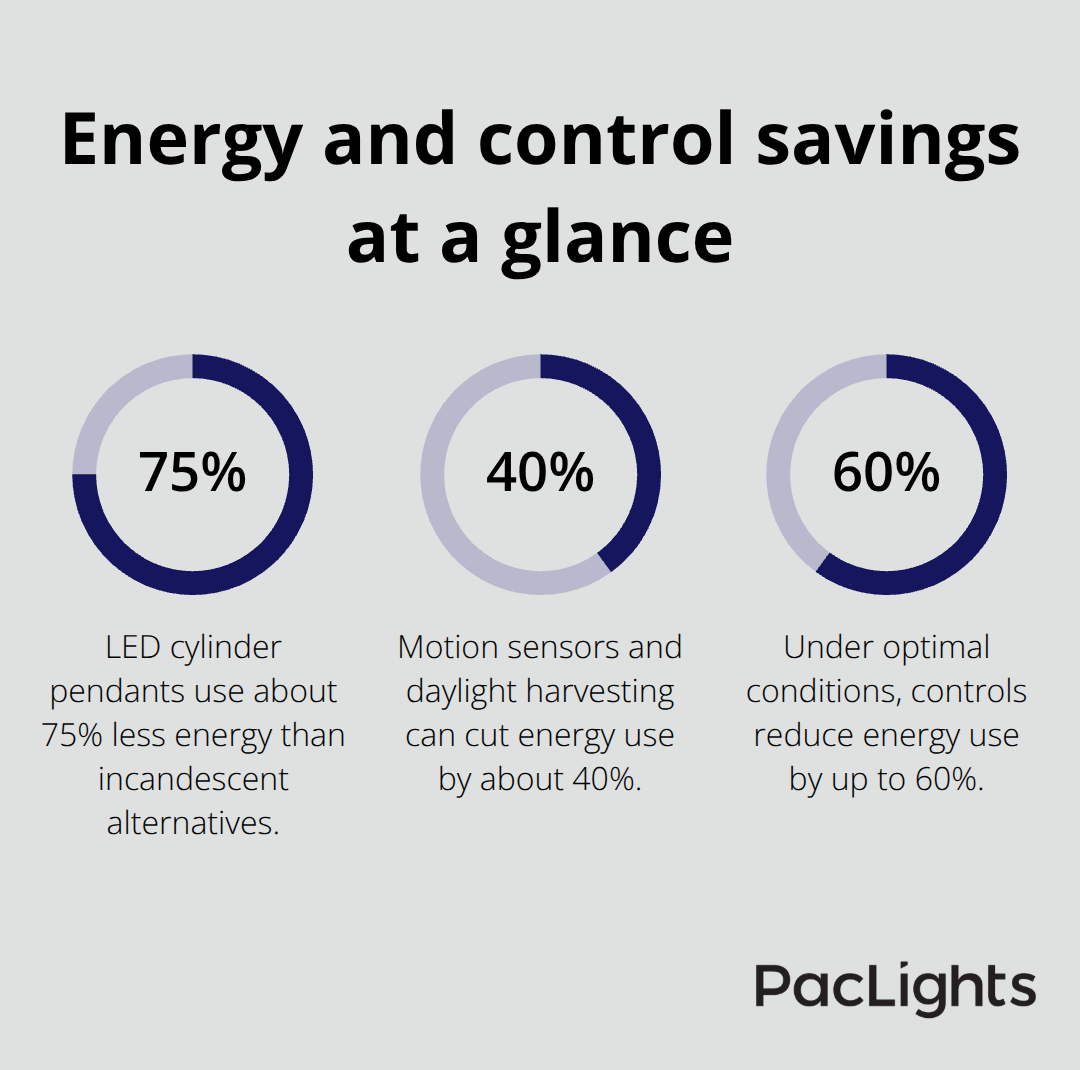
When motion sensors and daylight harvesting are added, energy use drops another 40 to 60 percent through dimming to 20 percent during unoccupied periods.
Lifespan and Maintenance Cost Reductions
LED lifespan extends to 25,000 to 50,000 hours, meaning you replace bulbs far less frequently than with older technology. This extended lifespan cuts maintenance labor costs substantially over the fixture’s lifetime. Satin finishes cost 10 to 15 percent more upfront but eliminate frequent cleaning that brass or copper requires, reducing maintenance expenses over five years. Coastal environments benefit from aluminum housings with 3 mil powder coatings to resist corrosion, preventing fixture replacement costs that uncoated metals incur.
Smart Controls and Productivity Gains
LED cylinder pendants aligned with existing building control systems using DALI-2 or wireless protocols enable real-time adjustments across multiple zones, optimizing illumination without manual intervention. Dimmable LED cylinders adjust color temperature through the day, supporting natural sleep-wake cycles in offices and reducing eye strain according to the Ergonomics International Journal, which lowers absenteeism and healthcare costs for employers. The Human Spaces research shows that well-designed lighting boosts workplace productivity by 6 percent and creative output by up to 15 percent, so the energy investment also improves output in commercial settings. Payback for smart cylinder systems with controls typically ranges 18 to 24 months through energy savings and reduced maintenance alone, making upfront costs for networked controls rational for buildings running systems regularly.
Environmental and Retail Performance Benefits
LED production generates roughly 80 percent less carbon footprint than incandescent manufacturing, and the extended lifespan means fewer fixtures enter landfills. Selecting durable materials and high-CRI LEDs for accurate color rendering eliminates costly product returns in retail environments, where poor lighting causes customers to misjudge merchandise quality. These environmental and economic advantages combine to make LED cylinder pendants a smart investment across residential and commercial applications.
Final Thoughts
Cylinder pendant light designs solve real problems in modern spaces by delivering focused task lighting without visual clutter, creating clean vertical lines that lengthen ceilings, and adapting to kitchens, dining areas, entryways, and commercial environments. The material and finish you select directly impact maintenance demands and the mood you create, while proper spacing and height eliminate dark zones that plague undersized installations. LED technology cuts energy consumption by 75 percent compared to incandescent alternatives, translating to roughly $180 annually for residential installations and $1,050 for commercial 50-fixture setups running 12 hours daily.
Extended lifespan of 25,000 to 50,000 hours reduces replacement frequency and maintenance labor costs substantially, and motion sensors combined with daylight harvesting drop energy use another 40 to 60 percent through intelligent dimming during unoccupied periods. Smart controls aligned with DALI-2 or wireless protocols deliver measurable returns within 18 to 24 months through energy savings alone, while dimmable cylinders supporting circadian rhythms reduce eye strain and boost workplace productivity by 6 percent according to Human Spaces research. These gains compound across commercial installations where lighting runs continuously and creative output increases up to 15 percent in well-lit environments.
Selecting the right cylinder pendant fixtures requires matching design style to your space, confirming proper installation measurements, and choosing finishes that balance aesthetics with maintenance capability. We at PacLights provide free lighting layout designs and ROI assessments to help you optimize placement and validate performance before installation, eliminating guesswork and positioning your investment for long-term success.
Disclaimer: PacLights is not responsible for any actions taken based on the suggestions and information provided in this article, and readers should consult local building and electrical codes for proper guidance.