

Poor shelf lighting costs retailers thousands in lost sales and safety issues every year. Wrap lighting for shelves solves this problem by delivering even illumination across entire aisles without the shadows and dark spots that plague traditional fixtures.
At PacLights, we’ve seen firsthand how the right lighting transforms warehouse and retail spaces. This guide shows you exactly how to choose, install, and optimize wrap lighting to cut energy costs while improving customer experience.
Why Wrap Lighting Wins for Shelf Illumination
Continuous Light Eliminates Dark Spots
Wrap lighting delivers continuous, uniform illumination along shelf spans, and this matters more than most retailers realize. Traditional under-shelf fixtures create hotspots directly beneath the light source while leaving gaps between fixtures dark. Wrap lighting eliminates this problem entirely because it runs the full length of each shelf, producing consistent brightness from end to end. The result is that customers see products clearly at every point along the aisle, not just in scattered bright patches.
Warehouses and retail stores using wrap lighting report improved product visibility that directly influences purchase decisions. When shoppers can see merchandise accurately under consistent light, they spend less time searching and more time buying. High color rendering index lighting in the 3500K to 4000K range paired with wrap fixtures ensures products display their true colors, which is especially critical for apparel, cosmetics, and food items where color fidelity shapes customer confidence.
LED Wrap Lighting Slashes Energy Costs
Energy consumption drops significantly when you replace traditional fluorescent or incandescent shelf lighting with LED wrap fixtures. LED wrap lighting uses roughly 75 percent less energy than older fluorescent systems while delivering superior light quality and lasting 50,000 hours or more compared to 10,000 hours for fluorescent bulbs. This means fewer maintenance visits, lower electricity bills, and faster payback on your investment.
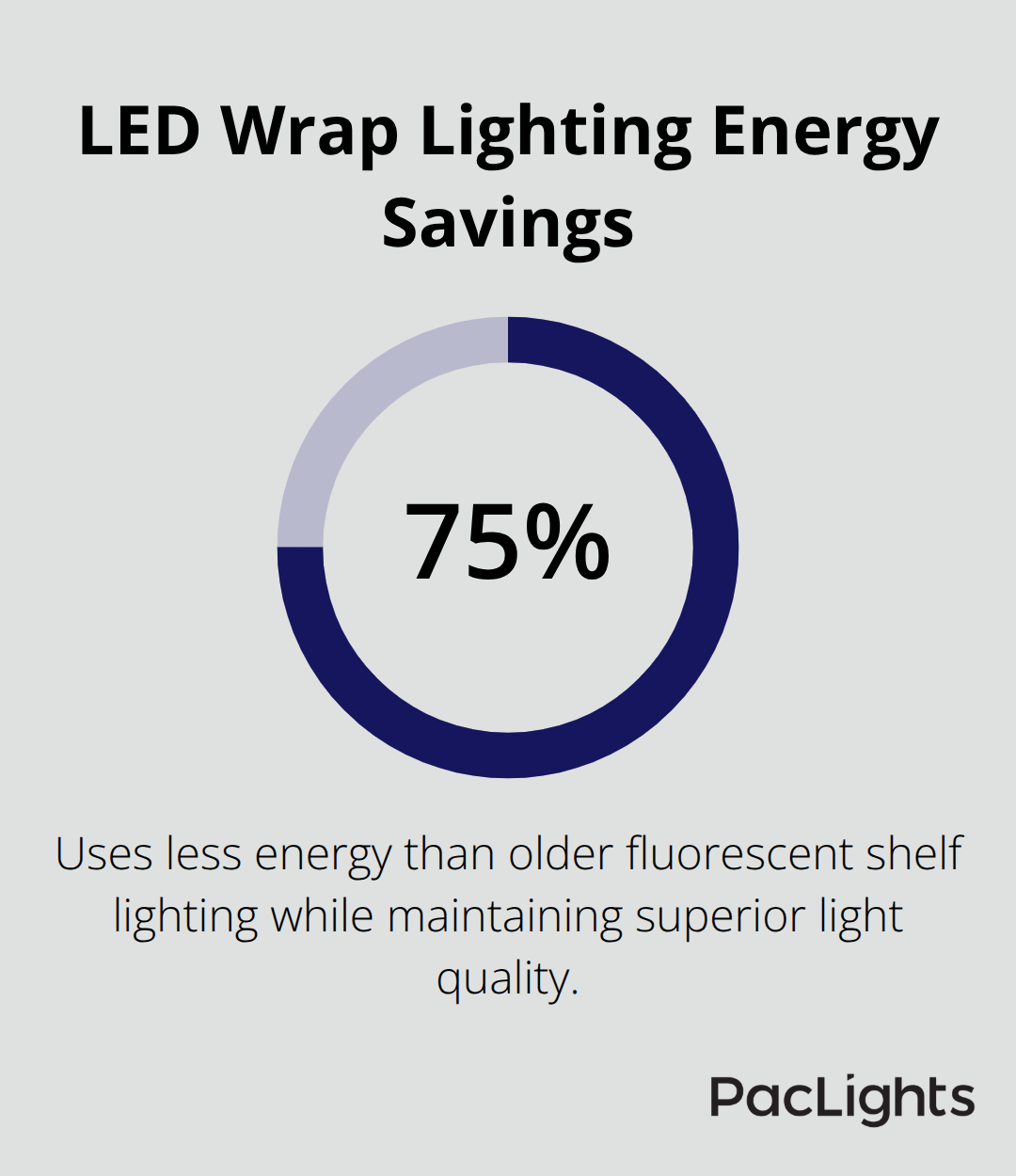
Retailers upgrading from traditional fixtures to LED wrap lighting typically recover their costs within 18 to 24 months through energy savings alone. The magnetic mounting systems on modern wrap fixtures allow quick repositioning as shelf layouts change, eliminating reinstallation costs. Dimmable options let you adjust brightness for different traffic patterns and times of day, further cutting energy waste without sacrificing visibility where customers need it most.
Smart Controls Maximize Your Savings
Motion sensors and daylight harvesting features (available on advanced LED wrap systems) reduce energy consumption even further by adjusting brightness based on occupancy and natural light levels. These controls transform wrap lighting from a static solution into a dynamic system that responds to real-time conditions in your facility. Understanding how to integrate these controls into your wrap lighting setup determines whether you achieve modest savings or exceptional ROI-which is exactly what the next section covers.
Picking the Right Wrap Lighting Setup for Your Space
Measure Your Space and Plan Before You Buy
Start by measuring your aisle width and shelf depth, then map out where wrap fixtures will mount. Most retail aisles run 36 to 48 inches wide, and wrap lighting fixtures come in standard lengths like 32 inches and 44 inches to fit these dimensions efficiently. If your shelves vary in width, cuttable LED strip options offer flexibility that fixed-size bars cannot match.
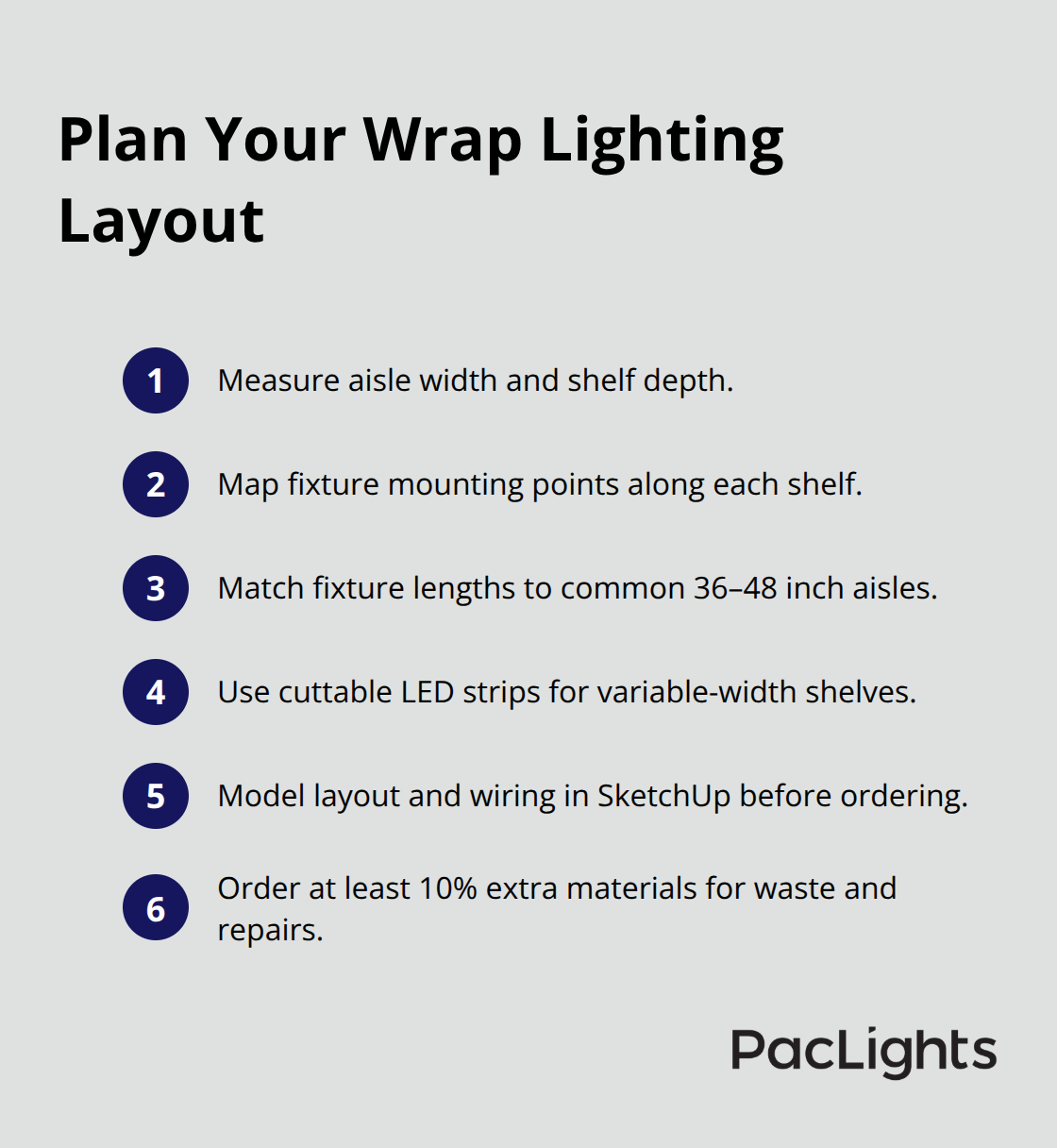
Use a tool like SketchUp to model your exact shelf layout and wire routing before you order anything-this prevents costly mistakes and ensures you calculate the right number of fixtures upfront. Plan to oversize your material estimates by at least 10 percent to cover waste, shipping damage, and future repairs or shelf reconfiguration.
Select the Right Color Temperature and CRI
Daylight 5000K color temperature works best for most retail and warehouse applications because it delivers bright, neutral illumination that makes products look crisp and true-to-life without the harshness of cooler temperatures or the dimness of warmer ones. However, if your space includes apparel or cosmetics sections, consider warmer tones in the 3500K to 4000K range to flatter products and create a more inviting atmosphere. High CRI lighting rated at 80 or above becomes non-negotiable when color accuracy influences purchase confidence, especially for fashion, cosmetics, and groceries where shoppers rely on true color rendering to assess quality.
Mount Fixtures for Maximum Light Distribution
Installation quality determines whether your wrap lighting delivers the promised energy savings and even illumination. Mount fixtures along the front edge of shelves to minimize shadows and ensure consistent light distribution across product faces rather than casting light downward where it wastes energy on empty shelf space below. Keep end distances equal when you position multiple fixtures to avoid visible hotspots at fixture boundaries, and test each LED strip segment before full installation to catch defects early.
Secure Magnetic Mounts and Route Wiring Properly
For magnetic mounting systems common on modern wrap fixtures, ensure metal shelves are clean and free of dust so magnets grip securely and fixtures do not slip during vibration or shelf adjustments. Route wiring with cord covers or wire trays to maintain a professional appearance and protect cables from damage, planning how wiring exits under diffusers for a clean finish across all aisles. Most LED wrap fixtures run on 120V with plug-in designs, eliminating the need for hardwired electrical work and allowing quick repositioning as layouts change.
Integrate Controls Before Installation Begins
If your facility requires networked lighting controls to zone brightness by section or schedule adjustments by time of day, confirm that your wrap lighting system integrates with your chosen control platform before installation begins. This flexibility makes wrap lighting far superior to traditional under-shelf systems that demand permanent installation and costly rewiring when store layouts shift. Once your fixtures are mounted and wired correctly, you unlock the real opportunity: optimizing those controls to maximize ROI and cut operating costs even further.
How Smart Controls Turn Wrap Lighting Into a Profit Machine
Motion Sensors Adapt Brightness to Occupancy
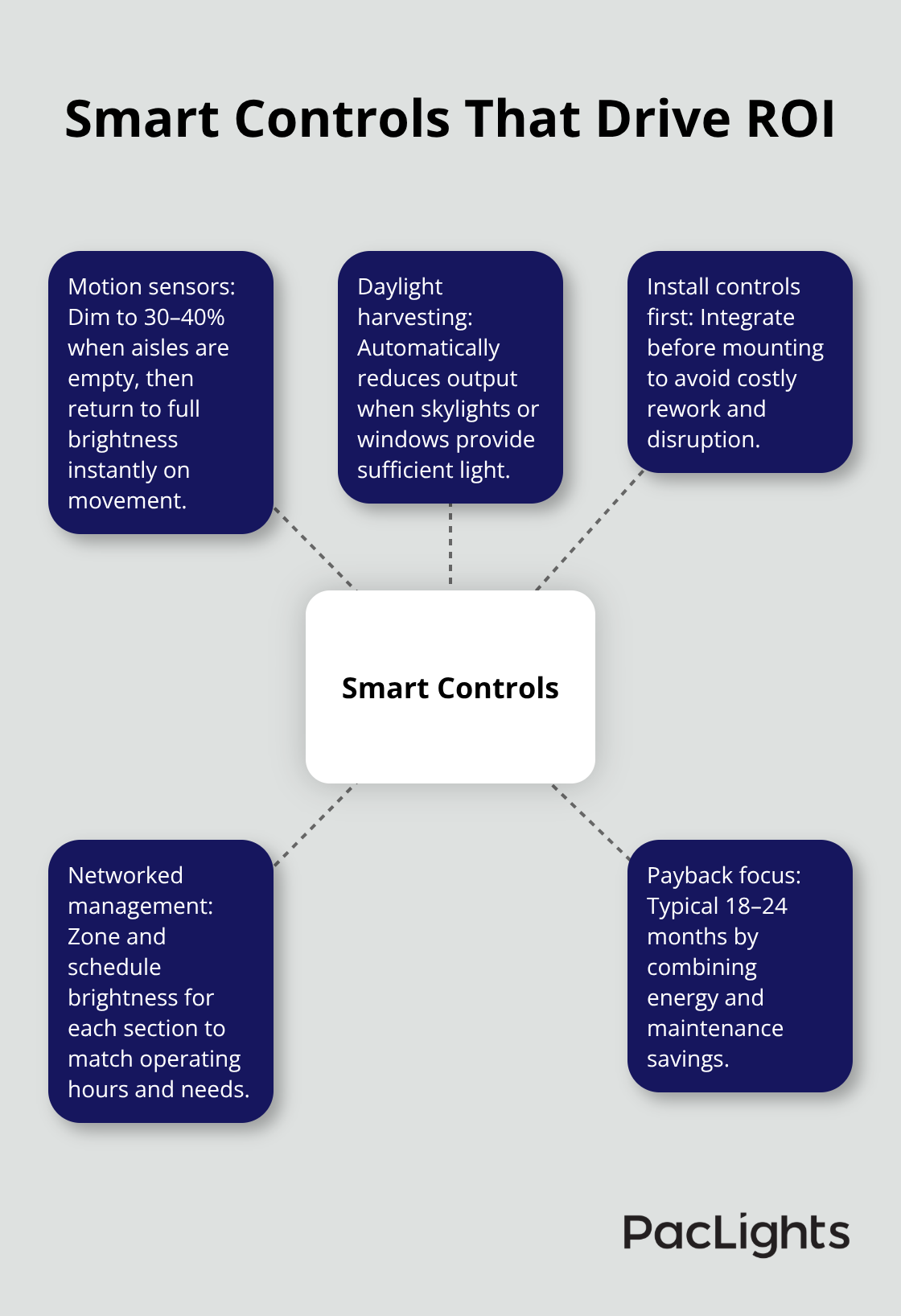
Motion sensors detect occupancy in specific aisles and reduce brightness to 30 to 40 percent when no customers are present, then restore full brightness instantly when movement is detected. This approach works especially well in warehouse aisles, back-of-store areas, and retail sections with variable traffic patterns. The sensor placement matters significantly-position them at aisle entry points and in high-traffic zones where they detect customer movement reliably without false triggers from passing equipment or air movement.
Daylight Harvesting Cuts Daytime Energy Waste
Daylight harvesting measures incoming natural light and automatically dims wrap fixtures when sufficient daylight enters through windows or skylights, preventing overillumination that wastes energy during daytime hours. Facilities with significant window exposure see the largest savings from this control strategy because natural light eliminates the need for artificial illumination during peak daylight hours. The combination of motion sensors and daylight harvesting typically reduces annual lighting energy consumption by 25 to 40 percent compared to static wrap lighting systems, according to energy management studies from commercial lighting retrofits.
Install Controls Before Mounting Fixtures
Installation timing determines your total project cost and downtime. Integrate control sensors and networked management before fixtures are mounted, not after, because retrofitting controls into an already-installed system costs substantially more and creates operational disruption. This upfront planning prevents expensive rework and ensures your control system functions optimally from day one.
Calculate Your Payback Period Accurately
Most facilities see payback periods of 18 to 24 months when upgrading to LED wrap lighting with smart controls, with some high-traffic retail environments achieving payback in under 18 months through combined energy savings and reduced maintenance costs. Calculate your specific payback by measuring current monthly electricity spend on shelf lighting, multiplying that figure by 0.75 to estimate LED savings, then dividing your total fixture investment by monthly savings. For a typical 5,000-square-foot retail space spending around 600 dollars monthly on shelf and aisle lighting, switching to LED wrap with motion sensors and daylight harvesting reduces that cost to approximately 180 to 225 dollars monthly, generating savings of 375 to 420 dollars per month or 4,500 to 5,040 dollars annually before accounting for reduced maintenance expenses and longer fixture lifespan.
Networked Controls Unlock Zone-Level Optimization
Networked lighting management systems allow you to zone brightness by section and schedule adjustments throughout operating hours, adapting illumination to specific business needs rather than applying one-size-fits-all settings across your entire facility. PacLights wrap lighting fixtures feature optional motion and daylight controls that integrate seamlessly with networked lighting management systems, giving you granular control over energy consumption and customer experience simultaneously.
Final Thoughts
Wrap lighting for shelves transforms three critical operational metrics simultaneously: it produces even illumination across entire aisles, eliminates shadows that conceal products, and cuts energy consumption by roughly 75 percent compared to fluorescent systems. These gains compound as your facility operates with consistent brightness, reduced maintenance visits, and extended fixture lifespan. The 18 to 24-month payback period means your lighting investment pays for itself while improving daily operations.
Motion sensors and daylight harvesting amplify these benefits by reducing energy consumption an additional 25 to 40 percent through adaptive brightness that responds to occupancy and natural light conditions. Networked lighting management systems let you zone brightness by section and adjust illumination throughout operating hours, transforming static installations into dynamic systems that match your specific business needs. High CRI wrap lighting in the 3500K to 4000K range ensures products display their true colors, which directly influences shopper confidence and purchase decisions.
Contact PacLights today to receive a customized lighting plan with realistic payback projections for your facility. We provide free layout designs and ROI assessments to help you calculate exact requirements before purchasing anything. Our wrap lighting fixtures integrate optional motion and daylight controls plus advanced networked lighting management to maximize your energy savings and operational efficiency.
Disclaimer: PacLights is not responsible for any actions taken based on the suggestions and information provided in this article, and readers should consult local building and electrical codes for proper guidance.