

Industrial facilities operating in harsh environments face a constant battle against moisture, chemicals, and corrosive elements that destroy standard lighting systems. At PacLights, we understand that vapor tight industrial lighting isn’t a luxury-it’s a necessity for operations that demand reliability and safety.
The right lighting solution protects your equipment, reduces downtime, and keeps your facility compliant with safety regulations. This guide walks you through everything you need to know about selecting and installing vapor tight fixtures that actually work.
Why Vapor Tight Lighting Actually Protects Your Facility
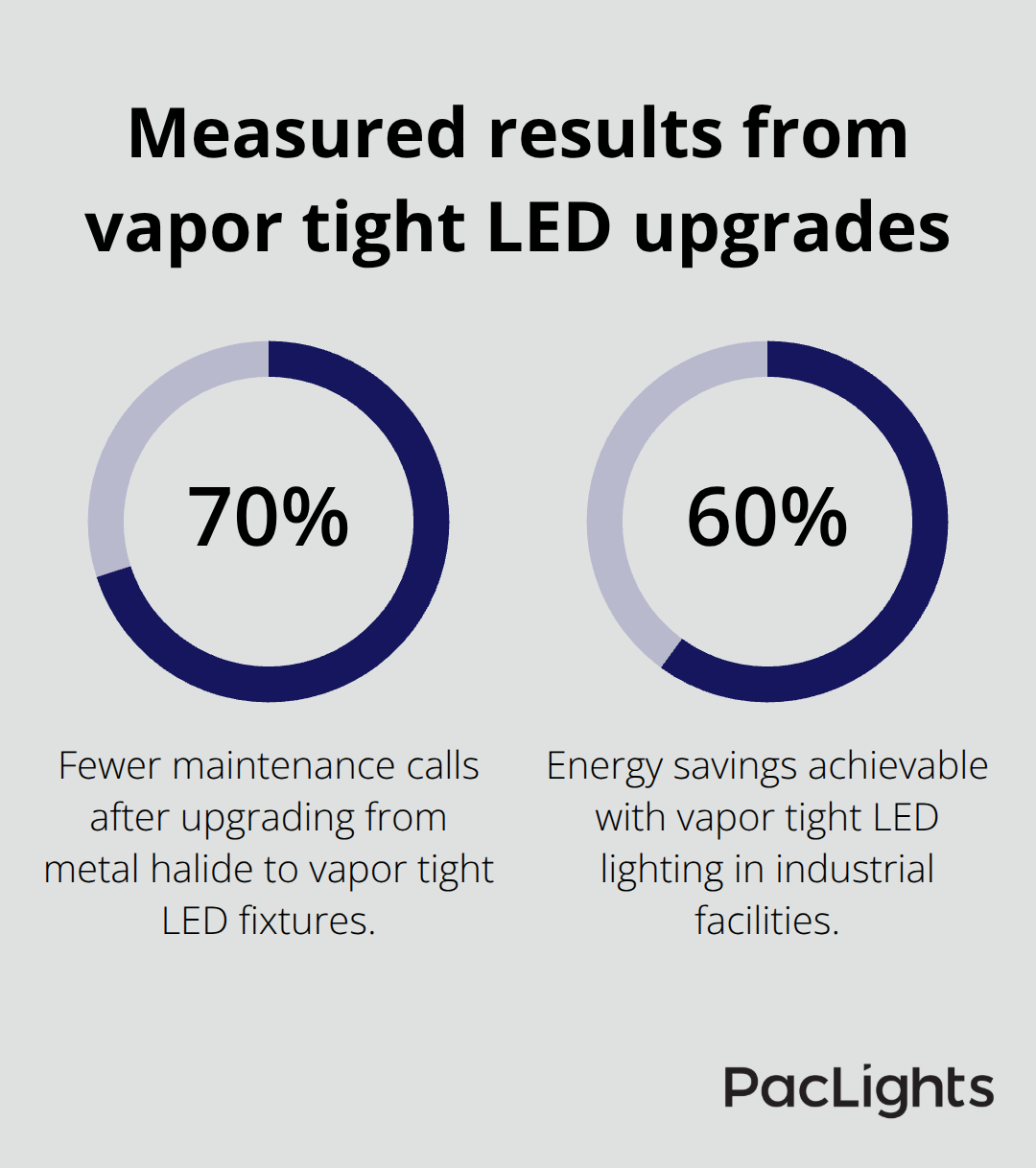
Moisture doesn’t just sit on the surface of standard industrial lighting-it penetrates sealed housings, corrodes internal components, and kills fixtures from the inside out. Vapor tight fixtures solve this problem through sealed, gasketed construction that blocks moisture, dust, and fumes before they reach critical components. The difference is measurable: facilities upgrading from traditional metal halide systems to vapor tight LED lighting report approximately 70% fewer maintenance calls and up to 60% energy savings. This isn’t theoretical-it’s what happens when you stop fighting moisture and start preventing it.
Die-cast aluminum housings with corrosion-resistant powder coatings, combined with silicone gaskets rated for temperatures between -20°C and 40°C, create barriers that actually hold up in parking garages, food processing plants, car washes, and coastal environments where salt spray accelerates corrosion.
Real Lifespan Numbers That Matter
Standard fluorescent vapor tight fixtures typically reach 15,000 to 20,000 hours before failure accelerates. LED vapor tight fixtures deliver 50,000+ hours at L70 rated life, meaning they maintain 70% of their initial brightness after five years of continuous operation in harsh conditions. That’s not a marketing claim-that’s an engineering specification backed by testing. When you calculate total cost of ownership, the upfront price difference between LED and older technologies disappears within three to four years because you replace fixtures less frequently and consume 50-70% less energy. A facility running 40 vapor tight fixtures 12 hours daily in a cold storage environment saves approximately 15,000 to 20,000 kilowatt-hours annually (at industrial electricity rates averaging 10 cents per kilowatt-hour, that’s $1,500 to $2,000 in annual savings) before factoring in reduced labor for maintenance and replacement.
Compliance Isn’t Optional in Regulated Spaces
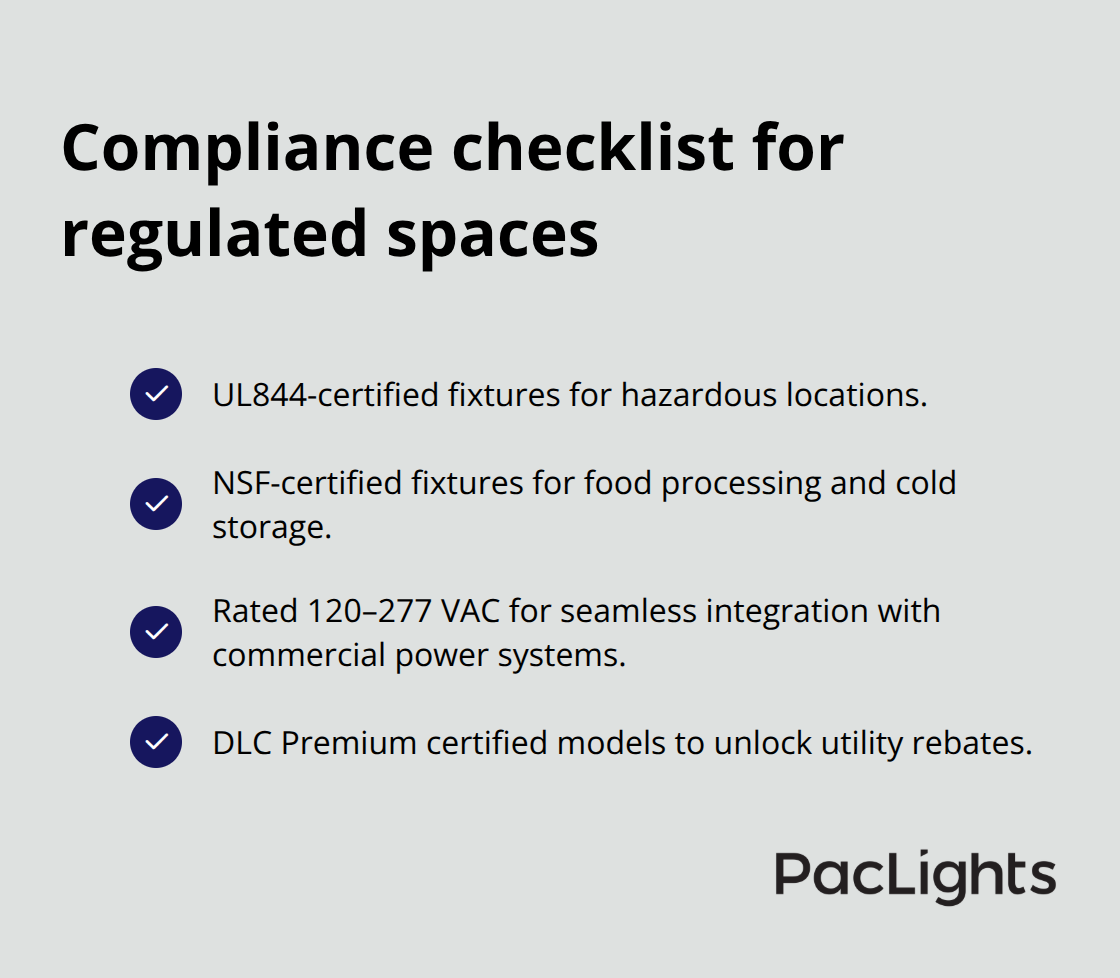
Food processing facilities must meet NSF International sanitation standards, which standard industrial lighting cannot satisfy. Vapor tight fixtures with NSF certification maintain hygiene standards because sealed designs prevent dust and debris accumulation on optical surfaces, and smooth housing materials resist bacterial colonization. Similarly, facilities classified as hazardous locations require explosion-proof or hazardous-location rated fixtures certified under UL844-standard vapor tight fixtures won’t meet these requirements regardless of their IP rating. Choosing the wrong fixture type creates liability exposure and forces costly retrofits. Electrical code compliance matters too: vapor tight fixtures rated for 120-277 VAC integrate seamlessly with commercial power systems, and DLC Premium certified models unlock utility rebates that offset initial investment costs.
Verifying Your Facility’s True Requirements
Your facility’s classification determines which fixtures actually work for your space. A sealed housing alone doesn’t guarantee hazardous-location compliance or food-service approval, so you must verify your facility’s specific environmental conditions and regulatory obligations before specifying any fixture. Moisture-heavy environments like car washes and coastal facilities need different protection levels than food processing plants, which face different challenges than spaces classified for explosive atmospheres. This assessment step prevents costly mistakes and ensures your lighting investment protects operations rather than creates compliance problems. Understanding these distinctions shapes every decision that follows in your fixture selection process.
Which Fixture Type Actually Fits Your Environment
Understanding IP Ratings and What They Really Mean
IP ratings tell only part of the story when selecting vapor tight lighting. IP65 protects against low-pressure water jets and dust ingress, making it suitable for outdoor canopies and parking structures where rain exposure occurs but high-pressure washdowns don’t. IP66 handles heavy-duty washdown environments like food processing facilities and coastal installations where high-pressure cleaning jets and salt spray accelerate corrosion, with gaskets and housing materials rated to tolerate repeated exposure without degradation.
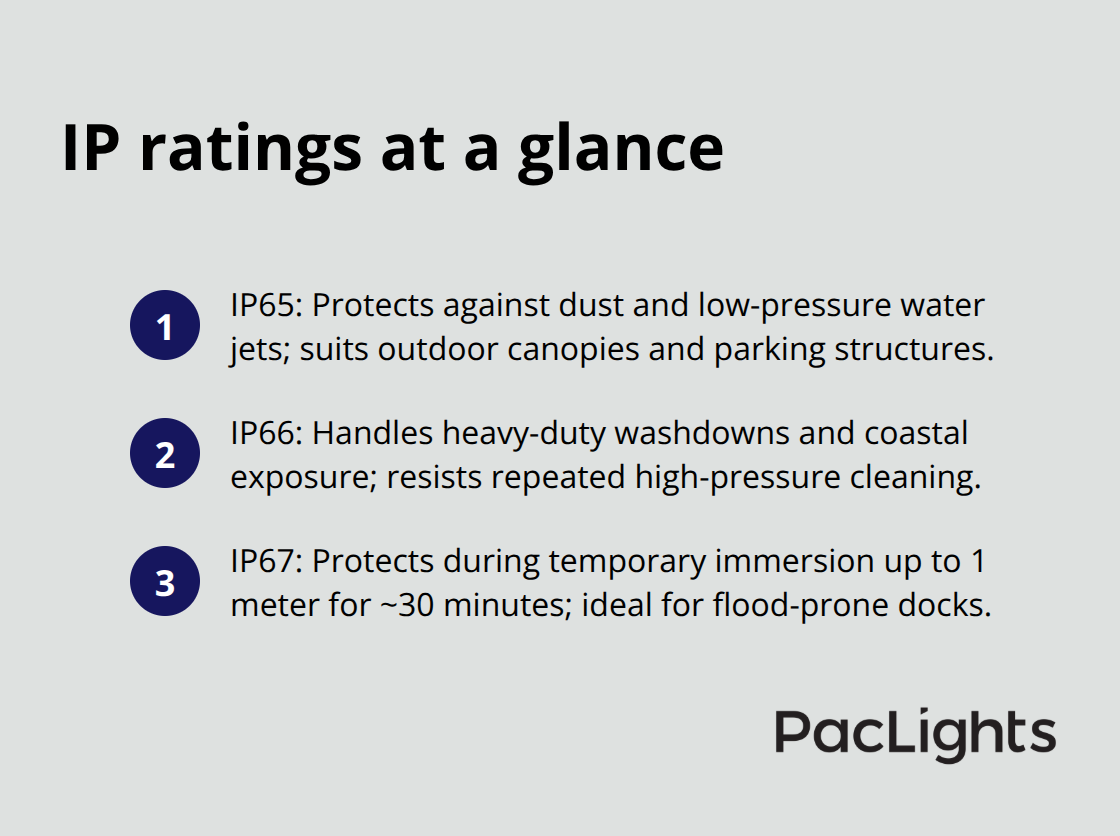
IP67 targets temporary immersion scenarios up to one meter for approximately 30 minutes, ideal for flood-prone docks or areas where brief submersion during storms occurs. Selecting the wrong IP rating forces either premature fixture failure or unnecessary overspending on protection your facility doesn’t need.
Materials and Construction That Stop Water at the Source
The sealed construction itself matters more than the number: die-cast aluminum with corrosion-resistant powder coating and silicone gaskets create the actual barrier, while polycarbonate or glass diffusers resist impact and chemical exposure. Bulkhead-style compression fittings at cable entries eliminate weak points where water typically enters fixtures, and gasket materials must match your specific chemical exposure (standard silicone differs from chemically resistant compounds used in aggressive industrial kitchens or manufacturing environments). Stainless steel housings resist corrosive environments better than standard aluminum, while epoxy or polyester powder coatings provide superior protection against caustic washdowns. Facilities operating in marine or coastal zones need salt-spray tested fixtures because standard corrosion-resistant coatings fail within months under constant salt exposure.
Hazardous Locations Require Entirely Different Specifications
Hazardous location classification requires entirely different specifications that vapor tight alone cannot provide. Standard vapor tight fixtures carry no explosion-proof rating regardless of their IP number, so facilities classified as Class I Division 2 or similar require UL844-certified hazardous location fixtures specifically engineered for explosive atmospheres. This distinction prevents costly compliance failures and liability exposure. Food processing and cold storage environments demand NSF certification, which verifies that sealed designs prevent bacterial colonization and dust accumulation on optical surfaces.
Matching Specifications to Your Actual Environment
Your facility’s true classification determines which fixture actually protects operations. Verify IP rating, hazardous location certification, NSF approval, and material compatibility before purchase to prevent the expensive retrofits that result from mismatched specifications. Food processing and cold storage environments face different challenges than spaces classified for explosive atmospheres, and moisture-heavy environments like car washes and coastal facilities need different protection levels than either. This assessment step prevents costly mistakes and shapes every decision that follows in your fixture selection process. Once you understand your environmental conditions and regulatory obligations, the next step involves calculating the specific lighting levels and fixture counts your facility actually needs.
Getting Your Facility’s Lighting Right the First Time
Document Your Facility’s Actual Conditions
Start by documenting exactly what your facility exposes fixtures to, because guessing costs money later. Walk your facility and note where moisture condenses on walls, where chemical vapors linger, where washdowns occur daily, and where temperature swings between freezing and hot. Take photos of existing fixture failures-corrosion patterns, water stains inside housings, and degraded gaskets-because these failures reveal what protection level you actually need. If your facility runs 24/7 in a cold storage environment at -10°C with daily humidity spikes, you need different gasket materials than a parking garage that experiences occasional rain. Similarly, a food processing facility with high-pressure washdowns demands IP66 minimum, while an outdoor canopy exposed only to rain works with IP65.
Facilities classified as hazardous locations need UL844-certified fixtures, not standard vapor tight solutions, regardless of their IP rating. NSF-certified fixtures are non-negotiable for food processing and cold storage spaces where sanitation standards apply. This assessment prevents the expensive retrofits that occur when you discover your IP65 fixtures fail under high-pressure washdowns or your standard fixtures violate food safety regulations.
Calculate Lighting Levels Based on Space Type
Once you’ve identified your environmental conditions, calculate actual lighting levels rather than guessing. Industrial spaces typically need 30-75 foot-candles for manufacturing areas, 5-20 foot-candles for parking garages, 20-50 foot-candles for cold storage, and 10-30 foot-candles for natatoriums, according to lighting design standards. A 10,000-square-foot warehouse with 8-foot ceiling heights and 30 foot-candle requirements needs roughly 40-50 vapor tight fixtures to achieve even illumination without dark corners that create safety hazards.
High-output models deliver 155-200 watts with tens of thousands of lumens, so you can reduce fixture counts in high-bay applications and lower total installation costs. Mount fixtures at appropriate heights-typically 8-20 feet depending on space type and lumen output-because mounting too low creates glare and wastes energy, while mounting too high requires higher wattage to achieve target illumination levels.
Execute Installation Correctly to Preserve Sealed Performance
Installation should secure fixtures with quick-mount brackets that speed retrofits and reduce labor costs, and pre-wired connectors eliminate custom field wiring that introduces moisture entry points. Verify that seals and gaskets are properly fitted before powering fixtures, because a gasket seated incorrectly during installation defeats the entire sealed design. After installation, test operation and adjust fixture orientation to eliminate shadows and ensure uniform light distribution across work surfaces.
Final Thoughts
Vapor tight industrial lighting solves a problem that standard fixtures cannot: protecting your operations from moisture, chemicals, and corrosive elements that destroy equipment and create safety hazards. Facilities upgrading to LED vapor tight solutions report 70% fewer maintenance calls and 50-70% energy savings compared to traditional systems, with payback periods typically falling between three and four years when you factor in reduced labor costs and lower electricity consumption. A 50,000+ hour L70 rated lifespan means your fixtures remain operational through years of harsh conditions without premature failure, so your team spends less time replacing failed lights and more time running operations.
NSF-certified options protect food processing and cold storage facilities from sanitation violations, while hazardous location rated fixtures prevent compliance failures in classified spaces. Correctly specified IP ratings ensure your investment actually matches your environmental exposure rather than failing prematurely or overspending on unnecessary protection. When your parking garage, food processing plant, or coastal facility has reliable illumination, your team works safely and efficiently, and compliance becomes automatic rather than a constant concern.
Document your facility’s actual environmental conditions and regulatory requirements to start your upgrade. Walk your space, identify moisture exposure, chemical hazards, and temperature ranges, then verify whether your facility needs standard vapor tight protection, NSF certification, or hazardous location ratings. We at PacLights offer free lighting layout designs and ROI assessments to help you plan installations that match your facility’s specific needs.
Disclaimer: PacLights is not responsible for any actions taken based on the suggestions and information provided in this article, and readers should consult local building and electrical codes for proper guidance.