

Most commercial buildings waste 20–30% of their lighting energy through outdated fixtures and inefficient systems. At PacLights, we’ve seen firsthand how commercial downlights retrofit ideas can cut electricity costs by 40–60% while improving workplace lighting quality.
Older downlights lack the control and flexibility modern businesses need. A retrofit doesn’t require ripping out your entire system-smart upgrades to existing fixtures deliver fast payback periods and measurable savings.
Why Your Downlights Are Costing You Money
Incandescent and halogen downlights consume 60–75 watts per fixture, while modern LED alternatives use just 10–15 watts for the same light output. In a typical 50-fixture office space, this difference translates to 5,000–7,500 kWh wasted annually-roughly $1,800 in unnecessary electricity costs per year. Over a decade, that single building hemorrhages approximately $18,000 in wasted energy. The EPA data shows that if all downlights sold in the United States were ENERGY STAR certified, annual energy cost savings would exceed $1 billion, with over 12 billion kWh saved and more than 18 billion pounds of greenhouse gas emissions prevented annually. Your building’s downlights are likely among the inefficient ones still operating at 1990s performance levels.
The Heat and Maintenance Burden
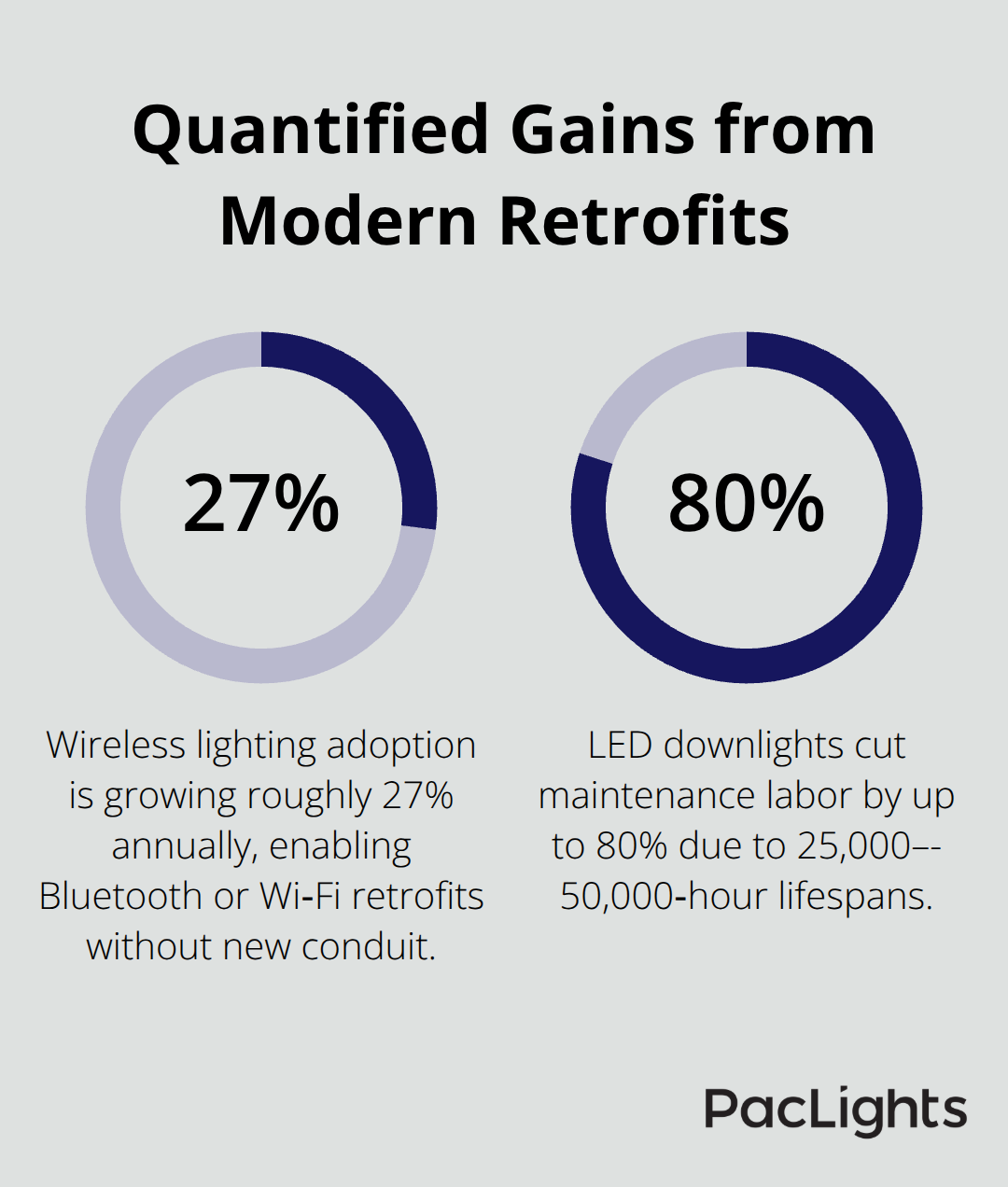
Older downlights generate substantial heat, forcing your HVAC system to work harder during warm months and inflating cooling costs. Traditional incandescent and fluorescent fixtures require frequent replacements-typically every 2,000–5,000 hours of operation. Maintenance teams spend valuable time on ladders every few months, disrupting workflows and adding labor costs that compound over years. LED downlights operate for 25,000–50,000 hours, cutting maintenance labor by up to 80% and eliminating the constant cycle of replacements. A modern retrofit eliminates both the heat penalty and the maintenance headache.
The Control Problem
Your old downlights operate on or off, with no flexibility for different times of day or occupancy patterns. You cannot dim them for energy savings during low-traffic hours, adjust color temperature to support focus during daytime work, or automate lighting based on actual space usage. Smart retrofits with occupancy sensors and daylight harvesting cut energy use by an additional 20–30% beyond the LED baseline-in high-traffic areas, total reductions can reach 60–70%. Without these controls, you pay full lighting costs even when spaces sit empty or natural daylight already fills the room.
What Retrofit Solutions Deliver
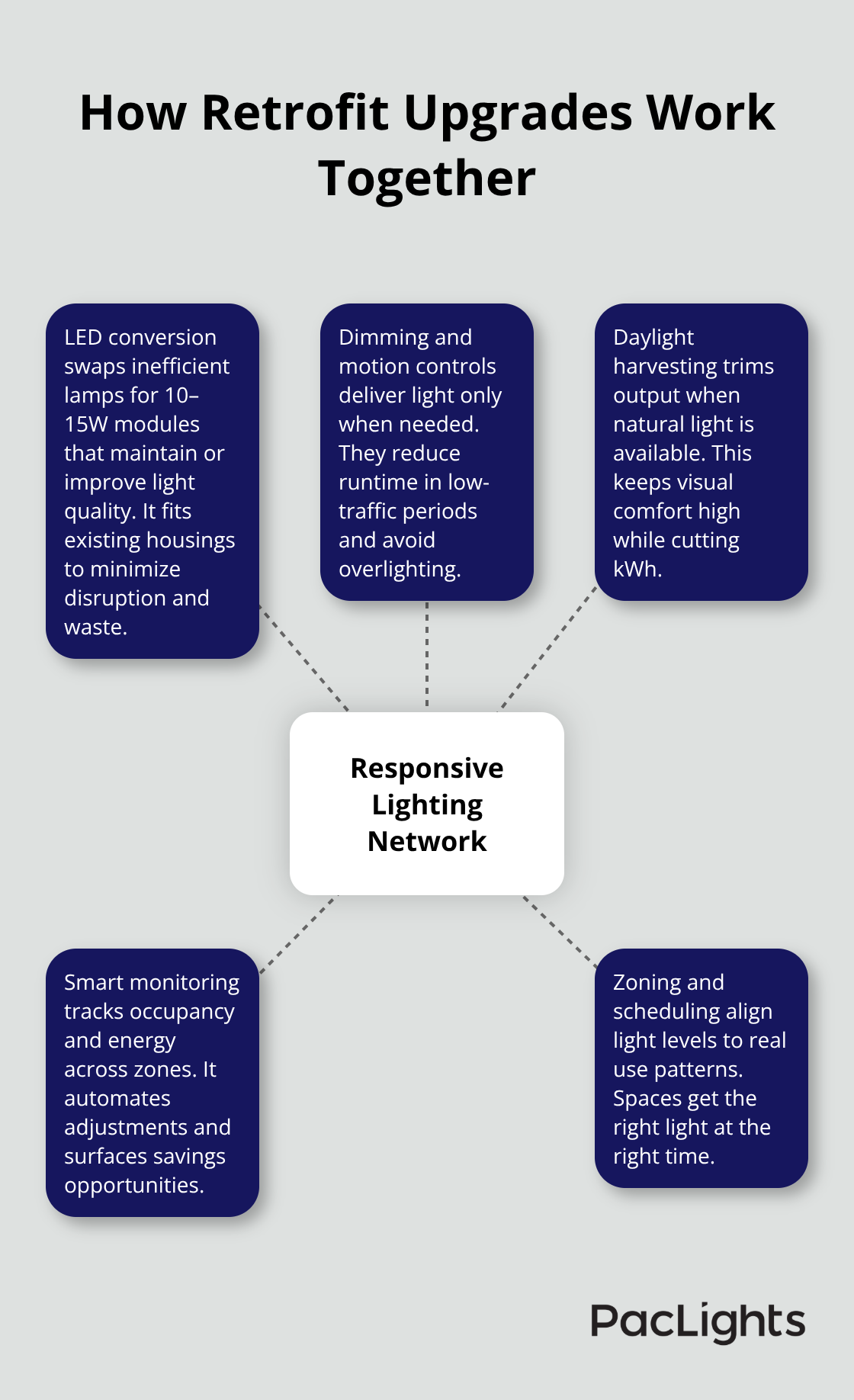
LED conversion options fit directly into existing fixtures without major rewiring, preserving your ceiling structure and reducing installation disruption. Dimming and motion controls activate only when needed, while smart lighting systems track occupancy across multiple zones and adjust automatically. These upgrades work together to transform your lighting from a fixed, wasteful system into a responsive, efficient network that adapts to how your building actually operates. The next section explores the specific retrofit solutions that deliver these results.
Quick Retrofit Solutions for Commercial Downlights
LED Conversion: The Direct Path to Savings
LED retrofit modules slide directly into your existing 4–6 inch recessed housings without rewiring, making this the fastest path to efficiency gains. A standard 6-inch retrofit delivers 800–1,200 lumens at just 10–15 watts, replacing your old 60–75W fixtures while maintaining or improving light quality. Installation takes 15–30 minutes per fixture-a 50-fixture office completes in 1–2 days with minimal disruption. The retrofit preserves your ceiling structure and existing junction boxes, cutting waste and replacement costs. Payback typically lands under 2 years, often 18–24 months after accounting for rebates. Georgia Power rebates commonly offset $10–$25 per qualifying fixture, dropping your post-incentive cost to $15–$40 per unit.
Before purchasing, verify IC-rating for insulated ceilings and confirm dimmer compatibility-not all LED downlights work with every existing dimmer. The ENERGY STAR Product Finder identifies certified options, while the Rebate Finder locates incentives in your region.
Motion Sensors and Occupancy-Based Dimming
Motion sensors and occupancy-based dimming add 20–30% more savings beyond the LED baseline without requiring smart infrastructure. Ceiling-level sensors detect occupancy up to 20 feet, triggering full brightness when spaces are in use and dimming or shutting off during vacant periods. Daylight harvesting pairs occupancy detection with photosensors to reduce artificial lighting when natural light fills the room-particularly effective in perimeter offices and conference areas. These controls work on retrofit kits with no complex rewiring, making them ideal for quick upgrades.
Smart Lighting Control Systems
Smart lighting control systems take efficiency further by integrating occupancy, daylight, and scheduling across multiple zones simultaneously. DALI-2 certified drivers ensure interoperable control with precise real-time monitoring, letting you adjust brightness and color temperature remotely via mobile app or web dashboard. Cloud-based analytics track space usage patterns, predict maintenance needs, and reveal which zones consume the most energy. Wireless adoption is growing roughly 27% annually, enabling sensor-driven retrofits via Bluetooth or Wi-Fi without running new conduit.
The combination of LED conversion, occupancy controls, and smart monitoring transforms your lighting from a static system into a responsive network that adapts to actual building use. This layered approach delivers the 60–70% total energy reductions in high-traffic areas that static LED retrofits cannot achieve alone. With your retrofit strategy in place, the next step involves calculating exactly how much your building will save and how quickly the investment returns.
Measuring ROI and Energy Savings
Calculate Your Payback Period
A 50-fixture retrofit costs roughly $750–$2,000 before rebates, dropping to $400–$1,200 after Georgia Power incentives offset $10–$25 per fixture. Your payback arrives in 18–24 months based on energy savings alone. A typical office retrofit eliminates 5,000–7,500 kWh annually, worth approximately $1,800 per year at standard commercial rates. Over 10 years, that single building avoids $18,000 in electricity costs.
Factor in Maintenance Savings
The real calculation extends beyond electricity. LED fixtures operate 25,000–50,000 hours, meaning your maintenance team stops replacing bulbs constantly while labor costs drop by up to 80%. If your current system requires fixture replacements every two years at $500–$1,000 in labor and materials, a retrofit eliminates that recurring expense entirely. These maintenance savings compound significantly over the retrofit’s lifespan.
Conduct a Professional Lighting Audit
A professional lighting audit quantifies these numbers for your specific building. We at PacLights offer free lighting layout designs and ROI assessments that project payback based on your fixture count, local utility rates, and available rebates. This removes guesswork and shows exactly when your investment returns cash flow.
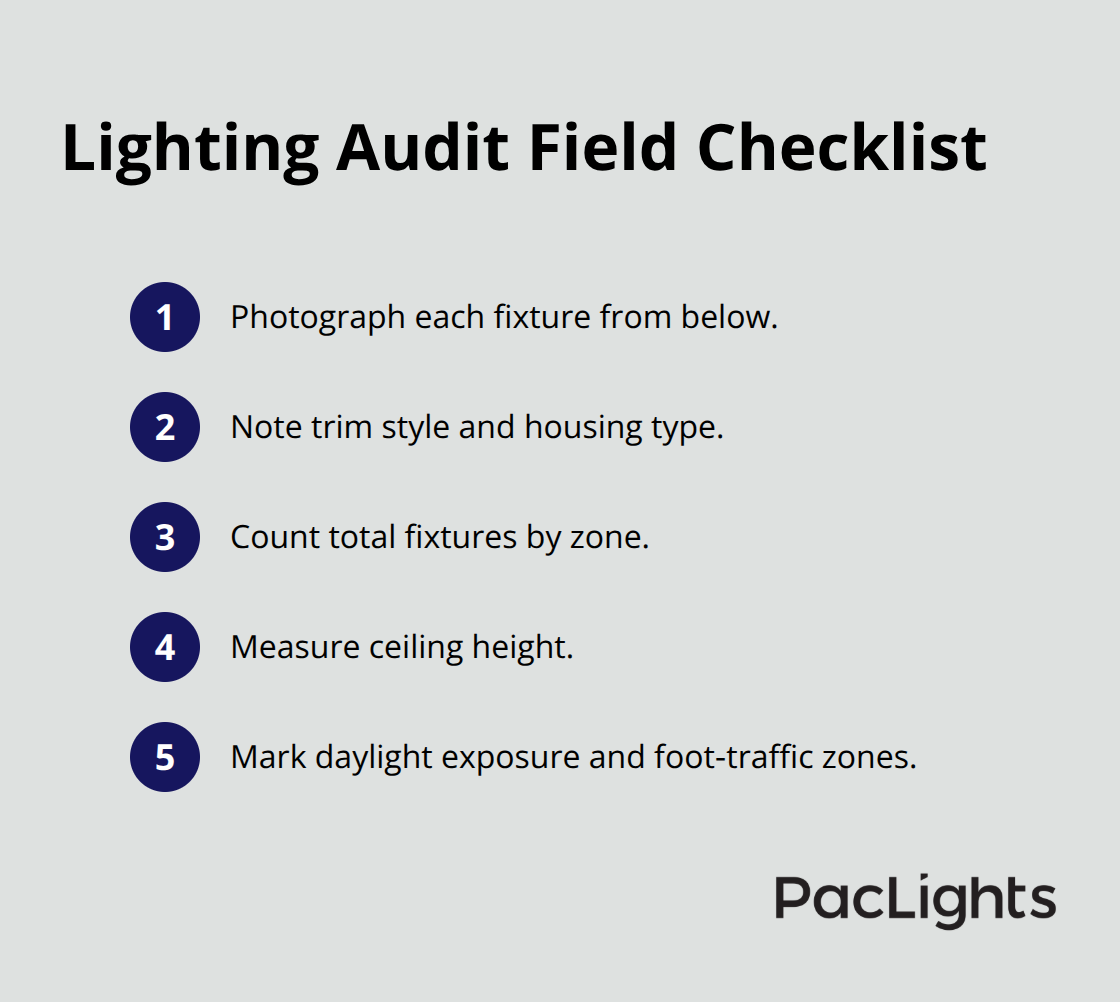
The audit process identifies which fixtures waste the most energy and which zones benefit most from controls. Photograph your existing fixtures from below, note trim styles, count total fixtures, measure ceiling height, and mark daylight and foot-traffic zones. This inventory reveals whether motion sensors alone deliver sufficient savings or whether smart controls justify the higher upfront cost.
Prioritize High-Impact Zones First
A 50-fixture retrofit with LED conversion alone saves $1,800 yearly, but adding occupancy-based dimming adds 20–30% more savings without major expense. Smart systems with cloud analytics cost more initially but unlock an additional 30–50% savings through precise scheduling and predictive maintenance alerts that prevent emergency failures. The audit data shows which approach matches your building’s actual usage patterns rather than assumptions.
Retrofit in phases if budget constraints exist: convert high-traffic zones first to maximize early ROI, then expand to remaining spaces once initial savings fund subsequent upgrades. This staged approach keeps payback under 24 months while spreading capital outlay across fiscal years.
Final Thoughts
Commercial downlights retrofit ideas transform outdated lighting into efficient systems that cut electricity costs by 40–60% while reducing maintenance labor by up to 80%. A typical 50-fixture office saves $1,800 annually through LED conversion alone, with payback arriving in 18–24 months. Adding occupancy sensors and daylight harvesting pushes savings to 20–30% beyond the LED baseline, while smart controls unlock an additional 30–50% through precise scheduling and predictive maintenance alerts that prevent costly failures.
Start by inventorying your existing fixtures, photographing them from below, noting trim styles, and counting total units. Identify high-traffic zones and areas with natural daylight exposure to reveal whether motion sensors match your building’s usage patterns or whether smart controls justify the higher upfront investment. Prioritize high-impact zones first to maximize early ROI, then expand to remaining spaces as initial savings fund subsequent phases.
We at PacLights offer free lighting layout designs and ROI assessments tailored to your specific building, local utility rates, and available rebates. Contact our team to schedule your assessment and transform outdated downlights into a responsive, efficient lighting network that cuts costs while improving workplace quality.
Disclaimer: PacLights is not responsible for any actions taken based on the suggestions and information provided in this article, and readers should consult local building and electrical codes for proper guidance.