

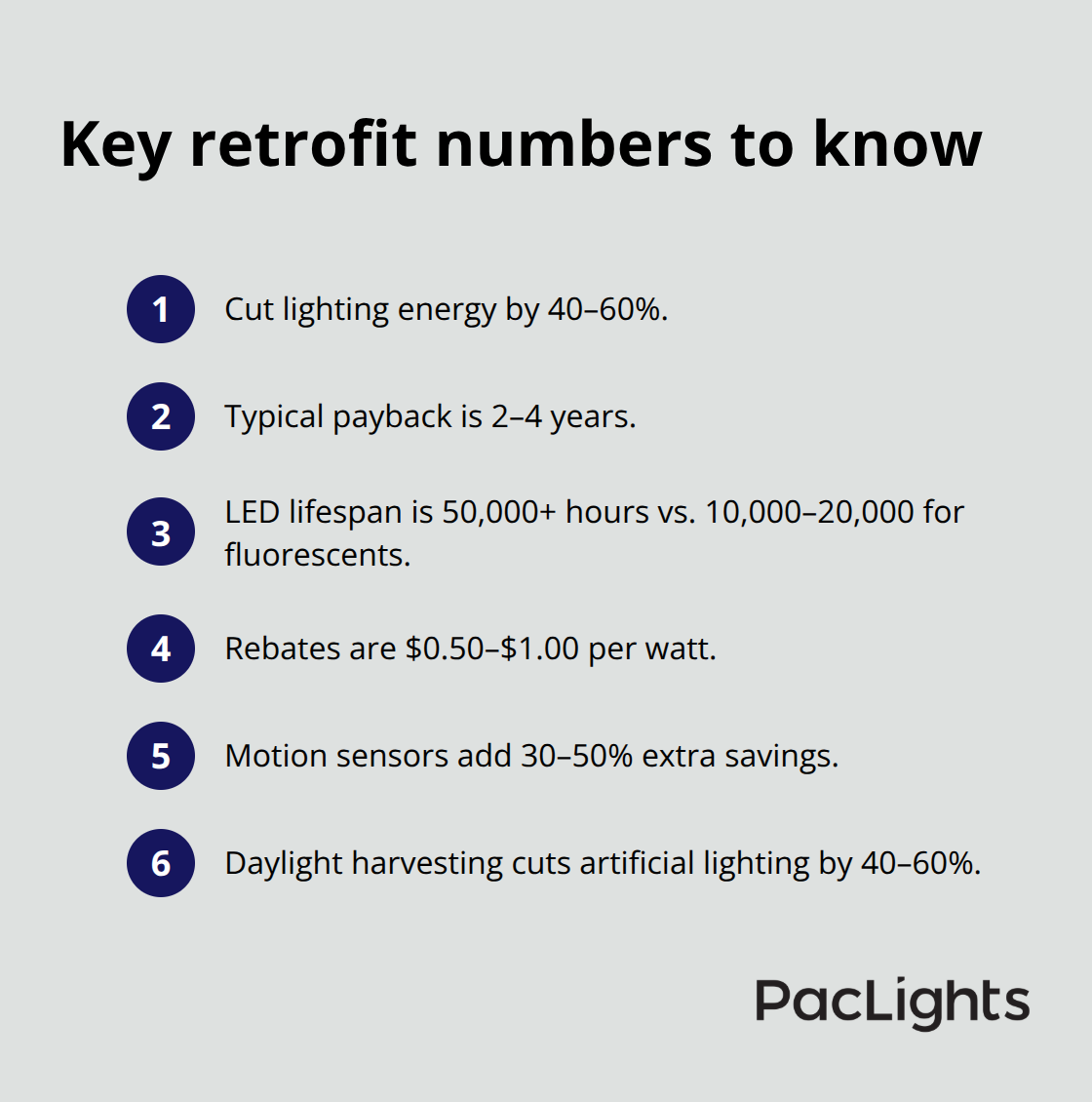
Data center lighting consumes 15–20% of total facility energy, yet most facilities still rely on outdated technology that generates excessive heat and drives up operating costs. At PacLights, we’ve helped hundreds of data centers cut lighting energy use by 40–60% through strategic retrofits.
This data center lighting retrofit guide walks you through assessing your current system, selecting the right LED solutions, and implementing changes with minimal downtime. The payback period typically ranges from 2–4 years, with additional benefits in cooling costs and equipment lifespan.
Why Modern Data Center Lighting Matters
Data centers globally consume between 1–2% of all electricity, and lighting accounts for 17–25% of that energy footprint. For a mid-sized facility around 5 MW, annual lighting costs typically run $200,000–$300,000 according to energy audits. The problem is stark: roughly 80% of data centers still operate with lighting over a decade old, using fluorescent or metal halide fixtures that are 3–4 times less efficient than modern LEDs. Fluorescent systems consume about 1.0–1.5 watts per square foot, while current LED technology uses just 0.1–0.3 watts per square foot. This difference translates to tens of thousands of dollars in unnecessary annual spending. Metal halide fixtures compound the issue by generating significant heat, which forces your cooling systems to work harder and drives up HVAC costs alongside the wasted lighting energy.
The Hidden Cost of Heat and Inefficiency
Older lighting technologies don’t just waste electricity-they actively damage your bottom line through excess heat generation. Metal halide and fluorescent fixtures create thermal load that your data center’s cooling infrastructure must counteract, sometimes increasing overall facility energy consumption by 10–15% beyond the lighting system itself. When you switch to LED, you eliminate that waste heat immediately. The total cost of ownership for LEDs has dropped dramatically, making payback typically 2–3 years despite any initial investment. LED fixtures last 50,000+ hours compared to 10,000–20,000 hours for fluorescents, meaning fewer service disruptions and lower maintenance labor costs. For facilities operating 24/7, this reliability directly protects uptime-your most valuable asset. A single unplanned outage costs far more than any retrofit investment, yet aging lighting systems increase that risk every year they remain in place.
What a Real Retrofit Delivers
LED retrofit projects cut data center lighting energy costs by 40–60% while helping meet sustainability regulations like LEED or ENERGY STAR certification, which can yield about 20–30% electricity savings compared to non-certified peers. Government rebates commonly range from $0.50–$1.00 per watt, significantly improving project economics. After retrofit, mid-sized facilities typically see 50–80% energy reductions and $100,000–$180,000 in annual savings. Direct-replacement LED tubes that work with existing ballasts can cut energy use by 50–80% versus fluorescents, and wireless controls avoid costly rewiring. The numbers don’t lie: a phased retrofit starting with high-traffic areas shows quick wins within 6–12 months, justifying broader rollout and giving leadership confidence to proceed with full modernization.
Moving Forward with Assessment
These savings and reliability gains depend on understanding what you currently have in place. The next section walks you through assessing your existing lighting infrastructure, identifying inefficiencies specific to your facility, and selecting LED solutions that match your server rooms, corridors, and operational needs.
Planning Your Data Center Lighting Retrofit
Conduct a Thorough Lighting Audit First
Start with a lighting audit before spending a dollar on new fixtures. A proper audit takes 2–3 days for a mid-sized facility and establishes your baseline energy use, identifies underperforming zones, and maps out exactly where LED replacements will deliver the fastest payback. Measure power consumption in each area with a power meter, document fixture types and ages, and photograph layouts so you have a clear record of what exists today. Most facilities discover that server halls consume far more lighting energy than necessary because fixtures were oversized decades ago or installed without any controls. Corridors and equipment rooms often have motion sensors that are either broken or set to stay on permanently, wasting thousands annually. Back-of-house areas like storage and cable runs typically have no controls at all. This baseline data becomes your ammunition when justifying the retrofit to leadership and when calculating actual ROI later. Without it, you’re guessing.
Match LED Solutions to Your Actual Space Requirements
Once you have audit data, select LED solutions based on actual space requirements, not generic recommendations. Server halls with 15–25 foot ceilings benefit from high-bay LED fixtures that deliver 150–300 lux in aisles, which is precisely what technicians need to identify equipment and spot problems without eye strain. Try cooler color temperatures like 4000K–5000K in these zones to enhance alertness during maintenance work. Linear LED strips and troffers work better in corridors and equipment rooms where ceiling heights are lower and uniformity matters more than peak brightness. Reserve warmer 3000K color temperatures for break areas and monitoring stations to reduce eye fatigue during long shifts. Direct-replacement LED tubes that work with your existing ballasts can cut energy use by 50–80% compared to fluorescents and cost far less than rewiring entire circuits. This approach lets you start retrofitting immediately without major infrastructure changes.
Add Controls and Monitoring to Maximize Savings
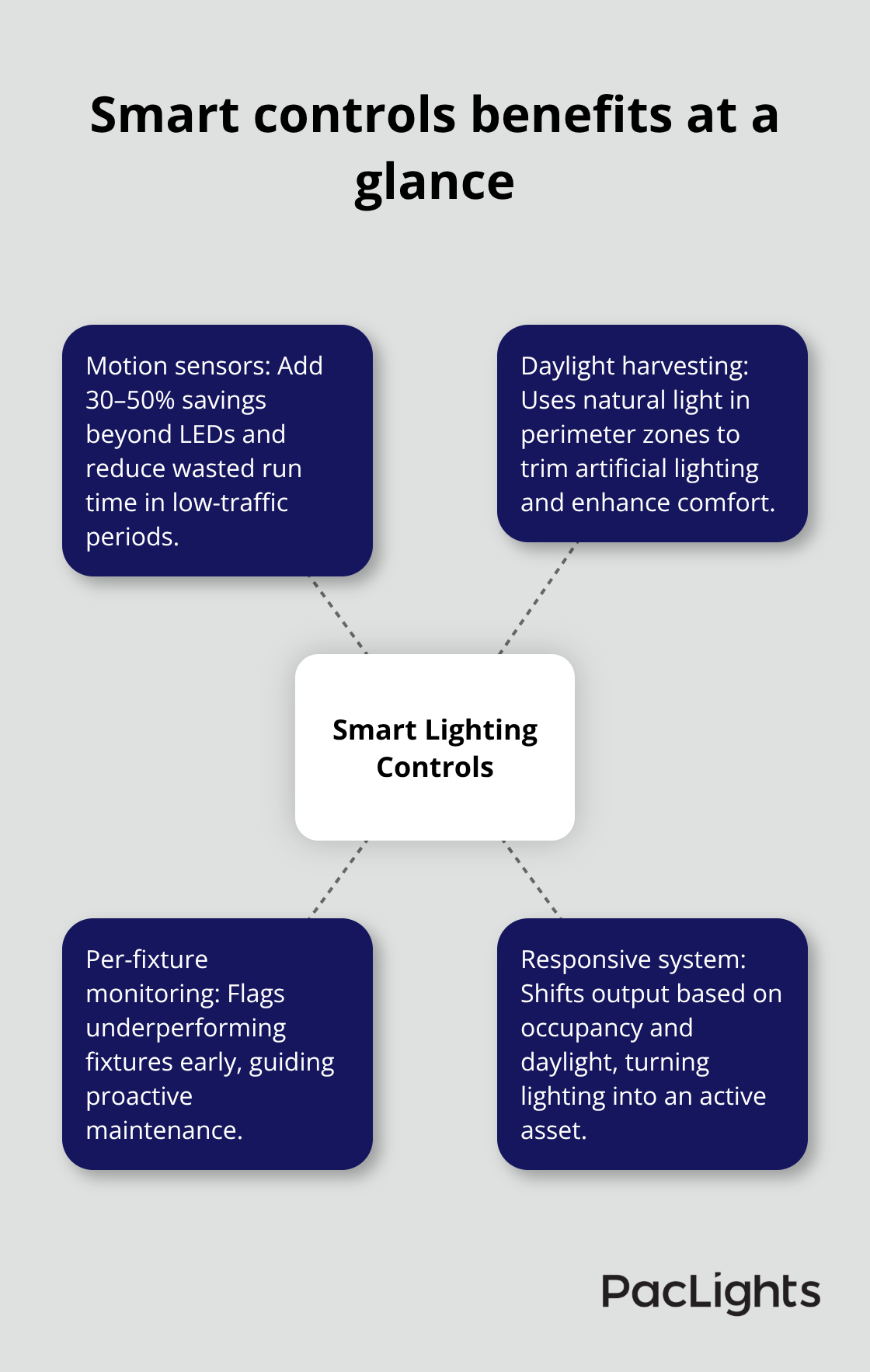
Motion sensors add an extra 30–50% energy savings beyond LEDs alone, and daylight harvesting in perimeter zones near windows or skylights captures free illumination during business hours. Install per-fixture power monitoring if your budget allows it, because identifying which specific fixtures underperform helps prioritize maintenance before failures create dark zones. These controls transform your lighting system from a static installation into an active asset that responds to actual occupancy and natural light conditions.
Calculate Payback and Plan Your Phased Approach
Calculate payback by dividing your total project cost by annual energy savings. Government rebates ranging from $0.50–$1.00 per watt often reduce net investment by 30–50%, which shrinks your payback period from 2–3 years down to 18–24 months in many cases. A phased approach starting with high-traffic areas demonstrates quick wins within 6–12 months, giving you data to justify expanding the retrofit across the entire facility. These early results build internal support and provide real numbers to present to stakeholders. With your audit complete, LED selections finalized, and controls planned, you’re ready to move into the implementation phase-where timing, coordination, and minimizing downtime become your primary concerns.
Implementation and Optimization of LED Retrofit
Install LED Fixtures During Low-Traffic Windows
The installation phase separates successful retrofits from projects that damage relationships with operations teams. Most data centers cannot tolerate extended downtime, which means your retrofit strategy must work around 24/7 operations. Divide your facility into zones and retrofit one zone every 1–2 weeks during low-traffic periods, typically between 2 AM and 6 AM on weekdays. This phased approach keeps server rooms operational while technicians remove old fixtures, install LED replacements, and test circuits thoroughly. Schedule work during maintenance windows your operations team already blocks off for other upgrades. Add 20–30% extra time to your estimates because unexpected ballast failures, corroded wiring, or missing junction box covers will surface during teardown. When you encounter old metal halide fixtures in high-bay areas, assign two technicians per fixture: one to handle the fixture itself and another to manage electrical disconnection and safety protocols. High-bay LED fixtures typically weigh 5–15 pounds less than their metal halide predecessors, so mounting hardware may need adjustment. Test every circuit after installation before energizing the zone, and keep your operations team informed of progress every morning so they understand what has been completed and what remains.
Configure Motion Sensors and Daylight Controls
Smart controls transform your retrofit from a simple fixture swap into an energy-optimization system that continues saving money long after installation ends. Motion sensors in corridors and equipment rooms should activate lights at 100% brightness when movement is detected, then dim to 30–40% after 10 minutes of no activity. This prevents the annoying on-off-on cycling that frustrates technicians while capturing the 30–50% energy savings sensors provide. Daylight harvesting in perimeter offices and monitoring stations harvests natural light during daylight hours, reducing artificial lighting by 40–60% in those zones. Set your daylight sensors to reduce artificial light proportionally as natural light increases, not as an all-or-nothing switch. Install per-fixture power monitoring on at least your high-bay and linear strip fixtures so you can track individual performance and identify failures before they create dark zones.
Monitor Performance and Fine-Tune Settings
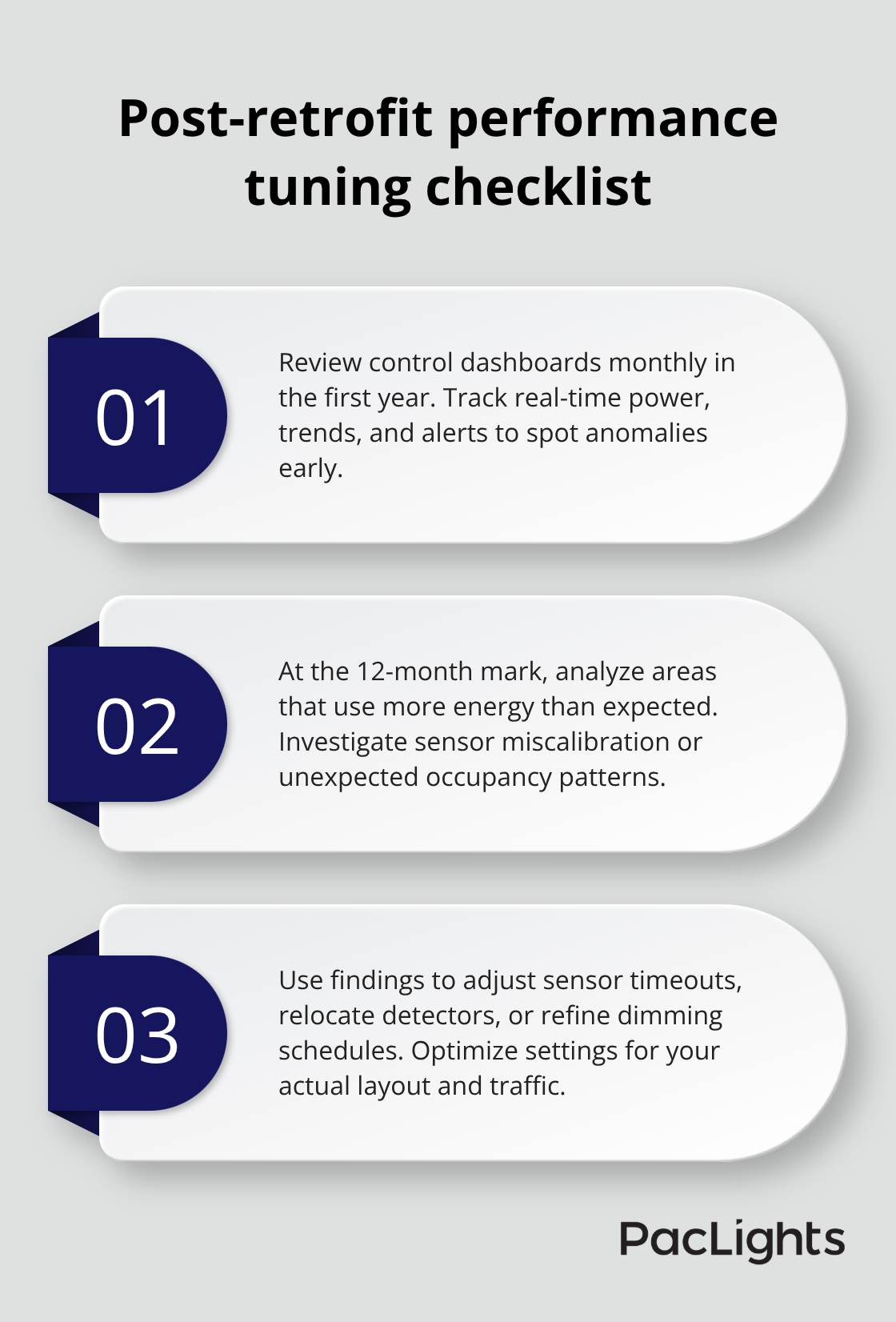
Most networked lighting controls provide dashboards showing real-time power consumption, historical trends, and maintenance alerts. Review this data monthly during your first year post-retrofit to catch any underperforming fixtures and confirm that sensors function correctly. After 12 months, your control system should reveal which areas consume more energy than expected, signaling either sensor miscalibration or usage patterns that differ from your initial assumptions. This feedback loop allows you to adjust sensor settings, relocate motion detectors, or modify dimming schedules based on actual occupancy rather than guesswork. Your facility’s specific layout, traffic patterns, and operational schedules determine optimal control settings, so generic factory defaults will never maximize your savings. Commissioning your system properly takes 2–4 weeks of fine-tuning after installation completes.
Final Thoughts
Modern data center lighting retrofits deliver three measurable outcomes that justify the investment immediately. Your facility cuts energy consumption by 40–60%, translating directly to $100,000–$180,000 in annual savings for mid-sized operations. You also eliminate the heat burden that older fixtures impose on your cooling infrastructure, reducing HVAC strain and extending equipment lifespan while gaining operational reliability through LED longevity and networked monitoring that catches failures before they create dark zones.
Data centers globally consume 1–2% of all electricity, and lighting represents 17–25% of that footprint. When you retrofit your lighting system, you reduce grid demand and lower your carbon footprint proportionally. LEED and ENERGY STAR certifications recognize these improvements, positioning your facility as a responsible operator in an industry under increasing scrutiny for energy consumption.
Government rebates of $0.50–$1.00 per watt reduce your net investment by 30–50%, shrinking payback periods to 18–24 months in many cases. After payback, every dollar saved flows directly to your bottom line for the next 15–20 years as LED fixtures maintain performance with minimal maintenance. Contact PacLights for a free ROI assessment and lighting layout design tailored to your specific facility, and we’ll help you transform your system into an active asset rather than a static installation.
Disclaimer: PacLights is not responsible for any actions taken based on the suggestions and information provided in this article, and readers should consult local building and electrical codes for proper guidance.