

Commercial spaces demand lighting that performs without compromise. Wafer downlights deliver exactly that-a compact, efficient solution that cuts energy costs while improving how your ceiling looks.
At PacLights, we’ve seen firsthand how wafer downlight benefits extend far beyond simple illumination. This guide walks you through everything you need to know about making the switch.
What Wafer Downlights Actually Are
The Core Design and Installation Advantage
Wafer downlights are ultra-thin, single-unit LED fixtures that mount flush against your ceiling with virtually no protrusion. Unlike traditional recessed can lights that require a housing installed between ceiling joists before drywall goes up, wafer downlights connect directly to electrical wiring without needing a separate electrical box. This design fundamentally changes how you approach ceiling installation. The fixture itself contains the LED, power management circuitry, and all necessary components in one thin panel, typically measuring less than two inches deep. Installation happens after drywall is already in place, which makes retrofitting existing commercial spaces far simpler than ripping open ceilings to install traditional housings. For facilities with limited plenum height or tight spacing constraints, wafers eliminate the headaches that plague standard recessed lighting projects.
Energy Performance and Lifespan
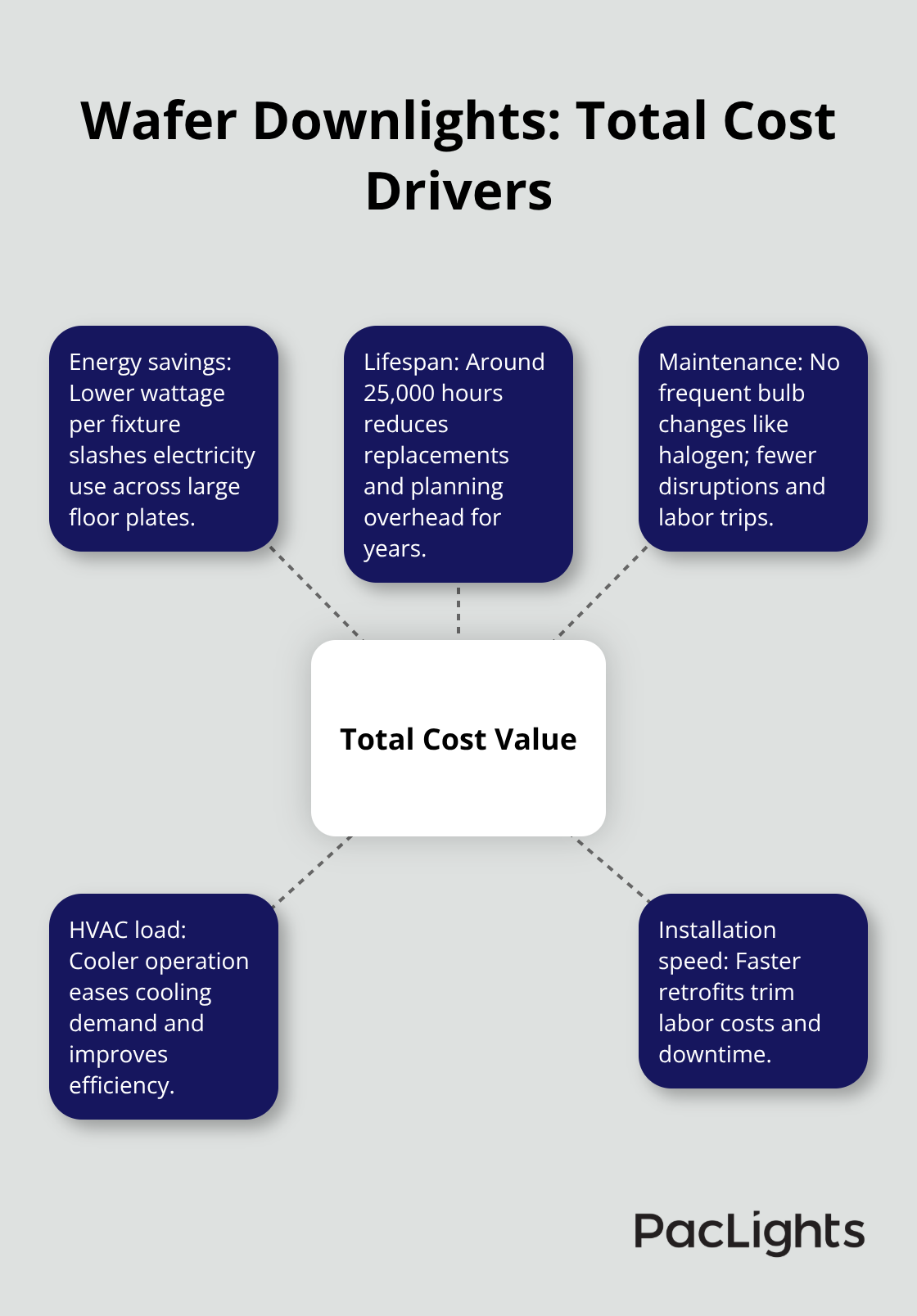
LED wafers consume significantly less power than incandescent or halogen alternatives, directly lowering your electricity bills. Lifespan typically reaches 25,000 hours or more, which translates to roughly 45 years with three hours of daily use, meaning you replace fixtures far less frequently than older technologies. This extended lifespan dramatically reduces your maintenance costs and operational disruptions over time. Wafers also run cooler than traditional fixtures because the thin semiconductor design minimizes heat escape through your ceiling, improving your HVAC efficiency and reducing overall facility cooling demands.
Light Quality and Visual Comfort
Light distribution from wafers is broad and diffuse, eliminating harsh shadows and hotspots that create visual discomfort in offices and retail environments. This uniform illumination reduces eye strain and fatigue, supporting worker productivity in manufacturing and quality-control areas where precision matters. The sleek, seamless aesthetic suits modern commercial spaces without visual clutter, and the minimal installation footprint reduces ceiling disruption during retrofits.
Total Cost Considerations
When comparing total cost of ownership, the higher upfront expense gets offset by energy savings and dramatically reduced maintenance over the fixture’s lifetime. The combination of lower electricity consumption, extended operational life, and minimal replacement frequency creates substantial financial advantages that compound year after year. These economics make wafer downlights particularly attractive for large-scale commercial deployments where energy and maintenance budgets represent significant operational expenses. Understanding how wafer downlights perform in specific commercial environments-from retail showrooms to manufacturing floors-requires examining their practical applications and optimal placement strategies.
Why Wafer Downlights Slash Your Operating Budget
The Math Behind Energy Savings
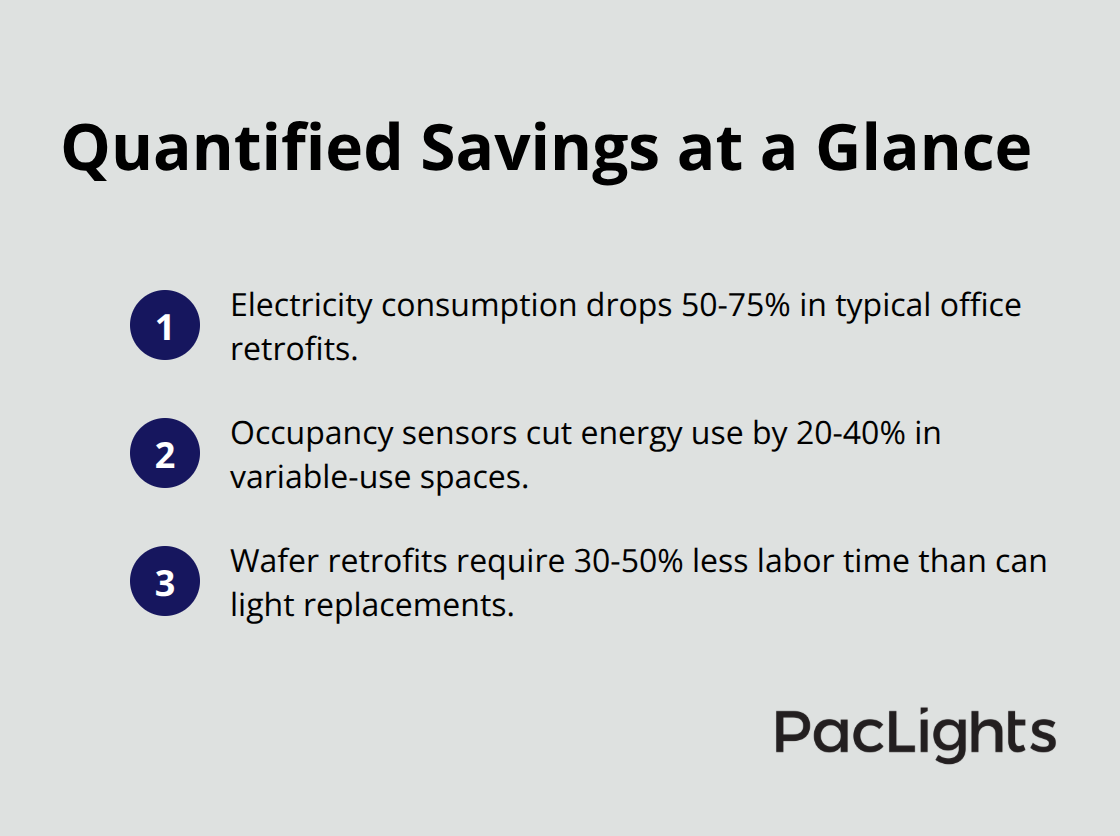
A typical office space retrofitted with LED wafer downlights sees electricity consumption drop by 50-75% compared to older incandescent or halogen recessed lighting. For a 10,000-square-foot commercial facility running standard lighting 12 hours daily, switching to wafer downlights saves between $3,000 and $8,000 annually depending on local energy rates and baseline fixture types. Traditional can lights with incandescent bulbs draw 60-75 watts per fixture, while LED wafers typically consume 10-15 watts for equivalent brightness.
That difference compounds fast. Over five years, those savings accumulate substantially, and the payback period for wafer installation usually falls between three and six years for most commercial applications.
Maintenance Costs Disappear
Maintenance expenses vanish almost entirely with wafer fixtures. A fixture rated for 25,000 hours of operation that runs eight hours daily lasts roughly eight years without replacement. Halogen recessed lights, by contrast, need bulb changes every 1,000-2,000 hours, which means recurring labor costs, inventory management headaches, and operational disruptions from maintenance crews accessing your ceiling. Wafers eliminate all of that. Your facility stops paying for frequent bulb replacements and the labor that comes with them.
Thermal Efficiency Reduces HVAC Demands
Wafers generate minimal heat, reducing your HVAC load during cooling seasons. Facilities in warm climates see measurable reductions in air-conditioning costs because less energy escapes through the ceiling plane. This compounds the energy advantage beyond just the lighting circuit itself. The thermal efficiency gains matter as much as the direct electricity savings.
Aesthetics Strengthen the Financial Case
Wafer downlights eliminate the visual clutter of traditional can light trim rings and bulky housings, creating a seamless ceiling plane that enhances the perceived quality of your commercial space. This matters in retail environments where customer perception directly influences purchasing behavior and in office settings where employee satisfaction correlates with space quality. The modern, minimalist appearance signals professionalism and investment in facility standards without requiring costly architectural renovations.
Installation Speed Cuts Labor Costs
Retrofit installation proves faster and cheaper than traditional recessed lighting because wafers mount directly to existing drywall without requiring housing installation between joists or extensive ceiling modifications. Labor costs drop significantly, and your facility experiences minimal disruption during the changeover. The thin profile also works in spaces with tight clearances or structural constraints where standard can lights simply won’t fit, opening retrofit possibilities that were previously impossible. These financial advantages set the stage for understanding how wafer downlights perform across different commercial environments and how to position them for maximum impact.
Applications and Best Practices for Wafer Downlights
Optimal Placement Strategies for Different Commercial Environments
Placement strategy determines whether wafer downlights deliver their full potential or underperform in your space. Retail environments require different spacing than manufacturing floors, and office layouts demand precision that many facilities overlook. Start by measuring your ceiling height and calculating the spacing between fixtures based on your target illumination level, typically measured in foot-candles. For general office work, try 30-50 foot-candles on horizontal work surfaces. Retail display areas need 75-100 foot-candles to make products visually appealing, while warehouse picking zones require 20-30 foot-candles for safe navigation.
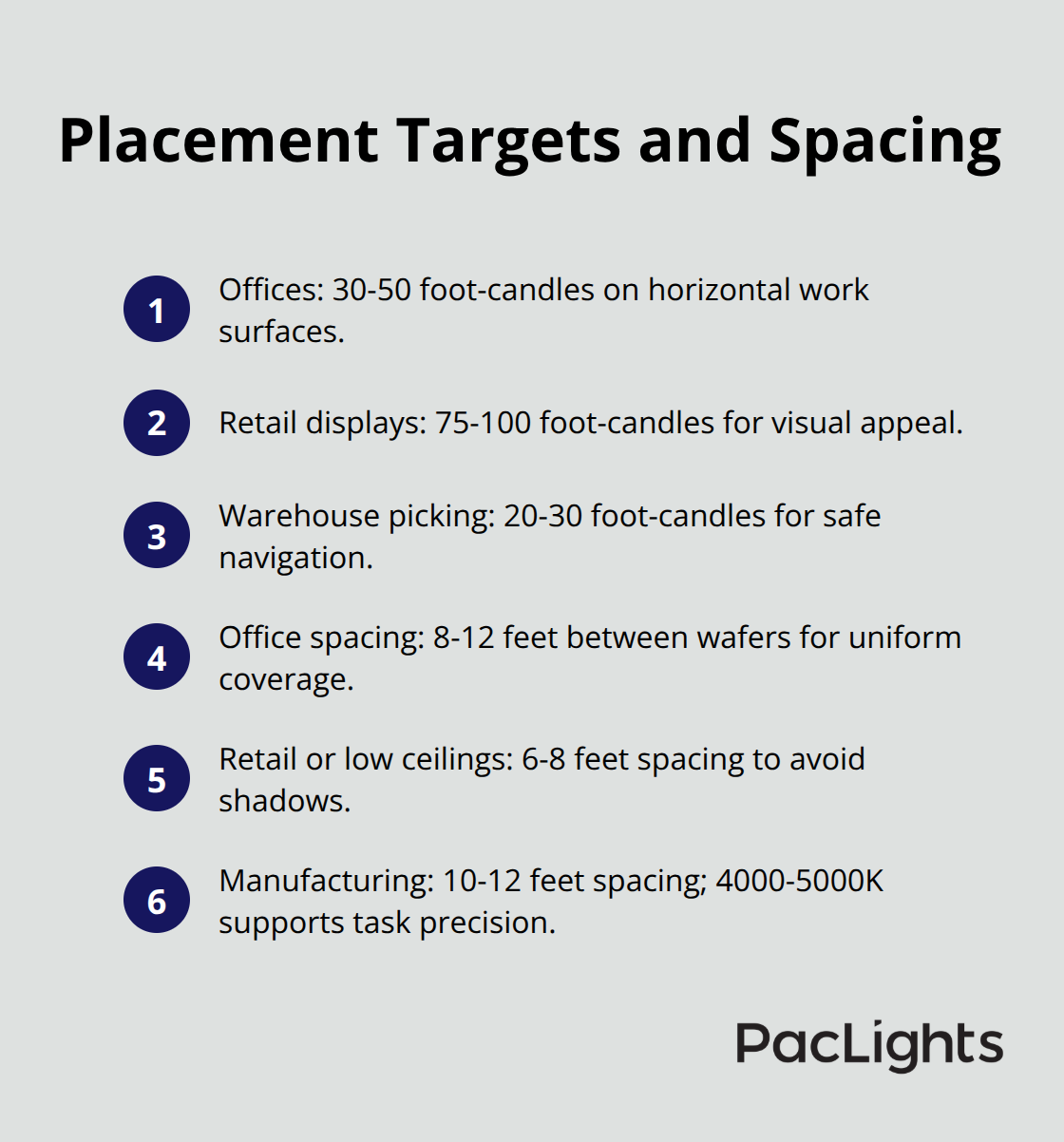
Space wafers roughly 8-12 feet apart in standard office settings to achieve uniform coverage without creating dark zones between fixtures. Closer spacing of 6-8 feet works better in retail environments where product visibility matters and in spaces with lower ceilings where wider spacing creates visible shadows. Manufacturing floors benefit from 10-12 foot spacing because the lower color temperature options available in wafer fixtures (around 4000-5000K) already support task precision without requiring excessive illumination density.
The critical mistake most facilities make is installing wafers on a grid pattern without considering actual work zones, resulting in bright areas above desks and darker corners near walls. Instead, focus placement on functional areas where employees spend time and where product displays sit. In retail, position wafers to highlight merchandise while avoiding glare on glass shelves and display cases. In offices, concentrate fixtures above work surfaces and meeting areas rather than spreading them evenly across the entire ceiling plane.
Integration with Lighting Control Systems
Lighting controls transform wafers from static fixtures into responsive systems that adapt to real occupancy and daylight conditions. Occupancy sensors cut energy consumption by 20-40% in spaces with variable usage patterns like conference rooms, break rooms, and storage areas. Daylight harvesting systems automatically dim artificial lighting when natural light from windows is sufficient, delivering additional savings in perimeter office zones and retail storefronts.
Pair occupancy sensors with dimming capabilities rather than simple on-off controls because dimming maintains visual comfort while maximizing energy reduction. Smart controls enable remote adjustments and programmable schedules that respond to your facility’s actual operational patterns. These systems work particularly well in commercial spaces where occupancy fluctuates throughout the day and across seasons.
Retrofitting Existing Spaces with Wafer Downlight Solutions
Retrofitting existing spaces with wafers becomes dramatically simpler than upgrading traditional can lighting because wafer fixtures require no housing installation between ceiling joists. Your electrician drills a small hole through existing drywall, runs wiring through the plenum space, and mounts the fixture directly to the drywall surface using a simple bracket. The entire process takes roughly 15-20 minutes per fixture compared to 45-60 minutes for traditional recessed can installation.
This speed advantage translates directly into lower labor costs and reduced facility disruption during business hours. For facilities with suspended drop ceilings, wafer installation becomes even faster because fixtures simply mount to the existing grid without requiring structural modifications. Budget roughly 30-50% less labor time for wafer retrofits compared to can light replacements in the same space.
Plan your retrofit in phases if your facility operates continuously, starting with low-traffic areas like hallways and storage zones before moving to customer-facing or production areas. This approach minimizes operational disruption while allowing your team to verify performance and make adjustments before full-scale deployment. Optimal fixture placement and spacing ensures you maximize both performance and cost savings before installation begins.
Final Thoughts
Wafer downlight benefits extend far beyond initial installation savings. Your commercial facility gains a lighting system that operates with minimal intervention, delivers consistent performance across years of service, and generates measurable financial returns that compound annually. The combination of 50-75% energy reductions, virtually eliminated maintenance costs, and extended fixture lifespans creates a financial case that justifies the upfront investment within three to six years for most facilities.
Sustainability matters increasingly to tenants, customers, and regulatory bodies. Wafer downlights lower your carbon footprint through reduced electricity consumption while supporting green building certifications that enhance property value and appeal. The long operational life means fewer fixtures end up in landfills, and the energy savings accumulate to thousands of tons of avoided emissions over a decade of operation.
Your facility’s specific needs determine the optimal wafer downlight strategy. Retail spaces benefit from the aesthetic advantages and product visibility that wafers provide, while manufacturing floors gain from uniform illumination that supports precision work and office environments see productivity improvements from reduced eye strain. Start by assessing your current lighting performance and energy consumption, then contact PacLights to evaluate your specific situation with a free lighting layout design and ROI assessment.
Disclaimer: PacLights is not responsible for any actions taken based on the suggestions and information provided in this article, and readers should consult local building and electrical codes for proper guidance.