

Linear lighting design transforms modern spaces through strategic placement of continuous light sources. This approach creates seamless illumination that enhances both functionality and aesthetics.
We at PacLights see businesses struggling with outdated lighting that wastes energy and creates uneven coverage. The right linear lighting system solves these problems while reducing operational costs by up to 60%.
This guide covers everything from fixture selection to installation best practices for your next lighting project.
What Makes Linear Lighting Systems Work
Linear lighting systems consist of LED modules housed within aluminum profiles that create continuous lines of light. These systems use specialized connectors to link segments together, which forms seamless illumination across any length. The aluminum alloy 6063-T5 profiles provide excellent heat dissipation while they maintain structural integrity.
High-quality LED chips with CRI ratings above 90 deliver accurate color representation that traditional fluorescent systems cannot match.
System Components and Performance Standards
The most effective linear systems maintain color consistency with SDCM values below 3, which prevents visible color variations between segments. Driver placement significantly impacts performance – integral drivers offer compact installations while remote drivers provide better heat management for longer runs. Voltage drop becomes problematic in runs that exceed 20 feet without multiple feed points. Smart plans prevent these issues and maintain uniform brightness throughout the installation.
Fixture Types for Specific Applications
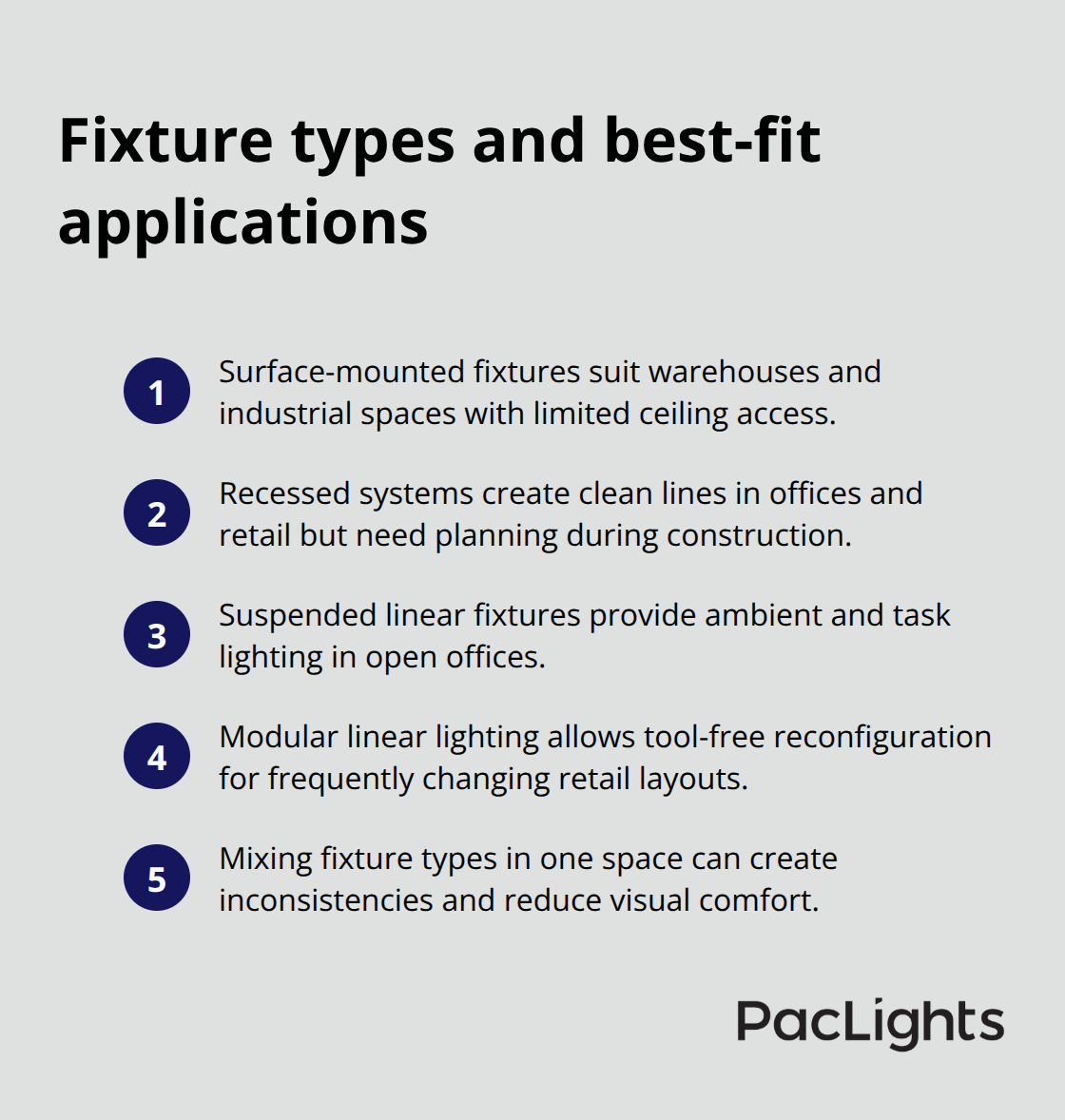
Surface-mounted fixtures work best for warehouses and industrial spaces where ceiling access is limited. Recessed systems create clean lines in offices and retail environments but require proper plans during construction. Suspended linear fixtures provide both ambient and task light in open office layouts. Modular linear lighting systems allow repositions without tools, which makes them ideal for retail spaces that frequently change layouts. Each type serves distinct purposes, and mixed types within one space often create inconsistencies that reduce visual comfort.
Space Plans and Technical Requirements
Linear systems require detailed shop drawings before installation to avoid costly mistakes. Plan for 30-50 foot-candles in office environments and 20-30 foot-candles in corridors. Industrial spaces need 50-100 foot-candles (depending on task requirements). Consider ceiling height, beam spread, and mount options during the design phase. Proper space between parallel runs should equal 1.5 times the mount height to prevent shadows and hot spots.
These technical foundations set the stage for strategic implementation across different commercial environments, where each space type demands specific approaches to maximize both performance and visual appeal.
Design Strategies for Different Space Types
Office environments demand suspended linear systems positioned 8-10 feet above workstations to minimize glare while providing 30-50 foot-candles at desk level. The Lighting Research Center found that proper linear lighting improves concentration and productivity by 15% compared to traditional fluorescent systems. Place continuous runs parallel to workstation layouts rather than perpendicular to avoid shadows on computer screens. Open offices benefit from 4-foot linear fixtures with 4000K color temperature and controls that adjust throughout the day. Private offices need 2-foot fixtures with 3000K warmer light to create comfortable spaces for meetings.
Retail Environments Require Strategic Accent Placement
Retail environments require 50-75 foot-candles for general merchandise areas with accent systems that reach 150-200 foot-candles on featured displays. Position linear track systems 12-16 feet from walls to create even wash effects that eliminate harsh shadows on products. Clothing retailers should use 3000K-3500K color temperature with CRI values above 90 to show accurate fabric colors. Grocery stores need different approaches – 4000K-5000K linear systems in produce sections make fruits and vegetables appear fresh while bakery areas benefit from warmer 3000K options. Modular systems work best because retailers change layouts frequently, and fixed installations create expensive renovation costs.
Industrial Facilities Demand High-Performance Solutions
Warehouses and production spaces require 50-100 foot-candles (with assembly areas at the higher end of this range). Mount linear high-bay fixtures 20-40 feet high with 120-degree beam angles to minimize fixture count while maintaining uniform coverage. The U.S. Department of Energy reports that LED linear systems reduce industrial energy consumption by 75% compared to metal halide fixtures. Install fixtures in continuous rows aligned with aisle ways to maximize light utilization and minimize dark spots between storage racks.
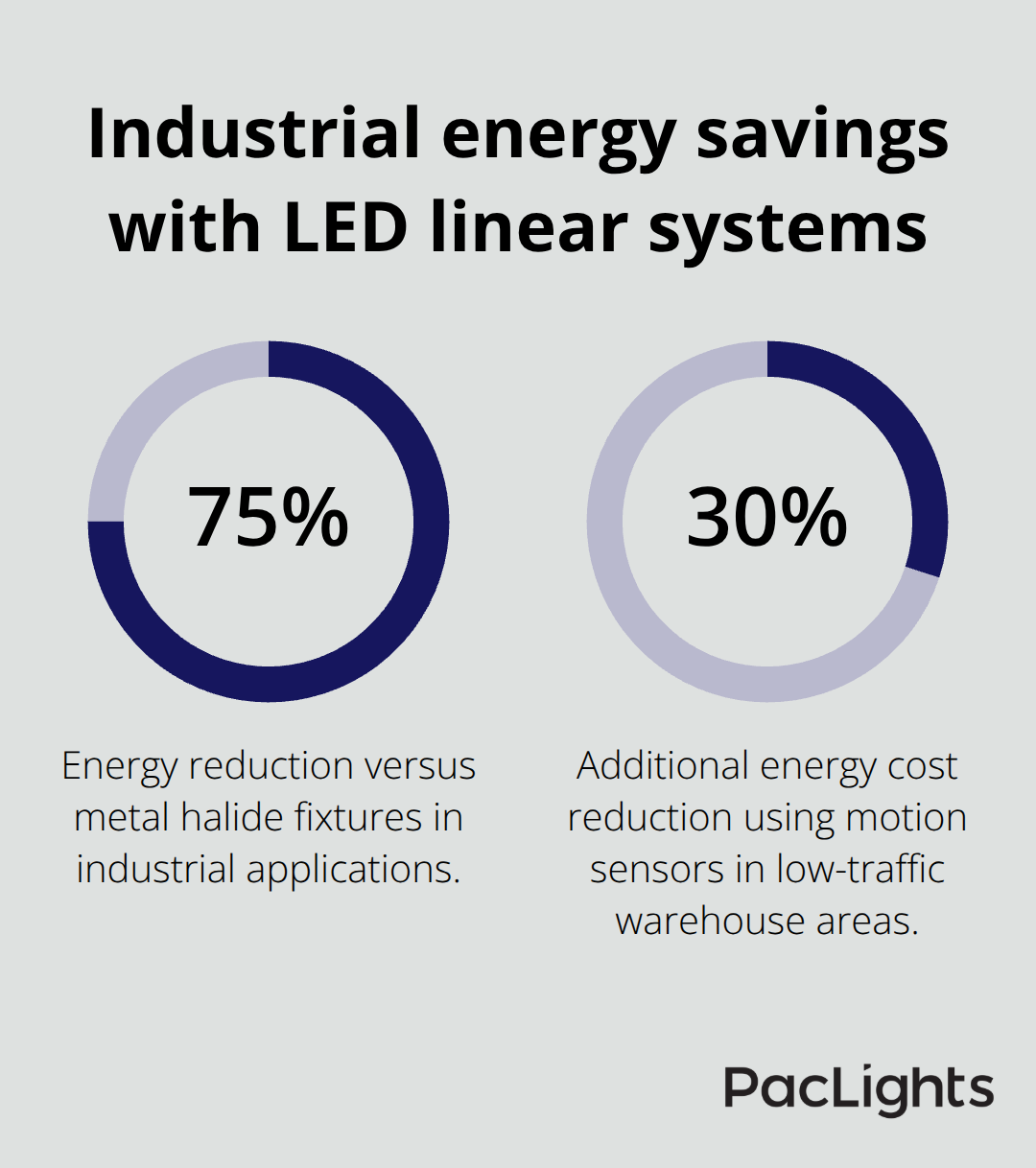
Motion sensors paired with linear systems reduce energy costs by an additional 30% in low-traffic warehouse areas.
Healthcare and Educational Spaces Need Specialized Approaches
Healthcare facilities require 50-100 foot-candles in patient rooms with tunable white systems that adjust from 2700K to 6500K throughout the day. Corridors need 20-30 foot-candles with emergency backup systems that activate during power outages. Educational spaces benefit from 30-50 foot-candles at desk level with glare-free distribution that prevents eye strain during extended reading periods. Classrooms with interactive whiteboards need asymmetric beam patterns that illuminate the board without creating hot spots or reflections.
These space-specific strategies form the foundation for successful installations, but proper implementation requires attention to technical details and performance standards that separate professional results from amateur attempts.
Implementation Best Practices
Professional installations start with precise measurements and detailed electrical plans that account for voltage drop calculations across each run. Install fixtures 16 inches on center for uniform light distribution. Maintain minimum 6-inch clearances from HVAC equipment to prevent heat interference. Use junction boxes rated for the specific voltage and amperage of your system – most linear LED installations require 20-amp circuits with THWN-2 wire rated for 90°C operation. Mount drivers in accessible locations with adequate ventilation, and keep them at least 3 feet from heat sources. Test each segment before final connection to prevent troubleshooting entire runs later.
Smart Controls Maximize Energy Savings
Daylight harvesting systems paired with linear fixtures reduce energy consumption by 40% in perimeter zones according to the International Energy Agency. Install photosensors 6-8 feet from windows and program them to maintain 30-50 foot-candles regardless of natural light levels. Occupancy sensors should have 15-20 foot detection ranges for open offices and 10-foot ranges for private spaces.

Networked control systems allow zone-based scheduling that turns off fixtures in unused areas automatically. Set automatic dimming schedules that reduce light levels by 20% during cleaning hours and lunch breaks. These controls pay for themselves within 18 months through reduced energy costs.
Installation Guidelines and Technical Requirements
Position linear fixtures parallel to primary work areas to minimize shadows and glare. Space parallel runs at distances equal to 1.5 times the mounting height to prevent hot spots. Connect segments with high-quality connectors that maintain electrical continuity and prevent light leaks between modules. Plan multiple power feed points for runs longer than 20 feet to prevent voltage drop issues. Use proper wire management systems that allow access for maintenance while protecting connections from dust and moisture. Install emergency backup systems in critical areas (such as exit corridors and stairwells) to meet building codes.
Preventive Maintenance Extends System Life
Clean aluminum housings every 6 months with mild detergent and soft brushes to maintain heat dissipation efficiency. Replace failed LED modules immediately because voltage redistribution to remaining modules accelerates degradation across the entire fixture. Check driver connections annually and tighten any loose terminals that create resistance and heat buildup. Monitor light output with a calibrated meter every 2 years – output below 85% of initial levels indicates module replacement needs. Keep spare drivers and LED modules in inventory because emergency replacements cost 3 times more than planned maintenance purchases. Document all maintenance activities with dates and part numbers to track performance trends and warranty claims.
Final Thoughts
Linear lighting design success depends on how well you match fixture types to specific space requirements while you maintain proper technical specifications. Surface-mounted systems work best for industrial applications, recessed fixtures create clean office aesthetics, and suspended options provide flexible workspace illumination. Professional installations require detailed electrical plans, precise space calculations, and smart control integration to achieve optimal performance.
The benefits extend beyond aesthetics into measurable business improvements. Businesses report 60% reductions in operational costs through LED efficiency gains, while proper linear systems improve worker productivity by 15% compared to traditional fluorescent options. Smart controls with daylight harvesting add another 40% energy savings in perimeter zones (particularly valuable for buildings with extensive window coverage).
Your next step involves partnering with experienced professionals who understand both technical requirements and design principles. We at PacLights provide comprehensive linear solutions with layout designs and ROI assessments that demonstrate projected savings before installation begins. Start your project with proper plans, quality components, and professional installation to achieve the full benefits of modern linear technology.
Disclaimer: PacLights is not responsible for any actions taken based on the suggestions and information provided in this article, and readers should consult local building and electrical codes for proper guidance.