

Office lighting has evolved dramatically over the past decade. Traditional fluorescent fixtures are giving way to more sophisticated solutions that balance performance with aesthetics.
Linear recessed lighting has emerged as the preferred choice for modern workspaces. We at PacLights see this trend accelerating as companies prioritize both employee comfort and energy efficiency in their lighting decisions.
What Makes Linear Recessed Lighting Worth the Investment
Energy Performance That Actually Delivers
Linear recessed LED fixtures achieve 100-130 lumens per watt compared to fluorescent systems at just 60-80 lumens per watt. The University of Michigan found LED lights operate 44% more efficiently than traditional 4-foot fluorescent tubes. With lights consuming 11% of commercial building electricity (according to the U.S. Department of Energy), this efficiency translates to real savings.
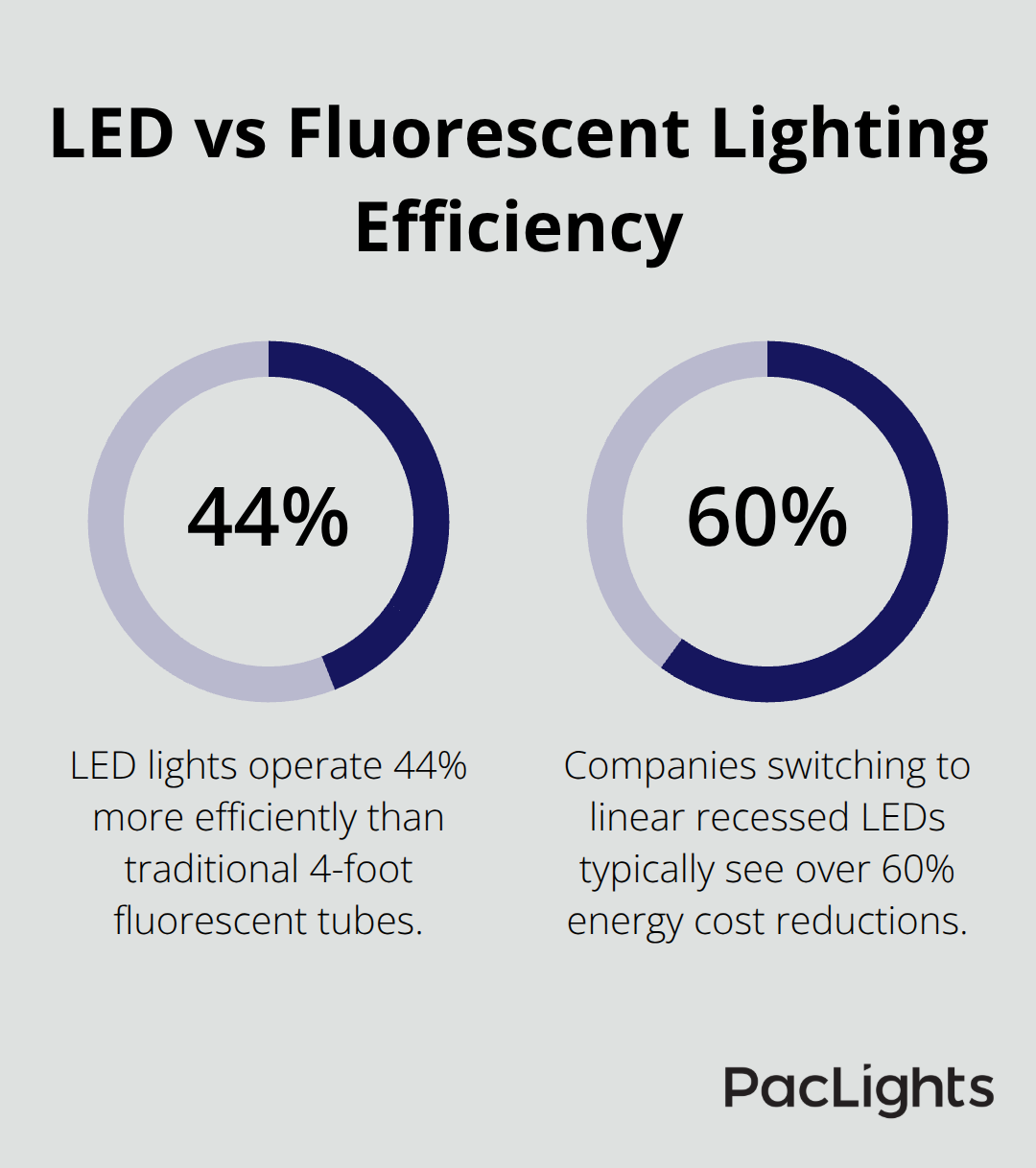
Companies that switch to linear recessed LEDs typically see energy cost reductions that exceed 60%. These fixtures last over 50,000 hours, far beyond traditional options. Motion sensors integrated with these systems activate lights only in occupied spaces, which maximizes energy savings during off-hours and weekends.
Visual Comfort That Reduces Eye Strain
Linear recessed fixtures with UGR ratings below 19 eliminate the glare problems that affect over 70% of office workers who spend 6-8 hours daily under poor lights. These fixtures deliver uniform illumination across wide spaces with fewer units than traditional options, which creates seamless light distribution without dark spots or harsh contrasts.
The recessed installation disappears into ceiling lines and makes spaces appear larger while it supports modern architectural features. Color temperatures around 4000K maintain employee alertness, while high CRI ratings above 80 render colors accurately for design work.
Smart Controls That Adapt to Work Patterns
Smart control systems with DALI or 0-10V dimming adjust throughout the day and support circadian rhythms while they reduce eye strain from computer screens. These systems allow facility managers to program different light levels for various work scenarios (meetings, focused work, or collaborative sessions).
The integration of daylight sensors automatically adjusts artificial light levels based on natural light availability. This feature prevents over-illumination during bright days and maintains consistent light levels during cloudy conditions. These advanced controls set the foundation for understanding how linear recessed lights compare against other office options.
What Features Should Drive Your Linear Recessed Lighting Choice
Advanced Dimming Systems Transform Workplace Productivity
DALI and 0-10V dimming systems represent the gold standard for office linear recessed fixtures. DALI systems allow individual fixture control across 64 devices per line, while 0-10V provides reliable analog dimming at lower costs. Research from HOK shows workers who control their lighting report higher perceived productivity compared to those with fixed lighting levels.
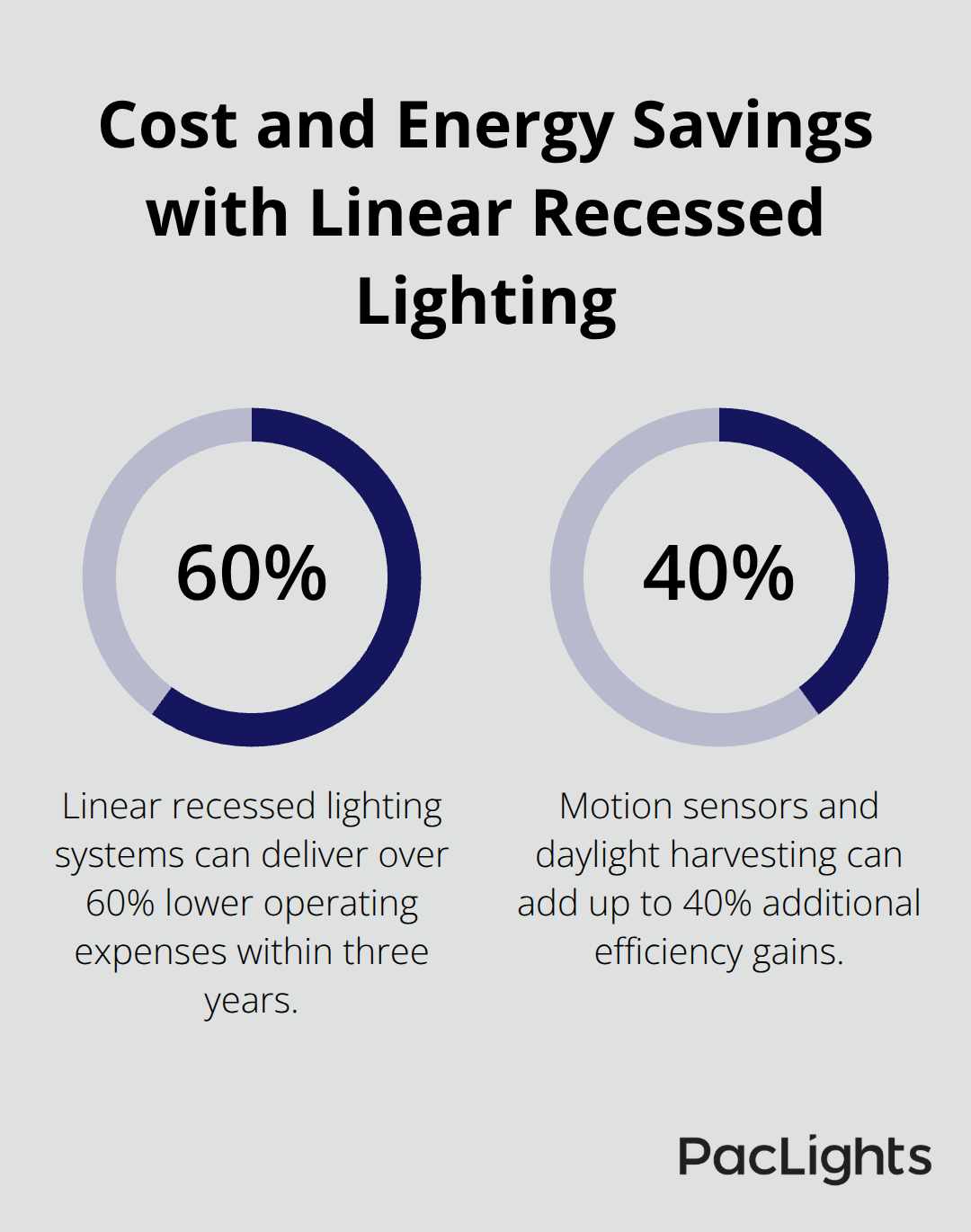
Daylight harvesting sensors automatically adjust artificial light output based on available natural light, which can reduce energy consumption by 20-40% in perimeter offices. Motion sensors with dual-technology detection prevent false triggers and maintain consistent lighting in occupied spaces. Smart scheduling reduces energy waste during nights and weekends (with some facilities achieving 30% additional savings through automated controls).
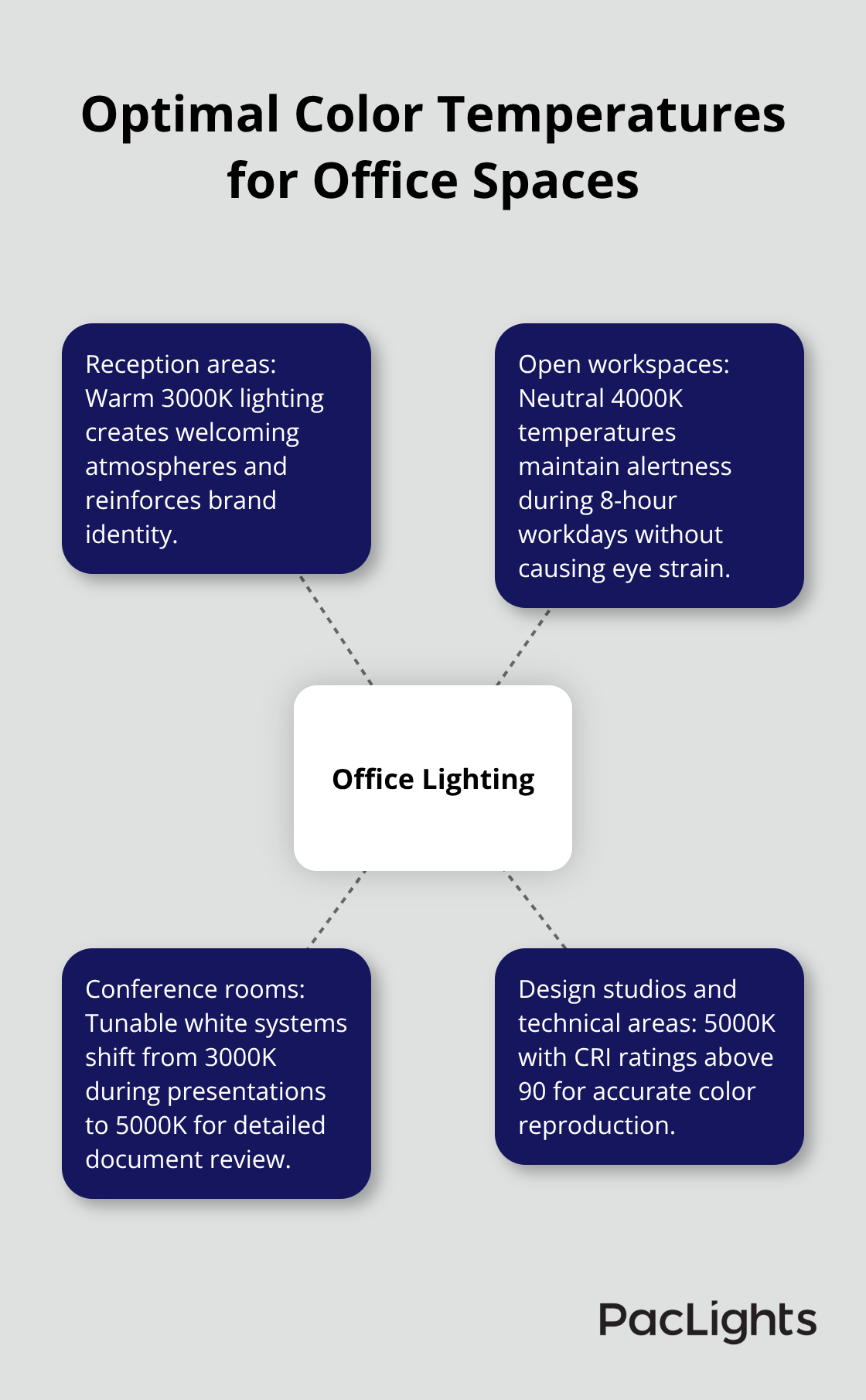
Color Temperature Zones Optimize Different Work Functions
Reception areas perform best with warm 3000K lighting that creates welcoming atmospheres and reinforces brand identity. Open workspaces require neutral 4000K temperatures to maintain alertness during 8-hour workdays without causing eye strain. Conference rooms benefit from tunable white systems that shift from 3000K during presentations to 5000K for detailed document review.
Design studios and technical areas demand 5000K with CRI ratings above 90 for accurate color reproduction. The wrong color temperature costs productivity – studies show 3000K lighting in focus-intensive work areas reduces performance by 15% compared to optimal 4000K settings. Circadian lighting systems that gradually shift from cool morning light to warmer evening tones support natural sleep patterns and reduce afternoon fatigue.
Installation Methods Impact Long-Term Performance
Type B direct-wire installations eliminate ballast compatibility issues and provide the lowest long-term operating costs, though they require higher upfront electrical work. Hybrid Type AB fixtures offer installation flexibility with existing infrastructure while they maintain upgrade paths for future improvements. Modular designs with replaceable LED modules reduce maintenance costs over 50,000-hour lifespans compared to integrated non-serviceable units.
Ceiling grid compatibility determines installation complexity and final appearance. Standard T-bar systems accommodate most linear recessed fixtures, while hard ceilings require precise cutting and structural considerations. Access above ceiling lines affects maintenance schedules – fixtures in inaccessible locations should feature extended warranties and proven reliability records to minimize service calls.
These technical specifications matter most when you compare linear recessed options against traditional office lighting alternatives (which often fall short in multiple performance categories).
How Linear Recessed Lighting Outperforms Traditional Office Options
Fluorescent Systems Fall Behind in Every Category
Traditional fluorescent fixtures deliver inferior performance compared to linear recessed LED systems across all metrics. The U.S. Department of Energy confirms LED systems operate 25% more efficiently than fluorescent alternatives, while the University of Michigan study demonstrates LEDs achieve 44% better efficiency than 4-foot fluorescent tubes. Fluorescent systems flicker at 120Hz and cause eye strain plus headaches for workers during extended periods. Linear recessed LEDs provide flicker-free illumination that eliminates these health concerns.
Mercury content in fluorescent tubes creates disposal hazards and safety concerns that LEDs eliminate entirely. Maintenance costs favor linear recessed systems significantly – fluorescent ballasts fail every 2-3 years while LED drivers last over 50,000 hours. Workers report better focus and reduced fatigue under LED systems compared to the harsh, inconsistent light that fluorescent fixtures produce.
Track and Pendant Systems Create Workspace Problems
Track systems require multiple fixtures to achieve uniform coverage across open office areas, which increases installation complexity and energy consumption per square foot. These systems produce uneven light distribution with bright spots directly under fixtures and darker areas between them. Workers must adjust desk positions based on poor light placement rather than optimal workflow efficiency.
Pendant fixtures hang below ceiling lines and reduce usable vertical space while they create visual clutter that contradicts modern design principles. These suspended systems collect dust and require frequent maintenance compared to recessed alternatives that remain protected within ceiling cavities. Track and pendant options also limit furniture arrangement flexibility since desk placement depends on fixture locations rather than functional needs.
Cost Analysis Favors Linear Recessed Across All Office Sizes
Small offices under 2,000 square feet benefit most from direct-wire linear recessed installations that eliminate ballast replacement costs over 10-year periods. These systems deliver immediate energy savings and require minimal ongoing maintenance compared to traditional options that demand regular component replacements.
Medium offices between 2,000-10,000 square feet achieve optimal returns with hybrid systems that work with current infrastructure during phased upgrades. Large facilities above 10,000 square feet maximize savings through networked systems that provide zone control and energy monitoring capabilities (with some achieving 30% additional savings through automated controls).
Installation costs for linear recessed systems range 15-25% higher initially but deliver 60% lower operating expenses within three years. Energy consumption drops significantly while maintenance requirements virtually disappear, creating substantial long-term value that traditional systems cannot match.
Final Thoughts
Linear recessed lighting delivers measurable advantages that traditional office systems cannot match. The 44% efficiency improvement over fluorescent systems creates immediate cost reductions, while 50,000-hour lifespans eliminate frequent maintenance disruptions. UGR ratings below 19 reduce eye strain for workers who spend 6-8 hours daily under artificial light.
Office managers should prioritize DALI or 0-10V systems that adapt to different work scenarios throughout the day. Color temperature selection affects productivity significantly – 4000K maintains alertness in open workspaces while 3000K creates welcoming reception areas. Direct-wire installations provide the lowest long-term costs despite higher upfront electrical requirements.
The productivity benefits compound over time as employees experience reduced fatigue and improved focus under consistent, flicker-free illumination. Energy savings that exceed 60% create substantial budget relief for other workplace improvements (with motion sensors and daylight harvesting adding another 20-40% efficiency gains). We at PacLights help facility managers evaluate linear recessed lighting options through layout designs and ROI assessments that support informed decisions.
Disclaimer: PacLights is not responsible for any actions taken based on the suggestions and information provided in this article, and readers should consult local building and electrical codes for proper guidance.