

Poor lighting kills productivity and drains employee energy. Most offices rely on harsh overhead fluorescents that create shadows and eye strain.
Office light layering transforms workspaces by combining three distinct lighting types. We at PacLights have seen companies boost employee satisfaction by 40% through strategic lighting design that balances ambient, task, and accent lighting layers.
What Makes Office Lighting Actually Work
Office lighting operates through three distinct layers that work together to create functional workspaces. Ambient light provides the foundation with general illumination across the entire space, typically delivered through LED panel lights or recessed fixtures. Task light adds focused brightness exactly where employees need it most, such as desk lamps or under-cabinet strips that eliminate shadows on keyboards and documents. Accent light completes the system by highlighting architectural features and creating visual warmth through wall sconces or decorative fixtures.
The Performance Impact Nobody Talks About
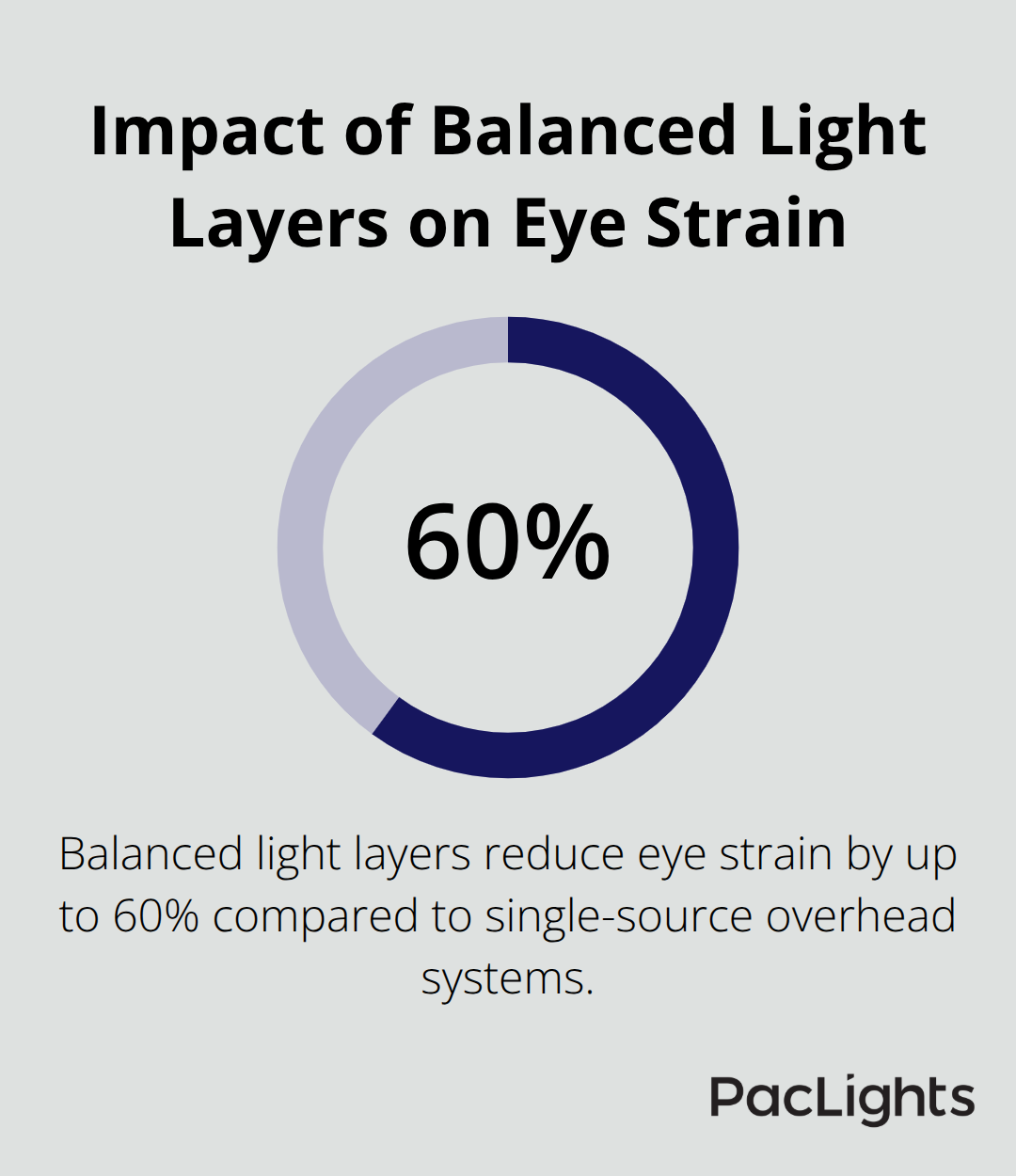
The Harvard Business Review found that properly layered light increases employee productivity by 15%, while the International Association of Lighting Designers reports direct links between light design and retention rates. Cool light temperatures between 4000K-5000K boost alertness during morning hours, while warmer 2700K-3000K tones reduce stress in break areas. The American Society of Interior Designers confirms that balanced light layers improve mood and reduce eye strain by up to 60% compared to single-source overhead systems.
Why Most Office Light Fails
Most offices make three fatal mistakes that destroy productivity. First, they rely solely on overhead fluorescents without task or accent layers, creating harsh shadows and glare on computer screens. Second, they ignore color temperature variations and use the same cool white throughout all spaces instead of matching light to function. Third, they skip dimmer controls and smart systems, forcing employees to work under static light that fights against natural circadian rhythms. The U.S. Department of Energy reports that offices waste 75% more energy without proper layer strategies.
The Science Behind Light Layers
Research from the Lighting Research Center shows that employees perform 23% better when they control their light environment (including brightness and color temperature). Motion sensors and daylight harvesting systems automatically adjust artificial light based on natural light availability, leading to significant energy savings. Smart systems can reduce energy consumption by up to 40% while maintaining optimal visibility for different tasks throughout the day.
The next step involves implementing these three layers strategically throughout your workspace to maximize both employee performance and energy efficiency.
How Do You Layer Light for Maximum Office Impact
Start with ambient light that covers 80% of your workspace needs through LED panel lights or troffers mounted at 9-foot ceiling heights. Install fixtures every 8-10 feet to eliminate dark spots and maintain 30-50 foot-candles of general brightness throughout open areas. The Future Workplace study shows that 70% of employees want control over their environment, so add dimmer switches to all ambient circuits and integrate daylight sensors that automatically adjust brightness based on natural light levels. Cool white 4000K temperature works best for general areas, while conference rooms need warmer 3000K to reduce stress during meetings.

Task Light Placement That Actually Works
Position task lights 18-24 inches above work surfaces to eliminate shadows without creating glare on computer screens. Under-cabinet LED strips provide shadow-free illumination for detailed paperwork, while adjustable desk lamps with 500-1000 lumens handle individual workspace needs. The Illuminating Engineering Society recommends you combine direct and indirect task lights to reduce eye strain by 45%. Mount task fixtures on arms that articulate so employees can redirect light based on specific activities, and choose fixtures with individual switches rather than shared circuits to maximize personal control.
Accent Light Strategy for Employee Wellness
Add accent lights at 30% of ambient brightness levels to create visual depth without overwhelming primary illumination. Wall-mounted fixtures highlight architectural features and artwork, while cove lights along ceiling perimeters soften harsh overhead shadows. Strategic accent placement reduces workplace stress and improves employee retention according to design professionals. Install accent fixtures on separate circuits with warm 2700K temperature to create relaxation zones in break areas and collaborative spaces (this supports natural circadian rhythms while maintaining professional aesthetics).
Smart Controls That Transform Workspaces
Smart controls allow automatic adjustment throughout the day and give employees the flexibility they demand. Motion sensors prevent unnecessary energy use and automatically control lights based on occupancy patterns. Daylight harvesting systems adjust artificial light when natural light changes, which leads to energy savings of up to 40%. These systems work best when you program them to match your team’s work patterns and peak productivity hours for maximum effectiveness. Smart switches allow employees to customize their environment while they maintain energy efficiency across all three light layers.
The right fixtures make these layered strategies work effectively across different office zones and employee needs.
Which Fixtures Work Best for Each Light Layer
LED Panel Lights Transform Ambient Coverage
LED panel lights deliver uniform ambient illumination across office spaces with 40% better light distribution than traditional fluorescent troffers. Install 2×4-foot panels with 4000-5000 lumens output spaced 8-10 feet apart to achieve consistent 30-50 foot-candles throughout workspaces. The U.S. Department of Energy confirms that LED troffers with prismatic lenses reduce glare by 60% compared to standard fluorescent fixtures while they consume 50% less energy. Choose fixtures with 0-10V dimming capability and integrated daylight sensors that automatically adjust brightness based on natural light levels. Recessed lighting work best in drop ceiling installations, while surface-mounted panels suit spaces with exposed structural ceilings above 9 feet.
Task Light Fixtures That Actually Improve Focus
Adjustable desk lamps with 800-1200 lumen output provide optimal task illumination without screen glare or harsh shadows. Position fixtures 18-24 inches above work surfaces with arms that articulate so employees can direct light precisely where they need it. Under-cabinet LED strips mounted 6 inches from the front edge of shelves eliminate shadows on keyboards and paperwork while they add 300-500 lumens of focused brightness. The Lighting Research Center reports that employees experience 45% less eye strain when task lights include individual switches rather than shared circuits. Choose fixtures with 3000K color temperature for detailed work and 4000K for computer-based tasks to match specific activity requirements.
Accent Fixtures Create Professional Warmth
Wall-mounted sconces positioned at 60-66 inches from floor level highlight architectural features while they provide indirect ambient support at 30% of primary light levels. Install decorative pendant lights in reception areas and break rooms with warm 2700K temperature to create atmospheres that reduce workplace stress. Cove lights along ceiling perimeters soften harsh overhead shadows and add visual depth without they overwhelm primary illumination systems. Strategic accent placement improves employee satisfaction according to the International Association of Lighting Designers (particularly when fixtures include separate dimmer controls that allow brightness adjustment throughout the day).
Smart Controls That Complete the System
Motion sensors prevent unnecessary energy use and automatically control lights based on occupancy patterns throughout the workspace. Daylight sensors adjust artificial light when natural light changes, which leads to energy savings of up to 40% according to industry studies. Program these systems to match your team’s work patterns and peak productivity hours for maximum effectiveness. Smart switches allow employees to customize their environment while they maintain energy efficiency across all three light layers.
Final Thoughts
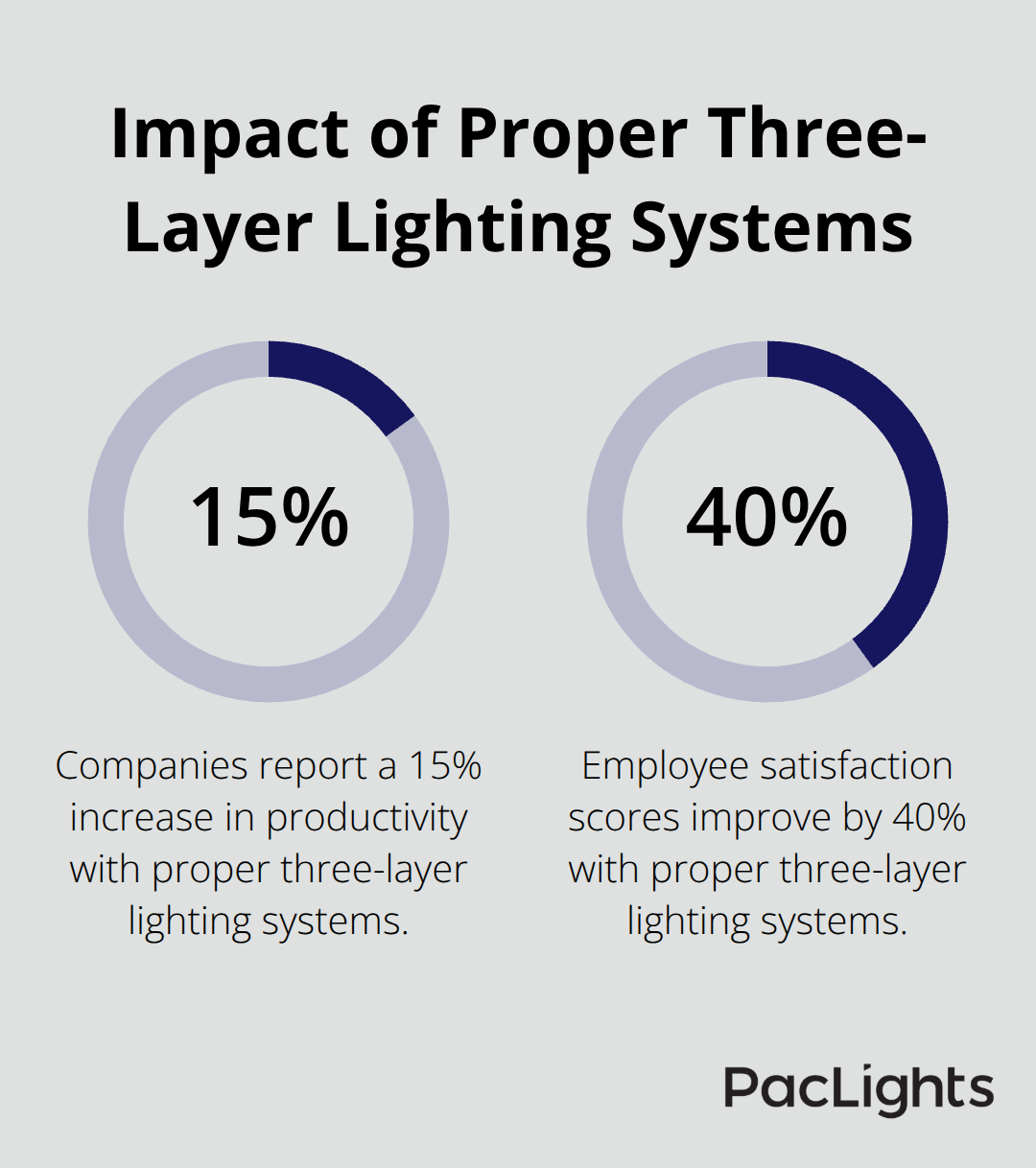
Office light layering delivers measurable results that transform workplace performance and employee satisfaction. Companies that implement proper three-layer systems report 15% productivity increases and 40% improvements in employee satisfaction scores. The strategic combination of ambient, task, and accent lights reduces eye strain by 60% while it cuts energy consumption by up to 75% compared to traditional fluorescent-only setups.
The financial impact extends beyond energy savings. Organizations with well-designed systems experience higher retention rates and reduced absenteeism according to workplace studies. Employees gain control over their environment through smart controls and dimmer systems (which 70% of workers actively want in their workspace).
Ready to upgrade your office light layering system? Start with a comprehensive assessment of your current setup and identify areas where shadows, glare, or insufficient brightness impact daily operations. We at PacLights can help you plan your transition to layered systems with LED retrofit solutions and advanced controls that optimize energy use across all three layers for maximum workplace effectiveness.
Disclaimer: PacLights is not responsible for any actions taken based on the suggestions and information provided in this article, and readers should consult local building and electrical codes for proper guidance.