

Office buildings consume 40% of total energy in commercial sectors, with lighting accounting for nearly 30% of that usage. Traditional lighting systems waste enormous amounts of electricity through constant operation and poor controls.
Modern office light control systems change this completely. We at PacLights have seen businesses cut their lighting energy costs by 50-70% through smart automation and sensor technology.
How Much Energy Can Smart Controls Really Save?
Office light control systems deliver measurable energy reductions that transform operational expenses. Advanced lighting control reduces energy usage in offices by up to 30% according to the U.S. Department of Energy, while some retrofit projects achieve savings up to 90%. The University Hospital of Nord Norge experienced 75% energy savings after they upgraded to LED lights with smart controls, and companies like NOV Inc. report energy consumption reductions that exceed 80% through intelligent management systems.

Automated Controls Cut Waste Through Precision Operation
Occupancy sensors and automated schedules eliminate the biggest source of energy waste: lights that run in empty spaces. Motion sensor systems activate lights only when spaces have occupants, which prevents unnecessary consumption during lunch breaks, meetings, and after-hours periods. Time-based control systems operate lights on pre-set schedules and automatically shut off illumination during non-operational hours.
Studies from the Foster Institute show that proper automated systems reduce employee absenteeism while they cut operational costs by up to 39% in hospital facilities. Wireless control systems simplify installation in existing structures, which makes retrofits cost-effective without major construction disruptions.
Daylight Integration Maximizes Natural Light Benefits
Photosensors adjust artificial lights based on available daylight and maintain consistent illumination while they reduce energy consumption during sunny conditions. Daylight harvesting technology dims artificial lights automatically when natural light proves sufficient, which creates energy savings of 50% in demand-driven systems.
Natural daylight reduces eye strain by 51% and headaches by 63% among office workers (according to the Ergonomics International Journal), while circadian systems can increase task performance by 12% when properly implemented. Smart systems learn occupancy patterns and adapt to seasonal daylight changes, which optimizes energy use throughout the year without manual intervention.
Network Integration Amplifies Control Capabilities
Networked systems connect multiple zones and floors through centralized platforms that monitor energy consumption across entire facilities. These platforms provide real-time data on usage patterns and identify areas where additional savings opportunities exist (particularly in conference rooms and storage areas). Advanced systems integrate with HVAC and security networks to create comprehensive energy management strategies that reduce overall operational costs beyond just lighting expenses.
Which Control System Fits Your Office Best
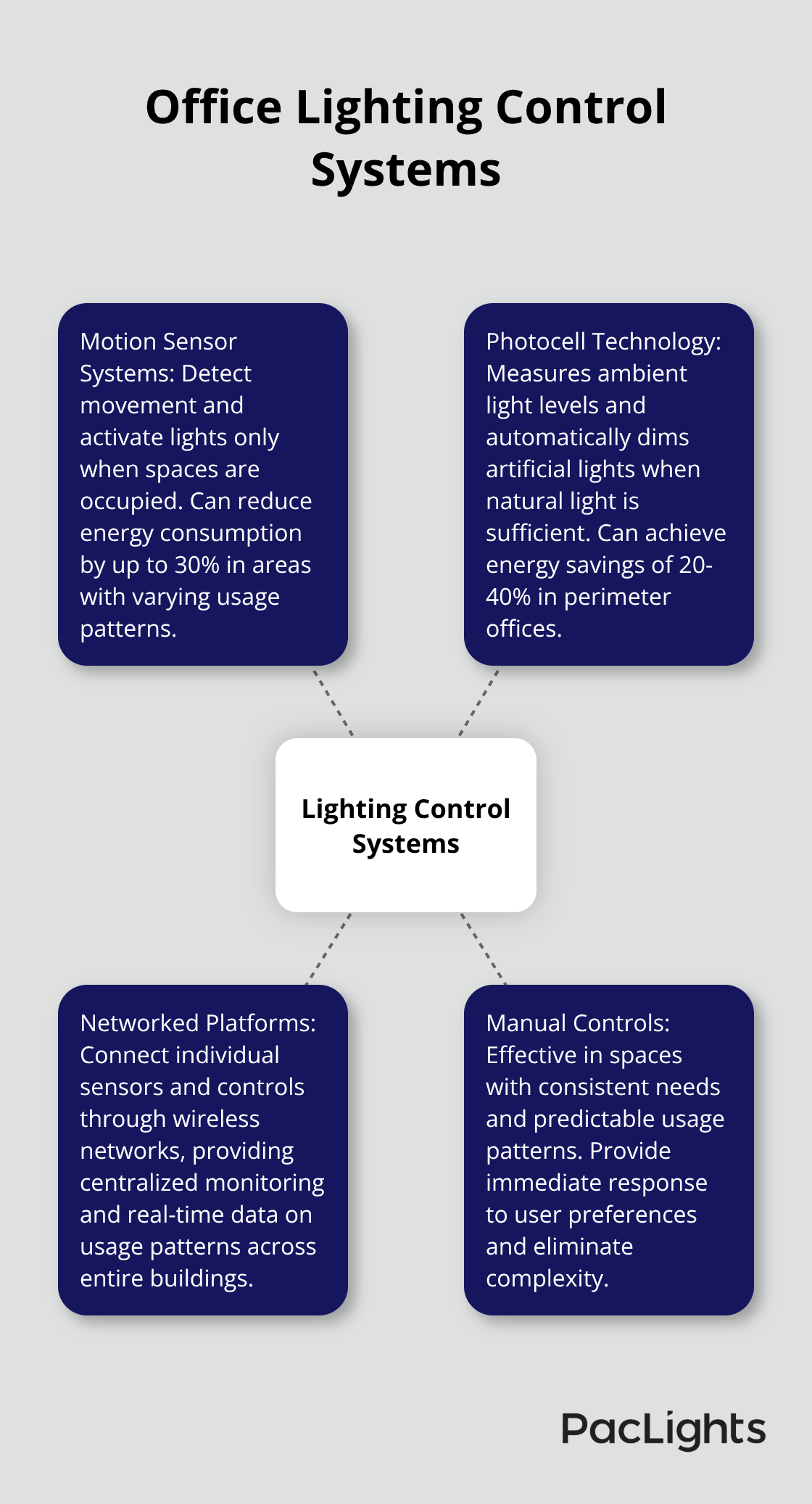
Motion sensor systems represent the most direct path to energy savings in office environments. These systems detect movement through infrared technology and activate lights only when spaces have occupants. Occupancy sensors can reduce energy consumption by up to 30% in conference rooms and private offices where usage patterns vary throughout the day. Vacancy sensors require manual activation but automatically shut off lights when spaces become empty, which works better in areas with consistent daily use patterns. The key difference matters: occupancy sensors work best in intermittently used spaces like storage rooms and break areas, while vacancy sensors excel in regularly occupied workstations where employees prefer control over activation times.
Photocell Technology Responds to Natural Light Changes
Daylight systems use photocells to measure ambient light levels and automatically dim artificial lights when sufficient natural light enters through windows. These photosensors can achieve energy savings of 20-40% in perimeter offices with good window exposure. The technology works through continuous monitoring rather than simple on-off switches, which maintains consistent illumination levels while it reduces energy consumption during peak daylight hours. Advanced photocells integrate with LED dimming capabilities to create smooth transitions that occupants barely notice, yet facilities like Harlow Civic Centre report 60% energy savings through proper daylight integration strategies.
Networked Platforms Connect Multiple Control Points
Smart management platforms connect individual sensors and controls through wireless networks that span entire buildings. These systems provide centralized monitoring through cloud-based dashboards that track energy usage patterns across different zones and floors. DALI-2 compatible systems offer real-time monitoring capabilities that identify areas with poor performance and optimize schedules based on actual occupancy data rather than assumptions. Bluetooth mesh networks enable easy installation without rewires of existing structures, while advanced platforms learn usage patterns and automatically adjust settings to maximize efficiency without they sacrifice occupant comfort or productivity.
Manual Controls Still Have Their Place
Simple manual systems work effectively in spaces with consistent needs and predictable usage patterns (such as executive offices or dedicated workstations). These controls provide immediate response to user preferences and eliminate the complexity that some employees find frustrating with automated systems. Manual dimmer switches allow precise light level adjustments for specific tasks, while basic timer controls can handle routine operations in areas like storage rooms or utility spaces.
The right system depends on your specific office layout, usage patterns, and employee preferences, which makes proper assessment the foundation for successful implementation.
How Do You Plan Your Lighting Control Implementation
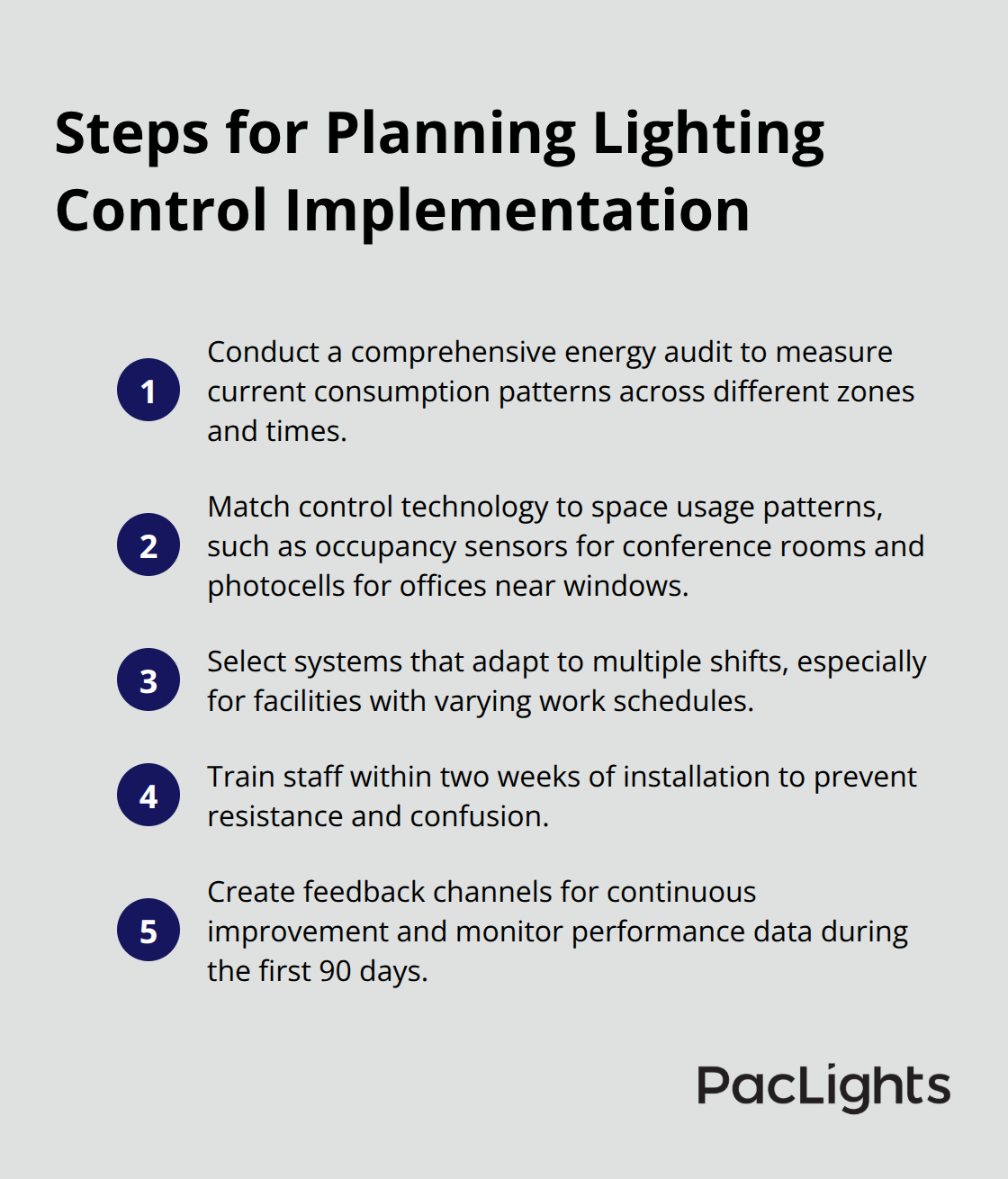
Start with a comprehensive energy audit that measures current consumption patterns across different zones and times. Track electricity usage through bills from the past 12 months and identify peak consumption periods, weekend usage, and seasonal variations. Measure actual light levels in different areas with a light meter to determine over-lit spaces where energy waste occurs. Document which spaces remain illuminated after hours and calculate the cost impact of this unnecessary consumption. The U.S. Department of Energy reports that improper schedules account for 40% of wasted energy in commercial buildings.
Match Control Technology to Space Usage Patterns
Conference rooms with irregular occupancy patterns require occupancy sensors that activate lights only during meetings, while open offices with consistent daily use benefit from vacancy sensors combined with daylight harvesting. Private offices near windows need photocell integration to maximize natural light benefits, whereas interior spaces without windows work best with simple occupancy detection and time-based controls. Storage areas and utility rooms only need basic motion sensors with extended delay settings, while executive areas may require manual override capabilities for presentation needs.
Select Systems That Adapt to Multiple Shifts
Facilities with multiple shifts need networked systems that adapt schedules automatically rather than fixed timer controls. These systems learn usage patterns and adjust illumination based on actual occupancy data rather than assumptions. Advanced platforms can reduce energy consumption by up to 85% through intelligent adaptation to seasonal changes and varying work schedules (particularly in manufacturing facilities with rotating shifts).
Train Staff Within Two Weeks of Installation
Schedule hands-on sessions immediately after installation to prevent resistance and confusion. Show employees how manual overrides work in automated systems and explain the 15-30 second delay in motion sensors to prevent frustration. Post simple instruction cards near control panels that explain basic operations and emergency procedures. Address common concerns about quality and personal control through demonstration rather than explanation. Companies that skip proper training see 60% higher service calls and employee complaints during the first month.
Create Feedback Channels for Continuous Improvement
Establish feedback systems where staff can report issues or suggest improvements, then act on this feedback quickly to build trust in the new systems. Monitor performance data during the first 90 days to identify areas that need adjustment or additional training. Track energy consumption weekly to verify that expected savings materialize and address any performance gaps immediately.
Final Thoughts
Office light control systems transform energy expenses across commercial facilities through measurable results. Businesses achieve 50-85% reductions in electricity consumption through smart automation, occupancy sensors, and daylight integration. These systems pay for themselves within 12-24 months through reduced utility bills, while advanced networked platforms provide decades of continued savings.
The long-term value extends beyond immediate cost reductions. Companies report improved employee productivity, reduced maintenance expenses, and enhanced sustainability credentials that attract environmentally conscious clients and talent. Modern LED fixtures with integrated controls last up to 50,000 hours (which eliminates frequent replacements and service calls).
Your next step involves partnering with experienced professionals who understand both technology and implementation strategies. We at PacLights provide comprehensive solutions that optimize energy use across entire facilities. Our team helps you make informed decisions about upgrades that deliver measurable results from day one.
Disclaimer: PacLights is not responsible for any actions taken based on the suggestions and information provided in this article, and readers should consult local building and electrical codes for proper guidance.