

Poor lighting affects 68% of office workers, leading to fatigue, eye strain, and disrupted sleep patterns. Traditional fluorescent systems ignore our natural biological rhythms.
Office circadian lighting mimics natural sunlight patterns throughout the day, supporting employee health and performance. We at PacLights have seen companies reduce sick days by 25% after implementing these systems.
Why Your Office Lighting Controls Your Employees’ Energy Levels
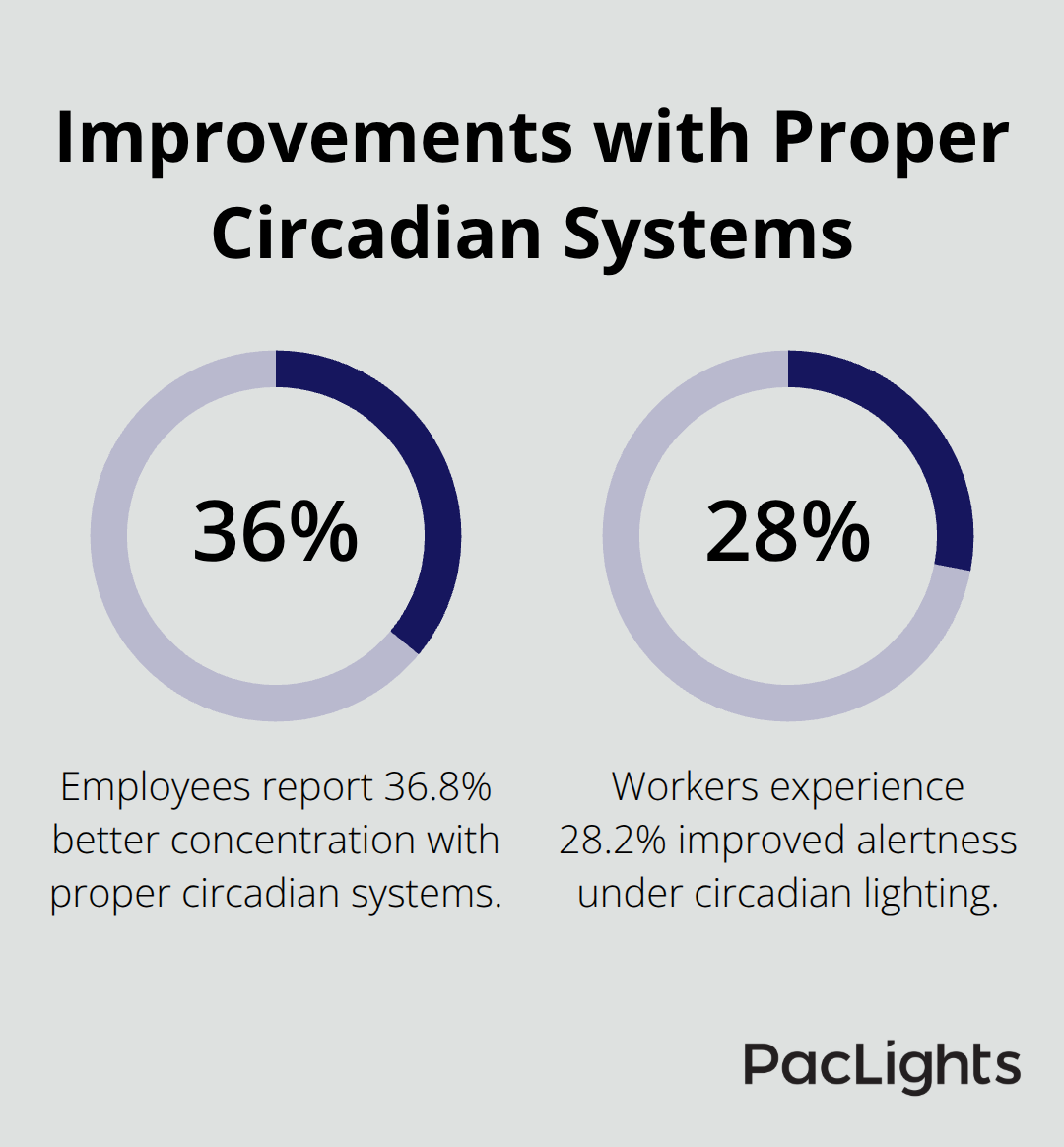
Your employees’ internal clocks operate on a 24-hour cycle that directly impacts their work performance throughout the day. Morning exposure to bright, blue-enriched light triggers cortisol production and increases alertness by up to 25%, while afternoon light reduction prepares the body for rest. Research from the International Dark-Sky Association shows that employees under proper circadian systems report 36.8% better concentration and 28.2% improved alertness compared to those under standard fluorescent systems. The Society found that workers need 300-500 lux during peak hours, but most offices provide inadequate light that disrupts melatonin production and sleep cycles.
The Hidden Cost of Fluorescent Systems
Standard office systems create serious health problems that cost companies money. Fluorescent lights lack the blue spectrum found in natural daylight, which causes fatigue and reduces cognitive function by 20%. Employees under poor conditions experience increased neck and shoulder pain, with 50% reporting eye strain that leads to decreased productivity. Studies indicate that inadequate systems contribute to cardiovascular diseases and compromised immune systems, which results in higher healthcare costs. The WELL Standards emphasize that only workers who sit directly next to windows receive adequate circadian stimulus, which leaves the majority of your workforce exposed to health-damaging artificial light that operates at the wrong intensity and color temperature throughout the day.
Smart Controls Maximize Performance
Advanced systems with automated controls solve these problems through color temperature adjustments from 17000K in the morning to 3000K in the evening. High correlated color temperature systems during work hours improve mental health by 13.9% and work performance ratings by 19.4%. Smart sensors and tunable LED systems enable dynamic adjustments that match natural sunlight patterns, which reduce fatigue by 26.9% and daytime sleepiness by 31%. Companies that implement these systems see immediate improvements in employee satisfaction (with 89% of workers who prefer circadian systems over traditional fluorescent fixtures).
Implementation Strategies That Work
Modern circadian systems require strategic placement and proper controls to maximize their effectiveness. Position fixtures to illuminate vertical surfaces like walls, which increases brightness and helps elevate mood and productivity. Layer different types of controls throughout your workspace to accommodate individual needs based on age and visual acuity. The direction of light should mimic natural sunlight that enters from above to support circadian rhythm patterns effectively.
These strategic approaches to workplace illumination set the foundation for selecting the right technology solutions that will transform your office environment.
Which Circadian Technologies Should You Install
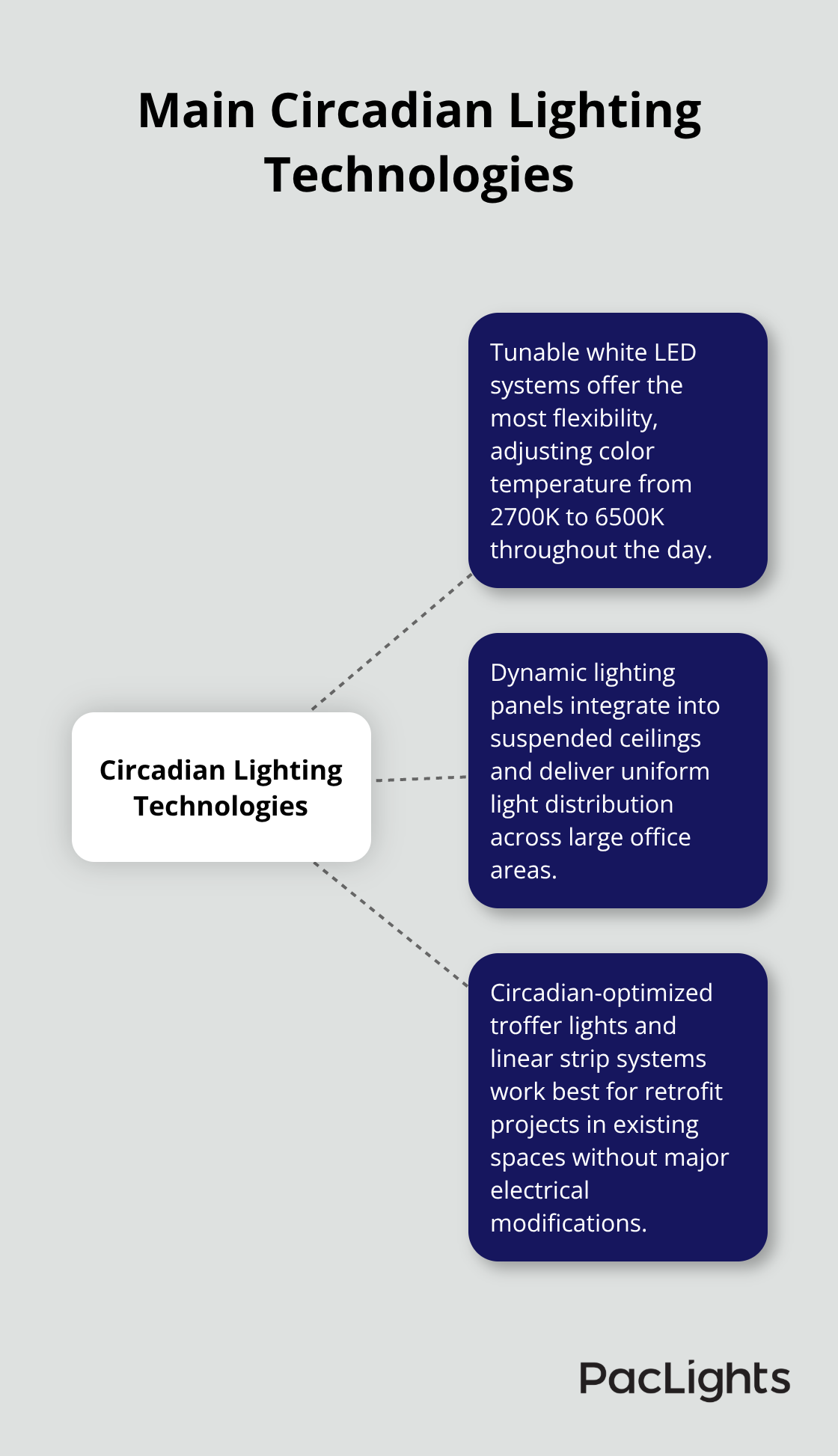
Three main technologies dominate the circadian lighting market, each serving different workplace needs and budgets. Tunable white LED systems offer the most flexibility as they adjust color temperature from 2700K to 6500K throughout the day, with high-quality fixtures that provide Color Rendering Index ratings above 90 for accurate color perception. Dynamic lighting panels integrate seamlessly into suspended ceilings and deliver uniform light distribution across large office areas, while smart sensor networks automatically adjust intensity and color temperature based on time of day and occupancy patterns. Circadian-optimized troffer lights and linear strip systems work best for retrofit projects in existing spaces without major electrical modifications.
Installation Requirements That Matter
Professional installation teams should conduct lighting assessments before implementation to measure current lux levels and identify optimal fixture placement zones. Position circadian fixtures to provide 500-750 lux at desk height during peak morning hours, then program automatic dimming to 200-300 lux during evening periods. Install fixtures 8-10 feet apart for uniform coverage and mount them perpendicular to workstations to minimize glare on computer screens. Networked lighting controls require Cat-6 cabling infrastructure (while standalone fixtures need only standard electrical connections but sacrifice centralized programming capabilities).
Programming Systems for Maximum Impact
Set morning light exposure to begin at 6500K color temperature with 750 lux intensity to stimulate alertness, then gradually transition to 4000K by midday and 3000K during afternoon hours. Program automatic shutoff features for evening hours to prevent blue light exposure after sunset, and include override controls for shift workers who need different scheduling patterns. Integration with building management systems allows facilities managers to monitor energy consumption and adjust settings remotely, while individual zone controls accommodate varying departmental schedules and preferences across different workspace areas.
Advanced Control Features
Modern systems include occupancy sensors that detect when employees arrive and automatically adjust light levels accordingly. Light sensors measure natural light levels and reduce artificial lighting when sufficient daylight enters the workspace (which can save up to 40% on energy costs). Smartphone apps allow individual employees to customize their personal lighting preferences within preset parameters, while centralized dashboards provide facility managers with real-time data on energy usage and system performance across all zones.
These technology choices and installation considerations directly impact the financial returns you can expect from your circadian lighting investment.
What Financial Returns Can You Expect
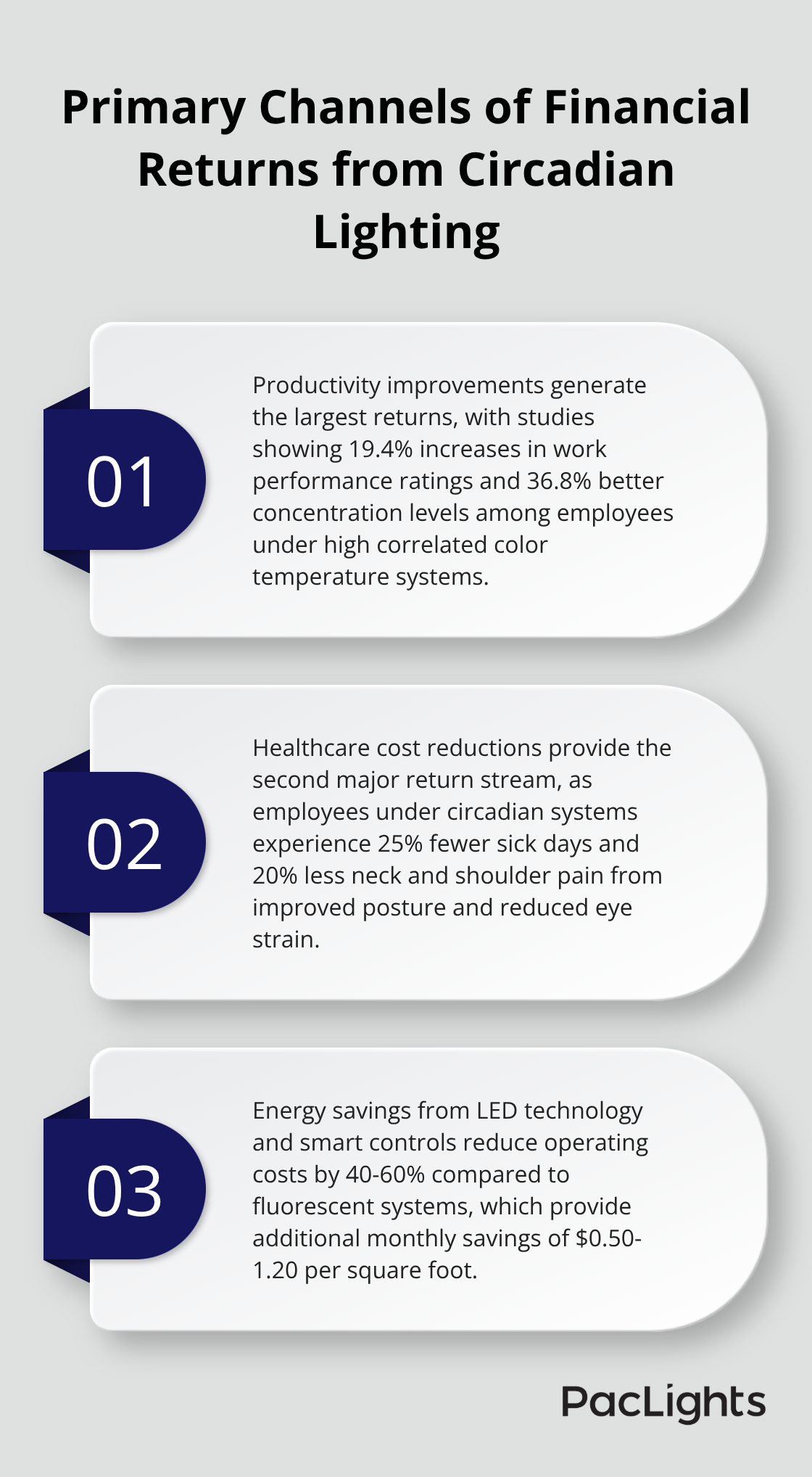
Companies that invest in circadian lighting systems see measurable financial returns within 12-18 months through three primary channels. Productivity improvements generate the largest returns, with studies that show 19.4% increases in work performance ratings and 36.8% better concentration levels among employees under high correlated color temperature systems. The Illuminating Engineering Society found that proper lighting reduces task errors by 20%, which translates to significant cost savings in quality control and rework expenses. Healthcare cost reductions provide the second major return stream, as employees under circadian systems experience 25% fewer sick days and 20% less neck and shoulder pain from improved posture and reduced eye strain.
Productivity and Health Savings Calculations
Calculate your potential savings when you multiply average employee salaries by productivity improvement percentages and sick day reductions. A 100-person office with $60,000 average salaries can expect $234,000 in annual productivity gains from the 19.4% performance improvement, plus $75,000 in reduced sick day costs based on the 25% absenteeism reduction. Healthcare premiums decrease as employees report 13.9% better mental health and 6% improved sleep quality under circadian systems. Employee retention rates improve significantly (with 89% of workers who prefer circadian systems over traditional fluorescent fixtures), which reduces recruitment and training costs that average $15,000 per replacement hire.
Investment Costs and Payback Analysis
Modern circadian systems cost $8-15 per square foot for new installations, while retrofit projects range from $12-20 per square foot based on existing infrastructure requirements. Energy savings from LED technology and smart controls reduce operating costs by 40-60% compared to fluorescent systems, which provide additional monthly savings of $0.50-1.20 per square foot. Most companies achieve full payback within 24-36 months when they combine productivity gains, healthcare savings, and energy reductions. Commercial light fixtures can deliver significant reductions in operating expenses due to lower energy bills and decreased maintenance costs.
Long-term Financial Impact
The financial benefits compound over time as employees adapt to optimized light conditions. Companies report sustained productivity improvements that continue beyond the initial adjustment period, with some organizations that document 30% reductions in workplace accidents due to better visibility and alertness. Insurance providers increasingly offer premium discounts for workplaces that demonstrate commitment to employee wellness through environmental improvements like circadian lighting systems. LED installations can be recouped within just a few years, depending on usage and electricity rates.
Final Thoughts
Office circadian lighting transforms workplace wellness through measurable improvements in employee health, productivity, and satisfaction. Companies that implement these systems report 36.8% better concentration, 25% fewer sick days, and 19.4% higher work performance ratings. The financial returns justify the investment, with most organizations that achieve full payback within 24-36 months through productivity gains and healthcare cost reductions.
Start your upgrade with a professional assessment of current lux levels and fixture placement needs. Choose tunable LED systems that adjust from 6500K morning light to 3000K evening temperatures, with smart controls that automate daily transitions. Position fixtures to provide 500-750 lux during peak hours while you minimize glare on computer screens.
The long-term impact extends beyond immediate health benefits. Organizations experience sustained productivity improvements, reduced workplace accidents by 30%, and enhanced employee retention rates (with workers who consistently prefer circadian systems over traditional fluorescent fixtures). We at PacLights provide comprehensive lighting solutions that help you transform your workplace environment.
Disclaimer: PacLights is not responsible for any actions taken based on the suggestions and information provided in this article, and readers should consult local building and electrical codes for proper guidance.