

Datacenter lighting controls are far more than just switches and bulbs. They’re critical infrastructure that directly impacts your uptime, energy costs, and operational reliability.
At PacLights, we’ve seen firsthand how advanced lighting management systems transform datacenter operations. This guide covers the technologies and strategies that keep your facility running efficiently while protecting against costly downtime.
How Real-Time Lighting Data Drives Datacenter Performance
Modern datacenters generate enormous amounts of operational data, yet most facilities treat lighting as an afterthought-a static system that runs independently from power management and facility monitoring. We believe this approach is a critical mistake. Real-time lighting control systems that integrate directly with your facility’s operational infrastructure are not optional; they’re essential for competing in an era where data center electricity demand is projected to exceed California’s total consumption within five years, according to U.S. Lighting Trends. Facilities operating without integrated lighting visibility miss early warning signs of equipment failure, waste energy during off-peak hours, and struggle to meet increasingly stringent energy codes. Advanced LED lighting combined with intelligent controls can cut datacenter lighting energy use by up to 40%, but only when those systems talk to your broader facility management platform. Your lighting controls must connect with your building management system, HVAC operations, and power distribution monitoring simultaneously, not as separate deployments.
Sensor Data That Predicts Problems Before They Happen
Lighting sensors do far more than detect occupancy. Modern systems track illumination levels, temperature rise from fixtures, power draw anomalies, and fixture degradation patterns. When integrated with your facility’s monitoring infrastructure, this data becomes predictive maintenance intelligence. A fixture showing gradual lumen depreciation allows you to schedule replacement during planned maintenance windows rather than face failure during peak operational hours.
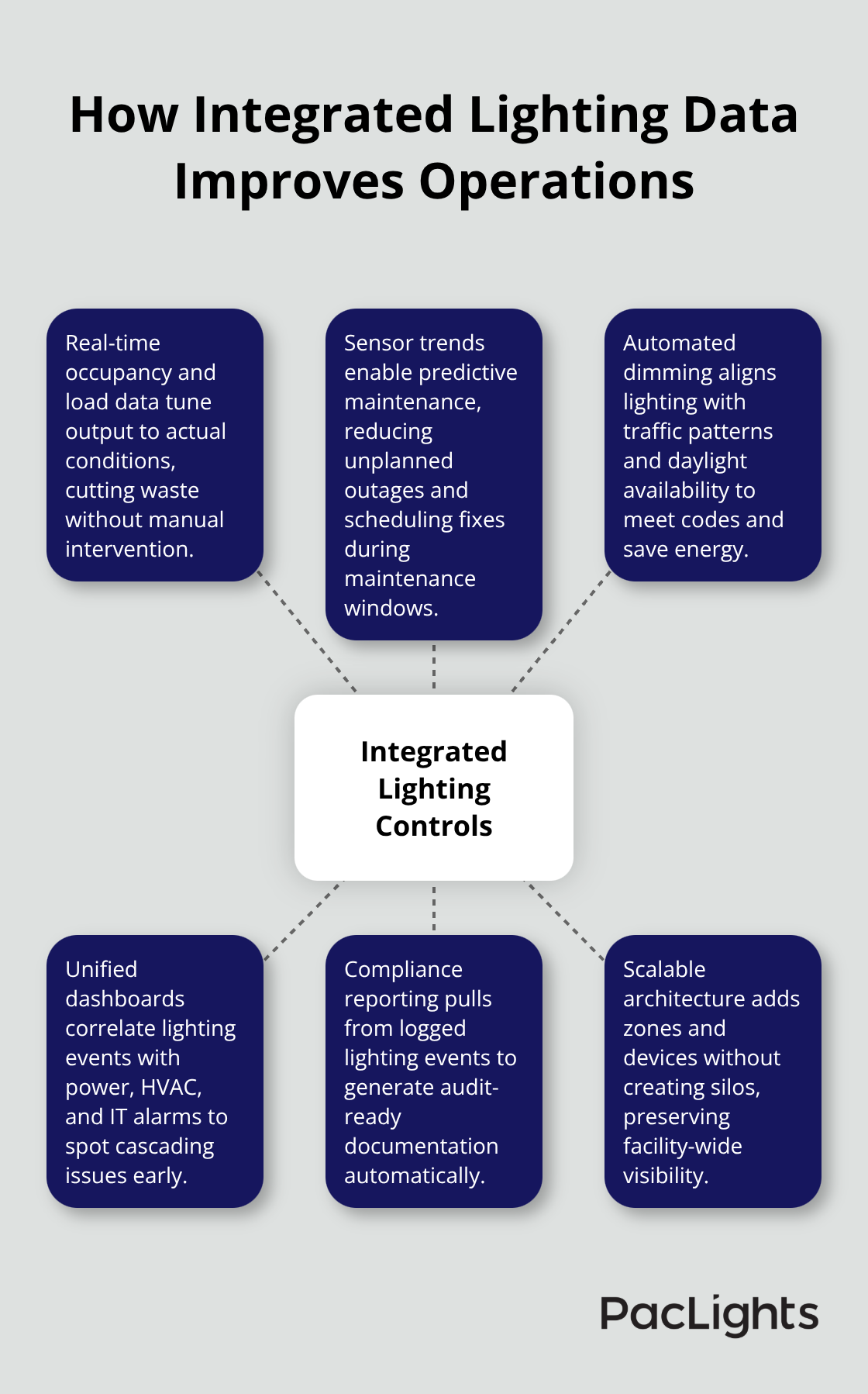
Temperature sensors embedded in lighting systems provide early notice of cooling system strain-reducing lighting heat output also lowers facility heat load, which means your HVAC systems operate more efficiently. Real-time monitoring across lighting, power, and environmental conditions accelerates decision-making and reduces downtime risk. Datacenters that implement this integrated approach report faster issue resolution because technicians have unified visibility rather than checking multiple disconnected systems. The practical advantage is straightforward: when your lighting platform feeds data to a centralized monitoring dashboard alongside your UPS systems, network equipment, and cooling infrastructure, you spot cascading failures before they compound into facility-wide incidents.
Automated Dimming That Responds to Actual Conditions
Smart lighting platforms enable automated dimming during low-traffic hours and real-time compliance with energy codes when integrated with building management systems. In practice, your facility automatically reduces lighting in corridors, storage areas, and secondary spaces based on occupancy sensors and time-of-use patterns-without manual intervention. Many datacenters operate at 30-40% occupancy during night shifts yet maintain full lighting levels, wasting energy and generating unnecessary heat. Automated dimming systems eliminate this waste. Networked lighting controls adjust output based on daylight availability and actual facility usage, not preset schedules that ignore real operational rhythms. This automation also supports compliance reporting; modern energy codes require documentation of lighting management practices, and integrated systems generate the audit trails automatically.
Why Integration Matters More Than Individual Components
Isolated lighting deployments fail to deliver the performance gains that datacenters need. A dimming system that operates independently from your power monitoring cannot help you understand how lighting efficiency impacts your overall electrical load. Motion sensors that work only within a single zone cannot coordinate with facility-wide occupancy patterns. The biggest roadblock in datacenter lighting projects is seamless integration; avoid isolated deployments and pursue a cohesive, scalable platform. When lighting, power conditioning, distribution, and monitoring operate as a unified system, your facility gains the visibility and control required to adapt as capacity demands grow. This integrated approach transforms lighting from a peripheral utility into a core component of your operational resilience strategy, setting the stage for the redundancy and backup systems that protect against unexpected failures.
How Much Advanced Lighting Controls Save Your Datacenter
The Real Math Behind Lighting Energy Savings
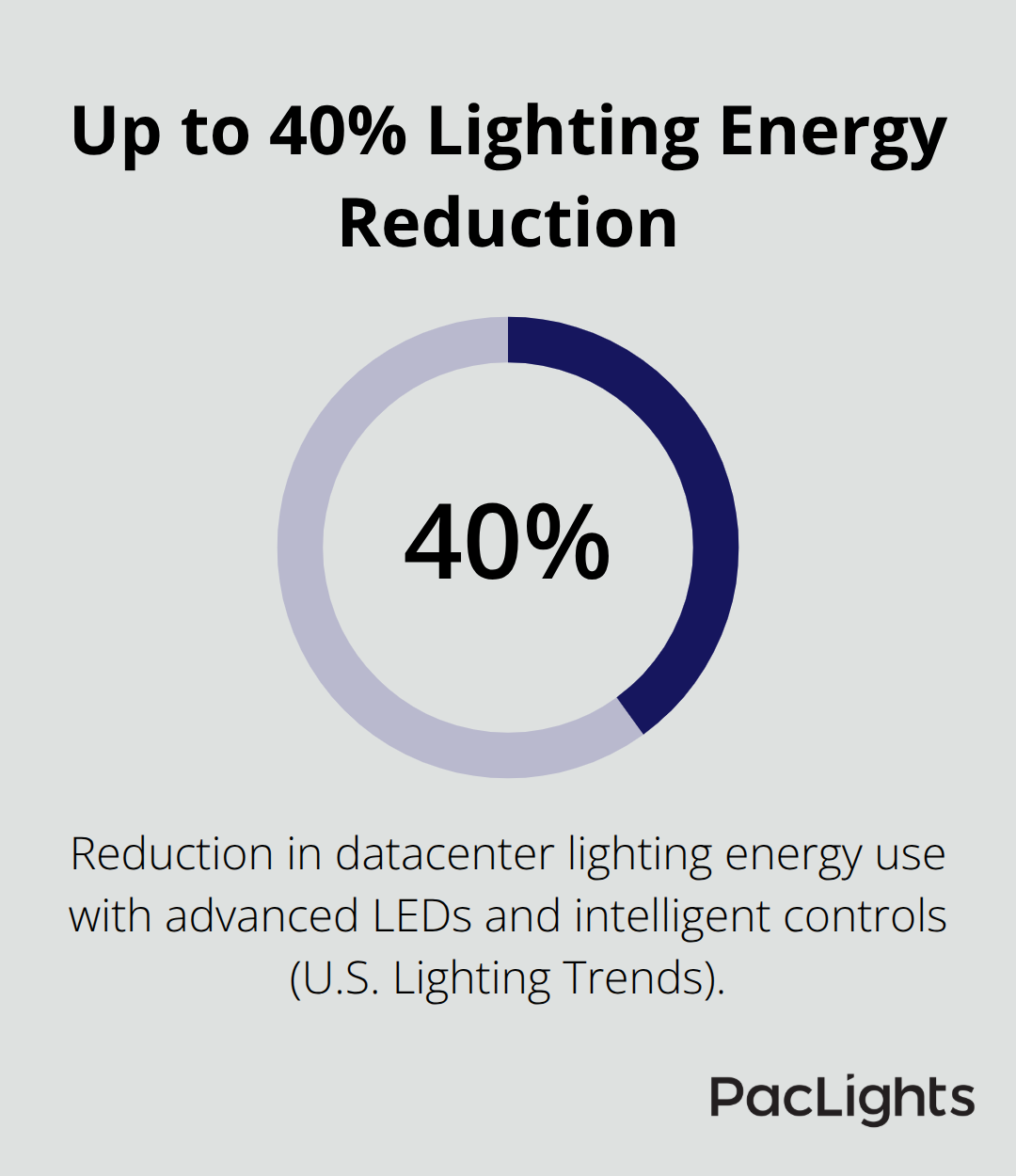
Advanced LED lighting combined with intelligent controls cuts datacenter lighting energy use by up to 40%, according to U.S. Lighting Trends. This translates directly to lower operating expenses and reduced cooling demands.
Most facilities miss the critical insight that lighting savings compound through secondary effects. When you reduce lighting output, you lower the heat your fixtures generate, which means your cooling systems work less hard. Reducing lighting energy also lowers facility heat load, helping cooling systems operate more efficiently.
A datacenter spending $50,000 annually on lighting energy could realistically save $15,000 to $20,000 per year through optimized LED systems and automated controls. However, achieving this 40% reduction requires more than installing new fixtures. Your dimming and occupancy detection systems must operate within an integrated facility management environment where they coordinate with your HVAC monitoring and power distribution systems. Many datacenters implement motion sensors or dimming systems as standalone solutions and capture only 15-20% energy savings because those systems cannot communicate with the broader facility infrastructure. Facilities that achieve the full 40% reduction treat lighting controls as part of their core operational strategy, not as a peripheral upgrade.
Payback Timelines That Match Your Current Infrastructure
The financial timeline for advanced lighting control systems depends entirely on your current baseline costs and the comprehensiveness of your implementation. A datacenter with aging fluorescent or inefficient LED systems operating without any controls will see payback periods of three to five years when upgrading to modern LED fixtures with networked controls integrated into your building management system. A facility that already operates efficient LED fixtures but lacks coordinated controls will see longer payback periods of five to seven years, though the operational benefits extend well beyond simple ROI calculations.
PacLights offers LED retrofit solutions and advanced lighting controls tailored to datacenter environments, supported by free ROI assessments that account for your specific energy rates, facility layout, and operational patterns. These assessments help you understand exactly what your facility can achieve before you commit capital to upgrades.
Where Secondary Spaces Deliver Immediate Returns
The most aggressive savings come from facilities that combine LED upgrades with occupancy-based dimming in low-traffic areas like corridors, stairwells, and storage zones. Lighting often operates at full capacity in these spaces despite minimal human presence. Secondary spaces typically consume 15-25% of datacenter lighting budgets yet operate at full output during night shifts and weekends when occupancy drops to near zero.
Motion detection systems paired with networked controls reduce lighting in these zones by 60-70%, creating immediate cost reductions that offset implementation expenses quickly. The remaining calculation depends on your local electricity rates. Datacenters in high-cost regions like California or the Northeast see faster payback because each kilowatt-hour saved delivers greater financial benefit. This efficiency advantage positions your facility to invest in the redundancy and backup systems that protect against unexpected failures-the infrastructure that separates competitive datacenters from those vulnerable to costly downtime.
Protecting Uptime When Lighting Fails
Datacenter operators obsess over UPS systems, redundant power feeds, and backup generators-yet most ignore the single point of failure that sits directly above their heads. Lighting infrastructure fails silently and catastrophically in datacenters. When a lighting circuit drops, technicians cannot safely access equipment racks, perform emergency maintenance, or navigate evacuation routes. We believe that backup lighting deserves the same engineering rigor as your electrical distribution systems.
Designing Redundancy Into Your Lighting Architecture
Redundancy in lighting means designing circuits across multiple independent feeds so that no single failure darkens a critical space. This requires coordinating with your core electrical architecture during facility planning, not retrofitting backup systems after construction. Advanced lighting control systems automatically detect fixture failures and immediately switch to backup circuits without manual intervention. Your building management system must monitor lighting status continuously, triggering alerts when circuits degrade or fixtures fail-the same way you monitor cooling systems for temperature anomalies.
Automatic Failover and Emergency Response Integration
Integration with your fire safety and emergency response infrastructure is non-negotiable. When your facility activates emergency protocols, lighting controls automatically illuminate evacuation routes at full brightness while dimming non-critical areas to preserve backup power. Many datacenters operate emergency lighting as a completely separate system from their primary lighting infrastructure, creating maintenance nightmares and testing blind spots. Unified control platforms eliminate this fragmentation by managing both primary and emergency lighting through a single system, ensuring that your backup circuits receive the same preventive maintenance and performance monitoring as primary systems.
Meeting Compliance Standards Through Automated Testing
Compliance with industry standards like NFPA 110, IEC 62040, and local electrical codes mandates specific lighting performance during power loss scenarios. These standards require that emergency lighting activate within one second of main power failure and sustain operation for a minimum duration-typically 90 minutes in datacenter environments.
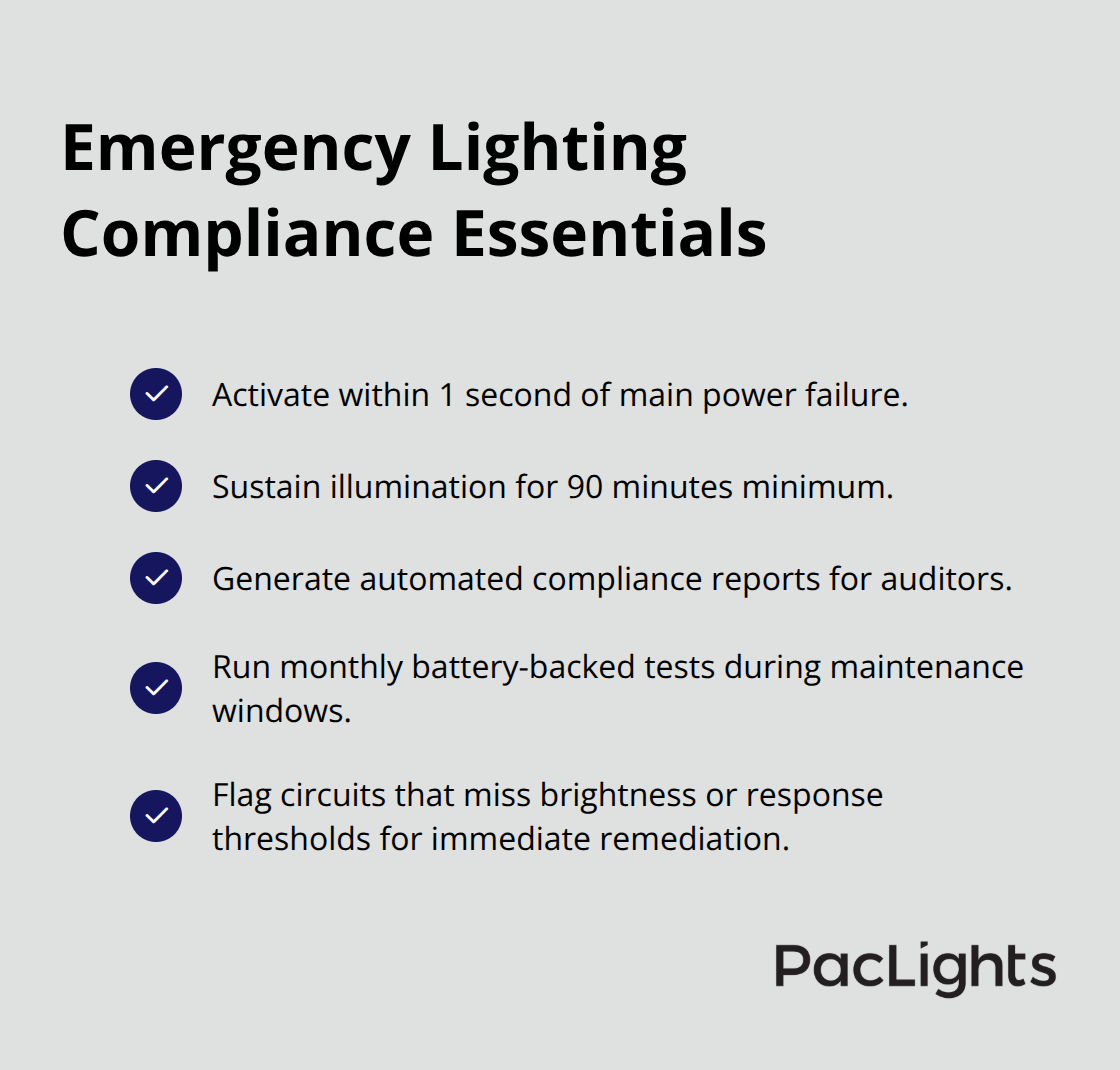
Your lighting control system must document this performance automatically, generating compliance reports that satisfy auditors and insurance carriers without manual testing.
Battery-backed lighting circuits require monthly testing to verify response times and brightness levels, yet most facilities skip this testing because manual verification is labor-intensive. Networked lighting controls automate this testing, running diagnostic cycles during scheduled maintenance windows and flagging any circuits that fail to meet performance thresholds. This automated approach transforms compliance from a burden into a continuous operational function that protects your facility and validates your readiness for emergencies.
Selecting a Lighting Partner With End-to-End Capabilities
When you select a lighting partner, demand end-to-end capabilities that include redundant circuit design, automatic failover mechanisms, and integrated compliance monitoring. PacLights offers advanced lighting controls that integrate with building management systems to provide real-time visibility into both primary and backup lighting status. This integrated approach transforms lighting from a compliance checkbox into an operational asset that actively protects your facility during emergencies and supports your facility’s ability to maintain service when primary systems fail.
Final Thoughts
Advanced datacenter lighting controls deliver three measurable outcomes that separate competitive facilities from those struggling with operational inefficiency: they reduce energy costs by up to 40% while simultaneously lowering cooling demands, they protect uptime through redundant circuits and automatic failover mechanisms, and they simplify compliance through automated testing and documentation for emergency lighting performance. Implementing these controls requires treating lighting as core infrastructure rather than a peripheral utility-this means coordinating with your electrical architecture during facility planning, integrating controls with your building management system, and selecting a partner with end-to-end capabilities spanning fixture design, control systems, and ongoing optimization. The biggest mistake datacenters make is deploying lighting systems in isolation, expecting standalone dimming or motion sensors to deliver the full 40% energy savings that integrated systems achieve.
Your lighting platform must communicate with your HVAC monitoring, power distribution systems, and emergency response infrastructure simultaneously to unlock the operational advantages that datacenter lighting controls provide. As data center electricity demand approaches California’s total consumption within five years, energy efficiency becomes a financial necessity, not an optional upgrade. Facilities that implement advanced lighting controls today position themselves to scale capacity without proportional increases in operating costs while simultaneously improving their ability to maintain service during emergencies.
We at PacLights provide LED retrofit solutions and advanced lighting controls tailored to datacenter environments, supported by free ROI assessments and lighting layout designs that account for your specific facility conditions. Your next step is understanding exactly what your facility can achieve through integrated lighting management.
Disclaimer: PacLights is not responsible for any actions taken based on the suggestions and information provided in this article, and readers should consult local building and electrical codes for proper guidance.