

Picking the wrong lighting fixtures costs money and creates safety risks. At PacLights, we know that certified lighting options give you peace of mind-they meet strict standards and perform reliably over time.
This guide walks you through certifications that matter, how to evaluate fixtures for your specific facility, and the steps to install systems that work.
What Certifications Actually Mean for Your Facility
The Three Certification Bodies That Matter Most
NSF International, UL, and DLC are the three bodies that validate different aspects of commercial and industrial lighting. NSF International has tested cleanroom and food-processing safety since 1944, operating across 180+ countries. UL covers electrical safety and wet-location performance, while DLC qualifies fixtures for energy-efficiency rebates.
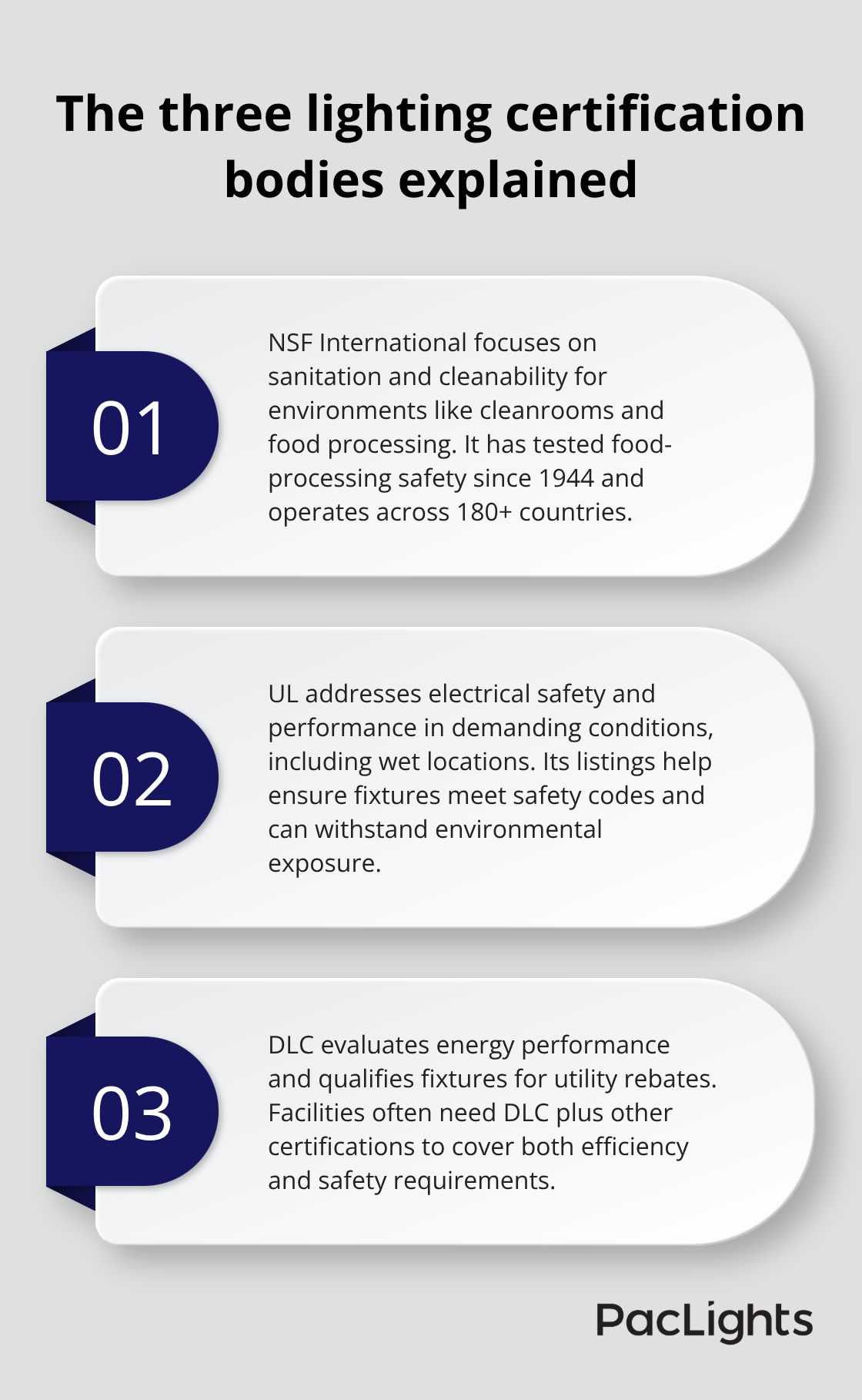
Each one tests different aspects of a fixture, and most facilities need multiple certifications to be fully compliant.
NSF certification alone does not cover electrical safety-you need UL listing for that. Many manufacturers bundle these certifications, but you should verify exactly which standards each fixture meets before purchasing. A fixture marked NSF/ANSI 2 with IP66 and UL wet-location listing gives you sanitation safety, washdown protection, and electrical compliance in one product. Without this clarity, you risk buying a fixture that looks certified but leaves gaps in your compliance.
Matching Certifications to Your Facility Type
Food processing, pharmaceutical manufacturing, and cold storage environments require NSF/ANSI 2 certification. The standard defines three work zones: Food Zone (direct food contact), Splash Zone (washdown exposure), and Non-Food Zone (standard areas). High bay LED fixtures certified for food safety deliver 150–190 lumens per watt and withstand IP66 or IP69K washdowns.
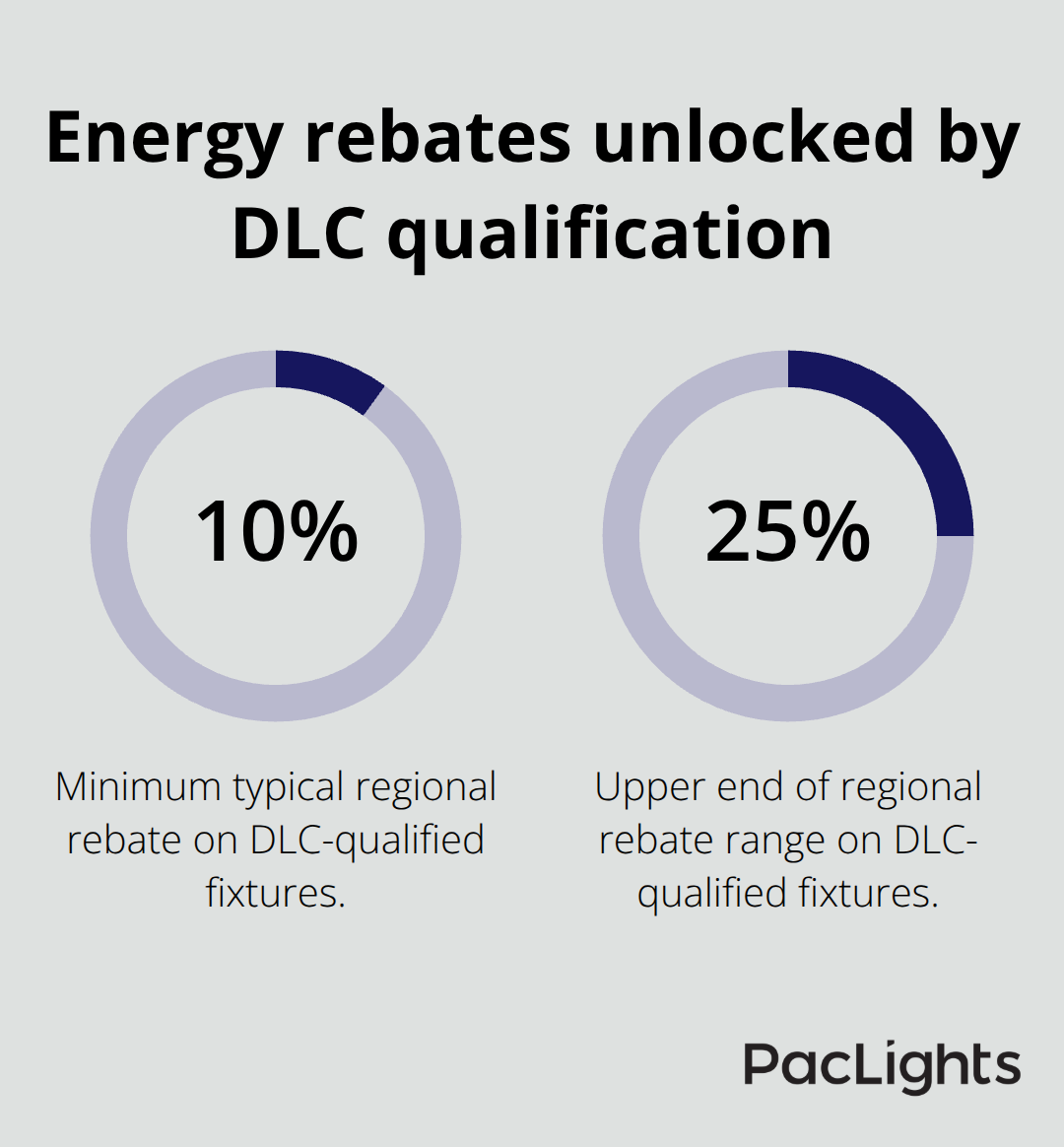
Cold storage facilities favor NSF-certified lights for instant-on performance and lower heat output, which reduces cooling load and preserves product quality. Healthcare and data centers prioritize color rendering index above 80 for accurate visibility and diagnostics. Warehouses and outdoor areas benefit from DLC qualification, which unlocks energy rebates worth 10–25% of fixture costs depending on your region.
Understanding IP Ratings and Exposure Levels
The FDA Food Code specifies minimum illumination of 215 lux for food preparation and 540 lux where employees work; NSF fixtures help you meet these levels without over-lighting. IP ratings (IP65, IP66, IP69K) measure dust and water ingress separately-IP69K handles high-pressure jets, while IP65 suits standard washdowns. Choose your certification profile based on actual exposure: a dry warehouse needs far less protection than a beverage plant.
Local health departments, USDA audits, or third-party inspectors determine exact requirements for your facility type, so verify before specifying fixtures. Once you understand what your space actually needs, you can move forward with confidence in selecting the right certified fixtures.
Finding the Right Certified Fixture for Your Space
Match Certifications to Your Actual Exposure
Not all certified fixtures work equally well for every facility. The certification tells you what a fixture meets, but your specific space determines which certifications actually matter. A food processing plant needs NSF/ANSI 2 with IP69K, while a warehouse may only require DLC qualification for energy rebates. Start by identifying your actual exposure level: does your space see regular high-pressure washdowns, occasional spray, or neither?
The FDA Food Code requires 215 lux minimum in food prep areas and 540 lux where employees work, so measure your current light levels first to understand if you need brighter output or just better placement. Contact your local health department or review any third-party audit reports to confirm exact standards your facility must meet. Many facilities waste money buying over-specified fixtures with protections they don’t need. A dry storage area marked for NSF certification costs more than standard industrial lighting but offers no compliance advantage if washdowns never occur there. Conversely, a beverage processing line without IP69K protection fails inspection within months.
Understand IP Ratings and Protection Levels
IP ratings (IP65, IP66, IP69K) measure dust and water ingress separately-IP69K handles high-pressure jets, while IP65 suits standard washdowns. The key is matching the certification profile to documented exposure, not guessing. Not every zone in your facility requires the same protection level. A dry storage area may need only shatterproof construction, while processing rooms demand full washdown resistance. Review your facility layout and identify which spaces actually face spray, moisture, or chemical exposure. This targeted approach prevents overspending on unnecessary protection in low-risk areas.
Calculate Energy Efficiency and Long-Term Costs
Energy efficiency ratings separate fixtures that drain your budget from ones that reduce operating costs. High bay LED fixtures certified for food safety deliver 150–190 lumens per watt according to NSF/ANSI 2 standards, meaning you get more light output per unit of electricity consumed. DLC-qualified fixtures often qualify for regional energy rebates worth 10–25% of purchase price, which directly improves your return on investment.
Evaluate Durability and Warranty Protection
Durability and warranty coverage reveal whether a fixture is built to last or engineered for early replacement. NSF-certified LED lights typically last 50,000–75,000 hours and commonly include 5-year warranties, reducing unplanned downtime in critical spaces. A fixture with a 2-year warranty costs less upfront but forces replacement cycles every few years, especially in harsh environments where corrosion or seal failure accelerates aging.
Verify that gaskets remain intact after installation, since damaged seals void NSF protection and create contamination risk. When comparing two fixtures with identical certifications, the one with longer warranty coverage and higher lumen-per-watt efficiency wins on total cost of ownership. Request detailed photometric data and warranty terms from manufacturers; if they won’t provide specifics, that’s a signal to look elsewhere.
Move Forward with Confidence
Once you understand what your space actually needs and have compared efficiency and durability across certified options, you’re ready to work with professionals who can assess your facility layout and recommend the right fixtures for installation.
Installing Certified Fixtures That Actually Work
Assess Your Facility Before You Purchase
A lighting professional conducts a site assessment that measures your current lux levels, documents exposure conditions, identifies voltage requirements, and maps mounting locations-data that eliminates guesswork. They verify that your electrical infrastructure supports the fixtures you’ve selected; many facilities discover mid-installation that their panel capacity, wiring gauge, or control systems need upgrades. A professional also confirms that chosen fixtures match local code requirements, which vary by jurisdiction and inspection authority. They identify which areas truly need NSF certification versus standard industrial protection, preventing overspending on unnecessary compliance in low-risk zones. Request a written assessment that specifies exact fixture models, quantities, mounting heights, control integration, and estimated lux output for each space. This document becomes your installation roadmap and protects you if problems arise post-installation.
Verify Voltage and Control Compatibility
NSF-certified fixtures typically support input voltages of AC120–277V, AC120–347V, or AC277–480V, so verify your facility’s supply matches the fixture specification before ordering. If your facility runs 480V three-phase and you specify 277V fixtures, installation fails and you absorb replacement costs. Dimming controls and occupancy sensors add value but demand compatible wiring; 0–10V dimming systems require separate low-voltage lines, while networked lighting controls need data connectivity. Assess whether your existing infrastructure supports these upgrades or if you need to budget for control rewiring. Cold storage environments need special attention because low temperatures affect gasket materials and electrical components; verify that selected fixtures carry cold-temperature ratings if your facility operates below 32°F.
Plan Mounting and Installation Details
Mounting compatibility matters equally-vapor-tight NSF fixtures accept surface, wall, and suspension mounting, but high bay fixtures require ceiling height clearance and structural assessment. Installation best practices demand that gaskets remain intact and seals stay undamaged, since compromised seals void NSF protection and expose your facility to contamination risk and inspection failure. Follow manufacturer instructions precisely during installation; rushing installation or improvising mounting brackets defeats the purpose of certified protection.
Maintain Fixtures to Preserve Certification
NSF-certified LED lights last 50,000–75,000 hours according to manufacturer specifications, but only if you follow cleaning protocols that preserve gasket integrity. Use a damp cloth with mild detergent monthly; harsh chemicals or high-pressure spray on gaskets degrades seals and creates contamination pathways. Inspect fixtures quarterly for visible cracks, corrosion, or failed seals, especially in harsh environments where salt spray or chemical exposure accelerates degradation.
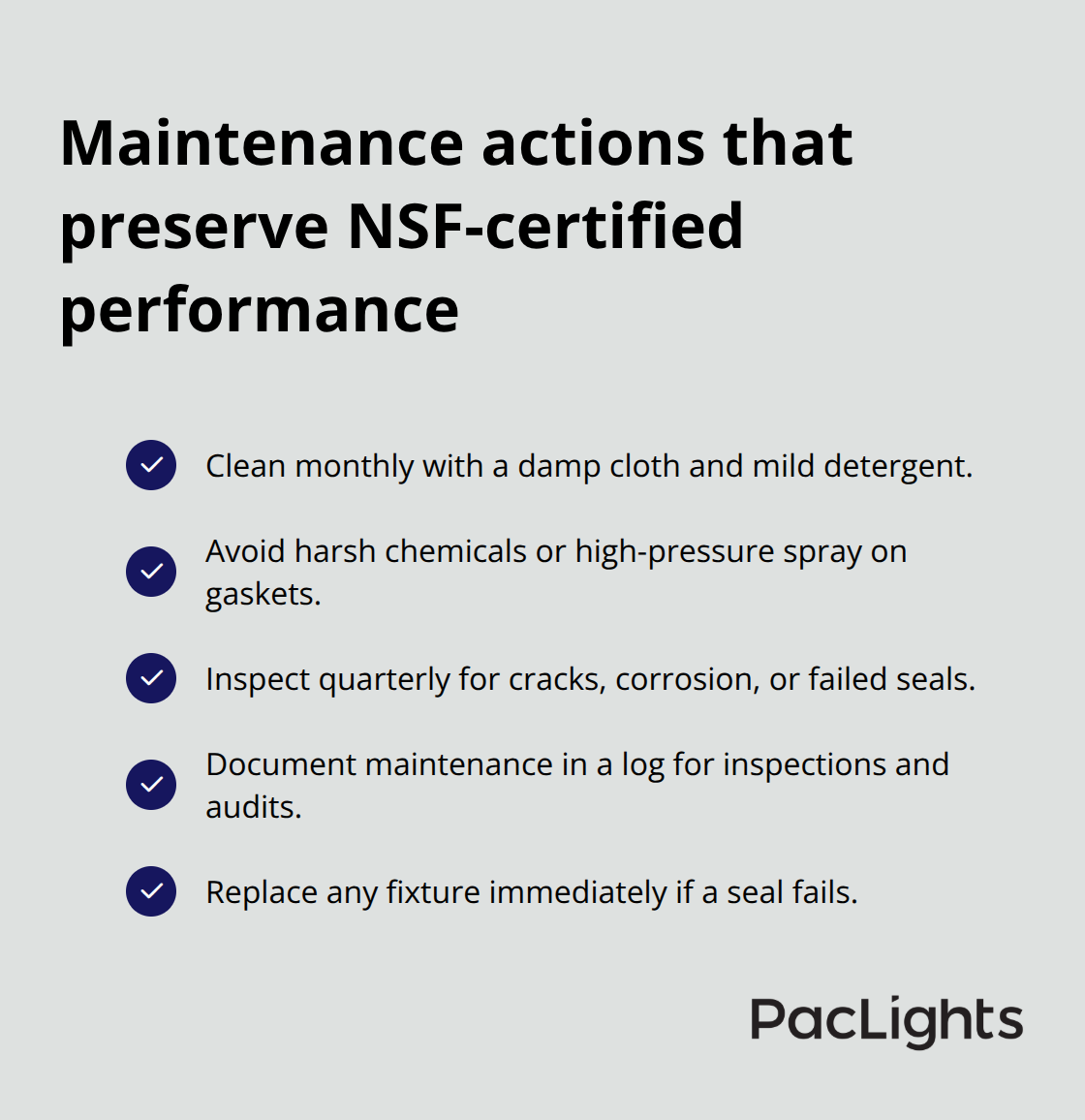
Document maintenance activities in a log that proves due diligence during health inspections or audits. Replace any fixture showing seal failure immediately rather than hoping it lasts until the next budget cycle-a failed seal in a food processing area triggers immediate compliance violations and potential shutdown.
Monitor Performance and Plan Replacements
Monitor lux levels annually using a light meter to confirm fixtures maintain rated output; LED fixtures gradually dim over time, and dust accumulation reduces effective brightness. If measured lux drops below 80% of specification, schedule cleaning or replacement before it impacts visibility or safety. Establish a replacement schedule for the most critical fixtures based on operating hours and environment severity; a fixture in a beverage plant washdown zone needs replacement sooner than one in dry storage. Track warranty expiration dates so you can claim coverage before protection lapses. PacLights provides free lighting layout designs and ROI assessments to help facilities plan upgrades and maintenance schedules tailored to their specific environment and compliance requirements.
Final Thoughts
Certified lighting options protect your facility from compliance failures, contamination risks, and wasted energy spending. NSF/ANSI 2, UL listing, IP ratings, and DLC qualification each serve a specific purpose, and matching them to your actual facility exposure prevents overspending on unnecessary protection while closing dangerous gaps in compliance. A facility without proper NSF certification in food processing faces health code violations and potential shutdown, while fixtures without adequate IP ratings fail within months in washdown environments and force emergency replacements that disrupt operations.
Making an informed decision starts with understanding what your space actually needs. Measure your current lux levels, identify your exposure conditions, and verify requirements with your local health department or audit reports, then compare certified fixtures based on energy efficiency, durability, warranty coverage, and total cost of ownership rather than purchase price alone. A fixture lasting 50,000–75,000 hours with a 5-year warranty outperforms a cheaper option that requires replacement every few years (and the long-term savings compound significantly over time).
Installation and maintenance determine whether your certified fixtures deliver promised performance. Follow manufacturer instructions precisely during installation to preserve gasket integrity, establish a monthly cleaning schedule with mild detergent, and inspect quarterly for seal failure or corrosion. Contact PacLights to assess your facility and identify the certified lighting options that deliver long-term performance, compliance confidence, and measurable cost savings.
Disclaimer: PacLights is not responsible for any actions taken based on the suggestions and information provided in this article, and readers should consult local building and electrical codes for proper guidance.