

Datacenter lighting design tips often get overlooked, yet they directly impact your facility’s temperature, energy costs, and operational safety. Most datacenter managers focus on cooling systems and power infrastructure while ignoring how lighting choices affect both performance and expenses.
At PacLights, we’ve seen firsthand how strategic lighting design transforms datacenter operations. The right approach reduces heat generation, cuts energy bills, and improves visibility where it matters most.
How Lighting Affects Datacenter Temperature and Efficiency
Heat Generation and LED Efficiency
Lighting produces heat, and in a datacenter where cooling consumes 7 to 30 percent of total energy use according to industry analyses, every watt of light adds directly to thermal load. Traditional incandescent and fluorescent fixtures waste 80 to 90 percent of their energy as heat, forcing your cooling systems to work harder and longer. LED fixtures cut that waste dramatically, producing 75 to 80 percent less heat than older technologies while delivering the same or better illumination. This matters because a datacenter operating at a PUE near 2.0 (the average for U.S. facilities according to EPA ENERGY STAR data) loses significant value to overhead energy.
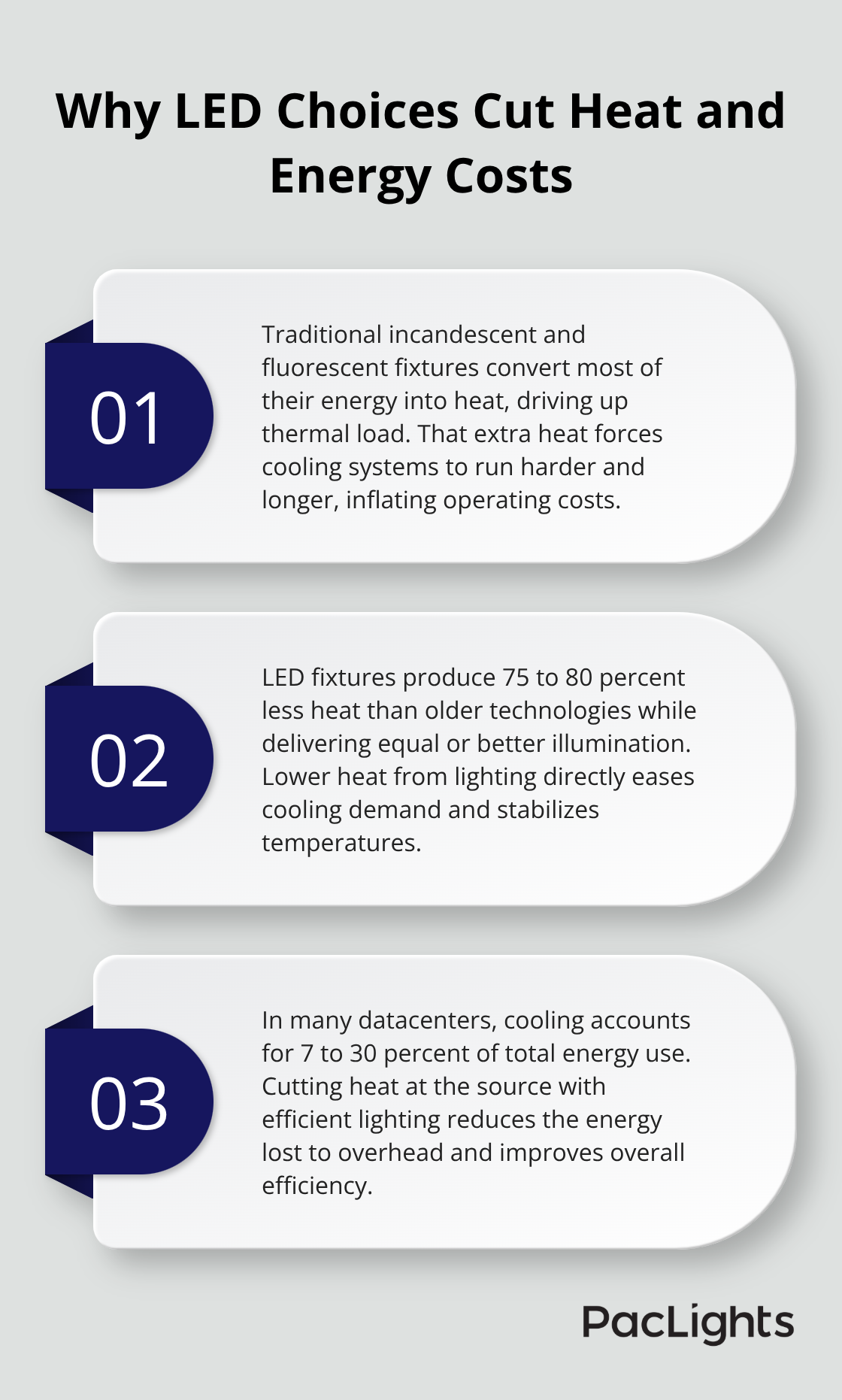
When you switch to LEDs with proper placement, you reduce both the direct heat load from fixtures and the cascading cooling demand that follows. Fixture selection alone can shift your cooling load by 10 to 15 percent in spaces with high lighting density.
Airflow and Temperature Control
Strategic placement and fixture type directly influence airflow patterns and hot-spot formation. Fixtures mounted above cold aisles or in positions that obstruct underfloor air distribution force your HVAC system to compensate, creating temperature gradients that sensors may not catch until damage occurs. ASHRAE guidelines recommend maintaining temperatures between 64.4°F and 80.6°F, yet many facilities operate below 70°F to mask poor airflow design, wasting energy unnecessarily. Proper lighting layout prevents obstructions to aisle containment systems and allows air handlers to function as designed. Temperature variations across your facility indicate that lighting placement directly affects cooling efficiency and equipment reliability.
Automated Controls and Energy Optimization
Motion sensors and daylight controls reduce fixture runtime during low-occupancy periods, cutting both lighting energy and associated cooling load. Advanced networked lighting controls let you dim or shut off lights in maintenance areas while keeping critical zones fully illuminated, optimizing energy spend without sacrificing safety. LED retrofit solutions modernize older systems without full infrastructure replacement, giving you immediate heat reduction and cost savings while you plan longer-term upgrades. PacLights offers retrofit solutions and advanced lighting controls (including networked options and optional motion or daylight sensors) designed to help you optimize energy use across your facility.
Visibility and Technician Safety
Technicians need clear visibility to read equipment status, identify cable routes, and spot thermal issues early, so readability cannot be compromised. Poor lighting in server environments leads to installation errors, missed maintenance alerts, and slower troubleshooting during outages. Proper fixture placement ensures that operators can monitor dashboard indicators and thermal hotspots without strain or guesswork. The next section covers how to select and position fixtures that balance these competing demands-energy efficiency, thermal management, and operational visibility.
How to Choose and Position Datacenter Lighting for Maximum Efficiency
Select LEDs Built for Datacenter Conditions
LED selection directly determines your thermal and energy outcomes, so treating it as a secondary decision wastes money. Most datacenters default to whatever fixtures fit the budget, but this approach ignores the 10 to 15 percent cooling load reduction you gain from proper LED choice and placement. Start with fixtures rated for continuous operation in your ambient temperature range. Datacenter environments run consistently warm, and LEDs rated only for standard office conditions degrade faster and lose efficiency. Verify the lumen output per watt-modern datacenter LEDs deliver 100 to 150 lumens per watt, compared to 60 to 80 for older fluorescent systems. This gap matters because every extra watt of inefficiency becomes cooling demand.
Position Fixtures to Preserve Airflow
Fixture placement directly influences airflow patterns and hot-spot formation. Mount lighting at the perimeter of server zones or use low-profile fixtures that sit flush with cable trays rather than above server aisles. Fixtures mounted directly above server aisles or in pathways that interrupt airflow force your HVAC system to compensate with higher fan speeds, increasing both energy consumption and noise. Proper positioning prevents obstructions to cold-aisle containment and underfloor air distribution, allowing air handlers to function as designed. Temperature variations across your facility indicate that lighting placement directly affects cooling efficiency and equipment reliability.
Deploy Automated Controls for Real Savings
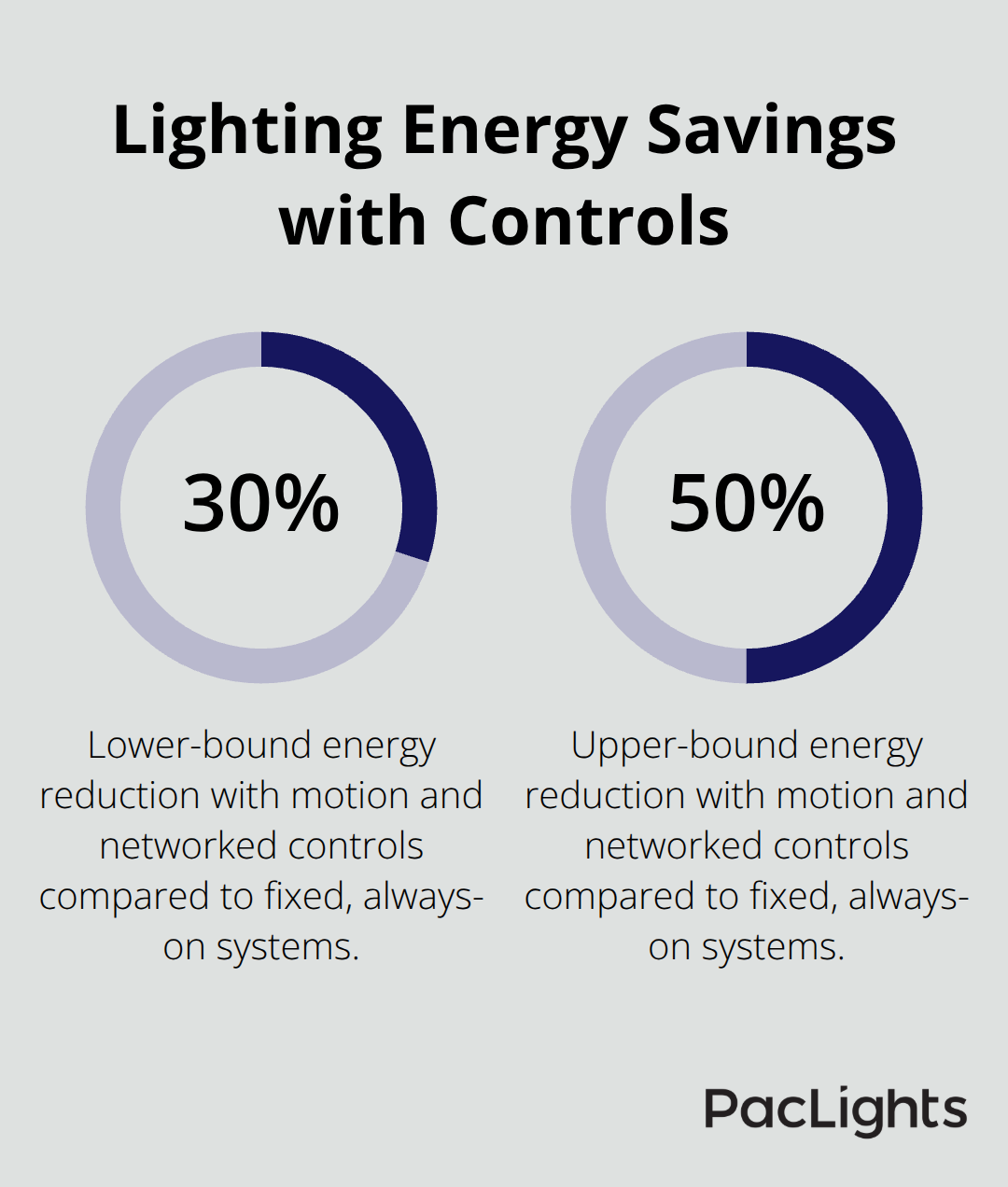
Motion sensors eliminate wasted lighting in maintenance areas that sit idle for hours, while daylight controls reduce fixture runtime when ambient light supplements your system. Networked lighting controls let you dim zones independently, matching illumination to actual occupancy rather than running everything at full brightness. A facility with motion and networked controls typically cuts lighting energy by 30 to 50 percent compared to fixed, always-on systems. The upfront cost of sensors and controls pays back in 18 to 36 months through reduced energy bills and lower cooling overhead.
LED retrofit solutions modernize older systems without full infrastructure replacement, giving you immediate heat reduction and cost savings while you plan longer-term upgrades.
Quantify Your Investment Before Committing
Request free lighting layout designs and ROI assessments to quantify savings before committing to upgrades. This approach eliminates guesswork and ties your lighting investment directly to measurable operational gains. PacLights offers high-bay and linear strip fixtures with optional motion and daylight sensors, plus networked controls for zone-level management, designed specifically for the thermal constraints of datacenters. When you have clear numbers on energy reduction and cooling load impact, you can make decisions with confidence rather than relying on assumptions about what will work in your specific environment.
Datacenter Lighting Mistakes That Cost You Money
Inadequate Brightness Creates Operational Friction
Dim server zones and technicians cannot read equipment labels without leaning in close or using flashlights-this wastes time during outages when every second counts. ASHRAE guidelines and datacenter best practices recommend 300 to 500 lux in server areas and 500 to 750 lux in control rooms, yet many facilities operate at 150 to 200 lux thinking dimmer fixtures save energy. This false economy fails because technicians compensate with portable lights, creating hot spots and obstructing airflow.
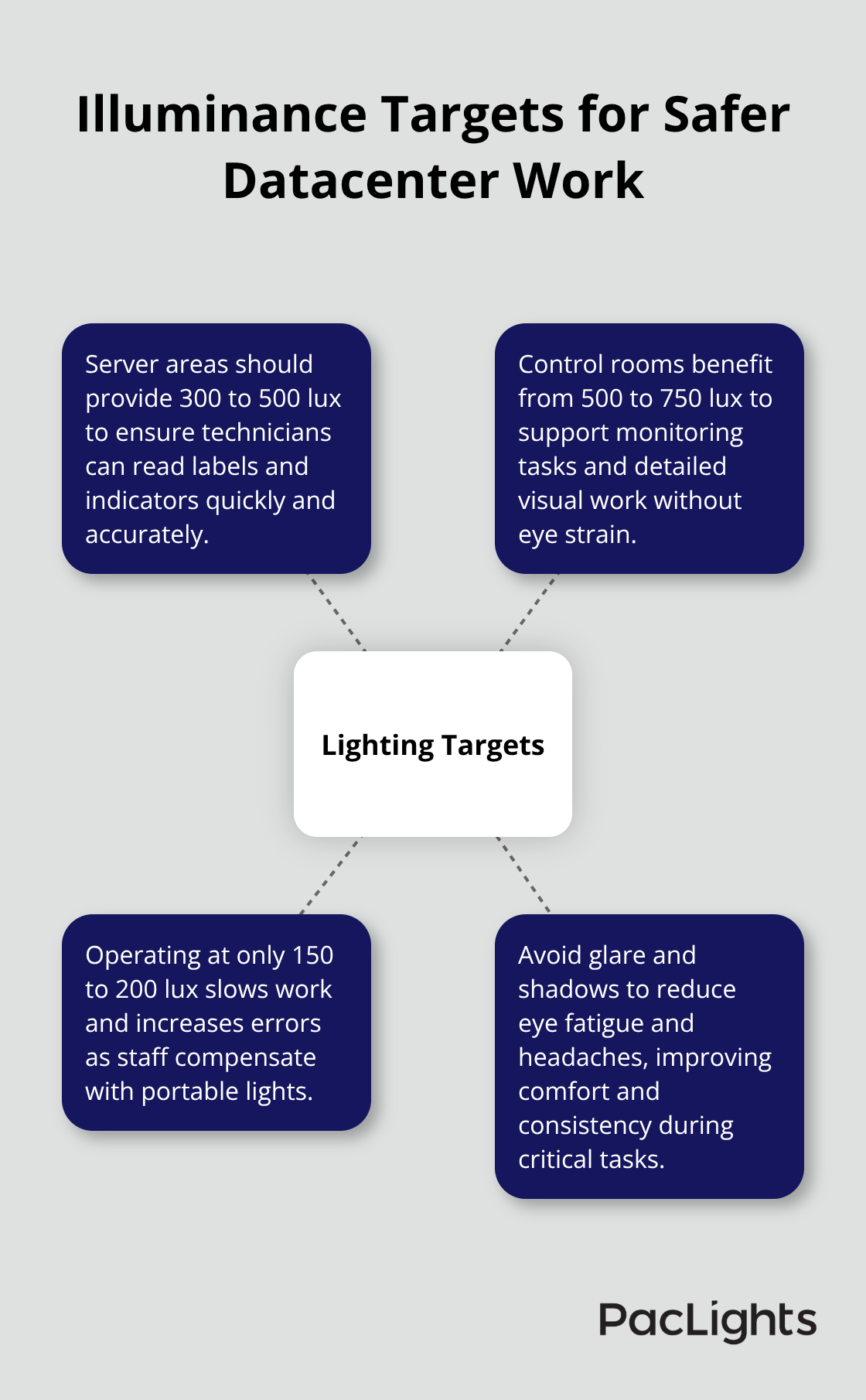
Facilities that dim server aisles below 300 lux often discover that technicians work slower and make more errors, offsetting any energy savings. Appropriate lighting without glare or shadows can reduce eye fatigue and headaches, revealing the true cost of inadequate brightness in critical zones.
Inefficient Fixtures Generate Unnecessary Heat
Older fluorescent or halogen units still running in legacy datacenters convert 80 to 90 percent of input energy into heat, forcing your cooling system to expend extra capacity that costs far more than the fixture energy itself. A single 400-watt halogen fixture generates roughly 320 watts of waste heat; replace it with a 60-watt LED and you eliminate that thermal load plus the cascading cooling demand, saving money on both lighting and cooling electricity. LED fixtures cut waste dramatically, producing 75 to 80 percent less heat than older technologies while delivering the same or better illumination. In a datacenter where cooling consumes 7 to 30 percent of total energy use, every watt of inefficient light adds directly to thermal load and operational expense.
Poor Planning Blocks Future Growth
Fixtures mounted in fixed positions above aisles become obstacles when you add server racks or relocate equipment. Undersized electrical circuits cannot support additional lighting without expensive panel upgrades. Modular fixtures that mount to cable trays or perimeter walls rather than overhead allow your facility to adapt as needs change. Specify circuits with 40 percent spare capacity so additions require no infrastructure work. A lighting infrastructure locked into fixed positions creates expensive rework when expansion arrives, and this bottleneck compounds the thermal and energy problems already present in your facility.
Quantify Savings Before Committing to Upgrades
Request free lighting layout designs and ROI assessments to quantify savings before committing to upgrades. This approach eliminates guesswork and ties your lighting investment directly to measurable operational gains. When you account for your facility’s growth roadmap, you ensure your lighting system scales without costly retrofits. Clear numbers on energy reduction and cooling load impact let you make decisions with confidence rather than relying on assumptions about what will work in your specific environment.
Final Thoughts
Datacenter lighting design tips rest on three core principles: reduce heat generation, cut energy waste, and maintain visibility where technicians need it most. Strategic LED selection and placement lower your cooling load by 10 to 15 percent, while automated controls cut lighting energy by 30 to 50 percent compared to fixed systems. These gains compound over time, turning a single lighting upgrade into years of reduced operational expense and improved equipment reliability.
Proper lighting design prevents the thermal hotspots and airflow obstructions that damage servers and shorten equipment life. Technicians work faster and make fewer errors when they can read equipment labels and status indicators without strain. Your facility scales more easily when fixtures mount to cable trays and perimeter walls rather than fixed overhead positions, eliminating expensive rework during expansion.
Start with a free lighting layout design and ROI assessment tailored to your specific facility. Visit PacLights to explore fixture options and schedule your assessment, then implement upgrades with confidence and start capturing operational gains immediately.
Disclaimer: PacLights is not responsible for any actions taken based on the suggestions and information provided in this article, and readers should consult local building and electrical codes for proper guidance.