

Hazardous locations demand lighting that won’t fail when it matters most. Vapor tight fixtures seal out corrosive vapors, moisture, and chemical exposure-protecting both your equipment and your team.
At PacLights, we’ve built this vapor tight lights guide to help you understand what these fixtures do, how to select them, and why they’re non-negotiable in certain industries. Whether you’re managing a chemical plant, pharmaceutical facility, or any environment with explosive atmospheres, the right lighting makes all the difference.
What Vapor Tight Lights Actually Do
The Core Function and Design
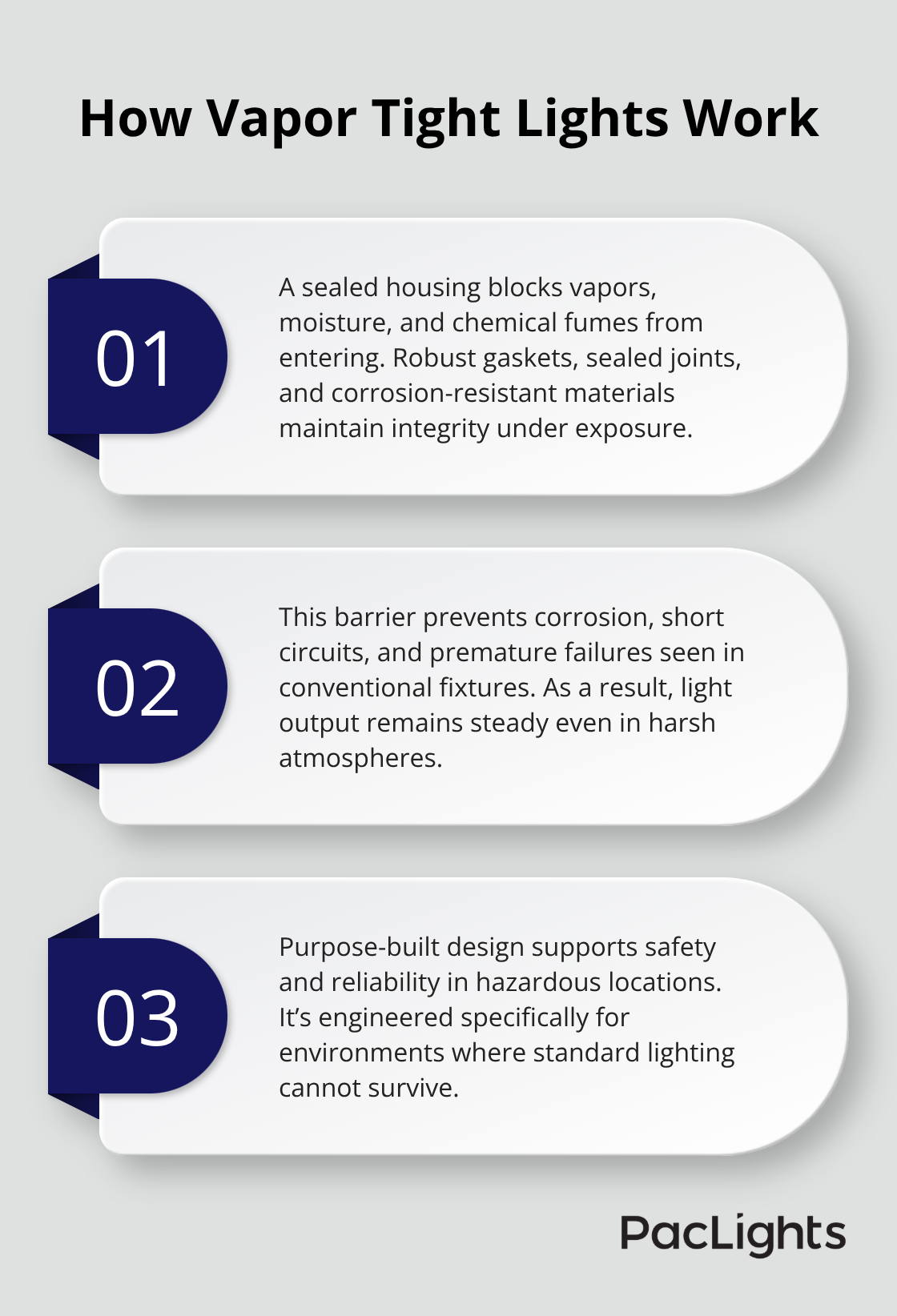
Vapor tight lights are sealed fixtures that prevent vapors, moisture, and chemical fumes from entering the housing and damaging internal components. Unlike standard industrial lighting, these fixtures feature gaskets, sealed joints, and corrosion-resistant materials that create a complete barrier against hazardous substances. The sealed design maintains consistent light output in environments where conventional fixtures would corrode, short-circuit, or fail entirely.
Why Standard Fixtures Fall Short
In chemical processing plants, refineries, and pharmaceutical manufacturing facilities, a failed light fixture represents a serious safety liability. Equipment shutdowns occur within weeks when moisture penetrates standard housings. Corrosive vapors attack electrical connections and degrade reflective surfaces, reducing light output by 30-40% within the first year. Failed fixtures also create additional fire and explosion risks in Class I and Class II hazardous locations.
Industries That Depend on Vapor Tight Lighting
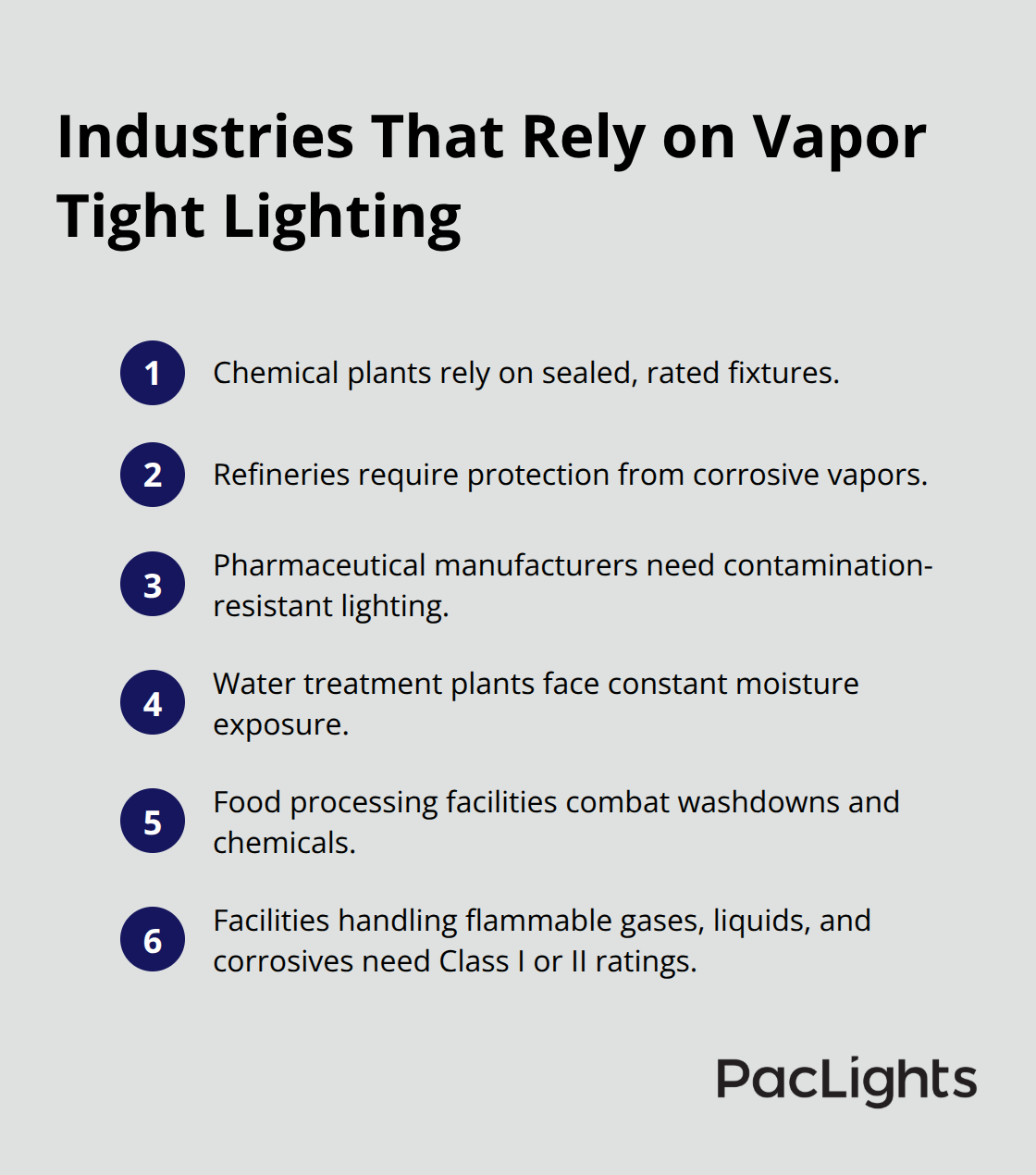
Chemical plants and refineries represent the primary markets for vapor tight lighting, with facilities handling flammable liquids, gases, and corrosive substances requiring fixtures rated for Class I or Class II hazardous locations under the National Electrical Code. Pharmaceutical manufacturers, water treatment plants, and food processing facilities also depend on these fixtures because moisture and chemical exposure degrade standard lighting within months.
Compliance Standards and Legal Requirements
Compliance with standards like NFPA 70 and UL 844 is legally mandated in these environments-not optional. Facilities that ignore these requirements face significant fines; OSHA citations for non-compliant hazardous location lighting typically range from $10,000 to $156,000 per violation depending on severity. Meeting these standards protects your team, prevents costly shutdowns, and keeps your operation within legal boundaries.
Selecting Fixtures Built for Your Environment
PacLights manufactures vapor proof and hazardous location lights specifically engineered to meet these rigorous standards. Your facility operates safely and legally while maintaining the reliable illumination your team needs to work effectively. Understanding what features matter most in vapor tight fixtures helps you make the right selection for your specific hazardous location.
What Vapor Tight Lights Protect and Deliver
Stopping Corrosive Vapors at the Source
Vapor tight fixtures stop corrosive vapors and moisture before they reach electrical components and degrade performance. In chemical plants handling substances like sulfuric acid or chlorine gas, standard fixtures corrode within weeks; sealed fixtures maintain full functionality for years. The gaskets and corrosion-resistant materials create an impenetrable barrier that keeps hazardous substances away from ballasts, wiring, and reflective surfaces. This protection translates directly into fewer equipment failures, reduced downtime, and safer working conditions for your team.
Energy Savings That Add Up Fast
Energy-efficient LED vapor tight fixtures consume 50-70% less power than older metal halide or high-pressure sodium alternatives, according to the U.S. Department of Energy. A typical chemical plant with 200 fixtures operating 16 hours daily saves $15,000 to $25,000 annually on electricity costs alone. Maintenance expenses drop significantly because sealed fixtures don’t require the frequent cleaning and component replacement that standard fixtures demand in corrosive environments.
Durability That Extends Equipment Life
Vapor tight fixtures rated for Class I Division 1 hazardous locations deliver 50,000+ operating hours before replacement becomes necessary, compared to 20,000-30,000 hours for conventional industrial lighting. Over a decade, this longevity reduces total cost of ownership by 40-50% when you factor in labor, replacement parts, and operational disruptions. Facilities that switched to LED vapor tight systems from older technologies reported payback periods of 3-5 years, after which they operate with minimal lighting-related expenses.
The Real Financial Impact
The combination of sealed protection, energy savings, and extended lifespan makes vapor tight fixtures the practical choice for any hazardous location operation. These benefits compound over time, transforming what appears as a higher upfront investment into substantial long-term savings. When you select the right vapor tight fixtures, you’re not just protecting your equipment-you’re making a decision that affects your bottom line for years to come.
How to Choose and Install Vapor Tight Lights Correctly
Match Your Fixture to Your Exact Hazard Classification
Selecting the wrong vapor tight fixture wastes money and creates safety gaps that put your team at risk. The most critical mistake facilities make is prioritizing price over specification matching. Your fixture must match your specific hazard classification, not just any vapor tight option on the market. Class I Division 1 environments handling flammable gases require different construction than Class II Division 1 spaces with combustible dust. Check the UL listing on every fixture to confirm it’s rated for your exact hazard group and temperature class. A $200 fixture that doesn’t meet your classification creates liability exposure worth millions.
Select Materials Built for Your Chemical Environment
Look for sealed construction with elastomer gaskets rated for the specific chemicals present in your facility. Silicone gaskets work well in most environments, but if you handle aggressive solvents or extreme temperatures, you need gaskets engineered for those conditions. Corrosion-resistant housing materials matter enormously. Aluminum housings corrode quickly in acidic vapor environments, while powder-coated steel or composite materials resist chemical attack far longer. Request technical data sheets that specify material compatibility with the substances your facility uses.
Install Fixtures With Proper Spacing and Connections
Installation location determines half the battle. Mount fixtures away from direct chemical spray whenever possible, even if vapor tight construction protects them. Heat buildup inside sealed fixtures reduces LED lifespan, so try adequate ventilation around mounting areas and avoid stacking fixtures in confined spaces. Install fixtures at least 12 inches from walls to allow air circulation. Tighten all connections with a torque wrench set to manufacturer specifications, not hand-tight assumptions. Loose connections create micro-gaps where vapors penetrate and moisture accumulates. Most fixture failures trace back to installation shortcuts, not design flaws.
Maintain Gaskets and Connections on a Regular Schedule
Maintenance schedules separate facilities that keep vapor tight systems running from those that experience repeated failures. Inspect gaskets every six months in corrosive environments. Degraded gaskets lose effectiveness quickly and cost $50–150 to replace versus $5,000–15,000 for emergency fixture replacement and downtime. Clean lens covers quarterly with appropriate solvents for your environment, never abrasive materials that scratch protective coatings.
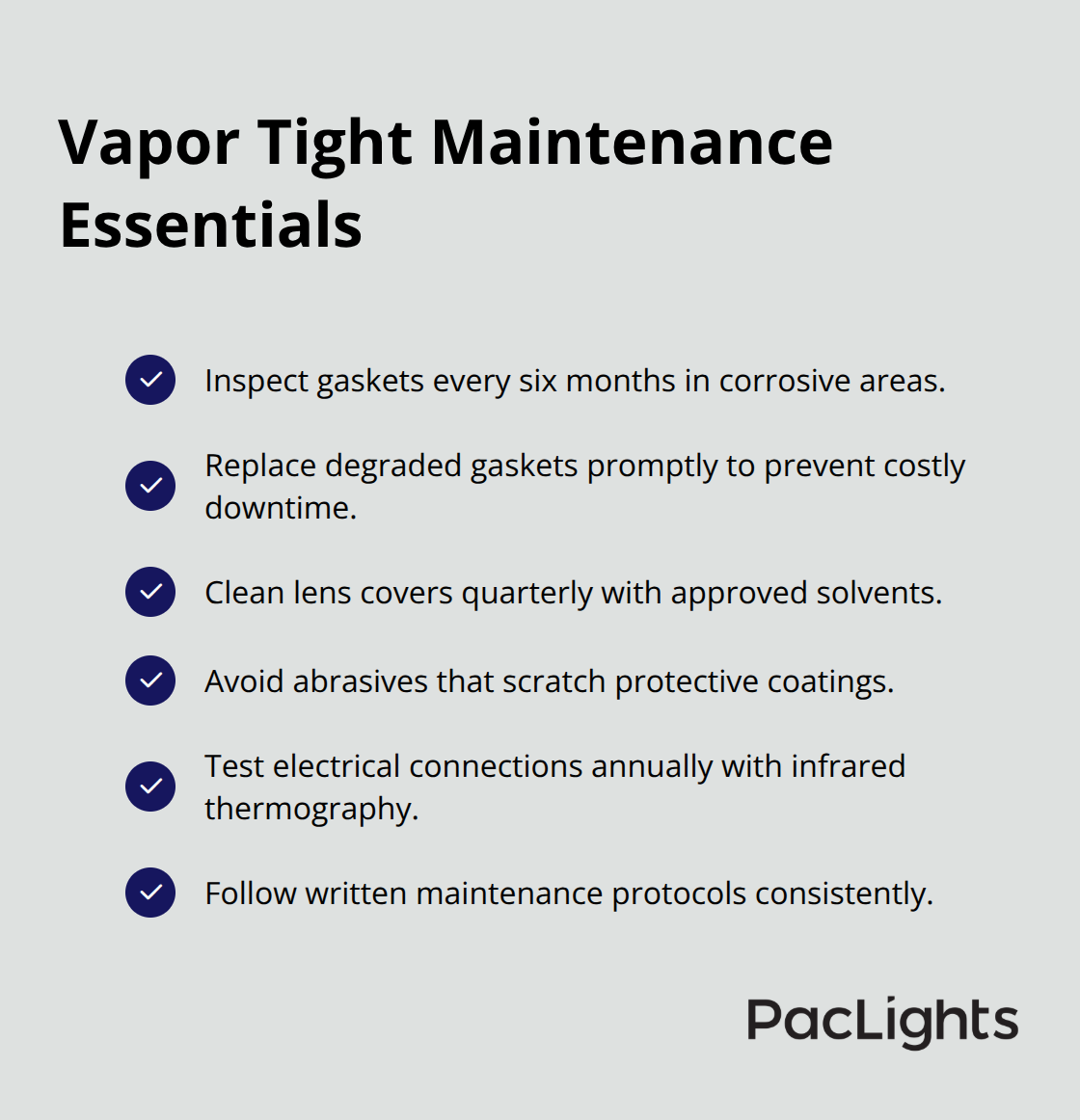
Test electrical connections annually using infrared thermography to catch loose contacts before they fail. Following detailed maintenance protocols extends fixture life beyond rated hours and prevents the unexpected outages that disrupt production and compromise safety.
Final Thoughts
Vapor tight lighting isn’t a luxury upgrade for hazardous locations-it’s a requirement that directly impacts safety, compliance, and operational costs. The fixtures you install today determine whether your facility runs smoothly for years or faces repeated failures, regulatory fines, and dangerous downtime. Sealed construction, corrosion-resistant materials, and proper gasket design stop vapors and moisture before they damage electrical components.
Energy-efficient LED vapor tight fixtures cut electricity costs by 50-70% while delivering 50,000+ operating hours compared to 20,000-30,000 hours from conventional alternatives. Maintenance becomes predictable and affordable when you select fixtures engineered for your specific hazard classification and chemical environment. Facilities that follow proper installation and maintenance protocols reduce total cost of ownership by 40-50% over a decade while keeping their teams protected.
We at PacLights manufacture vapor proof and hazardous location lighting specifically engineered to meet NFPA 70, UL 844, and other rigorous compliance standards. Our fixtures combine sealed construction with energy-efficient LED technology, delivering the protection and performance your facility demands. Visit PacLights to explore our hazardous location lighting options and connect with our team about your specific requirements.
Disclaimer: PacLights is not responsible for any actions taken based on the suggestions and information provided in this article, and readers should consult local building and electrical codes for proper guidance.