

NSF certification for LED lighting isn’t optional in certain industries-it’s a regulatory requirement that directly impacts your facility’s safety and compliance standing.
At PacLights, we’ve seen firsthand how facilities that overlook NSF-certified lighting solutions face contamination risks, failed inspections, and unnecessary operational costs. This guide walks you through what NSF certification actually means and why it matters for your business.
What NSF Certification Actually Requires
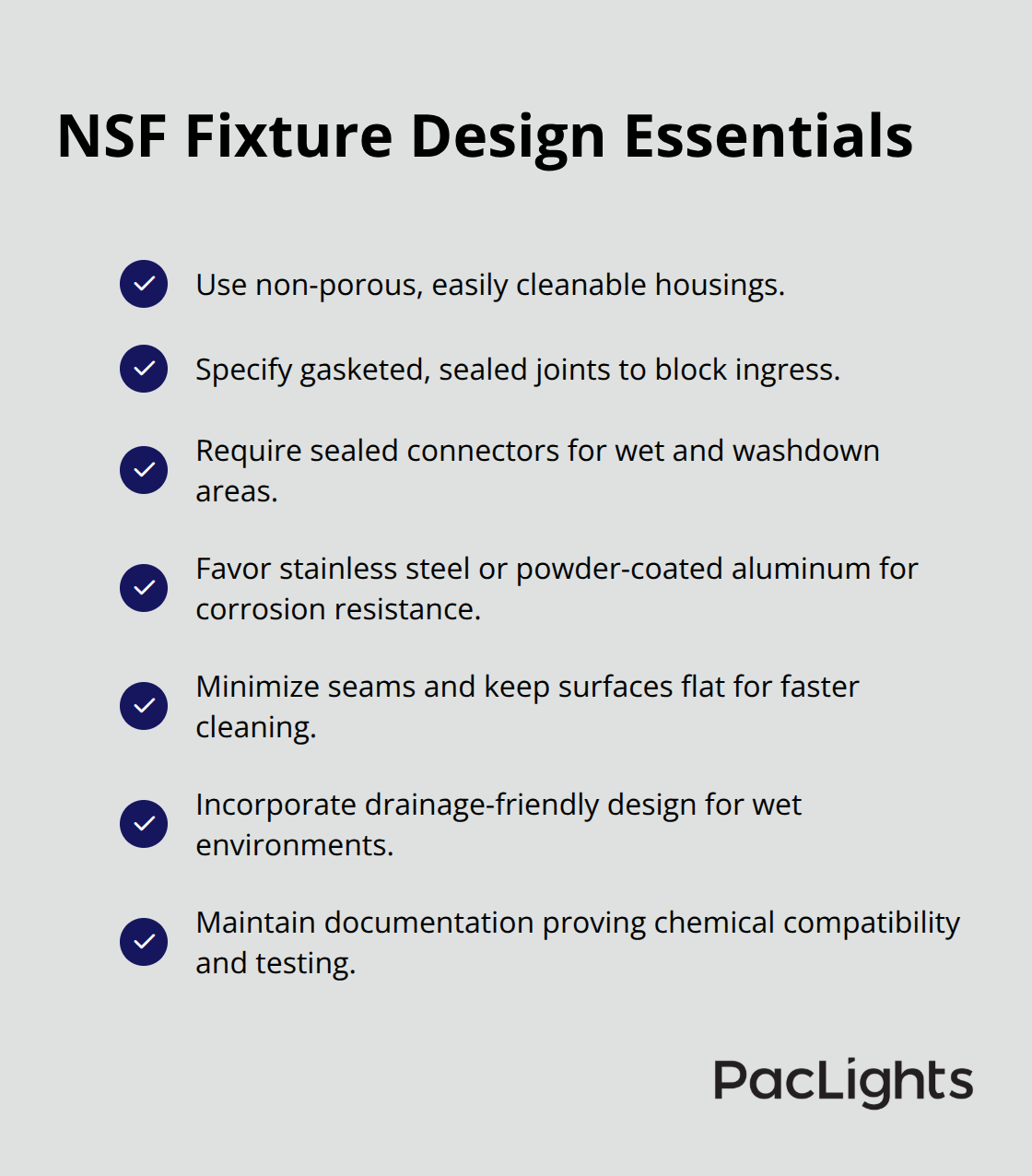
NSF certification signals compliance with sanitation and safety standards specifically designed for LED lighting in food processing, healthcare, and other clean environments. The certification isn’t a rubber stamp-it means your fixtures have undergone testing against strict protocols for material safety, cleanability, and electrical performance. In NSF-certified environments, fixtures must feature non-porous, easily cleanable housings and gasketed joints to withstand frequent sanitizing with cleaning chemicals. This matters because standard commercial LED fixtures won’t survive the washdown cycles that food plants, pharmaceutical facilities, and hospitals demand.
Verify Your Exact Application Coverage
When you evaluate NSF-certified products, verify that the NSF listing covers your exact application-whether that’s food contact surfaces, washdown zones, or sterile environments-and record the listing number for validation during audits. The certification process itself is rigorous: manufacturers submit fixtures to NSF International for testing, and the standards address everything from material composition to drainage design. A facility manager at a regional food processor discovered that non-certified retrofit fixtures started corroding within 18 months of daily chemical cleaning. Switching to NSF-certified units eliminated replacement costs and removed the contamination risk that nearly triggered a regulatory fine.
Materials and Design Prevent Bacterial Growth
Non-porous housings and sealed joints aren’t just nice features-they prevent bacterial growth and chemical degradation directly. Stainless steel, powder-coated aluminum, and sealed connectors resist corrosion from alkaline and acidic cleaners used in sanitization programs. Cleanability-focused design (flat surfaces and minimal seams) reduces cleaning time and labor in sanitation schedules. When selecting NSF-certified fixtures, look for products with published test data showing performance under your specific cleaning chemicals and protocols. Some facilities choose cheaper fixtures that carry NSF certification but lack documentation-this creates audit risk because inspectors want evidence that the fixture underwent testing with your actual cleaning agents.
Energy Savings Compound Over Time
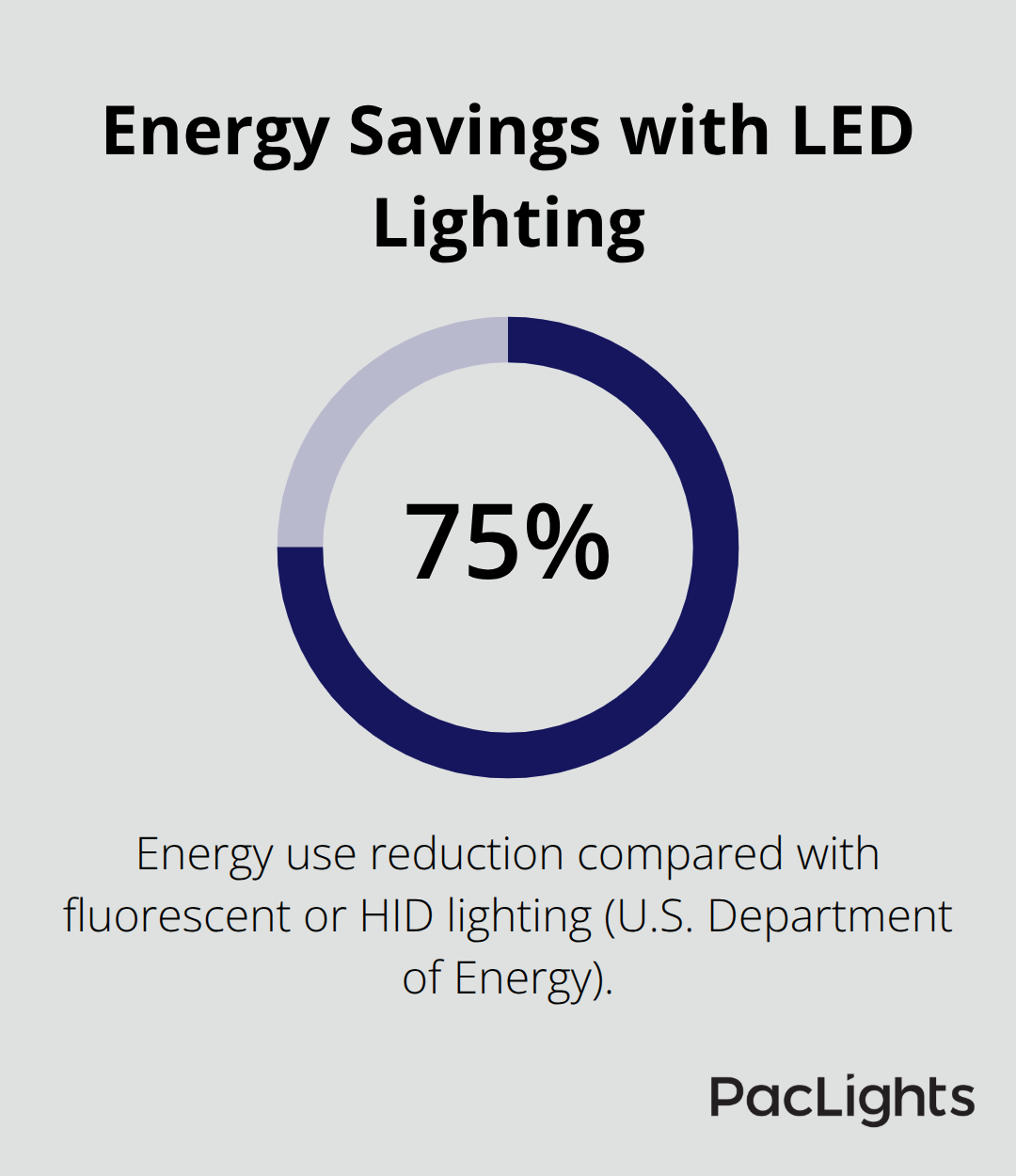
LED lighting cuts energy use by up to 75 percent compared with traditional fluorescent or HID lighting, according to the U.S. Department of Energy. NSF-certified LED fixtures deliver 50,000 to 100,000 hours of life, which reduces maintenance frequency and facility downtime significantly. Simple payback for LED retrofits commonly runs 2 to 4 years, driven by both energy savings and reduced replacement labor. When you factor in NSF compliance requirements, the total cost advantage grows because you avoid costly rework from non-certified fixture failures. The next section examines which industries face the strictest NSF requirements and why compliance becomes non-negotiable in those sectors.
Where NSF Certification Becomes Non-Negotiable
Food and Beverage Processing Plants Face Daily Washdown Demands
Food and beverage processing plants operate under constant regulatory pressure from the FDA and state health departments. These facilities run daily washdown cycles with alkaline and acidic cleaners that destroy standard LED fixtures within months. A non-certified fixture corrodes, leaks, and contaminates product lines-and that single failure can trigger facility shutdowns costing thousands per day.
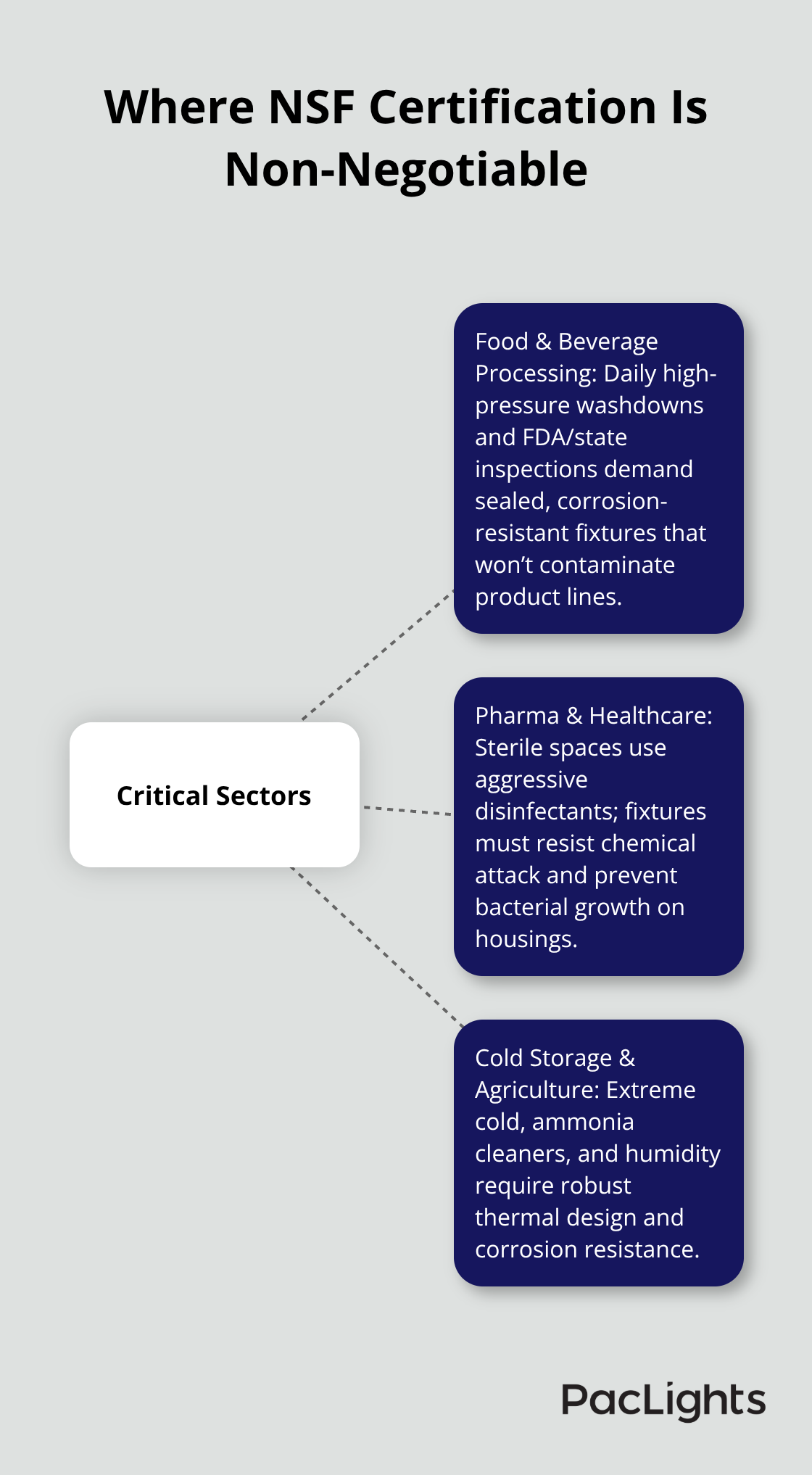
NSF-certified lighting in food plants must handle spray cleaning at high pressure without degradation, which means sealed connectors, stainless steel housings, and drainage systems designed specifically for wet environments. The USDA inspection protocols explicitly verify lighting compliance, and facilities without NSF-certified fixtures face citations that impact their compliance ratings.
Pharmaceutical and Healthcare Facilities Demand Sterile Conditions
Pharmaceutical and healthcare facilities face equally strict requirements, but for different reasons. Sterile compounding rooms, operating theaters, and clean rooms cannot tolerate any contamination from fixture materials or bacterial growth on light housings. NSF certification in these environments requires fixtures that resist the aggressive disinfectants hospitals use multiple times daily-hydrogen peroxide, quaternary ammonium compounds, and alcohol-based solutions that corrode non-certified materials rapidly. Healthcare facilities also demand precise color rendering and consistent lumen output because surgical lighting directly affects clinical outcomes. LED fixtures with CRI 80 or higher and CCT around 4000K to 5000K meet these standards, according to ENERGY STAR and IES guidelines. Hospitals that skip NSF certification face Joint Commission audit failures and potential loss of accreditation.
Cold Storage and Agricultural Facilities Battle Extreme Conditions
Agricultural cold storage and processing facilities encounter a third set of challenges: extreme temperature swings, ammonia-based cleaning agents, and high-humidity environments that cause rapid corrosion in standard fixtures. Cold storage facilities operating at minus 20 degrees Fahrenheit require LED systems with thermal management designed for those ambient conditions, because standard fixtures depreciate lumens prematurely in extreme cold. NSF-certified fixtures in these environments maintain L70 lumen maintenance ratings of 50,000 to 100,000 hours even under harsh conditions, according to the U.S. Department of Energy.
The True Cost of Non-Compliance
Facilities in all three sectors face one consistent reality: non-compliant lighting creates operational risk that far exceeds the cost difference between standard and NSF-certified fixtures. The payback period of 2 to 4 years for LED retrofits shrinks further when you factor in avoided compliance failures and facility shutdowns. Understanding which NSF requirements apply to your specific operation determines whether your facility passes inspection or faces costly citations and operational disruptions.
How NSF-Certified LED Lighting Protects Your Facility’s Bottom Line
NSF Certification Eliminates Contamination Risk
NSF-certified LED fixtures eliminate the false economy of buying cheaper non-certified alternatives. Facilities that install NSF-certified lighting experience measurably better outcomes across safety, contamination control, and operational costs. The difference isn’t marginal-it’s the gap between passing inspections and facing shutdown orders. When you select NSF-certified fixtures, you purchase regulatory certainty and operational stability simultaneously. Food processors and pharmaceutical manufacturers report zero contamination incidents linked to lighting after switching to certified systems, compared to multiple failures annually with non-certified fixtures. The reason is straightforward: NSF certification requires sealed connectors, non-porous housings, and drainage systems that survive the aggressive chemicals and washdown protocols these facilities demand. A pharmaceutical facility using non-certified fixtures in a sterile compounding room risks losing accreditation during Joint Commission audits-a consequence far more expensive than the fixture upgrade itself. NSF-certified LED systems reduce that risk to near-zero because the certification proves your fixtures withstand hydrogen peroxide, quaternary ammonium compounds, and alcohol-based disinfectants that hospitals use multiple times daily.
Durability in Extreme Conditions Reduces Maintenance Labor
Cold storage facilities operating at minus 20 degrees Fahrenheit face a different challenge: standard LED fixtures depreciate lumens prematurely in extreme cold, while NSF-certified units maintain L70 lumen maintenance ratings of 50,000 to 100,000 hours even under harsh conditions, according to the U.S. Department of Energy. This durability translates directly to reduced maintenance labor and fewer facility disruptions. NSF-certified fixtures also qualify for rebates and incentives through ENERGY STAR and DLC programs, which accelerate payback further. Warranties of 5 to 10 years are common with NSF-certified LED fixtures, reducing total cost of ownership compared to cheaper alternatives that fail within months.
Energy Savings Compound Financial Advantages
LED lighting cuts energy use by up to 75 percent compared with traditional fluorescent or HID lighting, according to the U.S. Department of Energy, and NSF-certified LED fixtures deliver this performance while meeting sanitation standards. Simple payback for LED retrofits commonly runs 2 to 4 years, driven by energy savings and reduced replacement labor. However, the actual financial advantage grows significantly when you factor in avoided compliance failures, contamination incidents, and emergency fixture replacements.
A food processing plant that skips NSF certification might save 15 to 20 percent on initial fixture costs, but a single failed inspection or contamination event costs thousands in downtime, remediation, and regulatory fines. Facilities that integrate occupancy sensors and daylight harvesting controls with NSF-certified LED systems achieve additional energy reductions of 20 to 40 percent, according to the U.S. Department of Energy, creating a compounding advantage over standard fixtures. The practical outcome is clear: NSF-certified LED lighting costs less over the fixture’s operational lifetime while eliminating the contamination and compliance risks that non-certified systems create.
Final Thoughts
NSF certification LED lighting protects your facility from contamination, regulatory failure, and unnecessary operational costs. Facilities that install NSF-certified fixtures pass inspections, avoid shutdown orders, and reduce their total cost of ownership compared to non-certified alternatives. Food processors, pharmaceutical manufacturers, and cold storage operators all benefit from sealed connectors, non-porous housings, and drainage systems that survive aggressive cleaning chemicals and extreme conditions.
LED lighting cuts energy use by up to 75 percent compared with traditional fluorescent or HID lighting, and NSF-certified fixtures deliver this performance while meeting sanitation standards. Simple payback runs 2 to 4 years through energy savings and reduced maintenance labor. When you factor in avoided compliance failures and contamination incidents, the actual advantage grows significantly-a single failed inspection or facility shutdown costs thousands in downtime and regulatory fines, far more than the difference between standard and certified fixtures.
Evaluate your facility’s specific NSF requirements and identify which fixtures need replacement. Verify that any NSF listing covers your exact application, whether that’s food contact surfaces, washdown zones, or sterile environments, and record the listing numbers for audit validation. Visit PacLights to explore NSF-certified options and request a lighting layout design for your operation.
Disclaimer: PacLights is not responsible for any actions taken based on the suggestions and information provided in this article, and readers should consult local building and electrical codes for proper guidance.