

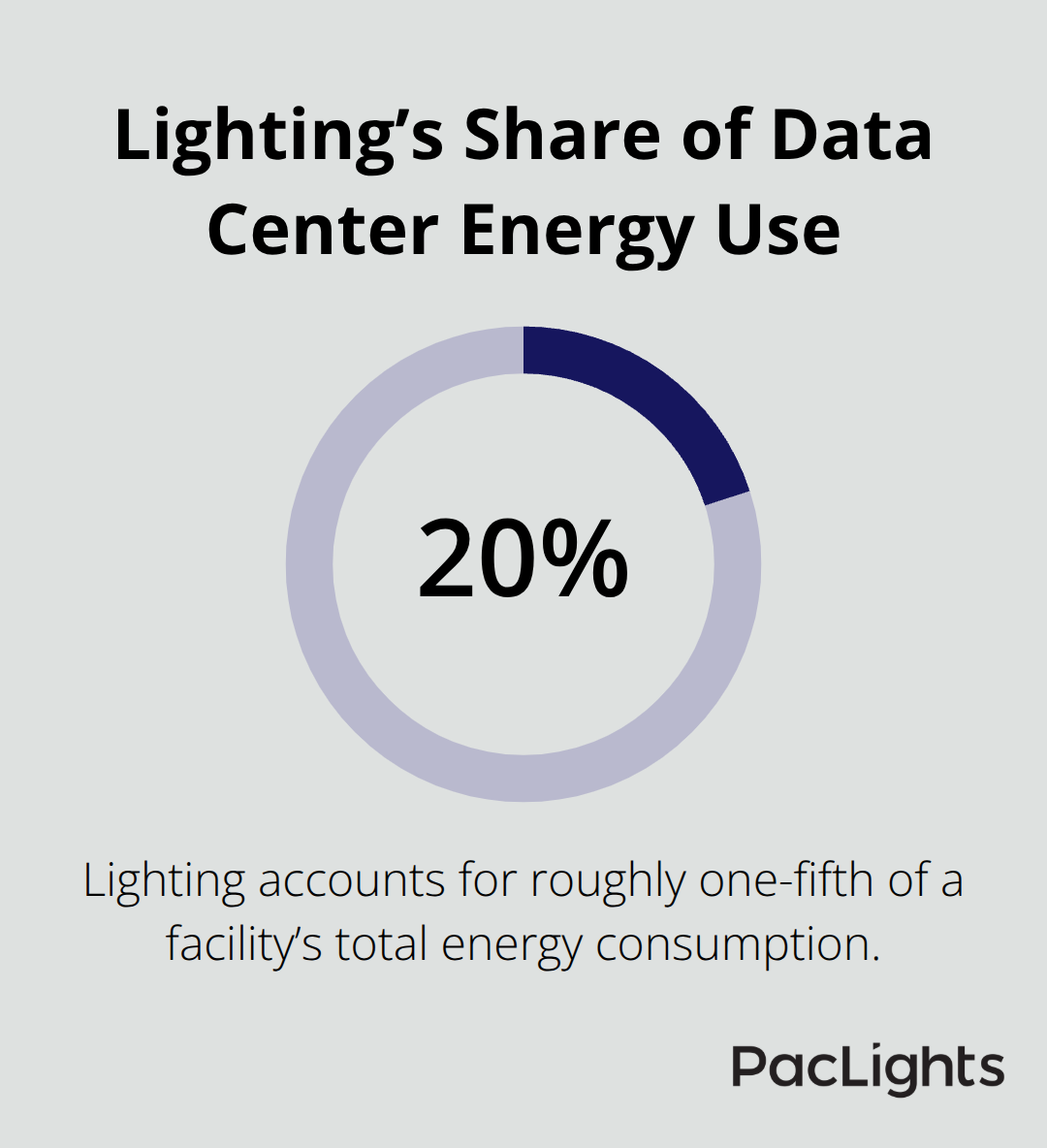
Data centers consume massive amounts of electricity, with lighting often accounting for 20% of total energy use. Yet most facilities still rely on outdated fixtures that waste power while generating unnecessary heat.
At PacLights, we’ve seen firsthand how data center lighting efficiency transforms operations. Modern LED systems paired with smart controls cut energy costs dramatically while improving safety for your IT staff.
The Real Cost of Outdated Data Center Lighting
Energy Waste and Cooling Expenses
Data center operators face a brutal math problem. Lighting accounts for roughly 20% of total facility energy consumption, yet most installations still use older fluorescent or metal halide fixtures that compound cooling expenses. The U.S. Energy Information Administration reports that data centers consumed approximately 196 billion kilowatt-hours in 2023, with lighting representing a significant fraction of that total. When your cooling system must work harder to counteract heat from inefficient lights, energy bills climb faster than facility managers expect.
A single poorly lit server room wastes thousands of dollars annually on wasted electricity and excess cooling capacity.
Safety and Maintenance Challenges
The visibility problem creates operational risk that directly impacts maintenance speed and staff safety. IT personnel work in data centers for hours identifying cable connections, diagnosing equipment failures, and performing preventative maintenance in dimly lit racks. Poor lighting forces staff to use flashlights or headlamps, slowing troubleshooting and increasing the chance of mistakes that damage expensive hardware. According to the National Safety Council, inadequate lighting contributes to workplace injuries at a rate significantly higher than well-lit environments.
Data center equipment operates in tight spaces where shadows from outdated fixtures obscure critical components. Technicians work inefficiently or make costly errors when they cannot see what they’re doing. Modern LED systems eliminate these shadows through superior light distribution and color rendering, allowing staff to work faster and safer while reducing the physical strain of working in dim conditions.
Why Modern Solutions Matter
These operational inefficiencies (both energy-related and safety-related) compound over time, making the case for lighting upgrades increasingly difficult to ignore. The combination of wasted electricity, excess cooling demands, and slower maintenance cycles creates a financial drain that extends far beyond the initial fixture cost. Understanding these real costs sets the stage for exploring how advanced LED technology and smart controls transform data center operations.
LED Technology and Smart Controls Cut Data Center Costs
Energy Savings from Modern LED Fixtures
Modern LED fixtures deliver energy savings that far exceed simple wattage reductions. The U.S. Department of Energy reports that typical data center retrofits from fluorescent to LED lighting cut energy consumption by 50-70%. This matters because those savings compound immediately through lower electricity bills and reduced cooling demands. LEDs generate significantly less heat than older technologies, which means your cooling system works less aggressively and consumes less power. A 500-square-foot server room consuming 5,000 watts of lighting under fluorescent fixtures drops to roughly 1,500-2,000 watts with quality LED systems. Over a year, that single room saves between 35,000 and 52,000 kilowatt-hours. At an average commercial electricity rate of 12 cents per kilowatt-hour, that translates to $4,200-$6,240 annually in direct lighting and cooling savings.
Calculating Your Payback Timeline
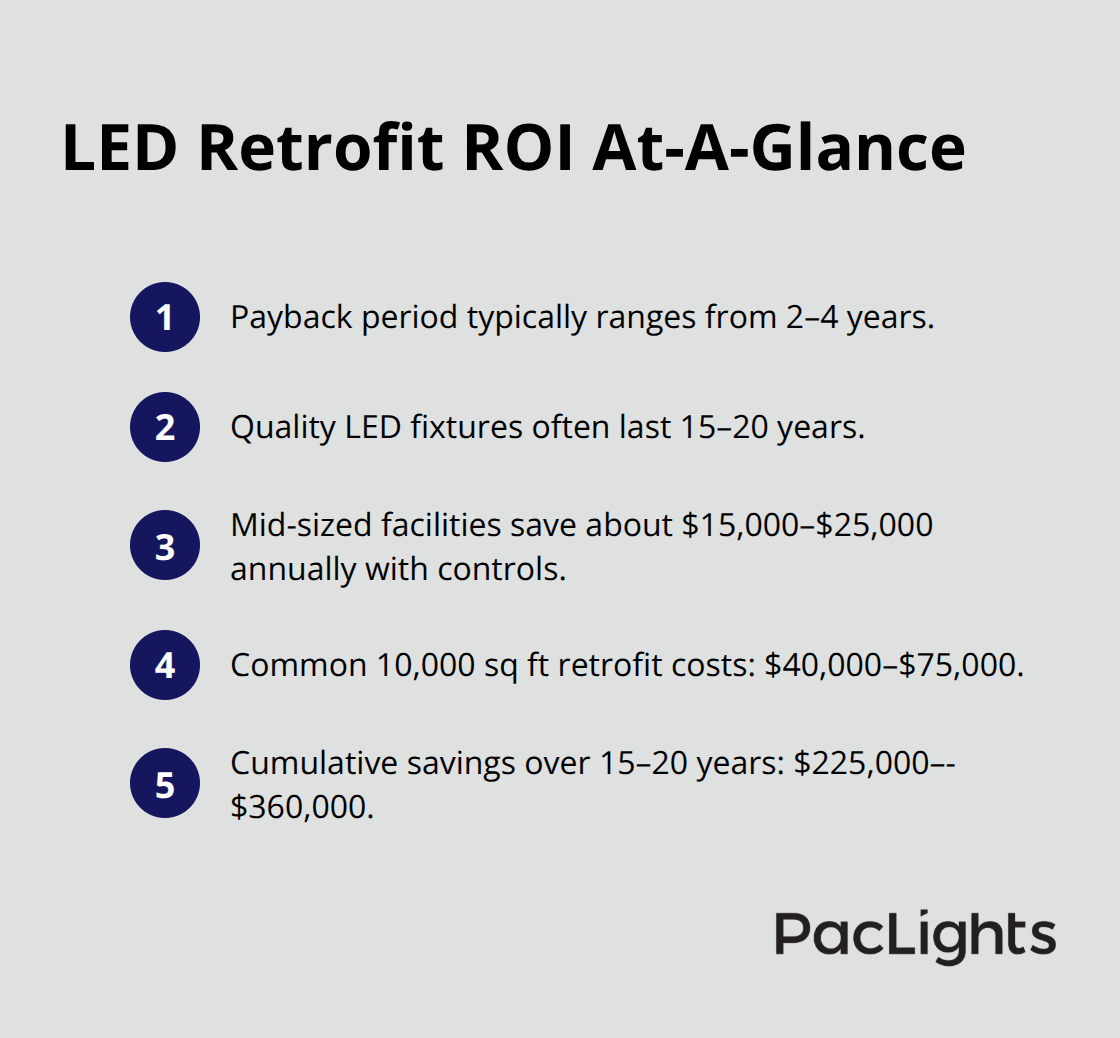
The payback period for LED retrofits typically ranges from 2-4 years, after which savings become pure profit. This timeline makes LED upgrades financially attractive even for facilities with tight capital budgets. Once you recover your initial investment, your facility operates with significantly lower energy costs for the next 15-20 years (the typical lifespan of quality LED fixtures). The math works in your favor from year three onward.
Motion Sensors and Occupancy-Based Controls
Smart controls amplify LED efficiency gains substantially. Motion sensors prevent lights from running during unmanned periods, which proves critical in data centers where technicians work sporadically in different zones. Networked lighting controls allow facility managers to adjust brightness levels remotely based on actual occupancy and task requirements rather than running fixtures at full intensity continuously. This capability reduces energy waste by an additional 20-40% beyond standard LED efficiency.
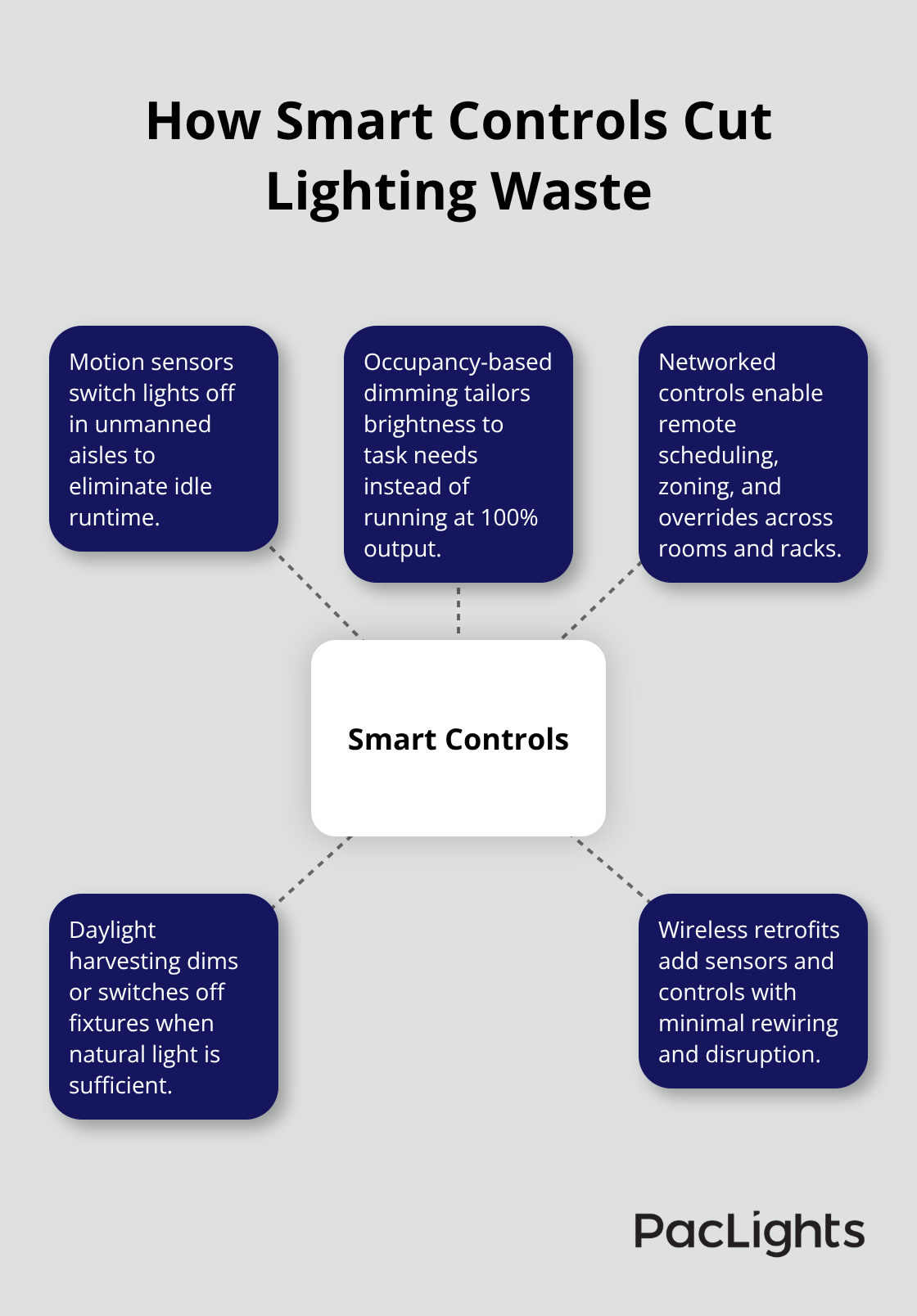
These integrated controls require minimal installation complexity in new construction and retrofit existing facilities with wireless sensors that avoid costly rewiring.
Daylight Harvesting and Visibility Improvements
Daylight harvesting systems work effectively in facilities with external walls or skylights, automatically dimming or switching off fixtures when natural light provides sufficient illumination. The combination of LED efficiency plus smart controls creates visibility improvements that accelerate maintenance work by 15-25%, according to facility management studies. Technicians complete troubleshooting tasks faster when they can see equipment clearly without shadows or glare. This operational speed gain translates directly into reduced labor costs and faster resolution of equipment failures-benefits that extend well beyond simple energy reduction.
Moving Toward Real-World Results
These efficiency gains remain theoretical until you implement them in your actual facility. The next section examines how data centers have transformed their operations through lighting upgrades, showing the concrete financial and operational results that facilities achieve when they move from outdated fixtures to modern LED systems with smart controls.
Real-World Impact of Efficient Data Center Lighting
Cost Reductions from Retrofit Projects
Retrofitting a 10,000-square-foot data center from fluorescent fixtures to LEDs typically costs between $40,000 and $75,000 in equipment and installation. That upfront investment recovers in 2-3 years through energy savings alone, but the real financial impact extends far beyond electricity bills.
A mid-sized facility operating 24/7 cuts its annual lighting energy consumption from roughly 150,000 kilowatt-hours to 45,000-60,000 kilowatt-hours after an LED retrofit. At commercial rates averaging 12 cents per kilowatt-hour, that translates to $10,800-$12,600 in direct annual savings.
The reduced cooling load from lower heat generation amplifies these numbers significantly. Cooling systems no longer fight against inefficient fixtures, which means compressors cycle less frequently and consume less power. Total annual savings reach $15,000-$18,000 for that same facility when you factor in cooling efficiency gains. This compounds over 15-20 years into savings exceeding $225,000 to $360,000 for a single retrofit project.
Enhanced Control Systems Drive Additional Savings
Facilities that add motion sensors and networked controls to their LED upgrades push annual savings to $20,000-$25,000. Motion sensors prevent lights from running in unmanned sections, while networked controls automatically adjust brightness based on actual occupancy patterns. These smart systems prevent waste during periods when technicians work sporadically in different zones throughout the facility.
Improved Visibility for IT Staff
Visibility improvements deliver operational benefits that spreadsheets often miss. IT staff complete maintenance tasks 20-30% faster under quality LED lighting compared to outdated fixtures, according to facility management professionals who track labor time before and after retrofits. Technicians spend less time squinting at cable labels, tracing connections, or repositioning themselves to see into equipment racks. This speed translates directly into faster problem resolution when equipment fails.
A data center that reduces mean time to repair by even 15 minutes per incident saves substantial labor costs across hundreds of annual service calls. Better lighting also reduces eye strain during extended troubleshooting sessions, which decreases fatigue-related errors that damage expensive hardware.
Extended Equipment Lifespan
Equipment lifespan extends when technicians work more carefully and catch maintenance issues earlier under superior lighting conditions. Preventative maintenance becomes more effective when staff can actually see equipment condition clearly, catching corrosion or loose connections before they cause failures. Facilities report that improved visibility accelerates the identification of hot spots in server racks, allowing technicians to reposition equipment or improve airflow before thermal issues damage components. These operational gains compound across years into extended equipment lifespan that multiplies the financial benefit of the original lighting upgrade.
Final Thoughts
Data center lighting efficiency delivers measurable financial returns that justify immediate action. The numbers speak clearly: retrofitting to LED systems cuts energy consumption by 50-70%, translates to $15,000-$25,000 in annual savings for mid-sized facilities, and recovers its initial investment within 2-4 years. Beyond electricity bills, improved visibility accelerates maintenance work by 20-30%, reduces equipment damage from careless repairs, and extends component lifespan through better preventative care.
The ROI case for upgrading data center lighting is straightforward. A $40,000-$75,000 retrofit investment generates $225,000-$360,000 in cumulative savings over 15-20 years when you factor in energy reductions, cooling efficiency, and labor acceleration. Facilities that add motion sensors and networked controls push annual savings even higher by preventing waste during unmanned periods and automatically adjusting brightness based on actual occupancy patterns.
Start your upgrade with a clear assessment of your current facility. Visit PacLights to request your customized assessment and learn which fixtures match your facility’s layout and operational requirements. The financial case for upgrading is compelling, and the operational benefits for your IT staff are immediate.
Disclaimer: PacLights is not responsible for any actions taken based on the suggestions and information provided in this article, and readers should consult local building and electrical codes for proper guidance.