

When a power outage hits, emergency wall light fixtures become your facility’s lifeline. They guide people to safety and meet legal requirements that protect your business from liability.
At PacLights, we know that choosing the wrong emergency lighting system costs money and puts lives at risk. This guide walks you through the features, standards, and selection process that matter most.
What Makes an Emergency Light Fixture Reliable
Battery Backup Duration That Actually Works
Battery backup duration separates fixtures that function during emergencies from those that fail when occupants need them most. Most building codes require a minimum of 90 minutes of illumination after power loss, but this baseline often proves insufficient for larger facilities or complex evacuation routes. A 2022 study by the National Fire Protection Association found that facilities with extended backup duration of 3+ hours experienced significantly fewer liability claims related to emergency lighting failures. Try selecting units with sealed lead-acid or lithium-ion batteries rated for at least 90 minutes at full brightness, though 3-hour capacity provides better protection.
Test battery performance annually, not just during code inspections, because battery degradation accelerates in high-temperature environments. Facilities in warm climates experience 30-40% faster battery deterioration than those in moderate conditions, so climate matters when you calculate fixture lifespan.
Brightness and Coverage That Guide Occupants
Brightness and coverage area directly impact how quickly occupants locate exits during emergencies. The Illuminating Engineering Society recommends a minimum of 1 foot-candle of light at floor level along evacuation routes, though 5 foot-candles provides noticeably better visibility for rapid movement. A single fixture typically covers 20-30 feet of hallway depending on mounting height and lens design, so calculate your actual exit route length and divide by coverage area to determine fixture quantity needed.
Durability Across Harsh Conditions
Durability becomes non-negotiable in industrial settings where vibration, temperature swings, and moisture exposure create constant threats. Fixtures rated IP65 or higher withstand washdown environments and corrosive atmospheres without performance degradation. Polycarbonate or aluminum housings outperform plastic in facilities with chemical exposure or extreme temperatures.
Temperature range matters significantly-fixtures rated for -20°F to 130°F operate reliably across most North American climates, but facilities in heated warehouses or cold storage require specialized ratings. Verify that fixtures meet UL 924 certification, which confirms they maintain brightness output for the full backup duration under actual failure conditions (not just laboratory testing). This standard separates products that perform in real emergencies from those that only meet minimum specifications.
Your facility’s specific layout and exit routes now determine which fixture specifications actually matter for your operation.
Common Applications and Industry Standards
Fire Safety Codes Mandate Emergency Lighting
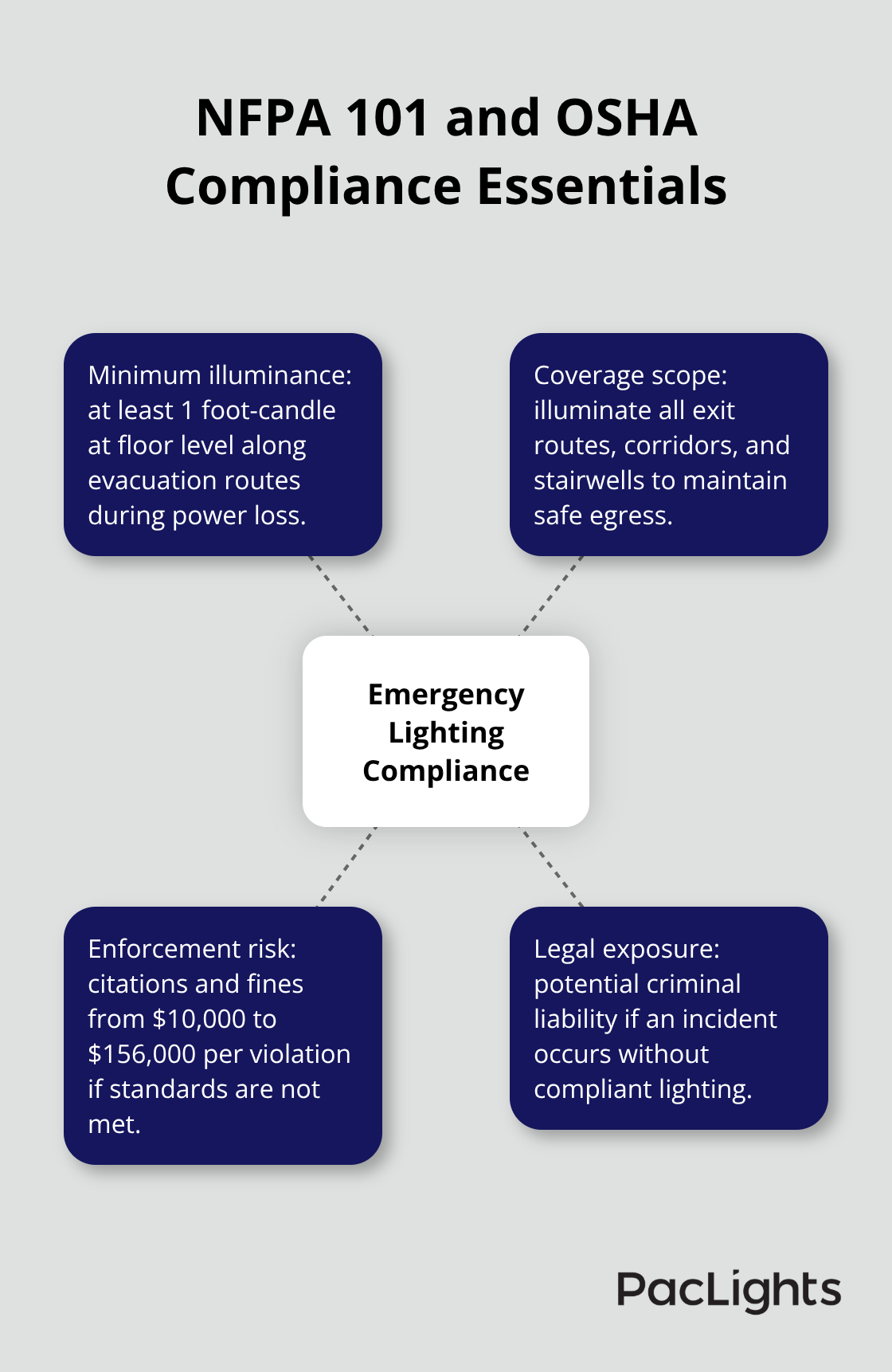
Fire safety codes and OSHA regulations exist because emergency lighting failures have caused real injuries and deaths. The National Fire Protection Association’s NFPA 101 Life Safety Code mandates that emergency lighting must illuminate all exit routes, corridors, and stairwells to a minimum of 1 foot-candle at floor level during power loss. Commercial facilities must comply with these standards or face citations, fines ranging from $10,000 to $156,000 per violation, and potential criminal liability if an incident occurs.
OSHA Enforcement in Industrial Settings
Industrial settings face stricter requirements because OSHA enforcement in manufacturing plants, warehouses, and chemical facilities directly ties emergency lighting compliance to worker safety inspections. Facilities that fail OSHA inspections related to emergency lighting typically receive follow-up visits within 30 days, and repeat violations result in penalties that escalate rapidly. UL 924 certification serves as your verification that a fixture meets these standards under actual failure conditions, not just theoretical testing, so any emergency light you install must carry this certification prominently on its documentation.
Commercial vs. Industrial Fixture Requirements
Commercial and industrial applications demand different fixture specifications because occupancy density and evacuation complexity vary dramatically. A retail store with 5,000 square feet requires different coverage than a manufacturing facility with 50,000 square feet and multiple exit routes. Industrial settings with chemical storage, high-bay racking, or hazardous locations need fixtures rated for those specific environments-polycarbonate housings resist chemical fumes better than standard plastic, and sealed fixtures prevent moisture infiltration in damp environments.
Local Building Department Requirements
Local building departments often impose requirements beyond NFPA 101, particularly in seismic zones or areas prone to extreme weather, so you must contact your local authority having jurisdiction before finalizing fixture selections. A facility manager at a mid-sized warehouse should expect to spend 40-80 hours coordinating with fire marshals, building inspectors, and electrical contractors to ensure complete compliance. Your supplier can provide a free lighting layout design that identifies exactly where fixtures must mount, how many units your facility needs, and which specifications apply to your specific building type and local regulations-this step eliminates guesswork and accelerates your path to compliance.
How to Choose the Right Emergency Wall Light for Your Facility
Map Your Facility’s Exit Routes and Coverage Needs
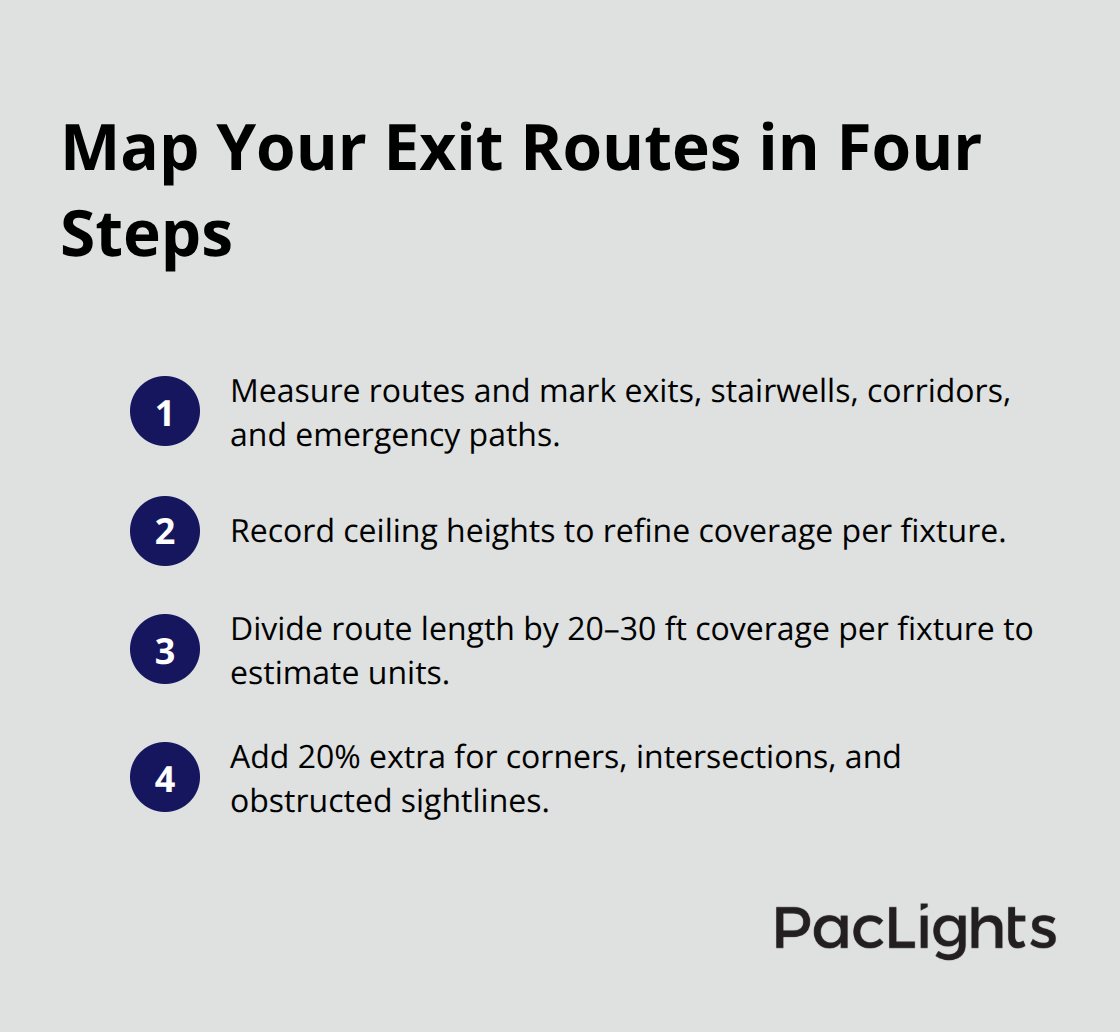
Start by measuring your actual exit routes and calculating exact coverage requirements rather than guessing at fixture quantity. Walk your facility with a floor plan and mark every exit, stairwell, corridor, and emergency route that occupants must navigate during power loss. Measure the length of each route and note ceiling heights, since a fixture mounted at 8 feet covers less area than one mounted at 10 feet. Divide your total route length by the 20-30 foot coverage area per fixture to determine how many units you need, then add 20% extra for corners, intersections, and areas with obstructed sightlines.
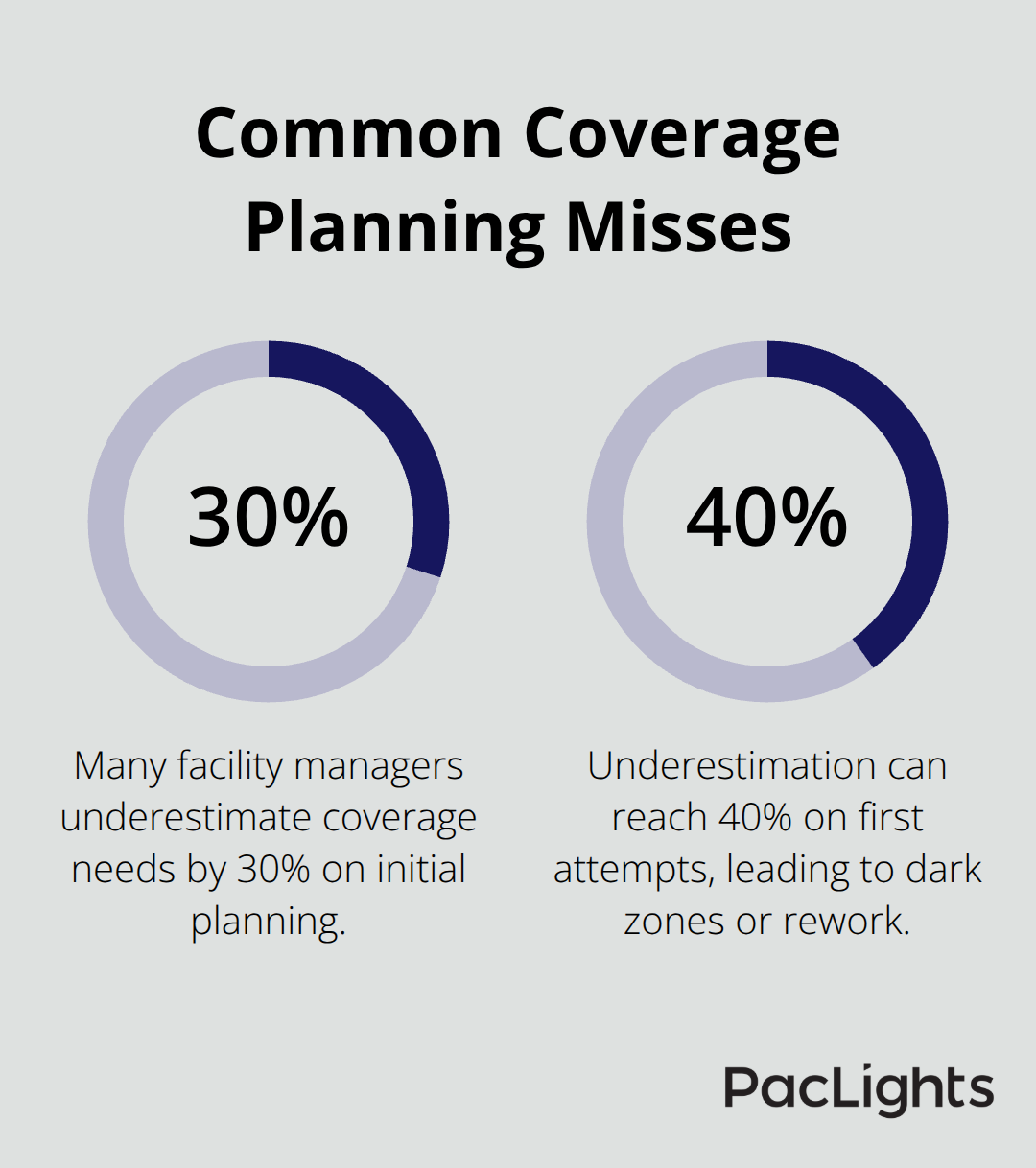
This calculation prevents both under-purchasing fixtures that leave dark zones and over-purchasing units that waste budget. Most facility managers underestimate coverage needs by 30-40% on their first attempt, so having a supplier conduct a free lighting layout design catches these errors before installation. A professional layout identifies exactly which fixture types work best for your specific building layout and local code requirements.
Calculate Total Cost of Ownership Over Your System’s Lifespan
Total cost of ownership determines whether your emergency lighting system remains affordable over its 10-15 year lifespan, yet most facilities focus only on upfront purchase price. Calculate the real cost per year by adding initial fixture cost, installation labor, annual maintenance and testing labor, replacement battery costs every 3-5 years, and electricity consumption for trickle charging. A facility spending $8,000 on fixtures but $2,000 annually on maintenance and batteries over 12 years actually pays $32,000 total, making fixture selection far more expensive than the initial invoice suggests.
Lithium-ion battery fixtures cost 40-60% more upfront than sealed lead-acid options but eliminate battery replacement costs entirely and reduce annual testing time by 50%, often delivering lower total ownership costs despite higher initial investment. Compare at least three fixture types using identical facility layouts and identical 12-year cost projections rather than relying on single quotes.
Prioritize Fixture Specifications Based on Your Operating Environment
Industrial facilities with 24/7 operations should prioritize fixtures with extended battery capacity and sealed housings over cheaper models, since a single emergency evacuation failure creates liability exposure that dwarfs fixture costs. Request ROI assessments from suppliers that show maintenance schedules, battery replacement timelines, and total cost breakdowns across your facility’s actual lifespan rather than accepting generic pricing sheets designed for smaller operations. These assessments reveal which fixture types deliver the best performance-to-cost ratio for your specific situation (facility size, climate, occupancy type, and local regulations).
Final Thoughts
Selecting reliable emergency wall light fixtures requires you to balance three critical factors: battery backup duration that exceeds minimum code requirements, brightness specifications matched to your actual exit routes, and durability ratings appropriate for your operating environment. A facility that invests time in mapping coverage needs, calculating total cost of ownership, and comparing fixture types across a realistic lifespan makes decisions that protect occupants and minimize long-term expenses. OSHA penalties ranging from $10,000 to $156,000 per violation, liability exposure during evacuation incidents, and operational disruptions from non-compliance create financial consequences that far exceed upfront equipment costs.
Facilities that prioritize UL 924 certified emergency wall light fixtures with sealed housings and extended battery capacity experience fewer compliance issues and lower maintenance burdens over their system’s 10-15 year lifespan. A professional lighting layout assessment identifies exact fixture quantities, mounting locations, and specifications required for your specific facility, which eliminates guesswork and accelerates your path to compliance while preventing costly over-purchasing or dangerous under-coverage. This assessment also reveals which fixture types deliver the best performance-to-cost ratio for your operating environment and budget constraints.
Contact PacLights to schedule your facility assessment and receive a customized implementation plan that addresses your emergency lighting requirements while optimizing long-term performance and cost efficiency.
Disclaimer: PacLights is not responsible for any actions taken based on the suggestions and information provided in this article, and readers should consult local building and electrical codes for proper guidance.