

Cylinder wall lights are workhorses in industrial and commercial facilities, but they’re only as reliable as the maintenance you put into them. Neglect them, and you’ll face dimming output, corrosion, and unexpected failures that disrupt operations.
At PacLights, we’ve seen firsthand how a structured maintenance approach transforms fixture longevity and cuts costs dramatically. This guide shows you exactly what to do to keep your lights performing at their best.
What Destroys Cylinder Wall Lights Fastest
Dust and debris settle on cylinder wall light lenses and reduce light output by blocking illumination before it reaches your work area. Over time, this accumulation traps moisture against the fixture surface, accelerating corrosion that eats through seals and electrical connections. Regular cleaning removes these deposits before they cause permanent damage.
Clean your lenses monthly in dry conditions using high-detergent oil like automatic transmission fluid to pull grime from the fixture surface, followed by hot water and dish soap to remove waxes and grease. Dry everything completely with 130 psi compressed air to prevent moisture from lingering inside the fixture. A lint-free towel with lacquer thinner as a final wipe reveals any remaining dirt and ensures the lens is truly clean. This simple routine prevents the glazing that occurs when dust bonds to the lens and becomes nearly impossible to remove later.
Corrosion Strikes Industrial Environments Hard
Industrial environments accelerate corrosion dramatically. Coastal locations, humid regions, and facilities near chemical operations expose fixtures to salt spray, moisture, and airborne contaminants that degrade aluminum and corrode electrical components within weeks rather than years. Inspect all connections for green or white buildup, which indicates active corrosion eating through metal.
Tighten fixture-to-wire connections immediately when you spot corrosion, as loose connections allow moisture to seep deeper into the fixture. Replace seals and gaskets after winter or heavy rain to prevent water intrusion that shortens fixture life. Choose outdoor-rated fixtures with corrosion-resistant aluminum or stainless steel construction, weatherproof seals, and UV-resistant plastics. Protect outdoor outlets and transformer enclosures with weatherproof bubble covers to limit moisture exposure. These steps matter more in harsh environments than anywhere else because corrosion doesn’t just dim your lights-it creates fire hazards and electrical failures that shut down operations unexpectedly.
Thermal Stress Damages Fixtures During Cleaning
Improper cleaning methods generate thermal stress that cracks lenses and damages internal components. Never spray cold water on hot fixtures or use high-pressure washers that force water into sealed areas. Instead, clean fixtures when they’re off and cool, using gentle hand-wiping techniques with appropriate solvents.
Ensure bulbs sit firmly in sockets because loose bulbs cause heat cycling that wears sockets and threads prematurely. Monitor total wattage on transformers feeding low-voltage fixtures to prevent voltage drop that shortens component life and causes excessive heat. LED bulbs generate far less heat than incandescent alternatives and can last up to 25,000 hours compared to roughly 1,000 hours for incandescent bulbs, making the switch a practical investment that reduces both thermal stress and replacement frequency.
These three failure modes-dust accumulation, corrosion, and thermal damage-work together to shorten fixture life. The next section shows you the specific maintenance practices that stop all three before they take hold.
How to Build a Maintenance Schedule That Actually Works
Maintenance prevents failure only when you execute it consistently, and that means establishing a rhythm tied to your facility’s operating conditions rather than vague intentions. Start with a seasonal routine: spring for wiring checks and lens cleaning, fall for bulb replacement and seal inspection, and winter for transformer care or solar panel maintenance if applicable. In coastal or humid regions, compress this cycle to monthly inspections because salt spray and moisture accelerate corrosion far faster than standard industrial environments. Document every maintenance action in a simple log so you know exactly when each fixture was last serviced and can spot patterns if certain lights fail repeatedly. Most facilities that see dramatic lifespan improvements move from reactive replacement to proactive quarterly inspections, catching problems before they cascade into system failures.
Execute the Cleaning Sequence Correctly
The practical work itself follows a strict sequence to avoid introducing new damage while fixing old problems. Clean lenses with automatic transmission fluid first to pull embedded grime, then hot water and dish soap to remove waxes, and finish with 130 psi compressed air to eliminate all moisture before it seeps into the fixture. A lint-free towel with lacquer thinner as a final wipe reveals any remaining dirt and ensures the lens is truly clean. This approach prevents the glazing that occurs when dust bonds to the lens and becomes nearly impossible to remove later.
Inspect and Tighten Connections Immediately
Inspect every fixture-to-wire connection for corrosion buildup and tighten immediately, as loose connections allow moisture deeper into the assembly where it corrodes components you cannot easily access. Green or white buildup indicates active corrosion eating through metal, and addressing it promptly prevents fire hazards and electrical failures. Replace seals and gaskets after winter thaws or heavy rain because these components degrade from freeze-thaw cycles and water exposure, and a fresh seal costs far less than replacing an entire fixture that developed internal corrosion.
Verify Bulb Seating and Transformer Load
Check that LED bulbs sit firmly in their sockets because vibration and thermal cycling cause loose bulbs to cycle heat repeatedly, wearing socket threads until the bulb no longer makes reliable contact. For low-voltage systems, measure total wattage on transformers to confirm you haven’t exceeded capacity, since voltage drop from overloaded transformers shortens component life and dims output unpredictably. Swap incandescent bulbs for LEDs wherever possible because LEDs last up to 25,000 hours compared to roughly 1,000 hours for incandescent alternatives, meaning fewer replacement cycles and less thermal stress on sockets and wiring.
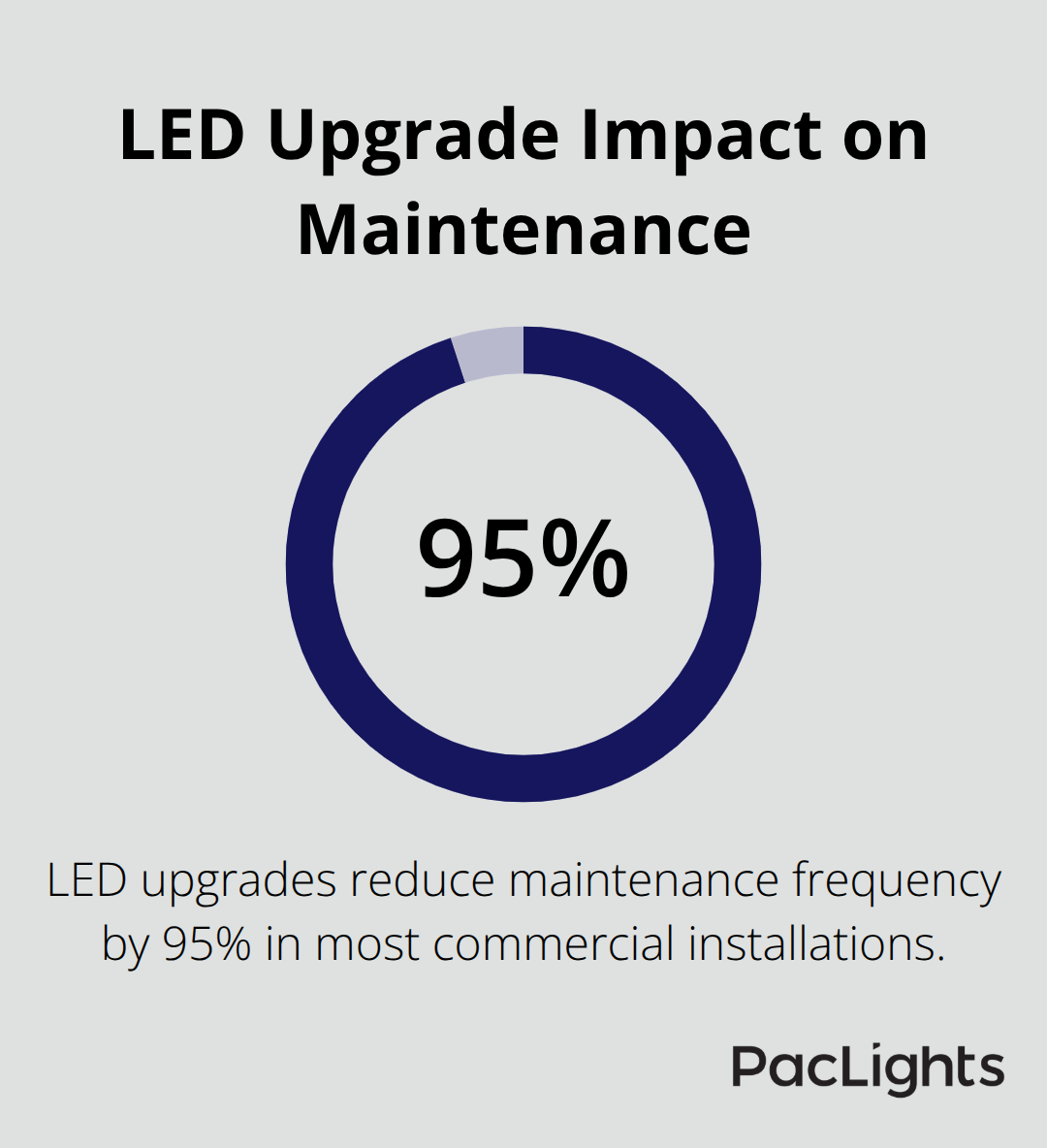
This shift alone reduces maintenance frequency by 95 percent in most commercial installations.
The consistency of your maintenance schedule matters more than perfection in execution. Once you establish this rhythm and document your actions, you’ll notice patterns that reveal which fixtures demand extra attention and which areas of your facility experience the harshest conditions. These insights shape your next step: understanding exactly how much money preventive maintenance saves you compared to reactive replacement.
How Preventive Maintenance Cuts Facility Costs
Emergency fixture replacements cost three to five times more than planned maintenance because you pay for after-hours labor, expedited parts delivery, and operational disruption when lights fail unexpectedly. A single unplanned outage in a manufacturing facility or warehouse halts production for hours, costing thousands in lost output and labor inefficiency. The math is straightforward: a $200 preventive maintenance visit that catches a corroded connection costs far less than a $1,500 emergency replacement that shuts down operations at night or on weekends.
Stop Paying for Emergency Callouts
Monthly lens cleaning takes 15 minutes per fixture and prevents the dust accumulation that reduces light output by 30 percent or more, meaning your existing fixtures deliver the brightness they were designed for without purchasing additional lights to compensate. LED bulbs lasting up to 25,000 hours versus 1,000 hours for incandescent alternatives means you replace bulbs roughly once every five years instead of every few months, eliminating the labor cost of frequent climbing, socket replacements, and inventory management for multiple bulb types. Facilities that shift from reactive replacement to quarterly inspections reduce emergency callouts by 80 percent within the first year.
Extend Fixture Life and Spread Capital Costs
Consistent maintenance transforms your capital equipment budget because you delay major replacement cycles and spread costs across longer periods. A facility with 50 cylinder wall lights spends $150 per fixture on preventive maintenance over five years, investing $7,500 total while avoiding two or three unplanned replacements that would cost $15,000 to $22,500. Facilities in coastal or humid environments see even sharper returns because monthly seal inspections and connection tightening prevent the accelerated corrosion that cuts fixture life in half if left unchecked.
Prevent Transformer Failures and Energy Waste
Transformer overheating from overload shortens component life dramatically, but measuring wattage during maintenance inspections costs nothing and prevents $3,000 to $5,000 transformer replacements. Energy costs drop when you maintain fixtures properly because dust-covered lenses force fixtures to work harder to deliver the same output, increasing electrical consumption by 20 to 30 percent. Switching from incandescent to LED bulbs during maintenance cycles cuts energy use by 75 percent according to industry standards, reducing utility bills by hundreds of dollars annually depending on fixture quantity and operating hours (with most commercial facilities seeing returns within two to three years). These savings compound over time, making preventive maintenance the only rational choice for facilities serious about cost control and operational reliability.
Final Thoughts
Cylinder wall maintenance isn’t optional if you want reliable illumination and predictable costs. Facilities that commit to regular inspections and cleaning see fixture lifespans extend by years while emergency replacement costs disappear almost entirely. A $200 preventive maintenance visit beats a $1,500 emergency callout every time, and LED bulbs lasting 25,000 hours instead of 1,000 hours mean you climb ladders far less often and eliminate constant inventory juggling of multiple bulb types.
What separates facilities with long-lasting lighting systems from those constantly replacing fixtures is consistency. Monthly lens cleaning, quarterly connection inspections, and seasonal seal checks catch problems before they cascade into system failures. Document every action so you understand which fixtures demand extra attention and which areas of your facility experience the harshest conditions-this data transforms maintenance from guesswork into strategy.
We at PacLights understand that reliable lighting is foundational to facility operations, and we offer durable fixtures designed for industrial and commercial environments along with LED retrofit solutions and advanced lighting controls that optimize both performance and energy use. Build maintenance into your facility budget now, and you’ll spend less money over time while enjoying the operational peace of mind that comes from lights you can depend on.
Disclaimer: PacLights is not responsible for any actions taken based on the suggestions and information provided in this article, and readers should consult local building and electrical codes for proper guidance.