

Harsh environments demand lighting that won’t fail when conditions get tough. Water, dust, extreme temperatures, and corrosive elements can destroy standard fixtures in weeks.
At PacLights, we’ve seen firsthand how the right IP rated surface mount downlight transforms facility reliability. This guide shows you exactly what IP ratings mean and how they protect your investment.
What IP Ratings Actually Protect
IP ratings follow the IEC 60529 standard, a two-digit classification system that tells you exactly how much protection a fixture has. The first digit (0–6) rates protection against solids like dust and debris, while the second digit (0–9) rates protection against liquids. These numbers directly determine whether your downlights survive in harsh conditions or fail within months. An IP44 fixture handles light splashing, IP65 withstands heavy water jets and steam, and IP67 fixtures work submerged in water. Installing the wrong rating in the wrong environment causes short circuits, corrosion, and expensive downtime. Many facility managers use IP20 fixtures (standard indoor rated) in moisture-prone areas, which leads to mold growth and electrical failures that proper IP ratings prevent.
Where Each Rating Works Best
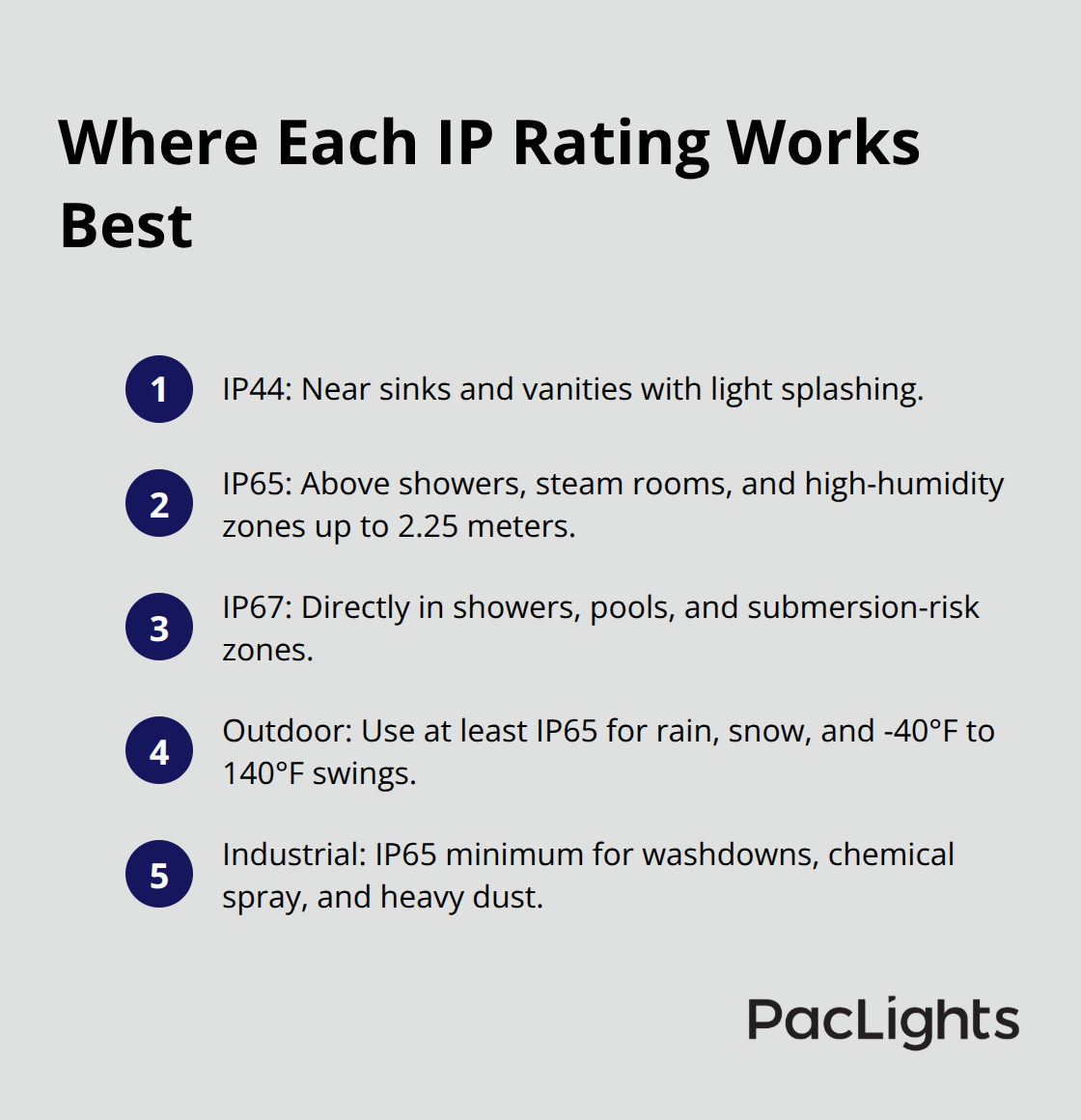
IP44 fixtures belong near sinks and vanities where water splashes occur but direct jets don’t hit them. IP65 downlights serve as the standard choice for areas above showers, steam rooms, and high-humidity zones up to 2.25 meters from water sources-they feature silicone seals and corrosion-resistant housing that handle persistent moisture. IP67 fixtures go directly in showers, pools, and any zone where submersion risk exists because they’re fully sealed and submersible-rated. Outdoor installations require at least IP65 to handle rain, snow, and temperature swings from -40°F to 140°F. Industrial facilities with washdown procedures, chemical spray, or dust-heavy operations need IP65 minimum.
The sealed construction of high IP-rated fixtures includes silicone-coated cables, waterproof caulking around edges, and advanced heat sinks that prevent moisture infiltration and overheating simultaneously.
Material Quality and Durability Standards
Moisture, dust, and temperature extremes degrade standard fixtures rapidly because water corrodes electrical components and dust clogs cooling systems. LED surface mount downlights with high IP ratings last 25,000 to 50,000 hours compared to incandescent fixtures that fail much faster in hostile conditions. The durable materials-aluminum, stainless steel, and UV-resistant plastics-prevent fading and corrosion over years of exposure. High IP-rated downlights also improve safety by eliminating short circuit risks and reducing fire hazards from moisture exposure. Installing fixtures without adequate sealing costs more in the long run-you’ll replace them far more often than investing upfront in proper IP ratings.
Selecting the Right Rating for Your Environment
Your specific application determines which IP rating you need. Check your local electrical codes and IEC 60529 standards before installation to confirm you’re using the correct rating for your zone and application. Industrial facilities, wet environments, and outdoor locations each demand different protection levels (IP44, IP65, or IP67). The sealed construction and material quality of high IP-rated fixtures work together to protect your investment from environmental damage. Once you understand which rating matches your conditions, the next step involves identifying the specific features that deliver durability and performance in your facility.
Where IP Rated Downlights Perform Best
Manufacturing and Industrial Washdown Environments
Manufacturing plants running washdown procedures need IP65 minimum because water jets hit fixtures directly during cleaning cycles. Food processing facilities, chemical plants, and automotive assembly lines all experience high-pressure water spray, caustic chemicals, and dust accumulation that destroys standard lighting within weeks. IP67 fixtures work in these settings because the fully sealed construction with silicone gaskets and corrosion-resistant housing handles repeated exposure to moisture and chemical residue. Industrial facilities operating at -40°F to 140°F temperature ranges also benefit from IP-rated fixtures because sealed construction prevents condensation inside the housing, which causes electrical failures in unprotected fixtures.
Unplanned downtime from lighting failures costs facilities an average of $250,000 per hour in lost production according to industry data. Installing proper IP ratings in manufacturing reduces these losses significantly. The sealed construction also extends LED lifespan from 25,000 to 50,000 hours, meaning fewer maintenance visits and replacement cycles that disrupt operations.
Wet Environments and High-Moisture Spaces
Wet environments like bathrooms, locker rooms, and commercial kitchens demand IP65 or IP67 downlights because steam and constant moisture create the conditions where standard fixtures fail within months. The silicone seals and corrosion-resistant housing in high IP-rated fixtures withstand persistent exposure to water vapor and liquid splash that corrodes unprotected electrical components. These environments require fixtures that prevent moisture infiltration at every connection point, which sealed construction accomplishes through advanced gasket design and waterproof caulking around edges.
Outdoor and Transitional Zones
Outdoor installations facing rain, snow, and UV exposure require IP65 minimum to prevent water infiltration and material degradation. Parking garages, covered loading docks, and transit stations sit in a middle zone where moisture from vehicles and weather exposure makes IP44 insufficient but full submersion protection unnecessary, making IP65 the practical choice. The material quality of high IP-rated surface mount downlights matters here because aluminum housings resist corrosion from road salt spray, stainless steel components withstand chemical washdowns, and UV-resistant plastics prevent yellowing and brittleness from sun exposure.
Outdoor fixtures also need proper weatherproofing around all wiring connections using silicone sealant to prevent moisture infiltration at vulnerable points. Installing surface mount downlights outdoors avoids the ceiling alteration costs of recessed lighting while delivering the same durability, making retrofits simpler and faster for existing facilities that need upgraded lighting without major construction. This flexibility in installation methods opens new possibilities when you consider how control systems and compatibility features enhance performance across different applications.
Key Features That Deliver Durability and Performance
Sealed Construction and Material Quality
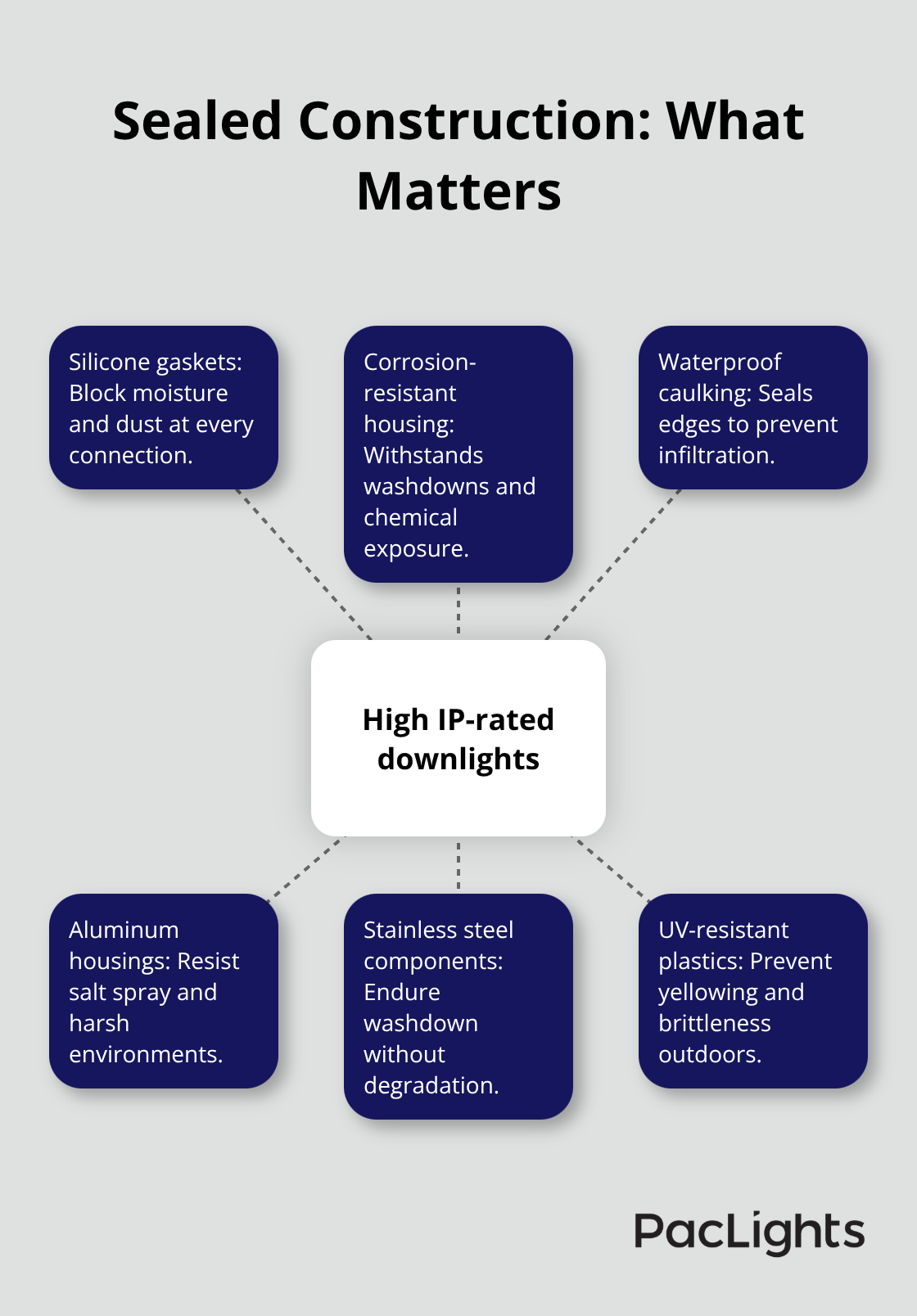
Sealed construction separates downlights that survive harsh environments from those that fail within months. High IP-rated surface mount fixtures use silicone gaskets, corrosion-resistant housing, and waterproof caulking at every connection point to block moisture and dust infiltration that destroys standard fixtures. The material selection matters equally-aluminum housings resist salt spray and chemical exposure, stainless steel components withstand washdown procedures without degradation, and UV-resistant plastics prevent yellowing and brittleness from sun exposure.
These construction methods cost more upfront but eliminate the hidden expenses of frequent replacements. A facility replacing standard IP20 fixtures every 2–3 years in a wet environment pays far more than investing once in IP65 or IP67 downlights rated for those conditions. The sealed design also prevents condensation inside housings, which causes electrical failures and corrosion that shorten fixture lifespans dramatically.
LED Technology and Extended Lifespan
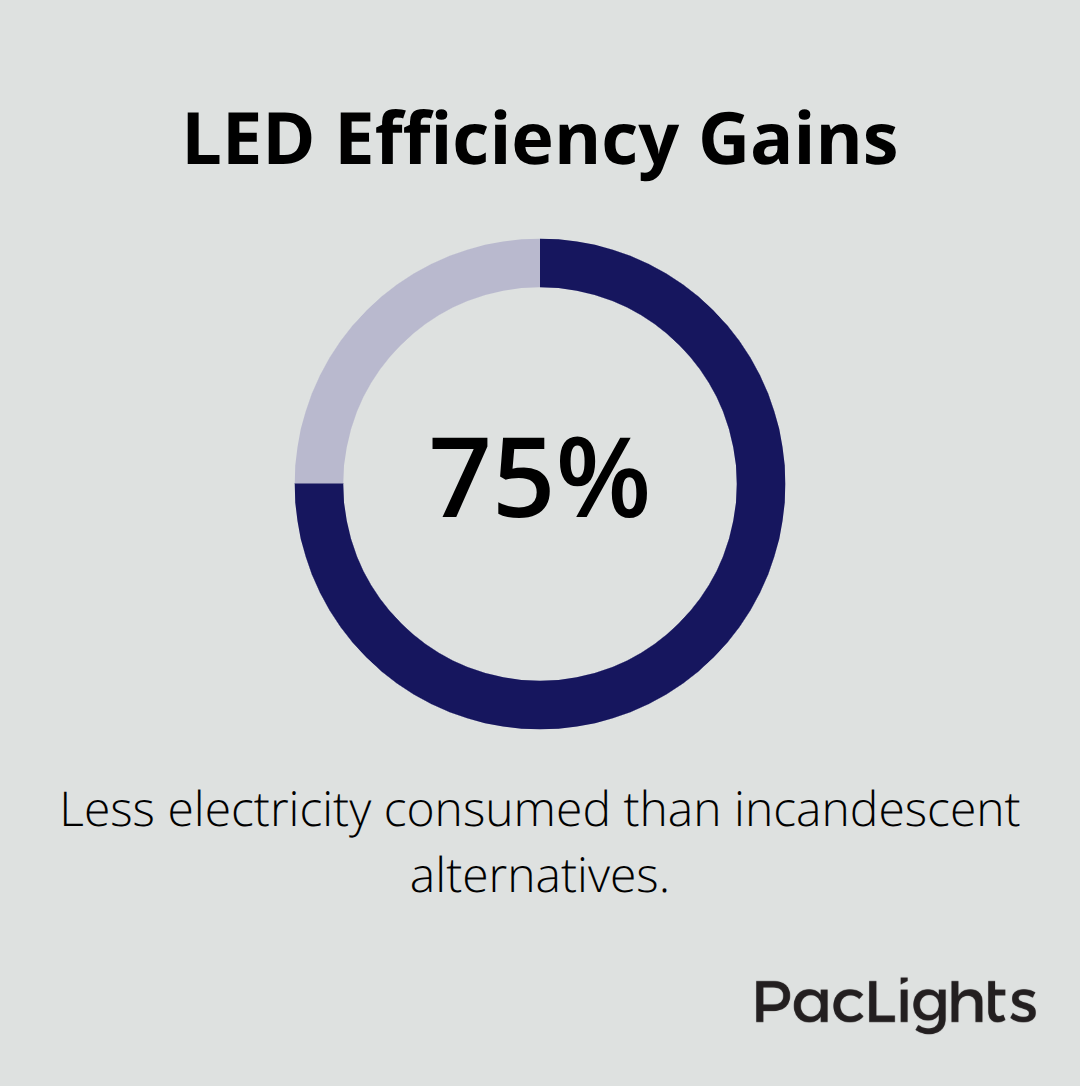
LED technology compounds these durability advantages. IP-rated LED downlights deliver 25,000 to 50,000 hour lifespans while consuming 75 percent less electricity than incandescent alternatives, cutting both replacement frequency and energy costs simultaneously.
A facility operating downlights 12 hours daily sees LED fixtures last 5–10 years before replacement, while older technologies fail in 1–2 years under identical conditions.
The sealed construction of LED fixtures also produces minimal heat-only 4–5 percent of energy becomes thermal output-which prevents overheating that degrades seals and shortens lifespan in confined spaces. Surface mount installation avoids ceiling alterations required for recessed lighting, making retrofits faster and cheaper when upgrading existing facilities.
Control Systems and Energy Management
Control system compatibility amplifies savings further. Dimmable IP-rated downlights work with both wireless and hardwired dimmer switches, enabling energy management that extends bulb lifespan by reducing runtime and avoiding full brightness operation when lower light levels suffice. Motion sensors paired with dimmable downlights cut energy consumption 30–50 percent in spaces with variable occupancy, and daylight harvesting systems automatically reduce fixture output when natural light becomes available.
These controls require compatible drivers and switches rated for bathroom or industrial use, but the installation complexity remains minimal compared to the operational savings they deliver over years of operation. At PacLights, we offer advanced lighting controls (such as networked lighting controls) and optional daylight or motion control features that help facilities optimize energy use across different applications.
Final Thoughts
IP rated surface mount downlights solve the core problem that standard fixtures cannot handle: environmental damage that destroys lighting systems and disrupts operations. Manufacturing plants, wet environments, and outdoor facilities face constant threats from moisture, dust, chemicals, and temperature extremes that plague unprotected installations. The right IP rating prevents short circuits, corrosion, and mold growth while eliminating the emergency replacements and unplanned downtime that cost far more than proper upfront selection.
The financial case for IP rated surface mount downlights strengthens over time as LED fixtures rated IP65 or IP67 last 25,000 to 50,000 hours, meaning a facility operating lights 12 hours daily replaces them every 5–10 years instead of every 1–2 years. Energy consumption drops 75 percent compared to incandescent alternatives, and motion sensors paired with sealed fixtures reduce energy use another 30–50 percent in spaces with variable occupancy. These savings compound annually, making the higher initial investment return value within 2–3 years for most facilities.
Matching your environment to the correct rating and selecting fixtures built with sealed construction and durable materials starts the process-IP44 works near sinks and vanities, IP65 handles high-moisture zones and outdoor areas, and IP67 protects submersion-risk locations. We at PacLights provide free lighting assessments and ROI calculations that help you identify the right fixtures for your specific application and quantify your cost savings. Contact us to assess your current lighting and discover how proper IP ratings eliminate environmental damage while reducing operational costs.
Disclaimer: PacLights is not responsible for any actions taken based on the suggestions and information provided in this article, and readers should consult local building and electrical codes for proper guidance.