

Facility managers face a constant tension: shrinking budgets demand energy efficiency, yet limited ceiling space forces tough compromises. We at PacLights built the high performance wafer downlight to eliminate that choice entirely.
This compact fixture delivers industrial-grade brightness without the bulk, cutting energy costs while fitting spaces traditional lighting cannot. Read on to see how peak efficiency and compact design work together in real installations.
Why Compact Efficiency Matters Now
Energy Costs Demand Action
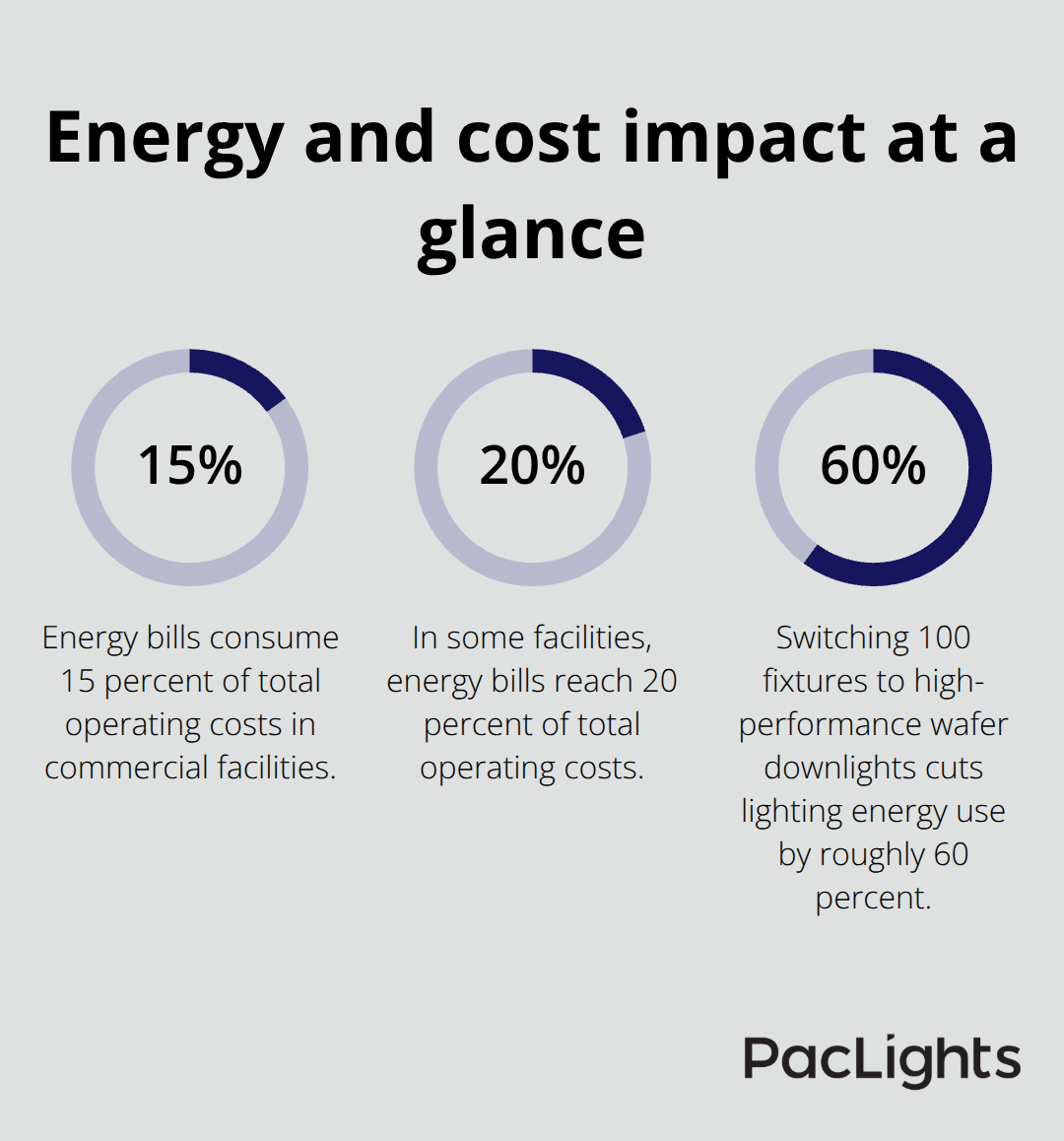
Energy bills consume 15 to 20 percent of total operating costs in commercial facilities, making lighting one of the easiest targets for budget cuts. Modern LED wafer downlights deliver over 150 lumens per watt, compared to 60 lumens per watt from older fluorescent systems. That efficiency translates directly to measurable savings: a facility switching 100 fixtures to high-performance wafer downlights cuts lighting energy use by roughly 60 percent, which compounds across thousands of operating hours annually.
The numbers are concrete. A 10,000-square-foot office using traditional recessed lighting spends approximately $3,000 annually on lighting electricity. The same space equipped with efficient wafer downlights drops that cost to around $1,200, freeing capital for other operational priorities.
Fitting Lighting Into Spaces That Demand It
Retrofit constraints define modern construction realities. Suspended ceilings in older office buildings sit only 7 to 9 inches above the structural deck, leaving almost no room for traditional downlight housings. Data centers, hospitals, and retail spaces face identical space limitations. Wafer downlights solve this problem through ultra-thin profiles-many models measure just 2 inches deep-allowing installation without ceiling reconstruction. This matters financially: a retrofit project avoiding structural modifications saves $500 to $1,500 per fixture in labor and materials. When space constraints disappear as an excuse, performance becomes the only conversation.
Refusing the False Trade-Off
The old lighting industry forced a choice between compact fixtures and adequate brightness. That choice no longer exists. Modern wafer downlights with IC-rated thermal management deliver 800 to 2,500 lumens in footprints smaller than a dinner plate, with color rendering indexes above 80 and lifespan ratings exceeding 50,000 hours. A 1,200-lumen wafer downlight consumes 12 to 15 watts while producing light quality comparable to 75-watt incandescent bulbs from the 1990s. Facilities no longer accept dimmer, hotter, shorter-lived alternatives simply because space is tight. The technology matured past that compromise.
What Technical Performance Actually Means
These efficiency gains rest on three technical foundations: advanced LED chips that convert electrical current to light with minimal waste, thermal management systems that keep junction temperatures stable, and optical components that direct light precisely where it’s needed. High-thermal-conductivity substrates (such as aluminum nitride or copper) pull heat away from the LED junction, preserving lumen output and extending lifespan. Constant-current drivers maintain stable operation across dimming ranges, preventing flicker and enabling integration with smart controls. The result: fixtures that maintain 90 percent of their initial brightness after 50,000 hours of operation, compared to 70 percent for older technologies.
Moving Beyond Efficiency Alone
Peak efficiency in compact form requires more than raw lumens per watt. Optical design shapes how light distributes across a space-narrow beam angles concentrate light on task surfaces, while wider distributions provide ambient coverage. Color rendering indexes above 80 ensure accurate color perception in retail and hospitality settings. Dimmable drivers and smart controls (occupancy sensors, daylight harvesting, networked systems) cut energy use further by matching light output to actual occupancy and natural light availability. These technical specifications translate into facilities that operate at lower cost while delivering superior light quality.
What Separates Peak Performance From Ordinary Compact Fixtures
Wafer downlights deliver measurable brightness without compromise, but not all compact fixtures perform equally. A 12-watt wafer downlight from a quality manufacturer produces 1,200 lumens with a color rendering index of 82 and maintains 90 percent of that output after 50,000 hours. The same wattage from a budget alternative might deliver only 900 lumens with a CRI of 75 and drops to 70 percent brightness by 40,000 hours. The difference compounds across a facility: 50 fixtures over five years means the quality option delivers substantially more usable light while consuming identical energy.
Beam angle matters equally. A narrow 25-degree beam concentrates light on specific task surfaces-retail counters, office desks, warehouse aisles-producing higher task illumination with fewer fixtures. A 40-degree beam spreads light across wider areas, requiring more fixtures to achieve uniform illumination. Space wafer downlights 4 to 6 feet apart with narrow beams to eliminate dark zones while reducing fixture count and installation labor. Selecting the right beam angle directly impacts both performance and project cost.
Thermal Management Determines Real Lifespan
Heat destroys LED performance silently and relentlessly. Junction temperature-the temperature at the LED chip itself-drives lumen depreciation and accelerates component failure. A wafer downlight running at 70 degrees Celsius maintains its rated lifespan and brightness. The same fixture running at 95 degrees Celsius loses 20 percent more brightness over its lifetime and may fail 5,000 to 10,000 hours earlier.
High-thermal-conductivity substrates such as aluminum nitride or copper pull heat away from the junction rapidly, while optimized heat sinks and proper airflow around the fixture complete the thermal path. IC-rated housings designed for insulated ceilings prevent heat buildup that destroys performance in retrofit installations. Specify fixtures with published junction temperature ratings and thermal management specifications. Without this data, you cannot predict actual performance or lifespan in your specific installation environment.
Smart Controls Transform Efficiency Into Real Savings
A high-efficiency wafer downlight sitting at full brightness during unoccupied hours wastes energy. Occupancy sensors reduce lighting energy by 20 to 40 percent in spaces with variable occupancy-offices, conference rooms, storage areas. Daylight harvesting sensors adjust output based on natural light availability, adding another 15 to 25 percent reduction in perimeter zones.
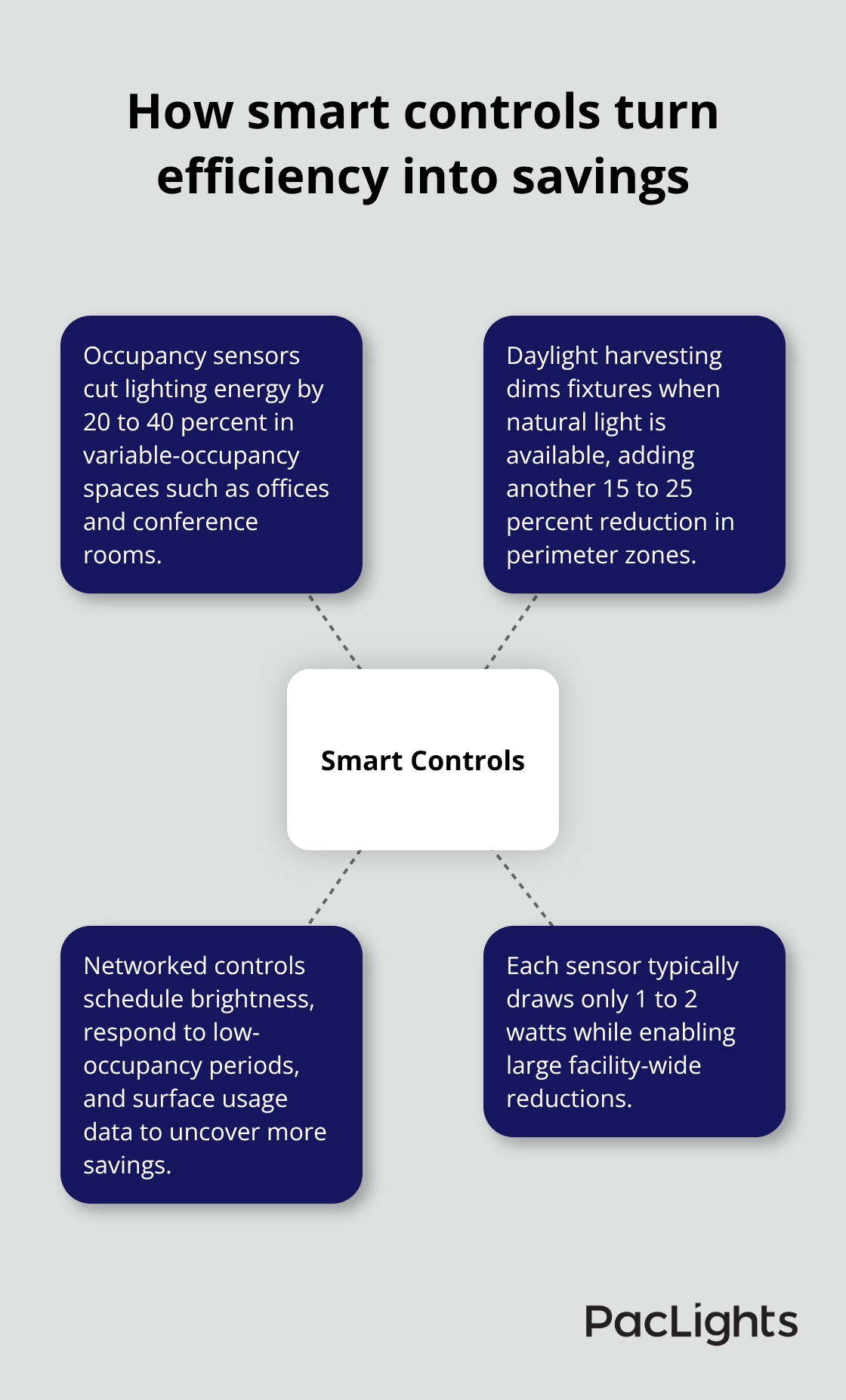
Networked lighting controls enable facility-wide optimization: they dim during low-occupancy periods, schedule brightness for different times of day, and collect usage data to identify additional savings opportunities. The controls themselves consume minimal power (typically 1 to 2 watts per sensor) while cutting overall lighting energy by 35 to 50 percent when properly configured. Without controls, efficiency gains from LED technology remain partially unrealized.
Optical Design Shapes Light Where It Matters
The path light takes from the LED chip to your work surface determines whether a fixture performs or merely exists. Advanced optics-lenses, reflectors, and diffusers-direct light precisely where you need it while minimizing waste and glare. A poorly designed optical system scatters light inefficiently, requiring more fixtures to achieve adequate illumination. A well-engineered system concentrates output on task areas, reducing fixture count and total energy consumption.
Color rendering index (CRI) above 80 ensures accurate color perception in retail and hospitality settings, where product appearance and ambiance directly affect customer experience. Tunable white options (2700K to 4000K color temperature ranges) allow facilities to match light quality to specific activities and times of day. These optical and color specifications transform a wafer downlight from a simple brightness source into a tool that shapes how people perceive and interact with their environment-and how much energy the facility actually consumes to achieve that result.
Where Wafer Downlights Deliver Real Results
Retail: Precision Lighting That Sells
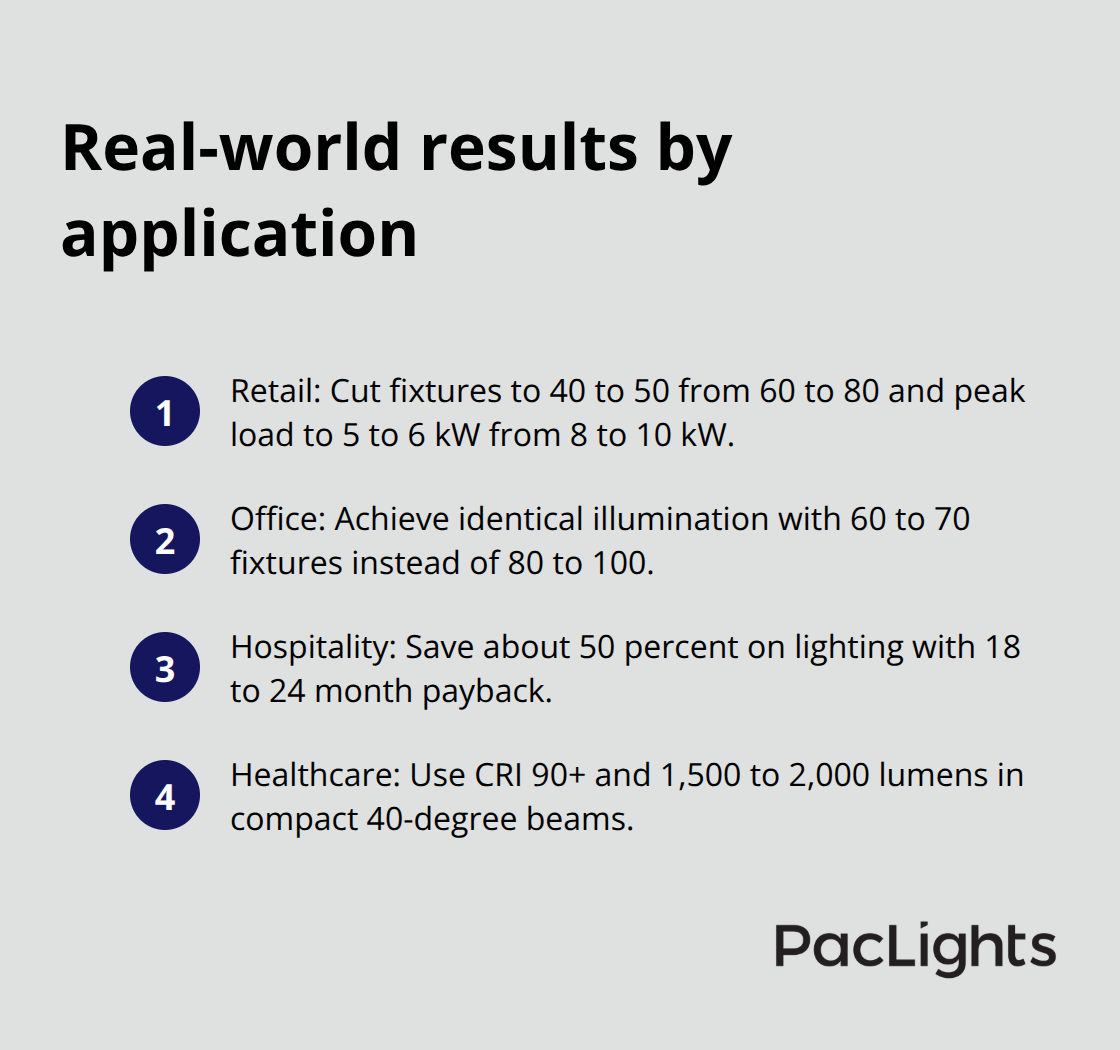
Retail environments demand precision lighting that highlights products while controlling costs. A 5,000-square-foot retail space with traditional recessed downlights typically uses 60 to 80 fixtures to achieve 500 lux on display surfaces, consuming 8 to 10 kilowatts at peak operation. The same space equipped with strategically positioned wafer downlights with 25-degree narrow beam angles requires only 40 to 50 fixtures, cutting peak consumption to 5 to 6 kilowatts while maintaining superior color rendering above 80 CRI for accurate product presentation.
Retail managers notice the difference immediately: merchandise colors appear more vibrant, customer dwell time increases, and monthly energy bills drop by 30 to 40 percent. Task-focused beam angles concentrate light on counters and display zones, eliminating wasted illumination in back-of-house areas. Color temperature selection matters equally-3000K lighting creates warmer ambiance for apparel and home goods, while 4000K enhances visibility for electronics and automotive displays. Dimmable drivers allow adjustment based on time of day and customer traffic patterns, further reducing consumption during slower periods.
Office Buildings: Compliance and Comfort
Office buildings present different challenges: uniform ambient lighting across open floor plans, task lighting at individual workstations, and energy code compliance under Title 20 and Title 24 standards in California and equivalent regulations elsewhere. A 10,000-square-foot open office with 8-foot ceilings traditionally requires 80 to 100 recessed downlights spaced 4 to 5 feet apart for adequate illumination. Compact wafer downlights achieve identical illumination with 60 to 70 fixtures, reducing installation labor and ceiling penetrations while meeting or exceeding energy standards.
Occupancy sensors in conference rooms and break areas cut lighting energy by 25 to 35 percent simply by eliminating illumination during unoccupied hours. Daylight harvesting in perimeter zones adds another 15 to 20 percent reduction by dimming fixtures as natural light availability increases. Networked controls enable facility managers to schedule brightness levels for different times of day-higher illumination during peak work hours, reduced levels during early morning and evening periods-without manual intervention.
Healthcare and Institutional Facilities
Hospitals and institutional settings require high color rendering (CRI 90 or above) for accurate clinical assessment, combined with flicker-free operation essential for patient comfort and staff safety. Surgical suites demand bright, shadow-free illumination; wafer downlights with 40-degree beam angles deliver 1,500 to 2,000 lumens in compact form, fitting tight ceiling constraints in renovation projects. Patient rooms benefit from tunable white controls allowing nurses to adjust color temperature from 2700K for rest periods to 4000K during medical procedures.
Hospitality: Ambiance and Efficiency
Hospitality venues-hotels, restaurants, event spaces-leverage wafer downlights’ aesthetic advantages: ultra-thin profiles maintain clean ceiling lines, while dimmable controls enable rapid transitions from bright breakfast service to intimate dinner ambiance without fixture replacement. A hotel restaurant saves 50 percent on lighting energy while improving visual appeal through superior color rendering and beam control, justifying retrofit investment within 18 to 24 months through operational savings alone.
Final Thoughts
The tension between compact design and industrial-grade performance no longer exists. High performance wafer downlights prove that facilities achieve peak efficiency without sacrificing brightness, color quality, or lifespan. A 12-watt fixture delivering 1,200 lumens with 90 percent lumen maintenance after 50,000 hours represents genuine progress, not compromise, and the financial case backs this reality completely.
A 10,000-square-foot facility switching to efficient wafer downlights reduces annual lighting costs from $3,000 to $1,200, freeing $1,800 annually for other operational needs. Across a multi-building portfolio, those savings compound rapidly-a 50-fixture retrofit saves $900 per year per location, reaching $45,000 across a 50-location chain within five years. Add occupancy sensors and daylight harvesting controls, and total energy reductions reach 35 to 50 percent, multiplying the financial benefit substantially.
The right choice for your facility depends on matching fixture specifications to your specific space and application. Narrow beam angles work for retail and task-focused environments; wider distributions suit open offices and ambient lighting. We at PacLights provide the fixtures, design tools, and expertise to optimize your lighting performance, and our free lighting layout designs and ROI assessments help you select the right wafer downlights for your specific needs and quantify the financial return before installation begins.
Disclaimer: PacLights is not responsible for any actions taken based on the suggestions and information provided in this article, and readers should consult local building and electrical codes for proper guidance.