

Flush mount downlights have become the standard in modern commercial spaces because they deliver clean aesthetics without sacrificing performance. We at PacLights know that choosing the right lighting solution directly impacts both your facility’s appearance and your bottom line.
This guide walks you through everything you need to know-from selecting the right fixtures to understanding long-term savings and real-world applications across retail, office, and hospitality environments.
What Flush Mount Downlights Actually Are
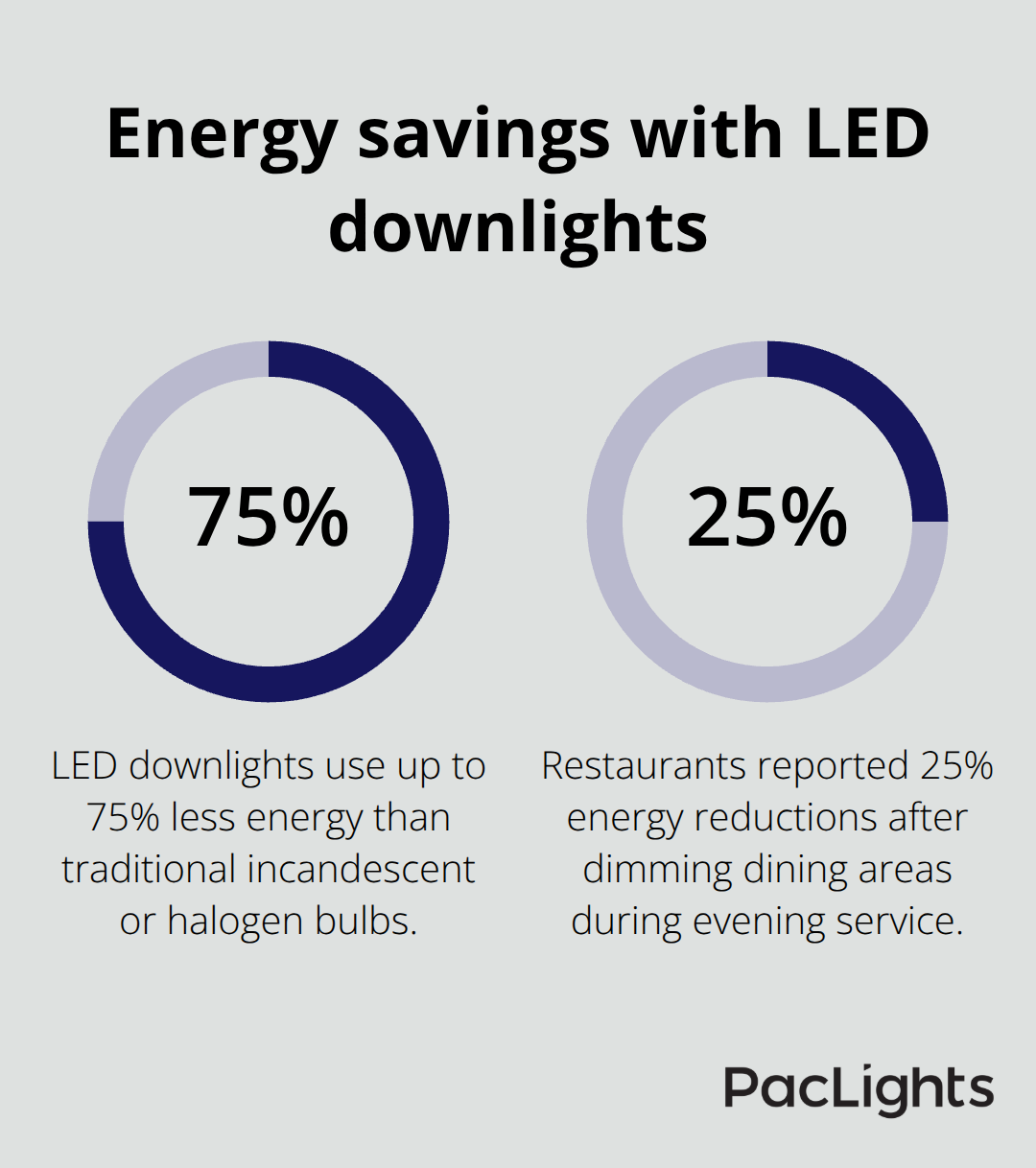
Flush mount downlights are recessed ceiling fixtures that sit completely flush against your ceiling surface, delivering light straight down without any hanging components or visible protrusion. This design eliminates the visual clutter you get with pendant fixtures or traditional surface-mounted lights, making them the practical choice for commercial spaces where ceiling height matters and aesthetics demand clean lines. The fixture itself contains an LED light source, reflector, and lens assembly housed entirely within the ceiling cavity, which means you preserve valuable overhead space while maintaining professional appearance. Unlike older incandescent or halogen downlights that generated excessive heat and wasted energy, modern LED downlights operate at significantly lower temperatures and consume up to 75% less energy than traditional bulbs. The typical LED downlight lasts around 25,000 hours, which translates to roughly 17 years of continuous operation or about 25 years under normal commercial use patterns. This longevity directly reduces your maintenance burden-you won’t replace bulbs every few months or deal with frequent fixture failures that disrupt operations.
Why Traditional Lighting Falls Short
The transition from older lighting systems to flush mount LED downlights isn’t optional for competitive commercial spaces. Incandescent and halogen downlights generate heat that requires additional cooling in summer months, inflating your HVAC costs and creating uncomfortable working conditions. Fluorescent fixtures, while more efficient than incandescent, deliver inconsistent color rendering and often produce visible flicker that fatigues occupants over extended periods. Flush mount LED downlights eliminate these problems entirely-they maintain color rendering index values above 90, meaning colors appear natural and accurate, which matters significantly in retail and hospitality environments where product appearance drives purchasing decisions. The even light distribution from properly positioned downlights minimizes shadows and dark spots that create visual discomfort and make hazard detection harder for staff. You’ll also avoid the maintenance headaches of older systems; LED fixtures rarely fail unexpectedly, and when they do eventually need replacement, the process is straightforward without complex rewiring or structural modifications.
Design Flexibility Across Commercial Environments
Flush mount downlights have become standard in contemporary commercial architecture because they align with how modern spaces actually function. Open-plan offices, retail showrooms, and hospitality venues all depend on flexible lighting that supports varied activities without cluttering the visual environment. Color temperature flexibility-ranging from warm 2700K tones for welcoming atmospheres to cool 5000K for focused task work-lets you create appropriate moods for different zones without installing separate fixture types. Many modern downlights offer dimming capability and smart controls that adjust brightness automatically based on occupancy or daylight availability, reducing energy waste during off-peak hours. This automation matters: facilities using occupancy sensors and daylight harvesting alongside LED downlights report energy reductions of 40-50% compared to fixed traditional lighting systems.
Smart Controls and Energy Optimization
Modern downlights integrate with building automation systems to maximize efficiency without sacrificing comfort or visibility. Motion sensors detect occupancy and activate lights only when needed, while daylight harvesting systems reduce artificial light output when natural sunlight provides sufficient illumination. These controls (when properly configured) transform downlights from static fixtures into responsive systems that adapt to actual facility usage patterns. Dimmable fixtures allow staff to adjust brightness for specific tasks, further reducing energy consumption during periods when full output isn’t necessary. The combination of LED efficiency and intelligent controls creates measurable cost reductions that compound over years of operation.
Moving Forward With Your Selection
Understanding what flush mount downlights are and how they outperform traditional systems sets the foundation for making smart choices about your facility. The next step involves evaluating your specific space requirements-brightness levels, color temperature preferences, and control capabilities-to select fixtures that match your operational needs and budget constraints.
Selecting Fixtures That Match Your Actual Needs
Match Brightness to Task Requirements
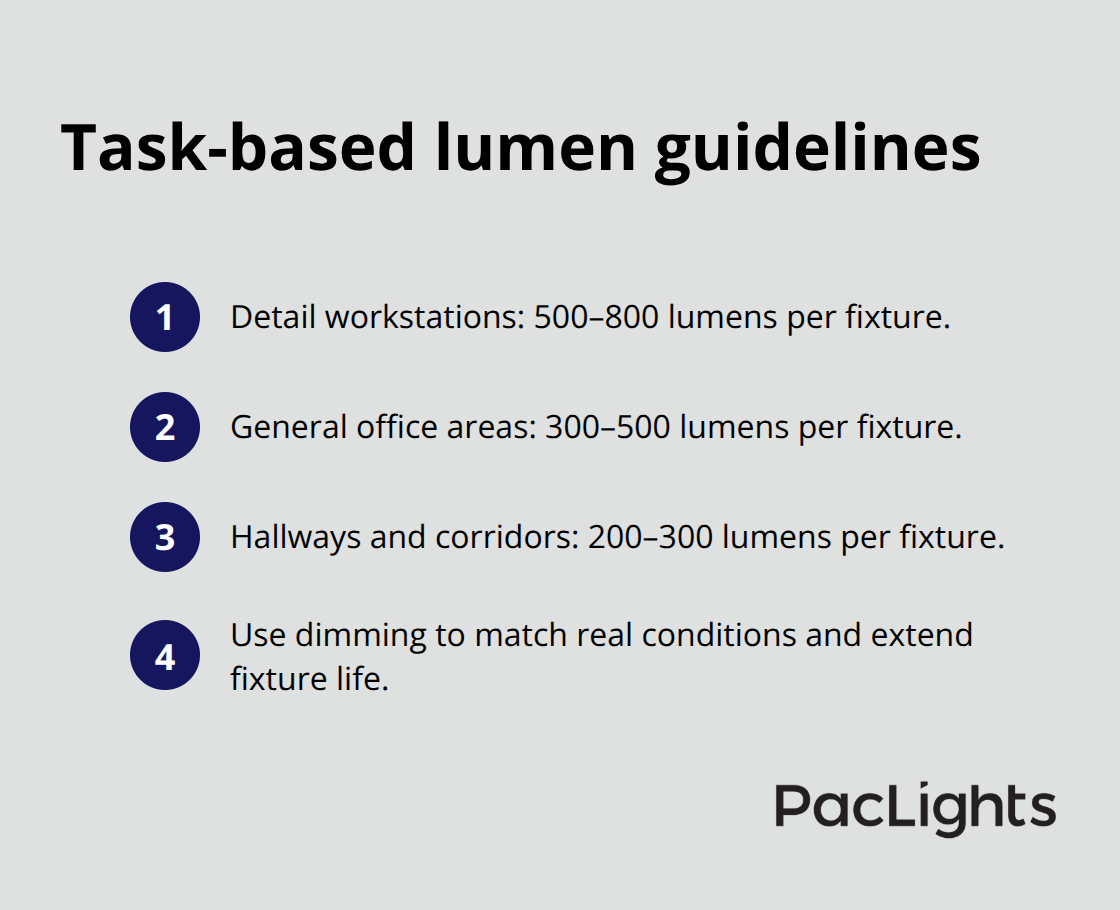
Brightness requirements depend entirely on what happens in your space, not on arbitrary rules or square footage alone. A retail showroom displaying jewelry demands significantly higher light output than a corridor or storage area, yet many facilities apply uniform lumen specifications across all zones and waste energy as a result. Start with task-specific requirements: detailed work stations need 500–800 lumens per fixture, general office areas function well at 300–500 lumens, and ambient hallway lighting operates effectively at 200–300 lumens. Most facility managers select downlights rated for maximum output and run them at full brightness continuously, which inflates energy bills and shortens fixture life unnecessarily. Instead, choose fixtures with dimming capability so you can adjust output to actual conditions rather than installing oversized units.
Color Temperature Shapes Occupant Behavior
Color temperature selection matters more than most people realize because it directly affects occupant behavior and perception. Warmer tones at 2700K create inviting atmospheres in hospitality and retail environments where customers linger longer, while cooler 4000–5000K tones improve focus and alertness in offices and task-intensive areas. Many facilities benefit from tunable fixtures that shift color temperature throughout the day, supporting circadian rhythms and reducing the afternoon energy slump that leads to reduced productivity.
Verify LED Integration and Compatibility
LED technology delivers the efficiency advantage only when you purchase true LED downlights rather than retrofitting older incandescent downlights with LED bulbs, which often causes compatibility issues and flicker problems. True LED downlights integrate the light source with reflectors and thermal management designed specifically for LED operation, delivering the promised 75% energy savings and 25,000-hour lifespan. Installation compatibility requires honest assessment of your ceiling infrastructure before purchasing fixtures. IC-rated fixtures can be installed in insulated ceilings without fire hazards, while non-IC models require clearance from insulation and create potential safety issues if installed incorrectly. Verify your ceiling type, check local electrical codes, and confirm dimmer compatibility with your LED fixtures because standard incandescent dimmers often cause flicker or premature failure with LEDs.
Plan Your Layout for Optimal Performance
Proper fixture placement and spacing determine whether your downlights deliver uniform illumination or create dark spots and shadows across your facility. Hallways benefit from fixtures spaced roughly 6–8 feet apart to create seamless light flow, while open office areas and retail spaces require denser placement to eliminate shadows that reduce visibility and create visual discomfort. Your specific layout depends on ceiling height, room dimensions, and the tasks your staff performs in each zone. Professional lighting design accounts for these variables and prevents costly installation mistakes that force expensive retrofits later. We at PacLights offer free lighting layout designs that account for your specific space dimensions, task requirements, and existing infrastructure, eliminating guesswork from the selection process and ensuring fixtures perform as intended from installation forward.
Where Flush Mount Downlights Deliver Real Results
Retail Showrooms: Lighting That Sells
Retail showrooms demand lighting that makes products look appealing without creating glare or shadows that hide details customers need to see. Jewelry stores, clothing boutiques, and electronics retailers benefit from downlights positioned to highlight merchandise while maintaining comfortable brightness levels for staff and customers alike. A 2700K color temperature in retail environments encourages customers to spend 15-20% more time browsing compared to cooler lighting, according to studies on retail behavior and lighting effects. However, overly warm lighting obscures color accuracy, which damages credibility when customers discover products look different under natural light at home.
Tunable fixtures that operate at 3000-3500K during peak shopping hours balance warmth with accurate color rendering so customers see products as they actually appear. Showroom layouts benefit from downlights spaced 5-6 feet apart rather than the 8-foot spacing used in corridors, creating the intensity needed to showcase details without wasting energy on empty areas. Dimming controls reduce output during slow periods or when natural light from windows supplements artificial lighting, cutting energy costs by 30-40% without sacrificing product visibility.
Office and Corporate Spaces: Focus and Efficiency
Open-plan offices with varied tasks require downlights capable of delivering 400-500 lumens per fixture in work zones while maintaining lower levels in circulation areas. Cooler color temperatures between 4000-5000K improve focus and alertness during peak work hours, which matters when your team spends 8+ hours under artificial light daily. Many facilities install uniform brightness across entire floors, wasting energy on hallways and break areas while potentially under-lighting detailed work stations.
Strategic placement concentrates downlights above desks and collaborative spaces where visibility directly impacts productivity, while reducing density in corridors and storage areas. Occupancy sensors cut energy consumption dramatically in offices because many spaces sit empty during meetings, lunch breaks, or when staff work remotely.
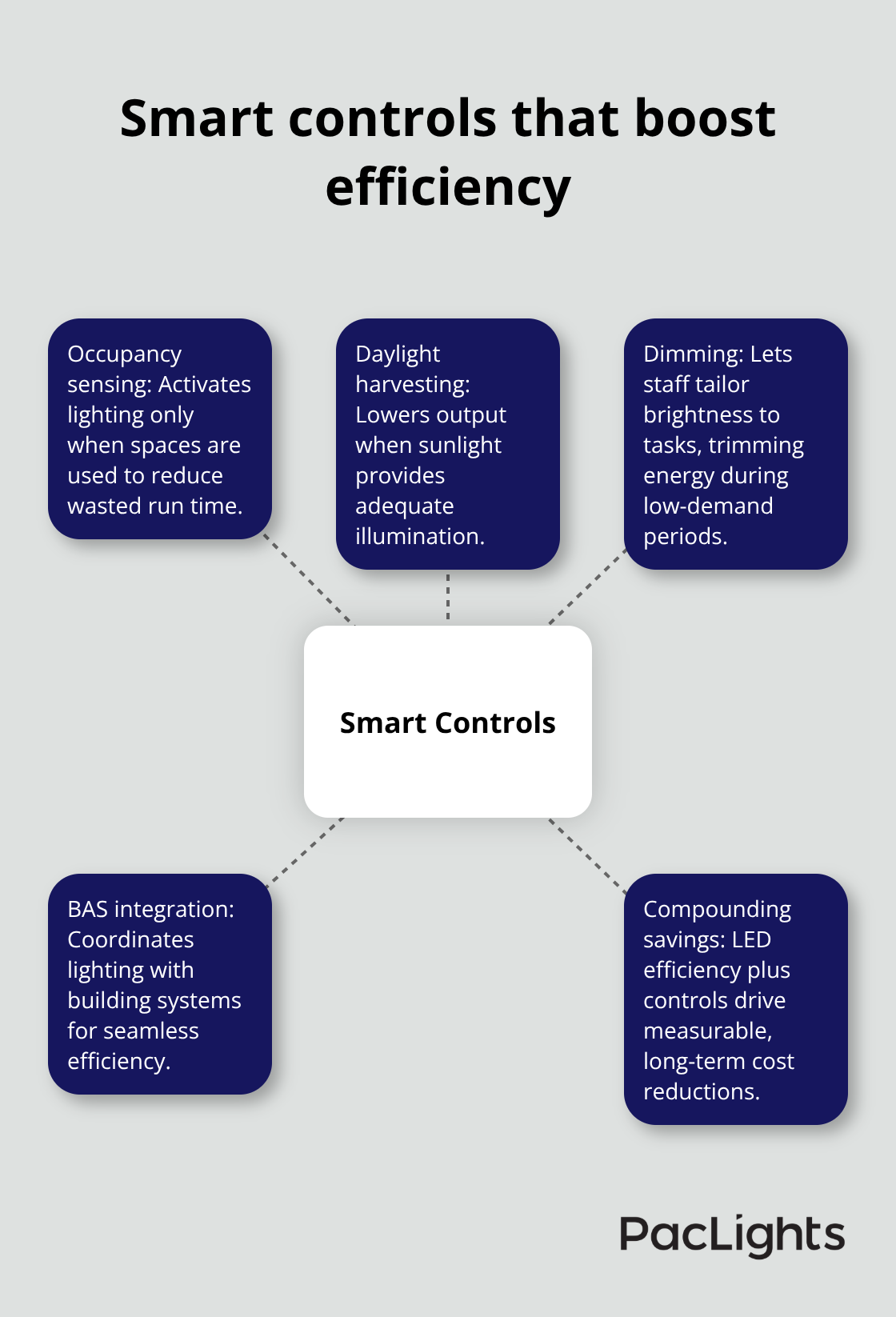
A commercial office using motion sensors alongside LED downlights typically reduces lighting energy by 40-50% compared to traditional systems that run continuously.
Hospitality and Restaurant Environments: Ambiance Meets Function
Dining areas benefit from warm 2700K lighting that encourages lingering and creates welcoming atmospheres, yet kitchens demand 4000-5000K brightness with 600-800 lumens per fixture to ensure food safety and prevent preparation errors. The contrast between dining and kitchen lighting should be intentional, not accidental, which means separate circuits and control zones rather than uniform fixtures throughout. Restaurant managers who dimmed downlights in dining areas during evening service reported 25% energy reductions while customers perceived the space as more upscale and intimate.
Hallways connecting dining and kitchen areas need sufficient brightness to prevent trips and falls, typically 300-400 lumens, but many restaurants over-light these zones and waste energy. Proper downlight spacing and control strategies transform these spaces from generic interiors into environments that support your business model while controlling operating costs.
Final Thoughts
Flush mount downlights solve real problems that older lighting systems created, delivering clean aesthetics without sacrificing performance or wasting energy. Your facility gains preserved ceiling space, reduced energy consumption by up to 75% compared to incandescent fixtures, and a 25,000-hour lifespan that cuts maintenance demands significantly. A retail showroom reduces energy costs by 30-40% through strategic placement and dimming controls, while an office using occupancy sensors cuts lighting energy by 40-50%-these results reflect what facilities actually experience, not theoretical projections.
Most commercial spaces recover their investment within 3-5 years through energy savings alone, with reduced maintenance costs accelerating the financial advantage even further. Your return depends on current conditions and upgrade scope, but the math favors upgrading to responsive LED downlights with intelligent controls across nearly every commercial application. Starting your implementation requires honest assessment of your space: what tasks happen in each zone, where occupants spend the most time, and which areas waste energy through over-lighting.
We at PacLights provide free lighting layout designs and ROI assessments that account for your specific space dimensions, task requirements, and existing infrastructure. Contact us to discuss your facility’s lighting needs and discover how flush mount downlight solutions can reduce costs while improving your commercial environment.
Disclaimer: PacLights is not responsible for any actions taken based on the suggestions and information provided in this article, and readers should consult local building and electrical codes for proper guidance.